
Features
Quality Circles: the Long March and recognition at last

My confidence in the Quality Circle concept continued to grow. I became increasingly convinced that, if properly adapted to our culture, it could make a significant contribution to improving both organizational performance and the quality of employees’ working lives in Sri Lanka.
Around this time, the Asian Productivity Organization (APO) organized a multi-country study mission on Quality Circles. It was an excellent opportunity to learn directly from countries that had successfully implemented the concept. Naturally, I submitted my application. To my disappointment, I was not selected.
Ironically, the authorities nominated another individual who, as far as I knew, had never previously encountered the concept of Quality Circles. Such disappointments are part of life, and one learns to accept them with good grace.
When he returned from the study mission, I approached him with genuine enthusiasm. I suggested that we join forces with a few like-minded colleagues to promote Quality Circles throughout Sri Lanka.His response was immediate. “This will never work in Sri Lanka.” I smiled politely but remained unconvinced.
Time has an interesting way of proving people either right or wrong. In this instance, the prediction could not have been more mistaken. Today, the National Convention on Quality and Productivity attracts well over 500 Quality Circles from companies and government institutions across the country, with participation continuing to grow year after year.
That experience reinforced an important lesson I have observed repeatedly throughout my career. Truly new ideas are often dismissed as impractical until they become accepted practice. Had every innovator accepted the verdict that “it will never work”, much of the world’s progress would never have occurred.
My first international conference paper
Not long afterwards, while attending another conference in Kuala Lumpur, chance intervened once again.
As I wandered through the exhibition area during a break, I noticed a collection of brochures and leaflets displayed on a table. One immediately caught my attention. It was a call for papers for the forthcoming International Convention on Quality Circles. I picked it up almost absent-mindedly.
By the time I returned to Sri Lanka, however, I had made up my mind. Why not share our experience with the international community? I prepared an abstract describing how I had modified the Japanese Quality Circle model to suit Sri Lankan organizational culture while preserving its fundamental principles. To my great delight, the organizers accepted the abstract and invited me to submit the full paper for presentation. For a relatively young professional, this represented a tremendous honour.
The organizers also offered a substantial concession on the conference registration fee for paper presenters. That solved one problem, but another remained. How was I going to pay for the airfare?
As fortune would have it, I noticed an advertisement by Pilgrimways Tours promoting a group package to Bangkok. Better still, the travel dates coincided almost perfectly with the conference schedule. Problem solved. I joined the tour group and travelled to Bangkok. The contrast between the priorities of my fellow travellers and my own still makes me smile.
After checking into the hotel on the first evening, most members of the tour disappeared into Bangkok’s famous nightlife. While they were enjoying themselves, I remained in my room rehearsing my presentation repeatedly, determined not to waste the opportunity that had come my way. The following morning presented another challenge.
The conference was being held at the Dusit Thani Hotel—or so my memory tells me—but I simply could not afford taxi fares. Instead, dressed in a full business suit, I walked all the way from my modest hotel to the conference venue. The journey took nearly 45 minutes.
I can still remember walking along the dusty streets of Bangkok, perspiring heavily in the tropical heat and wondering whether people thought I was rather eccentric. Nevertheless, every step was worthwhile. The convention itself was outstanding. Researchers and practitioners from many countries exchanged ideas, demonstrated successful projects and discussed the future of Quality Circles. For me, it was an invaluable learning experience.
When my turn came to present, everything went remarkably well. The audience responded positively to the paper, particularly to the way the Japanese model had been adapted rather than merely copied. That experience strengthened my belief that management practices cannot simply be transplanted from one country to another. They must first be understood, then carefully adapted to local culture while preserving their essential philosophy.
Looking back today, I sometimes reflect that those 45 minutes of walking through Bangkok probably became one of the best investments I ever made in my professional life.
Building lasting friendships with the Quality Circle Forum of India
One of the greatest benefits of attending international conferences is not merely listening to presentations but meeting people who share the same passion.
During the convention, I became acquainted with several of the senior office-bearers of the Quality Circle Forum of India (QCFI). These gentlemen had already built one of the strongest Quality Circle movements outside Japan and possessed a wealth of practical experience. Despite my relative inexperience, they received me warmly.
They willingly shared their constitution, organizational structure, operational procedures and numerous publications. Their generosity saved us years of trial and error. More importantly, these professional relationships gradually developed into lifelong friendships.
Even today, the links between the Quality Circle movements of Sri Lanka and India remain exceptionally close. Over the years, both countries have learned much from one another, and I remain deeply grateful to our Indian colleagues for the encouragement and assistance they extended during those formative years.
Sometimes, the greatest contribution one organization can make to another is simply to share its experience openly and generously.
Sri Lanka joins the international movement
Following the establishment of the Quality Circle Association of Sri Lanka, another important opportunity arose. An International Convention on Quality Control Circles (ICQCC) was scheduled to be held in New Delhi. During the discussions, the QCFI proposed that Sri Lanka should be admitted to the ICQCC Coordinating Committee. We were honoured.
However, not everyone shared the same enthusiasm. Some representatives from other member countries felt that Sri Lanka’s Quality Circle movement was still too young. In their view, we had not yet earned a place among the more established nations. I therefore found myself answering numerous questions about our activities, our achievements and our future plans.
It was, in effect, an oral examination. Fortunately, I had accumulated sufficient practical experience to answer every question confidently. After considerable discussion—and with the vigorous support for which our Indian friends are well known—Sri Lanka was finally admitted. Not everyone appeared pleased with the decision, but we had earned our place.
Many years later, when the ICQCC was held in Colombo, I had the privilege of proposing Bangladesh for membership. The proposal was accepted unanimously. Perhaps that was one small example of the spirit of regional cooperation that organizations such as SAARC sought to promote.
Establishing the Quality Circle Association of Sri Lanka
By this time, it had become increasingly clear that Sri Lanka needed a national body to promote, coordinate and support Quality Circle activities. Drawing extensively upon the successful experience of the Quality Circle Forum of India, we drafted our own constitution and formally established the Quality Circle Association of Sri Lanka (QCASL). I was privileged to be elected as its first President.
Those early years were both exciting and demanding. We organized seminars, workshops, demonstrations, practical clinics and, eventually, our own National Quality Circle Convention. Since the concept was still unfamiliar to many organizations, education became one of our principal objectives.
Our newsletter also played an important role. Under the guidance of an energetic editor, it carried articles, case studies, reports on successful projects and news of Quality Circle activities both locally and overseas. Gradually, a growing community of practitioners began sharing ideas and learning from one another.
One of the most memorable milestones was our first National Convention, held at the Colombo Hilton Hotel. It proved to be a landmark event. Among the many presentations, one remains especially vivid in my memory.
A young female Quality Circle leader from a factory was describing the intangible benefits her team had gained through participation. Towards the end of her presentation, she made a simple but deeply moving remark. “I never imagined that someone like me would one day have the opportunity to make a presentation in a five-star hotel.” Those few words captured the true spirit of Quality Circles.
The greatest achievement was not merely solving production problems or improving quality. It was giving ordinary employees the confidence to analyze problems, communicate effectively and present their ideas before senior managers with pride and dignity.
Interestingly, the Hilton management had initially expressed some concern about hosting large numbers of factory workers. They wondered how comfortable these visitors would be in a luxury hotel environment. By the conclusion of the convention, however, they told us that ours had been one of the most disciplined, courteous and well-behaved groups ever to use their facilities.
That compliment pleased me enormously, because it demonstrated once again that people invariably rise to the level of trust and respect shown to them.
Spreading the message further
At about the same time, another opportunity arose to spread the Quality Circle philosophy even more widely. I was serving on the Executive Committee of the Japan–Sri Lanka Technical and Cultural Association, an organization that had done much to strengthen ties between the two countries. During one of our committee meetings, someone suggested organizing a seminar on Quality Circles to introduce the concept to a wider audience. I readily accepted the challenge. The response exceeded all our expectations.
The first seminar attracted an overwhelming number of participants. In fact, so many organizations wished to attend that we were compelled to organize two further seminars within the following three months simply to accommodate the demand.
It became increasingly clear that Sri Lankan managers were searching for practical ways of involving employees more meaningfully in improving quality, productivity and organizational performance. Quality Circles appeared to offer precisely that opportunity.
As word spread, more organizations began experimenting with the concept. Some succeeded immediately, while others required more time and guidance. Nevertheless, the movement had begun to gather momentum.
An unfortunate setback
Unfortunately, organizations, like individuals, sometimes lose sight of the very ideals upon which they were founded. Following my departure from the Quality Circle Association of Sri Lanka, disagreements gradually emerged among some of the office-bearers. What began as differences of opinion eventually developed into personal accusations and internal disputes. The harmony and unity that had characterized the Association during its formative years slowly disappeared. Eventually, the Association ceased to function.
I watched these developments with considerable sadness. Years of hard work appeared to have been undone, not because the Quality Circle concept had failed, but because people had allowed personal differences to overshadow the larger mission. It was another valuable lesson in management. Building an organization is difficult. Sustaining it is even more difficult. No matter how noble its objectives, an organization can survive only if its members continue to place the common good above individual interests.
A new beginning
As the years passed, many colleagues and friends repeatedly approached me with the same request.”Why don’t you restart the Association?” Others suggested forming an entirely new organization. They believed, as I did, that Sri Lanka still needed a national institution dedicated to promoting Quality Circles, productivity improvement and continuous improvement practices.
Initially, I hesitated. Starting an organisation from scratch requires enormous commitment, and I had many other professional responsibilities. Yet the requests continued. Eventually, I agreed. A small group of committed enthusiasts came together to establish a new organization—the Sri Lanka Association for the Advancement of Quality and Productivity (SLAAQP).
None of us imagined that our inaugural meeting would coincide with one of the darkest days in Sri Lanka’s history. On the very morning scheduled for the inauguration, terrorists launched the devastating attack on the Central Bank in Colombo. Many innocent people lost their lives, hundreds were injured, and the city was plunged into fear and confusion. Shattered glass, damaged buildings and scenes of devastation confronted everyone who ventured into the city that day.
Several colleagues suggested postponing the inauguration. Their concerns were perfectly understandable. After giving the matter careful thought, however, I decided that we should proceed.If we abandoned our plans at the first sign of adversity, what message would that send about our own commitment? In the end, only four or five people managed to attend.
Yet, with that tiny gathering, we formally inaugurated the Sri Lanka Association for the Advancement of Quality and Productivity. Looking back today, I believe that one of the Association’s greatest strengths lay not in the size of its inaugural meeting but in the determination of the few who refused to allow fear to overcome purpose. Many successful organizations have had surprisingly modest beginnings.
Remaining connected to the international movement
Throughout both the QCASL and SLAAQP years, I made it a point to attend every International Convention on Quality Control Circles. People sometimes asked how our relatively modest Association managed to finance such regular overseas participation. The answer was simple. It did not. I was careful never to burden the Association financially.
Whenever possible, I arranged my business commitments so that I could combine visits to our principals and associates in Japan with attendance at the annual convention. By carefully planning my itinerary, I was able to use the same airline ticket to stop over in cities such as Bangkok, Kuala Lumpur, Bali or Seoul, where the conventions were often held.
This approach enabled me to remain closely connected with developments around the world while ensuring that the Association’s limited resources could be devoted to supporting activities within Sri Lanka. It was a small personal contribution, but one that I was happy to make.
The International Convention on Quality Control Circles rotates annually among its 13 member countries. Attending these conventions not only exposed me to the latest developments in participative management but also enabled me to establish friendships with practitioners from many parts of the world—friendships that have endured to this day.
Looking back with gratitude
Over the years, many people began referring to me as “Mr Quality Circles” or even “the Father of Quality Circles in Sri Lanka.” Although I always regarded such descriptions as generous exaggerations, one incident associated with the title has remained firmly in my memory. On one occasion, I was introduced at a public meeting as “the Father of Quality Circles in Sri Lanka.” Among those present was the distinguished Toastmaster, Mr Haleem Ghouse.
When the programme ended, he came up to me with a broad smile and offered a piece of advice that only a seasoned humourist could have delivered. “Sunil,” he said, “never allow anyone to introduce you as the father of Quality Circles.” I looked at him rather puzzled. He continued, with impeccable comic timing: “Because paternity is only an opinion—only maternity is a fact!” We both burst into laughter.
His witty remark has remained with me ever since, and whenever anyone attempts to bestow that title upon me, I cannot help recalling Haleem’s delightful observation.
A journey worth taking
As I reflect upon this remarkable journey, I experience a deep sense of gratitude. What began as a single factory visit in Japan in 1980 eventually evolved into a lifelong mission to promote participative management in Sri Lanka. I had no grand master plan. I simply encountered an idea that inspired me and felt compelled to share it with others. The journey was far from smooth.
There were disappointments, sceptics who dismissed the concept as impractical, failed experiments, organisational setbacks and moments when the future seemed uncertain. Yet there were also extraordinary rewards.
I had the privilege of watching thousands of ordinary employees discover talents they never realized they possessed. Factory workers became confident presenters. Supervisors became facilitators rather than controllers. Managers learned to listen. Organizations discovered that those closest to the work often possessed the best ideas for improving it. Perhaps that, more than anything else, is the enduring lesson of Quality Circles. Every employee deserves not only the opportunity to work but also the opportunity to think, contribute and grow.
Last year, I experienced one of the proudest moments of my professional life when the Sri Lanka Association for the Advancement of Quality and Productivity decided to name its highest recognition for Quality Circle achievement the Sunil G. Wijesinha Award for Quality Circles Excellence.For someone who simply wished to introduce an inspiring Japanese management practice to Sri Lanka nearly half a century ago, that honour was both deeply humbling and profoundly gratifying.
Awards eventually fade into history, but seeing an idea continue to benefit future generations is a reward beyond measure.
In my next episode, I shall describe another fascinating chapter of this journey—the introduction of the Japanese 5S workplace management system to Sri Lanka, a movement that would eventually spread to hundreds of organisations across the country and become one of the most widely practiced Japanese management techniques in Sri Lankan industry.
by Sunil G. Wijesinha


 Looking back over the years since the 9/11 catastrophe, it could be said that barring former Iranian President Mohammad Khatami no world political leader of note has made an earnest effort to change the nature of global political discourse for the better. Khatami won world acclaim for his pronouncement that the time is right to launch and sustain a ‘Dialogue among Civilizations’.
This was in marked contrast to US political scientist Samuel P. Huntingdon’s epochal theses, formulated in the wake of 9/11 and other global political tumults that the Post Cold War era is essentially one of conflicts among civilizations. That is, people’s identity markers, such as culture and religion, are the prime shaping forces of international conflicts.
From a Political Realism standpoint, Huntingdon’s theory may seem to have gained in credibility over the years but it is Khatami’s pronouncement that has evoked an empathetic response in the hearts and minds of publics world wide. So much so, 2001 was proclaimed by the UN General Assembly as the ‘Year of Dialogue among Civilizations’.
It could be said that the latter proclamation was an endeavour to give back to humans their essential identity of peace-makers. It was an eschewing of the position that war and conflict are central to the human condition and amounted to upholding constructive dialogue among peoples and civilizations as a path to peace.
That things have not worked out in the world in keeping with the expectations of peace makers does not in any way invalidate the thesis that peace is the essential propensity of humans.
If peace-making is seemingly ineffective it is primarily because the path to peace is narrow, tortuous and time-consuming. On the other hand, violence usually misleadingly recommends itself to the human as the more expedient, cost-effective way out of a conflictual situation. However, the ultimate cost of the latter approach is prohibitive because it brutalizes the human beyond recognition.
Some of the evidence is before our eyes. The Trump administration, for example, has, minus much forethought, unleashed what may be described as a ‘quick-fix’ war against Iran but is now finding that it is in a veritable military quagmire in West Asia. The priority for the administration now seems to be a face-saving escape strategy. Such are the costs of the war option.
However, there is no denying that much remains to be done by the world community to bring peoples and cultures together with a view to enabling them to work as one for the cause of a less dangerous world.
Meanwhile, the broad divisions in international politics continue and past political polarities are lingering to the detriment of enhanced international understanding. The East and the West and the South and the North, for instance, are continuing to work in separate collectives, more or less, and no notable efforts are being made by the international community to bring these sides together for the purpose of united constructive action that could usher greater international well being.
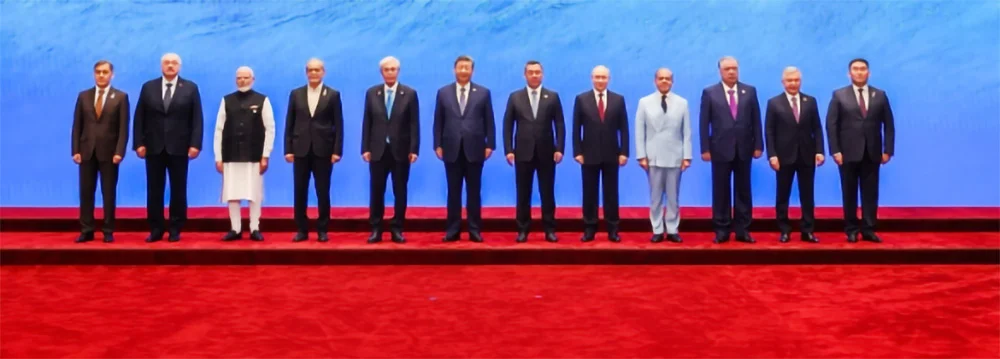
The recent Shanghai Cooperation Organization Summit, 2026, held in Kyrgyztan was a replication of the above broad trends but there were some statements at the forum by Indian Prime Minister Narendra Modi that deserve special scrutiny and comment.
Modi was quoted saying among other things: ‘The land of Gandhi and the land of Buddha share a single message: the path to peace!..We must move away from endless war towards an end to the war. This is essentially for the well being of humanity. A peaceful resolution to all issues at the earliest is the call of humanity, and this is India’s message.’
The above is the language of international peace and unity. It is such language that will help in building bridges among civilizations and advance the cause of world peace. Besides, it will help bring a measure of understanding between North and South.
In this regard, the Trump administration could take a leaf or more from the Modi government. Unless it makes a ‘U turn’, as it were, in the direction of peace and reconciliation it is very unlikely that the US and the world would experience any stability worth speaking of.
Right now the US is savaging the sovereignty of Venezuela. It is a question of the ‘Empire striking back’ but Venezuela is a far cry from Iran. Iran has outsmarted the US on the battle field and is in a position to influence broad trends in the world economy since it still has control over the Hormuz Straits. That is, Iran could exercise a determining influence over world oil, gas and energy prices. In short, the US consumer’s future peace of mind is very much in the hands of Iran.
Given the above backdrop it should have dawned on the US political leadership that working towards cordial relations with Iran is the most advisable option. The US, simply, has too much to lose otherwise.
Likewise, Russia too needs to take a leaf from India. It is plain to see that its invasion of Ukraine is proving totally ineffective. It has not brought any measure of peace for the Russian people. Russia is right now experiencing a rerun of its military misadventure in Afghanistan. On the other hand, sections of the peoples concerned have been victimized and even brutalized.
Accordingly, there needs to be a coming together of democratic opinion worldwide for a fresh consideration of the options facing humanity. There is a dire need for value-based politics to take the place of Realpolitik. Besides, the language of peace and humanity needs to replace current divisive discourse with its stress on polarities and antagonisms.
International organizations of the stature of the UN need to take the lead in spearheading the above initiatives. Right now the UN gives the impression of being a spent force. This columnist hopes that he would be proved wrong on this score because the UN remains the only hope of the poor and victimized. It will be in the interests of all peoples for the UN to rejuvenate itself and dedicate itself increasingly enthusiastically to the cause of international peace.
Whether it be the South or North, dynamic, visionary political leadership and direction emerges as essential. The need is for voices that would espouse peace and accord across boundaries and divisions. For South Asia, India and Pakistan have the potential to fill this lacuna.
by Shelton Dharmaratne
Sri Lanka has reached an important constitutional moment.
The proposed 22nd Amendment has moved beyond political debate and into the constitutional process through which its validity will be examined. That development should change the character of the national discussion.
That is understandable in a politically contested environment. But Sri Lanka should now resist reducing a question of constitutional design to a contest over political positions.
The deeper issue concerns the relationship between constitutional reform, judicial independence and public confidence in the institutions of the State.
The Supreme Court will determine the constitutional questions before it. Public commentators should therefore exercise restraint in predicting, interpreting or seeking to influence that determination. But restraint does not require silence. It requires a more rigorous discussion of the institutional principles at stake.
A narrower constitutional question than the political debate suggests
The proposed amendment principally concerns the retirement ages of judges of the Supreme Court and Court of Appeal, together with an increase in the maximum number of judges permitted on the Court of Appeal.
Under the proposal, the retirement age of Supreme Court judges would rise from 65 to 67 and that of Court of Appeal judges from 63 to 65. The maximum number of Court of Appeal judges would also increase from 19 to 24.
Other proposed changes concerning the retirement ages of judges in the lower courts arise under separate legislation. This distinction matters because the public debate has sometimes treated the wider package of judicial reform as though it formed a single constitutional proposal.
Nor should the central issue be reduced to whether retaining experienced judges is inherently good or inherently dangerous. Both propositions are too simplistic.
Sri Lanka faces a substantial burden of pending litigation, and delays in the administration of justice impose significant costs on citizens, businesses and the State. Experienced judges represent an institutional resource. Continuity, accumulated knowledge and familiarity with complex areas of law cannot always be replaced immediately.
Those are legitimate policy considerations.
But the opposing concern is equally important: judicial tenure is not merely an employment condition. It is a structural component of judicial independence.
The real question is institutional
The critical question is not whether an individual judge is capable of acting impartially. It is whether the constitutional structure provides adequate protection against circumstances in which judicial tenure could become connected, directly or indirectly, with political authority.
That is an institutional question, not an accusation against individual judges.
A judge may be entirely conscientious and independent while the institutional arrangements surrounding the judiciary nevertheless create public doubts about independence. Constitutional democracies therefore cannot depend solely on the personal integrity of office-holders. They must construct institutions capable of preserving independence even when governments, individuals and political circumstances change.
This is particularly relevant when constitutional reform concerns the tenure of serving members of the superior judiciary.
The institutional sensitivity of such a proposal should neither be exaggerated into an allegation of improper motive nor dismissed as irrelevant. The appropriate response is transparency, procedural fairness and confidence in constitutional safeguards.
Legitimate objectives do not settle constitutional questions
The government has stated that its objectives include strengthening the administration of justice, addressing delays, retaining judicial experience and increasing institutional capacity.
Those objectives deserve serious consideration. Sri Lanka needs judicial reform. Citizens waiting years for their cases to be concluded experience the justice system very differently from those discussing it in Parliament, courtrooms or universities.
A government is therefore entitled to propose reforms designed to improve judicial efficiency.
But legitimate objectives do not automatically resolve constitutional objections. The relevant question is whether the means chosen are compatible with the constitutional structure and whether sufficient safeguards exist against unintended institutional consequences.
That is precisely why constitutional scrutiny matters.
The concerns of the Bar Association of Sri Lanka (BASL) should likewise be examined without political labelling. Opposition to the proposed changes should not automatically be characterised as opposition to judicial reform or an attempt to obstruct the government. At the same time, invoking judicial independence does not place any argument beyond scrutiny.
The appropriate questions are straightforward:
Does extending judicial tenure strengthen the administration of justice?
What risks, if any, could it create for judicial independence?
Are adequate institutional safeguards in place?
Does the proposal operate prospectively, or does it affect judges already serving?
Could the same objectives be achieved by filling vacancies, increasing judicial capacity, improving court administration and strengthening case management?
These questions can be examined rationally without attributing improper motives to either side.
Judicial vacancies and institutional confidence
Recent concerns raised by the BASL regarding judicial vacancies add another dimension to the debate. The BASL has argued that vacancies in the Supreme Court contributed to the retirement of a senior Court of Appeal judge without promotion to the Supreme Court, despite vacancies having existed. It has also raised concerns regarding forthcoming judicial retirements and the need for timely consideration of appointments.
Such matters should not be treated as evidence of the motives behind the proposed amendment. They do, however, illustrate a broader principle.
Judicial independence is shaped not only by the retirement age written into the Constitution. It is also influenced by how vacancies are filled, how promotions are determined, how seniority and merit are assessed, and whether judicial officers and the public believe that institutional decisions are made according to transparent and defensible criteria.
The government has an opportunity to address these concerns constructively.
Prompt appointments based on publicly defensible principles would strengthen confidence in the judiciary irrespective of the eventual outcome of the constitutional debate.
Seniority, merit and transparent criteria
The controversy also exposes a longstanding question concerning judicial appointments.
Seniority has traditionally carried considerable weight in judicial advancement. Yet seniority alone need not be the sole measure of merit. Conversely, replacing established practices with undefined assessments of “merit” could create another institutional problem.
If governments or appointing authorities can determine which judges are sufficiently meritorious without clear and objective criteria, uncertainty itself may become a source of institutional anxiety.
Sri Lanka would therefore benefit from clearer, objective and defensible standards governing judicial appointments and promotions.
Such standards would protect judges as well as appointing authorities. They would reduce opportunities for favouritism, strengthen institutional confidence and make it harder for political actors to portray every appointment as politically motivated.
Institutional rules are stronger safeguards than assurances of good intentions.
The State is larger than any government
One principle deserves particular emphasis: a government is not the State.
Governments are temporary. The constitutional State is continuing. Political parties change, parliamentary majorities change and political priorities change. The judiciary, however, must continue to function independently of whoever occupies the government benches.
The judiciary is neither a government institution in the political sense nor an Opposition institution. It is an institution of the State whose legitimacy depends upon its independence from both.
For that reason, governments should exercise particular caution when proposing constitutional changes affecting the judiciary, even where the policy objectives are legitimate.
The stronger a government is politically, the greater its responsibility to demonstrate institutional restraint.
That is not political weakness. It is constitutional maturity.
Public confidence is a constitutional asset
The most consequential issue may ultimately be neither retirement age nor judicial capacity, but public confidence.
Courts do not possess political power in the conventional sense. Their authority rests substantially on the acceptance of their decisions as legitimate.
Citizens will sometimes disagree with judicial decisions. But where the judiciary is perceived as independent, even unpopular decisions can command respect. If judicial institutions are perceived as being shaped by political convenience, even legally sound decisions may become vulnerable to suspicion.
Constitutional reform affecting judicial tenure must therefore be evaluated not only by its immediate administrative benefits but also by its effect on institutional credibility.
A reform that produces short-term efficiency while weakening confidence in judicial independence could impose a greater long-term cost. Conversely, reform that improves efficiency while preserving independence can strengthen both justice and public trust.
The challenge is not to choose between judicial efficiency and judicial independence. It is to achieve both.
If a referendum arises …
If the constitutional process ultimately requires approval by the people at a referendum, the debate should rise above the conventional government versus Opposition contest.
The electorate should be given a clear constitutional question and sufficient information to assess it.
Citizens should understand what problem the amendment seeks to address, why the proposed mechanism is considered necessary, what institutional risks have been identified, what safeguards exist and whether alternative measures could achieve the same objectives.
A constitutional referendum deserves a higher standard of public discussion than an ordinary election campaign.
The people would not merely be choosing a political side. They would be deciding the institutional framework within which political power and judicial authority operate.
Beyond who wins
The most important question arising from the proposed Twenty-Second Amendment is therefore not simply whether the government succeeds or whether the Opposition and BASL prevail.
Nor is it ultimately whether judicial retirement ages become 67 and 65 or remain unchanged.
Those are immediate constitutional questions. The deeper issue is what Sri Lanka learns from the controversy.
If the government seeks to modernise and strengthen the justice system, that objective deserves serious consideration. If the BASL and others warn that particular reforms may affect judicial independence, those concerns deserve equally serious examination.
Neither side strengthens the country by assuming that the other is acting in bad faith.
The constitutional system is strongest when legitimate disagreements are resolved through institutions rather than political pressure.
Whatever the eventual constitutional outcome, Sri Lanka will still face the underlying challenges of judicial vacancies, case delays, institutional capacity, judicial appointments and public confidence. Those problems will not disappear with a judicial determination, nor should the national conversation end there.
Sri Lanka should instead seek a broader consensus around a fundamental proposition:
Judicial reform and judicial independence are not competing objectives.
The real challenge is to pursue reform in a manner that strengthens the judiciary without placing its independence under suspicion.
That requires sound legislation, transparent appointments, adequate resources, efficient court administration, responsible political conduct and safeguards capable of surviving changes of government.
The present controversy will eventually pass. Political arguments surrounding it will fade.
But constitutional arrangements can endure for decades.
That is why Sri Lanka must look beyond the immediate political contest.
The ultimate test is not who wins today’s constitutional argument. It is whether, when the political moment has passed, Sri Lanka has a judiciary that is more efficient, more accessible and more trusted—while remaining sufficiently independent to hold every government, including future governments, within the boundaries of the Constitution.

 Sri Lanka’s fashion world lost one of its brightest stars Monday morning – veteran model, actress, and elite pageant trainer Chulpadmendra “Chula” Kumarapathirana.
Her sudden demise has certainly come as a shock to many.
Chula had just completed a major event on Sunday (30th August), and was no more in the land of the living the following day (31st August).
Born in Colombo, she was an old girl of Buddhist Ladies’ College and later studied at the National Institute of Business Management, and has many awesome achievements to her credit.
In 2006, she won the “Miss Tourism Model of the World Press Award” in Tanzania.
She entered the entertainment industry, as an actress, and gained popularity through the teledrama “Wahinna Muthu Wessak.”
Chulpadmendra has been on TV, and many Sri Lankan hip-hop music videos, including “Hanthane” and “Heena Hirimal”, and has had several other minor acting jobs since then.
She hosted the Derana Miss Sri Lanka for Miss World 2008 and even participated in the reality TV show Sirasa Dancing Star.
For over 25 years Chula was active in local and international fashion and founded the Chulpadmendra Catwalk Studio to train young newcomers
She trained hundreds of models for runway, photoshoots, auditions, and international pageants.
She was known as a fierce mentor who believed in “not just learning to walk, but learning to command the runway”.
Many young models called graduating from her studio their “happiest moment.”

Chulpadmendra “Chula” Kumarapathirana: Many young models called graduating
from her studio their “happiest moment.” (L)/ Won the “Miss Tourism Model of the World Press Award” in Tanzania (R)
Chula was very fond of The Island newspaper and kept in touch with us on a regular basis.
Her last message to The Island was a ‘thank you’ note for the article ‘New benchmark in pageant industry’:
“Thank you, Ivan, for writing such a beautiful article about me. Your unwavering support, encouragement, and belief in me throughout my career mean more than words can express. I am truly grateful for your kindness and generosity.
“My heartfelt thanks also go to The Island newspaper for featuring the article. It is a great honour, and I sincerely appreciate the recognition and support.
“Thank you once again.”
In fact, just a couple weeks ago, she sent a photo of herself for our Glam Scene and that picture I publish today, as part of this story.
May she rest in peace. Our deepest condolences to her family, students, and all who loved her.

Sun directly overhead Madampe, Thorayaya, Thotagamuwa, Rattota and Kalavanchikudy about 12.09 noon today (03)

Afternoon thundershowers in the Northern, North-central, Eastern and Uva provinces in next few days, starting from today (03).

22A: SC urged to suspend hearing, appoint full bench

Govt. seeks NATO assistance

Recent ‘Ice’ detection at the Colombo Port made on US intelligence – Embassy

Sri Lanka launches National Food Safety Policy with support from FAO and EU

‘Dates have the highest sugar content to fight Coronavirus’

Sunday Island 27 December – Headlines

#SundayIsland 17th December – Headlines

Sunday Island – 28th March

Sunday Island Headlines – 21 March

Sunday Island – 21st February – Headlines
-

 News6 days ago
Eight politicians in drug kingpin probe
-

 Features4 days ago
“Wrap Me Up in My Blazer”— A Gentlemanly Bradby Reminiscence
-

 Business6 days ago
Sri Lanka opens up: A new season of direct connectivity
-

 Features3 days ago
When Sri Lankan stories find their own voice
-

 Latest News7 days ago
Nepal-Tibet floods: What happened, what caused them and who is missing?
-

 Features6 days ago
Redefining ageing in Sri Lanka
-

 Editorial6 days ago
The toxic legacy of two lakes
-

 Business6 days ago
Jaffna Teaching Hospital secures lifeline water supply via ADB-funded Thalaiyadi sea water desalination plant