
Features
First leg of my postgraduate engineering studies abroad


My journey from London to Toronto was on an Air Canada 747 jumbo jet. I had chosen a window seat while the middle seat beside me remained empty and a friendly woman sat on the aisle seat. Her English accent was unfamiliar, but I soon learned she was from Montreal, in Quebec—the French-speaking heart of Canada.
She spoke warmly about her country explaining its bilingual identity, its long winters, and its vast stretches of land. At that time, Canada had a population of only about 20 million (now over 40 million)—despite being the second-largest country in the world. She pointed out glaciers glistening beneath the plane, describing their majesty. Canadians, she assured me, were a welcoming people. Education, healthcare, and quality of life, she declared proudly, were all superior to what she believed one might find in the United States.
When she asked whether I had a winter coat, I admitted that a Lankan friend had lent me one although I had not packed it due to baggage weight limits. She nodded approvingly. “That’s wise. Styles change every year, and since it’s summer now, you’ll easily find a discounted one in Toronto.”
She explained that while parts of Canada endured some snow—especially in the central provinces—the west coast city of Vancouver enjoyed a gentler climate. Many Canadians dreamed of retiring there.
When we landed in Toronto, the kind lady stayed by my side, guiding me through immigration and even helping me find the right bus to the city. Before leaving for her connecting flight, she handed me her address and invited me to visit her in Montreal someday.
New life
After a week at New Hall in the University of Toronto, I was finally assigned a room at St. George College, where Siva and Surjeet also lived. This made life easier as I was no longer alone. I found that many Chinese students rented rooms in modest private homes nearby and to save money they often crammed two or three to a room—sometimes 10 in a house—sharing a single bathroom and a kitchen. Their meals were simple: dinner cooked as a group in the kitchen, breakfast skipped altogether, and lunch reduced to bread spread with peanut butter.
Watching them reminded me of the hardships faced by students in Maradana back in Sri Lanka. Yet, I admired the Chinese students deeply. They were disciplined and relentlessly hardworking, devoting nearly every waking hour to classes, libraries, or computer labs. Leisure was a luxury that they rarely allowed themselves to enjoy.
By contrast, my time at St. George was more colorful. Through Siva and Surjeet, I met others—among them Jim Retson from the Department of Law, his younger sister Mavis, a Master’s student in Speech Therapy, and Roberta, a fellow graduate student who was engaged to Jim. Our weekends filled quickly with outings, movies, road trips in Surjeet’s Volkswagen, and long hours of city exploration.
Pancake parties and beyond
Siva had a gift for cooking, often preparing sambar, a South Indian vegetable curry with a parippu base, which he served with white bread to anyone who dropped by his room. He was generous, never expecting anything in return. Yet one regular visitor, a South Indian day scholar named Paikyalingam, happily ate Siva’s food without ever offering reciprocal hospitality.
Sundays at St. George were special—pancake gatherings in a dorm kitchenette. Students brought flour, eggs, milk, and butter, flipped pancakes on the griddle, serving them with maple syrup. It was here I had my first taste of sweet pancakes alongside cured meats—bacon, ham, and sausage— to me a strange but intriguing combination. At these gatherings, Mavis grew particularly friendly toward me. Though I appreciated her warmth, I found her constant attempts to “correct” my English accent a little irritating.
From executive engineer to student
Before leaving Sri Lanka for graduate studies, I had risen to a permanent position of executive engineer at Richard Pieris and Co. Ltd. Shifting from the authority of that role to the humility of a student’s life in Canada was a difficult but necessary adjustment.
At the University of Toronto, my task was clear: complete the required coursework, and prepare and defend a research dissertation. Here, as a student, I found myself answering to people at every level. Back in Sri Lanka, I needed to obey only the chief engineer and the factory director. The contrast was striking.
Yet, my years as an engineer had been useful. Among my early projects was the development of a buffing system for rubber parts—an effort that would unexpectedly become my first brush with the field of Mechatronics.
My accidental exposure to mechatronics
When I was an engineering student in Sri Lanka, in the second half of the 1960s, we did not have digital computers in the university. When I was about to graduate, a main frame computer was installed in the faculty of engineering, University of Ceylon, Peradeniya. It was enormous in size and a large air conditioned room to accommodate it. Today’s desk-top personal computers (PCs) have more functionality, capability, and speed, and are far smaller and cheaper!
At that time, first we had to learn a programming language, typically FORTRAN, before we could use the computer. Even after that, we had to “punch” a deck of cards according to our program, hand it over to the person at the counter, and wait for many hours if not a day, to get a printout of the results. Often, such computer “outputs” showed errors (called, bugs) in the program, and the correct output would be forthcoming only after several iterations of correction, punching, re-submission and waiting.
To learn a programming language, we had to use the relevant manuals or books and unlike today, they were not freely available on line or even in library. The set of manuals for the university computer were kept under lock and key at the computer room of the University of Ceylon, and were carefully guarded by its manager.
Undeterred, I purchased a booklet on FORTRAN Programming, and carefully mastered it. Once I was ready to program the computer in FORTRAN, I had already graduated and was working as an engineer in a large factory. The company too did not have computers, but the chief engineer offered me a project related to computers soon after I joined the factory. Unbeknownst to me, that was my first and fortuitous exposure to rudimentary Mechatronics.
In my daily “walk through” in the factory, I noticed an alarming and hazardous situation. The factory had about ten “buffing stations” where the workers manually held rubber parts (the factory produced consumer items made of rubber, plastic, aluminum and steel among other things, in large scale) to spinning emery wheels, at buffing stations, and removed any minor artifacts in the parts, and also polished them in the process. The whole buffing area was full of rubber dust, and even though the buffing workers wore masks I was sure that they inhaled some of that dust daily. I asked the chief engineer whether we could improve the situation, and suggested two options: 1. Install a good ventilation system, 2. Redesign the buffing machines to be less hazardous. Fortunately, the chief engineer agreed, and told me “I will take care of the ventilation system, and you redesign the buffing machines.” He said that he would assign a foreman for the project, and I could acquire the needed parts and other material from the company’s Stores.
Little did I know, the particular foreman was typically a disaster, known to be lazy, did not want to do any work, and above all, did not like to take instruction or advice from others. The chief engineer just wanted me to somehow change the foreman’s habits and make him at least a bit productive, I suppose. Even though I was young and somewhat naïve, I resorted to some trickery with the foreman. I told him that I did not know much engineering, and I wanted to learn from him (even though I had a first class honors degree, with a practical final-year project, and topped the entire class of engineering at the university). He was quite flattered. I told him that I would recommend him for a bonus on completion of the project. During the project, I did not question his decisions, but tactfully corrected any of his errors that I noticed. So, gradually, he became a changed man and was quite friendly with me, while boasting to others that he could teach a thing or two to “these highly-paid engineers.” He was correct indeed.
The powers who designed the engineering curriculum at my university in Sri Lanka, had the foresight to plan for the future, proactively. The first two years of our engineering program were common to all engineering students (consisting of just Mechanical, Electrical, and Civil engineering students, at the time). Fortunately I learned electrical engineering and electronics as a result, even though my specialization in the final two years was mechanical engineering. So, in my main practical project after graduation, I embarked on Mechatronics.
I refreshed my knowledge in electrical engineering, and learned how to select an electric motor (particularly an induction motor), to properly match it to a load (which is the object that would be rotated by the motor). I learned the types of control that were available for induction motors. I brushed up my knowledge on the analysis of rotating bodies and particularly how to determine the torque versus speed curve of a load, using Mechanics of Machines that I learned in the university. Most of this study was done in the evenings, outside the normal working hours. Then I designed a hexagonal drum of appropriate capacity (doing some guesswork, based on the number of parts that were buffed in five existing stations in one hour and assuming that the new buffing machine would run for an hour to complete a batch of rubber parts) with the hope of gluing suitable emery paper in the interior. Then I estimated, with the help of the foremen, the weight of the drum with a full load of rubber parts. Finally, I calculated the moment of inertia of the loaded drum about its axis of rotation, and also determined a torque versus speed curve for it. That was the easy part.
A suitable shaft and bearings for the drum had to be selected from the company stores. The support structure for the drum had to be designed and fabricated, and a suitable induction motor had to be chosen. With eager help (and rigorous advice forthcoming) from the foremen, much of the design was completed except the selection of the motor. The motor selection was particularly difficult for several reasons. We had to depend on a few available induction motors (about four, as I recall) at the factory’s stores. No data sheet, manual, or even a standard torque versus speed curve were available (unlike today, when we can simply obtain all that information on line). Motor control involved simple start and stop, and at best, two-speed, “pole-changing” control. Unlike today, no sophisticated, variable speed, frequency control and field vector (magnetic flux vector) control were available then. Besides, an induction motor has to operate in its stable region, and the corresponding torque depends on the “slip,” which in turn depends on the motor speed. I had studied the analytical formula for the steady-state speed-torque characteristic of a 3-phase induction motor. I fitted all the available information of the available motors and estimated (crudely) the torque versus speed curve and the stable region of the motors. By painstakingly matching this curve with the load curve and allowing for a good factor of safety (to account for the numerous unknowns and uncertainties) I selected the best motor for the job, from what was available. The fabrication, assembly, and installation were the tasks of the foreman, technicians, and other workers. My job was primarily of supervisory nature during that activity. The enclosure and the ventilation system with a powerful exhaust fan were installed as well, but no “Mechatronics” knowledge was needed for that.
Fortunately, the project was a success, the workers and the management were very happy, and the foreman received a bonus (and a gratuity from me) and retired. A summary of the buffing process is as follows: Steam-cured sheets of latex is molded into rubber parts using a molding system. After cooling, the parts are placed in the drum. The motor is started and the exhaust system is operated. After an hour, the machine is stopped and a vacuum system is operated to clean the interior of the drum and its contents. A masked worker removes the parts into bins. The buffed (polished) parts are sent for inspection and packing. Many years later, I heard that the company had developed several such buffing machines and expanded the operation, but I was not involved in those activities as I was at the University of Toronto, carrying out graduate studies.
Paying Back to the Motherland
Computers, after all, are ubiquitous. Even at the Grade 8 level, rural students can be introduced to simple, computer-integrated projects in Mechatronics—at minimal cost. A computer education can be easily provided even to rural students. Figure below is just one example, where I had provided a computer room with several laptop computers to the rural school of Morahela, in the Badulla district. Beyond just the knowledge of using a computer, it is not difficult or costly to provide computer-integrated projects in Mechatronics even to Grade 8 students.
Exploring Mystic Toronto and Arrival of Winter
Toronto offered many attractions and activities. Public transportation—modern subways, trams, trolleys, and buses—made it easy to get around. For a small fare of twenty-five cents (at the time), one could explore the entire city, transferring between modes of transportation as needed. Weekend trips often took us to Ontario Place, a recreational park with open-air theaters, water parks, and a 3D IMAX theater. We also visited nearby islands, riding boats while enjoying “hot dogs” (sausages in buns). Jim, Mavis, Roberta, the French Canadian student Elizabeth (Liz) Campeau, and Anette Schiferl an American student who studied for a Master’s degree in Anthropology at the University of Toronto, often joined us in these explorations.
As winter approached, I bought a discounted coat, scarf, hat, and gloves from a store called Tip Top, just as the kind woman on the airplane had advised. The first snowfall thrilled me more than it chilled me—I ran outside, scooped up snow, and rubbed it against my face like a child discovering magic.
Groceries were affordable at the nearby open-air “Jewish Market.” One winter’s day, I walked there and back, with my gloves removed because my hands felt warm. When I returned to St George College, my fingers and ears had frozen stiff. Only after a hot bath and coffee did I feel normal again. Then I collapsed into bed. On that day I decided to buy earmuffs, a hat and scarf, as Mavis and Anette had wisely advised me to wear when venturing outdoors.
In Sri Lanka, I often suffered from sinus infections and allergies, but Canada brought me relief. What I did experience, however, was the common winter cold and nosebleeds. Alarmed one day at the sight of blood in a tissue, I hurried to the campus clinic (Canada had excellent healthcare. As a student, I could use any hospital or clinic at any time, free of charge). The kind doctor examined me in a fully equipped room, with the assistance of a nurse, carefully and thoroughly, and took me to his office after that.
“I know the problem” he explained gently. “Many Asian students face it in the winter. When you sneeze or clean the nose, your blood vessels can easily rupture. It’s nothing serious” he explained gently. “There is no medicine for a common cold, which you have. I will give you something to ease the pain.” The doctor handed me a bottle of Dimetapp syrup.
“As well, you can buy it over the counter, in a pharmacy” he said.
“How much is this?” I asked.
“Nothing. These are free samples that we get. In any case, the medicine is free for students” the attending nurse responded with a smile.
Friendship and Humor
Life in Canada became easier as friendships deepened. Over time, I adjusted to the Canadian life, including learning to cook basic Sri Lankan dishes for my friends, inventing recipes cautiously balancing spices, lime, and salt. In Sri Lanka, I went into the kitchen only when I felt hungry. I did not know how to cook. In Canada, often I treated the friends with “invented” dishes. Siva taught me how to make sambar. White Canadians rarely use spicy ingredients such as chili powder in their meals. My friend Bob, an Australian student, prided himself on his ability to eat spicy food. To test this, I prepared an exceptionally spicy meal. Although tears streamed down his face, he finished the meal, while cursing me in jest.
In the socials of St George, ballroom dancing and square dancing were common. We all participated enthusiastically in those activities. Notable here were Siva, Surjeet, Mavis, Liz, and Anette. Even though Bob used to be a chain smoker, he gave up smoking after peer pressure from our group. “If I don’t die from lung cancer, I am going to kill you” Bob joked.
Bob was a notorious beer drinker, who could easily beat all of us in it. One weekend I went to nearby pub with Bob. We ordered some beer, while Billy Joel’s “Piano Man” played on the jukebox. Young couples drifted onto the dance floor and engaged in ballroom dancing.
“Ask someone to dance,” I urged Bob.
“No, no, I can’t, you go,” he muttered. Despite his jovial spirit, Bob never associated women—dancing and romance seemed foreign to him. Mavis joked about this, and Siva scolded her for being unkind. Quietly, I agreed with Siva.
Rogues Like No Other
In Sri Lanka, I had not used computers. The coursework and research all were computer-based, in my new university in Toronto. This compelled me to learn at least two programming languages and become adept at using a computer. Consequently, I spent many evenings after dinner at the university’s computer center, familiarizing myself with this versatile tool. In interactive computing, which was a luxury then, typing commands into the computer felt akin to operating a typewriter, often straining my fingers after long sessions.
A course in modal control, taught by the respected Professor Edward Davison in the Department of Electrical and Computer Engineering needed a good knowledge in interactive APL programming. Since a homework assignment that needed APL was due the next day, I went to the computer room after dinner and used one of its interactive workstations to do the computations. Since the needed keying in of program commands was excessive, I decided to remove my Orient wristwatch and place it in my briefcase. After a while, I needed to use the nearby washroom. I went there after leaving the workstation on and keeping my briefcase near it. When I returned, I realized that someone had gone through the briefcase and stolen my wristwatch. I was quite disturbed, not because of the financial loss, but for the sentimental value of the watch. My parents had gifted it when I entered the university in Sri Lanka. I was looking for an Orient watch of similar model, and decades later found one at Hudson’s Bay shop at Richmond Mall in Vancouver.
Eyeing the South
“South,” for Canadians, means the United States (US). Siva made no secret of his wish to move there. My friend Anette Schiferl—warm, kind, mature, and from the US—told us a great deal about the US. I will never forget her kindness, for example, she volunteered to type my M.A.Sc. (Master of Applied Science) thesis, which was full of engineering analysis, on an IBM Selectric typewriter with changeable character balls.
Siva’s journey was unique. Unable to enter a university in Sri Lanka, he had joined the University of Birmingham in the United Kingdom, for the first degree and then had moved to Canada as a permanent resident. His desire was to join Massachusetts Institute of Technology (MIT) and obtain an MBA. He described MIT as the world’s leading engineering university. It was very foolish for Sri Lankans to covet Cambridge and Oxford universities in England when MIT and Harvard universities in the US were much better, he quipped. I remember that as a kid I too had wanted to get my PhD degree from the University of Cambridge in UK, but when I grew up and entered the School of Engineering at the University of Ceylon, I preferred to get my PhD from MIT.
Even though I came first among all engineering departments at the University of Ceylon the leading university in Sri Lanka, obtained a first-class honors degree in engineering, and won the University Prize for Best Performance in Engineering, I did not get a scholarship to Cambridge. Siva’s response was blunt: “That’s your luck.” Indeed, fate has its quirks. It is an ironic twist of fate that Siva went to MIT years later and obtained an MBA, while I went to MIT and obtained a PhD, and years later went from US on a Senior Fulbright Fellowship to Cambridge, and obtained my second PhD and also ScD—the so-called higher doctorate from there. That is another story for another time.
Journey to New York
Siva loved the newspaper New York Times, buying it daily and reading it religiously. One day, he proposed a road trip to New York City in Surjeet’s Volkswagen Beetle. He corrected my pronunciation along the way: “peetza” not “pissa,” “Nu York” and “Folkswagen,” not “New York” and “Volkswagen.” Since I hadn’t driven in Canada and Siva lacked a driver’s license, Surjeet would drive the whole journey. Siva slept in the back seat while I rode up in the passenger seat, navigating by paper maps—this was long before cell phones and GPS. We left Toronto early in the morning.
Since we had to stop twice on the way for food and fuel (“fule” not “fooel” as Siva explained), and also because we had to repair an engine problem too, it was the early morning of the next day when we reached the city of New York. Even though it was a tiring trip, it was relieving that we reached New York without accidents. Our fate could have been disastrous, however. While driving to New York, Surjeet grew tired and momentarily fell asleep at the wheel. The car swerved to the median of the road, but I quickly grabbed the steering wheel, preventing a disaster. This close call shook us, and we made sure to stay awake for the rest of the journey, stopping for coffee and chewing gum, playing loud music, and talking continuously.
In New York, we stayed in the house of one of Surjeet’s Indian friends, who was very tidy and methodical. He scolded us for our carelessness during driving. We went to sleep without any food. In the late morning when we woke up, there were bread, butter, jam, and chicken curry for breakfast. Reheating and eating food that had been cooked before is a common practice among Canadians and Americans.
“The first slice of the loaf has to be eaten at the very end, or the bread will become dry” Surjeet’s friend advised us. “Hey man, would there be anything left to spoil after the four of us eat a loaf of bread?” Surjeet scolded the friend.
In the evening, we went to see an Indian cultural festival. That was held in a nearby field. There were chairs for the spectators. The stage was made of tables covered with carpets. Dressed in traditional attire, Punjabis performed martial art and dances. Surjeet explained that historically, Punjabis were heavily involved in military and defense of India and Britain. Religiously the soldiers were predominantly Sikh, not Hindu. The festival featured stalls selling Indian fare like poori, paratha, samosa, gulab jamun, halwa, barfi, kulfi (Indian ice cream), and drinks like sweet lassi, which we indulged in heartily.
The next day, we visited Times Square, Central Park, and walked along Broadway, renowned for its theater. Although tickets to Broadway shows were expensive, we managed to watch a play at an off-Broadway venue and also enjoy street food before returning to Surjeet’s friend’s home. There, we discovered a cabinet stocked with various liquor. When Surjeet inquired if we could try some, his friend offered him a glass of “Drambuie,” a honey-flavored liqueur. Surjeet, however, grabbed the entire bottle and quickly finished it, prompting his friend to lock the cabinet.
To show our gratitude for the friend’s hospitality, we prepared lunch the next day with ingredients that we purchased from a nearby grocery shop. For dinner, we explored Chinatown, where the food was exceptionally delicious. Enclaves like Chinatown are a common feature in major Western cities.
Return to Toronto
Early the following morning, we began our journey back to Toronto. Along the way, we encountered yet another mishap. A piercing siren echoed, and glancing through the rearview mirror, we spotted a police car approaching us swiftly, its red and blue lights flashing in an unrelenting rhythm. Surjeet veered off the highway and brought the car to a halt. A police officer, stepping out with measured precision, inspected us closely. Holding a phone near his mouth and muttering something unintelligible, he first noted down our vehicle’s number. He wore aviator sunglasses, and a pistol hung visibly on his left side. Unlike most Americans, there wasn’t even a hint of a smile on his face.
He demanded Surjeet’s driver’s license and the vehicle registration papers, and then asked, “Do you know the speed limit on this road?” Surjeet offered a sheepish smile without responding. The officer continued, “It’s 55 miles per hour, but you were driving at 80. The fine is $50. Pay it now.” Surjeet explained that we were Canadian students and had no cash. The officer mentioned that payment could be made using check or credit card, but when we admitted that we had neither, he stated, “In that case, mail $60 within a week, or face legal action.” He handed Surjeet a citation slip and left.
As we resumed our journey, Surjeet reassured us with confidence that American authorities had no jurisdiction to enforce fines on Canadian vehicles and would not proceed with any legal action. However, a month later, Surjeet received a letter from the New York State Court, informing him that he had been charged for non-payment of the fine and was required to appear in court. The letter also mentioned that he could settle the case by mailing $100 immediately. Sharing the cost among ourselves, we pooled the amount and mailed it to the New York court.
Reflections on New York
New York City lacked the cleanliness and charm of Toronto (at the time). Yet, upon our return, we realized it had an inexplicable allure. To a youthful and restless mind, the city represented a sense of joy despite its chaos. Knowing the challenges, the three of us resolved that living in the United States was worth pursuing.
After returning to Toronto, we discussed the allure of living in the United States. Highly motivated, we visited the US Consulate in Toronto and submitted applications for permanent residency (green card) in the United States. Three months later, Siva and Surjeet received letters of regret, stating that their applications had been declined. I received no response. Assuming that the response to my application had been lost in mail, I wasn’t particularly bothered. Then, about a month subsequent, a letter arrived from the US Department of Immigration, informing me that the first stage of my application had been approved. They requested additional documents for the second stage. I couldn’t understand why the applications of Siva and Surjeet had been rejected. Nevertheless, they genuinely wished me well.
After completing the second stage, including an in-person interview, I was granted permanent residency in the United States. However, I needed to relocate there to legalize my status. I hastily submitted the thesis for my Master’s degree (MASc) and successfully completed all the exams, including the PhD Qualifying exam, which was a requirement, at the University of Toronto. Then, skipping the graduation ceremony, I boarded a Greyhound bus to Cincinnati, Ohio, with dreams of a new beginning. Siva, Surjeet, Annette, and a few other friends accompanied me to the bus terminal to bid me farewell. Leaving Anette Schiferl behind left a heartache in me. I recalled that Anette, painstakingly, had typed my MASc thesis at the University of Toronto on an IBM Selectric typewriter. The typewriter came with character balls for special mathematical characters and Greek letters, which were needed for typing analytical research documents. Those days, there were no PCs, laptops or tablets. Also, Anette advised me to go to Cincinnati, not Boston first, because the University of Cincinnati was rich and I could easily secure a research assistantship from them. I too was eager to go to Cincinnati before Boston because Neil Armstrong, the first man who set foot on the moon, was a Professor of Aerospace Engineering at the University of Cincinnati.
Vancouver and Other Canadian Cities
British Columbia is a vast province in Canada, and Vancouver is its most prominent city, an incredibly picturesque place. That region enjoys Canada’s warmest winters, thanks to the “El Niño” phenomenon, which brings mild weather through the tranquil Pacific Ocean. Summers, too, are not excessively hot. Vancouver is surrounded by natural beauty, with the serene Pacific Ocean to the west, the Fraser River to the south, and mountains to the north and the east. The enormous Stanley Park is located in the city, similar to Central Park in New York.
Within minutes, one could be kayaking along the coast, rowing on a river, skiing on Whistler Mountain, or hiking up Grouse Mountain. Vancouver International Airport is a major hub of air travel, offering direct flights to key destinations in Asia and Europe. A short 15-minute drive takes one to the US border in the State of Washington. These factors make Vancouver a popular destination for vacationers. With Hong Kong’s return to the People’s Republic of China, wealthy Hong Kong entrepreneurs have relocated to Vancouver (mostly its suburb called Richmond) with money, causing a surge in real estate prices.
Victoria is the capital city of the province of British Columbia (BC), and is located at the end of an island called Victoria Island, off Vancouver. One needs to take a ferry or an airplane to go there from Vancouver. The provincial parliament of BC is located there. The architecture in Victoria is Victorian, and is similar to that of England. Victoria boasts the picturesque view of its harbor, China Town, Royal BC Museum, and a variety of fine restaurants.
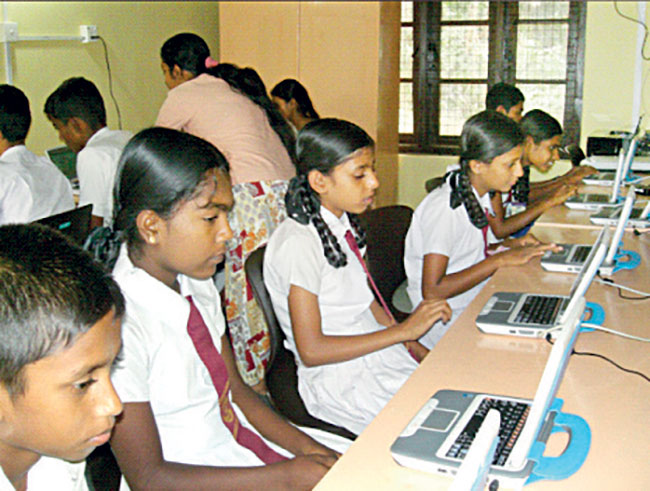
Interactive Computer Facility at a Rural School in Morahela
Canada’s top universities are known to be Toronto, British Columbia, and McGill. McGill University is located in the city of Montréal, within the French-speaking province, Québec. I had the opportunity to visit Montréal for conferences. Québec is the only province where French is given priority. Road signs, advertisements, restaurant menus, everything is in French. Locals address you in French first and switch to English only if you cannot respond in French.
Despite this, most residents in Québec speak English fluently but prefer not to display it. The food, drink, and customs all follow French traditions. Montréal itself is a delightful city, home to over 2,000 restaurants offering cuisines from 30 different countries. Its notable landmarks include the St. Lawrence River, Mount Royal and Laurentian Mountains, and Notre-Dame Basilica. Winters bring heavy snow to Québec, while summers are warm and vibrant.
Ottawa, pronounced “Otawa” but sometimes referred to by foreigners as “Otāwa,” is the capital city of Canada, and is located in the province of Ontario. It is relatively close to Toronto and Montreal and is known for its cold climate. Country’s Parliament buildings are located in Ottawa, and are particularly striking and a key attraction.
Edmonton is the capital city of the province of Alberta and is also situated in a cold region. Known for its wealth of oil and mineral resources, Alberta is a prosperous province with a lower cost of living and taxation. Traveling by car from Vancouver to Edmonton takes approximately 14 hours via the Trans-Canada Highway. Along the way, it is common to spot wildlife such as bear and moose, which often approach the roadside, gazing at the people who stop their vehicles to admire them. It’s as if they are observing us, imagining our world to be part of their vast sanctuary. Interestingly, it is not uncommon for humans to act more uncivilized than these creatures. Feeding the wildlife is strictly prohibited. Edmonton is also home to a massive shopping complex that features a hotel and a water park. I had the privilege of visiting the University of Alberta in Edmonton as an invited guest speaker and also as an external examiner for PhD.
Saskatoon, the principal city of Saskatchewan, a central province in Canada, is notable for its large population of First Nations people (occasionally and incorrectly referred to as Red Indians). The city is surrounded by vast, flat plains and is known for its extremely cold climate. I was fortunate to visit the University of Saskatchewan in Saskatoon as an external examiner for doctoral programs.
The other cities that I have visited in Canada include Halifax and Truro in the province of Nova Scotia, St John’s in Newfoundland, and Winnipeg in Manitoba, mainly for conferences and visits to universities.
This ends my story about Toronto and Canada.
by Clarence de Silva


 Looking back over the years since the 9/11 catastrophe, it could be said that barring former Iranian President Mohammad Khatami no world political leader of note has made an earnest effort to change the nature of global political discourse for the better. Khatami won world acclaim for his pronouncement that the time is right to launch and sustain a ‘Dialogue among Civilizations’.
This was in marked contrast to US political scientist Samuel P. Huntingdon’s epochal theses, formulated in the wake of 9/11 and other global political tumults that the Post Cold War era is essentially one of conflicts among civilizations. That is, people’s identity markers, such as culture and religion, are the prime shaping forces of international conflicts.
From a Political Realism standpoint, Huntingdon’s theory may seem to have gained in credibility over the years but it is Khatami’s pronouncement that has evoked an empathetic response in the hearts and minds of publics world wide. So much so, 2001 was proclaimed by the UN General Assembly as the ‘Year of Dialogue among Civilizations’.
It could be said that the latter proclamation was an endeavour to give back to humans their essential identity of peace-makers. It was an eschewing of the position that war and conflict are central to the human condition and amounted to upholding constructive dialogue among peoples and civilizations as a path to peace.
That things have not worked out in the world in keeping with the expectations of peace makers does not in any way invalidate the thesis that peace is the essential propensity of humans.
If peace-making is seemingly ineffective it is primarily because the path to peace is narrow, tortuous and time-consuming. On the other hand, violence usually misleadingly recommends itself to the human as the more expedient, cost-effective way out of a conflictual situation. However, the ultimate cost of the latter approach is prohibitive because it brutalizes the human beyond recognition.
Some of the evidence is before our eyes. The Trump administration, for example, has, minus much forethought, unleashed what may be described as a ‘quick-fix’ war against Iran but is now finding that it is in a veritable military quagmire in West Asia. The priority for the administration now seems to be a face-saving escape strategy. Such are the costs of the war option.
However, there is no denying that much remains to be done by the world community to bring peoples and cultures together with a view to enabling them to work as one for the cause of a less dangerous world.
Meanwhile, the broad divisions in international politics continue and past political polarities are lingering to the detriment of enhanced international understanding. The East and the West and the South and the North, for instance, are continuing to work in separate collectives, more or less, and no notable efforts are being made by the international community to bring these sides together for the purpose of united constructive action that could usher greater international well being.
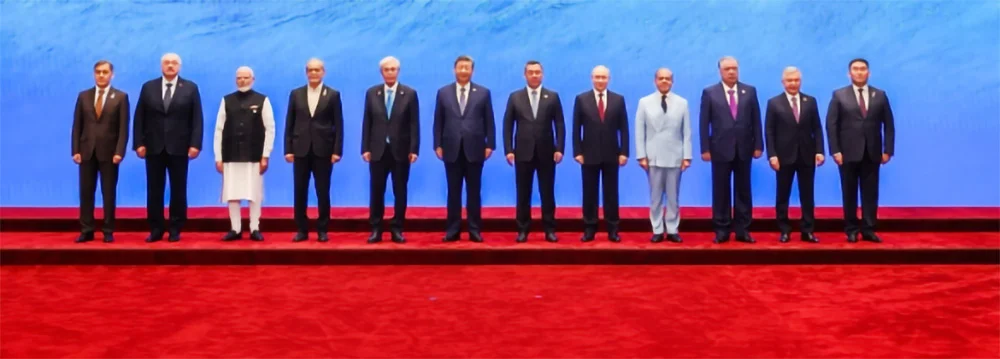
The recent Shanghai Cooperation Organization Summit, 2026, held in Kyrgyztan was a replication of the above broad trends but there were some statements at the forum by Indian Prime Minister Narendra Modi that deserve special scrutiny and comment.
Modi was quoted saying among other things: ‘The land of Gandhi and the land of Buddha share a single message: the path to peace!..We must move away from endless war towards an end to the war. This is essentially for the well being of humanity. A peaceful resolution to all issues at the earliest is the call of humanity, and this is India’s message.’
The above is the language of international peace and unity. It is such language that will help in building bridges among civilizations and advance the cause of world peace. Besides, it will help bring a measure of understanding between North and South.
In this regard, the Trump administration could take a leaf or more from the Modi government. Unless it makes a ‘U turn’, as it were, in the direction of peace and reconciliation it is very unlikely that the US and the world would experience any stability worth speaking of.
Right now the US is savaging the sovereignty of Venezuela. It is a question of the ‘Empire striking back’ but Venezuela is a far cry from Iran. Iran has outsmarted the US on the battle field and is in a position to influence broad trends in the world economy since it still has control over the Hormuz Straits. That is, Iran could exercise a determining influence over world oil, gas and energy prices. In short, the US consumer’s future peace of mind is very much in the hands of Iran.
Given the above backdrop it should have dawned on the US political leadership that working towards cordial relations with Iran is the most advisable option. The US, simply, has too much to lose otherwise.
Likewise, Russia too needs to take a leaf from India. It is plain to see that its invasion of Ukraine is proving totally ineffective. It has not brought any measure of peace for the Russian people. Russia is right now experiencing a rerun of its military misadventure in Afghanistan. On the other hand, sections of the peoples concerned have been victimized and even brutalized.
Accordingly, there needs to be a coming together of democratic opinion worldwide for a fresh consideration of the options facing humanity. There is a dire need for value-based politics to take the place of Realpolitik. Besides, the language of peace and humanity needs to replace current divisive discourse with its stress on polarities and antagonisms.
International organizations of the stature of the UN need to take the lead in spearheading the above initiatives. Right now the UN gives the impression of being a spent force. This columnist hopes that he would be proved wrong on this score because the UN remains the only hope of the poor and victimized. It will be in the interests of all peoples for the UN to rejuvenate itself and dedicate itself increasingly enthusiastically to the cause of international peace.
Whether it be the South or North, dynamic, visionary political leadership and direction emerges as essential. The need is for voices that would espouse peace and accord across boundaries and divisions. For South Asia, India and Pakistan have the potential to fill this lacuna.
by Shelton Dharmaratne
Sri Lanka has reached an important constitutional moment.
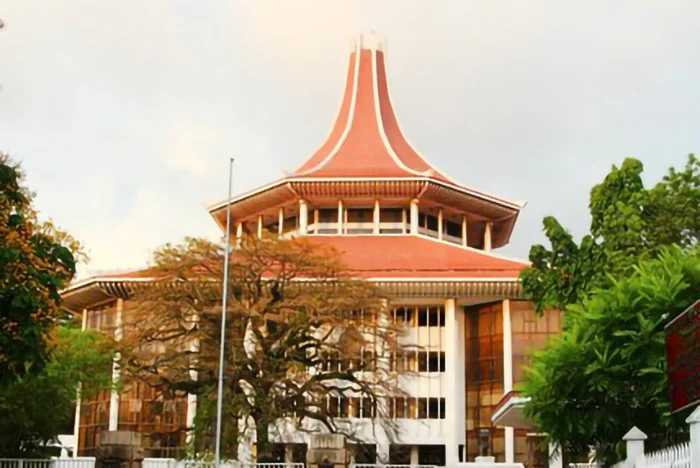
The proposed 22nd Amendment has moved beyond political debate and into the constitutional process through which its validity will be examined. That development should change the character of the national discussion.
That is understandable in a politically contested environment. But Sri Lanka should now resist reducing a question of constitutional design to a contest over political positions.
The deeper issue concerns the relationship between constitutional reform, judicial independence and public confidence in the institutions of the State.
The Supreme Court will determine the constitutional questions before it. Public commentators should therefore exercise restraint in predicting, interpreting or seeking to influence that determination. But restraint does not require silence. It requires a more rigorous discussion of the institutional principles at stake.
A narrower constitutional question than the political debate suggests
The proposed amendment principally concerns the retirement ages of judges of the Supreme Court and Court of Appeal, together with an increase in the maximum number of judges permitted on the Court of Appeal.
Under the proposal, the retirement age of Supreme Court judges would rise from 65 to 67 and that of Court of Appeal judges from 63 to 65. The maximum number of Court of Appeal judges would also increase from 19 to 24.
Other proposed changes concerning the retirement ages of judges in the lower courts arise under separate legislation. This distinction matters because the public debate has sometimes treated the wider package of judicial reform as though it formed a single constitutional proposal.
Nor should the central issue be reduced to whether retaining experienced judges is inherently good or inherently dangerous. Both propositions are too simplistic.
Sri Lanka faces a substantial burden of pending litigation, and delays in the administration of justice impose significant costs on citizens, businesses and the State. Experienced judges represent an institutional resource. Continuity, accumulated knowledge and familiarity with complex areas of law cannot always be replaced immediately.
Those are legitimate policy considerations.
But the opposing concern is equally important: judicial tenure is not merely an employment condition. It is a structural component of judicial independence.
The real question is institutional
The critical question is not whether an individual judge is capable of acting impartially. It is whether the constitutional structure provides adequate protection against circumstances in which judicial tenure could become connected, directly or indirectly, with political authority.
That is an institutional question, not an accusation against individual judges.
A judge may be entirely conscientious and independent while the institutional arrangements surrounding the judiciary nevertheless create public doubts about independence. Constitutional democracies therefore cannot depend solely on the personal integrity of office-holders. They must construct institutions capable of preserving independence even when governments, individuals and political circumstances change.
This is particularly relevant when constitutional reform concerns the tenure of serving members of the superior judiciary.
The institutional sensitivity of such a proposal should neither be exaggerated into an allegation of improper motive nor dismissed as irrelevant. The appropriate response is transparency, procedural fairness and confidence in constitutional safeguards.
Legitimate objectives do not settle constitutional questions
The government has stated that its objectives include strengthening the administration of justice, addressing delays, retaining judicial experience and increasing institutional capacity.
Those objectives deserve serious consideration. Sri Lanka needs judicial reform. Citizens waiting years for their cases to be concluded experience the justice system very differently from those discussing it in Parliament, courtrooms or universities.
A government is therefore entitled to propose reforms designed to improve judicial efficiency.
But legitimate objectives do not automatically resolve constitutional objections. The relevant question is whether the means chosen are compatible with the constitutional structure and whether sufficient safeguards exist against unintended institutional consequences.
That is precisely why constitutional scrutiny matters.
The concerns of the Bar Association of Sri Lanka (BASL) should likewise be examined without political labelling. Opposition to the proposed changes should not automatically be characterised as opposition to judicial reform or an attempt to obstruct the government. At the same time, invoking judicial independence does not place any argument beyond scrutiny.
The appropriate questions are straightforward:
Does extending judicial tenure strengthen the administration of justice?
What risks, if any, could it create for judicial independence?
Are adequate institutional safeguards in place?
Does the proposal operate prospectively, or does it affect judges already serving?
Could the same objectives be achieved by filling vacancies, increasing judicial capacity, improving court administration and strengthening case management?
These questions can be examined rationally without attributing improper motives to either side.
Judicial vacancies and institutional confidence
Recent concerns raised by the BASL regarding judicial vacancies add another dimension to the debate. The BASL has argued that vacancies in the Supreme Court contributed to the retirement of a senior Court of Appeal judge without promotion to the Supreme Court, despite vacancies having existed. It has also raised concerns regarding forthcoming judicial retirements and the need for timely consideration of appointments.
Such matters should not be treated as evidence of the motives behind the proposed amendment. They do, however, illustrate a broader principle.
Judicial independence is shaped not only by the retirement age written into the Constitution. It is also influenced by how vacancies are filled, how promotions are determined, how seniority and merit are assessed, and whether judicial officers and the public believe that institutional decisions are made according to transparent and defensible criteria.
The government has an opportunity to address these concerns constructively.
Prompt appointments based on publicly defensible principles would strengthen confidence in the judiciary irrespective of the eventual outcome of the constitutional debate.
Seniority, merit and transparent criteria
The controversy also exposes a longstanding question concerning judicial appointments.
Seniority has traditionally carried considerable weight in judicial advancement. Yet seniority alone need not be the sole measure of merit. Conversely, replacing established practices with undefined assessments of “merit” could create another institutional problem.
If governments or appointing authorities can determine which judges are sufficiently meritorious without clear and objective criteria, uncertainty itself may become a source of institutional anxiety.
Sri Lanka would therefore benefit from clearer, objective and defensible standards governing judicial appointments and promotions.
Such standards would protect judges as well as appointing authorities. They would reduce opportunities for favouritism, strengthen institutional confidence and make it harder for political actors to portray every appointment as politically motivated.
Institutional rules are stronger safeguards than assurances of good intentions.
The State is larger than any government
One principle deserves particular emphasis: a government is not the State.
Governments are temporary. The constitutional State is continuing. Political parties change, parliamentary majorities change and political priorities change. The judiciary, however, must continue to function independently of whoever occupies the government benches.
The judiciary is neither a government institution in the political sense nor an Opposition institution. It is an institution of the State whose legitimacy depends upon its independence from both.
For that reason, governments should exercise particular caution when proposing constitutional changes affecting the judiciary, even where the policy objectives are legitimate.
The stronger a government is politically, the greater its responsibility to demonstrate institutional restraint.
That is not political weakness. It is constitutional maturity.
Public confidence is a constitutional asset
The most consequential issue may ultimately be neither retirement age nor judicial capacity, but public confidence.
Courts do not possess political power in the conventional sense. Their authority rests substantially on the acceptance of their decisions as legitimate.
Citizens will sometimes disagree with judicial decisions. But where the judiciary is perceived as independent, even unpopular decisions can command respect. If judicial institutions are perceived as being shaped by political convenience, even legally sound decisions may become vulnerable to suspicion.
Constitutional reform affecting judicial tenure must therefore be evaluated not only by its immediate administrative benefits but also by its effect on institutional credibility.
A reform that produces short-term efficiency while weakening confidence in judicial independence could impose a greater long-term cost. Conversely, reform that improves efficiency while preserving independence can strengthen both justice and public trust.
The challenge is not to choose between judicial efficiency and judicial independence. It is to achieve both.
If a referendum arises …
If the constitutional process ultimately requires approval by the people at a referendum, the debate should rise above the conventional government versus Opposition contest.
The electorate should be given a clear constitutional question and sufficient information to assess it.
Citizens should understand what problem the amendment seeks to address, why the proposed mechanism is considered necessary, what institutional risks have been identified, what safeguards exist and whether alternative measures could achieve the same objectives.
A constitutional referendum deserves a higher standard of public discussion than an ordinary election campaign.
The people would not merely be choosing a political side. They would be deciding the institutional framework within which political power and judicial authority operate.
Beyond who wins
The most important question arising from the proposed Twenty-Second Amendment is therefore not simply whether the government succeeds or whether the Opposition and BASL prevail.
Nor is it ultimately whether judicial retirement ages become 67 and 65 or remain unchanged.
Those are immediate constitutional questions. The deeper issue is what Sri Lanka learns from the controversy.
If the government seeks to modernise and strengthen the justice system, that objective deserves serious consideration. If the BASL and others warn that particular reforms may affect judicial independence, those concerns deserve equally serious examination.
Neither side strengthens the country by assuming that the other is acting in bad faith.
The constitutional system is strongest when legitimate disagreements are resolved through institutions rather than political pressure.
Whatever the eventual constitutional outcome, Sri Lanka will still face the underlying challenges of judicial vacancies, case delays, institutional capacity, judicial appointments and public confidence. Those problems will not disappear with a judicial determination, nor should the national conversation end there.
Sri Lanka should instead seek a broader consensus around a fundamental proposition:
Judicial reform and judicial independence are not competing objectives.
The real challenge is to pursue reform in a manner that strengthens the judiciary without placing its independence under suspicion.
That requires sound legislation, transparent appointments, adequate resources, efficient court administration, responsible political conduct and safeguards capable of surviving changes of government.
The present controversy will eventually pass. Political arguments surrounding it will fade.
But constitutional arrangements can endure for decades.
That is why Sri Lanka must look beyond the immediate political contest.
The ultimate test is not who wins today’s constitutional argument. It is whether, when the political moment has passed, Sri Lanka has a judiciary that is more efficient, more accessible and more trusted—while remaining sufficiently independent to hold every government, including future governments, within the boundaries of the Constitution.

 Sri Lanka’s fashion world lost one of its brightest stars Monday morning – veteran model, actress, and elite pageant trainer Chulpadmendra “Chula” Kumarapathirana.
Her sudden demise has certainly come as a shock to many.
Chula had just completed a major event on Sunday (30th August), and was no more in the land of the living the following day (31st August).
Born in Colombo, she was an old girl of Buddhist Ladies’ College and later studied at the National Institute of Business Management, and has many awesome achievements to her credit.
In 2006, she won the “Miss Tourism Model of the World Press Award” in Tanzania.
She entered the entertainment industry, as an actress, and gained popularity through the teledrama “Wahinna Muthu Wessak.”
Chulpadmendra has been on TV, and many Sri Lankan hip-hop music videos, including “Hanthane” and “Heena Hirimal”, and has had several other minor acting jobs since then.
She hosted the Derana Miss Sri Lanka for Miss World 2008 and even participated in the reality TV show Sirasa Dancing Star.
For over 25 years Chula was active in local and international fashion and founded the Chulpadmendra Catwalk Studio to train young newcomers
She trained hundreds of models for runway, photoshoots, auditions, and international pageants.
She was known as a fierce mentor who believed in “not just learning to walk, but learning to command the runway”.
Many young models called graduating from her studio their “happiest moment.”

Chulpadmendra “Chula” Kumarapathirana: Many young models called graduating
from her studio their “happiest moment.” (L)/ Won the “Miss Tourism Model of the World Press Award” in Tanzania (R)
Chula was very fond of The Island newspaper and kept in touch with us on a regular basis.
Her last message to The Island was a ‘thank you’ note for the article ‘New benchmark in pageant industry’:
“Thank you, Ivan, for writing such a beautiful article about me. Your unwavering support, encouragement, and belief in me throughout my career mean more than words can express. I am truly grateful for your kindness and generosity.
“My heartfelt thanks also go to The Island newspaper for featuring the article. It is a great honour, and I sincerely appreciate the recognition and support.
“Thank you once again.”
In fact, just a couple weeks ago, she sent a photo of herself for our Glam Scene and that picture I publish today, as part of this story.
May she rest in peace. Our deepest condolences to her family, students, and all who loved her.

India to host inaugural Women’s Champions Trophy in February

Sun directly overhead Madampe, Thorayaya, Thotagamuwa, Rattota and Kalavanchikudy about 12.09 noon today (03)

Afternoon thundershowers in the Northern, North-central, Eastern and Uva provinces in next few days, starting from today (03).

22A: SC urged to suspend hearing, appoint full bench

Govt. seeks NATO assistance

Recent ‘Ice’ detection at the Colombo Port made on US intelligence – Embassy

‘Dates have the highest sugar content to fight Coronavirus’

Sunday Island 27 December – Headlines

#SundayIsland 17th December – Headlines

Sunday Island – 28th March

Sunday Island Headlines – 21 March

Sunday Island – 21st February – Headlines
-

 News7 days ago
Eight politicians in drug kingpin probe
-

 Features5 days ago
“Wrap Me Up in My Blazer”— A Gentlemanly Bradby Reminiscence
-

 Business7 days ago
Sri Lanka opens up: A new season of direct connectivity
-

 Features4 days ago
When Sri Lankan stories find their own voice
-

 Features7 days ago
Redefining ageing in Sri Lanka
-

 Editorial7 days ago
The toxic legacy of two lakes
-

 Business7 days ago
Jaffna Teaching Hospital secures lifeline water supply via ADB-funded Thalaiyadi sea water desalination plant
-
 Features5 days ago
JVP/NPP government as seen from outside by Lionel Bopage now domiciled in Australia