
News
Lanka engages UAE business leaders to promote Port City as South Asian gateway


(Constructiononline) The Embassy of Sri Lanka in the United Arab Emirates and the Consulate General of Sri Lanka in Dubai and the Northern Emirates, in collaboration with Colombo Port City Economic Commission and CHEC Port City Colombo Pvt. Ltd., hosted Globalisation and the Sri Lankan Opportunity – From Recovery to Relevance: Sri Lanka’s Moment in the Evolving Global and Regional Economy, an invitation-only diplomatic and investment engagement at The Ritz-Carlton, Dubai International Financial Centre.
The forum brought together approximately 200 senior leaders from across UAE corporates and business chambers alongside Sri Lanka’s most senior diplomatic and investment representatives – among them senior executives from Sobha Realty, Binghatti, Oracle, Emirates Airlines, First Abu Dhabi Bank, JLL, Cushman & Wakefield, CBRE, IFS, Danube and Samana Developers – reflecting the depth of interest from the UAE’s leading industries in Sri Lanka’s evolving economic proposition.
Opening the forum, Prof. Arusha Cooray, Ambassador of Sri Lanka to the United Arab Emirates, set the tone for a morning of substantive dialogue, speaking to the depth and durability of the UAE–Sri Lanka partnership, one built on decades of trade, people, and shared economic ambition, and affirming Sri Lanka’s commitment to taking that relationship into a new chapter defined by what Sri Lanka can offer UAE businesses seeking to grow their presence across South Asia.
The keynote address was delivered by Ghanim Al Falasi, CEO of Falak Tayyeb Platinum and Senior Vice President/Director General’s Office for of Dubai Silicon Oasis (DSO), who drew on over a decade of senior leadership experience in the UAE’s innovation and technology ecosystem to frame the question of what South Asia’s emerging platforms offer to forward-looking UAE businesses. He noted that while Dubai provides global access to capital and logistics, Colombo offers strategic access to South Asia, and that together the two cities can function as complementary platforms serving different but mutually reinforcing roles in the regional economy.
Hanif Yusoof, Presidential Special Envoy for Foreign Investment of Sri Lanka, delivered strategic perspectives on Sri Lanka’s investment vision, underscoring the President and Government’s commitment to Port City Colombo as the flagship vehicle for the country’s long-term economic transformation. Yusoof positioned Sri Lanka firmly as a transformation story rather than a recovery story, emphasising that Sri Lanka today offers UAE businesses something rare in South Asia – a jurisdiction that combines regional proximity with genuine institutional credibility, anchored in a platform that is operational, investable, and ready. He invited UAE businesses to see Port City Colombo and Sri Lanka as a gateway to South Asia in the same way that Dubai serves as a gateway to the Middle East and North Africa, enabling businesses already established in the Gulf to expand their regional footprint without starting from scratch.
Harsha Amarasekera PC, Chairman of the Colombo Port City Economic Commission, provided a detailed overview of Port City Colombo’s current commercial momentum, the strong investment interest that has crystallised in the last 12-18 months resulting in significant visible progress. The Chairman emphasised that the project is designed as a complementary, supportive, and collaborative platform – one that offers UAE companies a footprint from which to expand into South Asia, rather than a competing proposition to the Gulf’s established business ecosystem.
Revan Wickramasuriya, Director General of the Commission, elaborated on the governance architecture underpinning Port City Colombo, highlighting the investor protection mechanisms, long-term tax incentives, and rules-based regulatory environment that distinguish the SEZ, noting that the framework was designed from inception to meet the expectations of internationally mobile capital.
The centrepiece of the forum was a moderated panel discussion that drew all these threads together, exploring the global reconfiguration of business operating models, the deepening relationship between the Gulf and South Asia, and Sri Lanka’s specific role within that emerging picture. Moderated by Kris Wadia, the panel featured experts in their respective industries – Aaron Russell-Davison, Skandan ‘Ramesh’ Mahalingam, Bapsy Dastur and Thulci Aluwihare – whose combined perspectives across international capital markets, legal and governance advisory, UAE business development, and real estate produced a substantive and wide-ranging conversation that resonated strongly with the audience.
With the aim of deepening investment ties in the Gulf region, the forum also marked the ceremonial onboarding of Mujtaba Shaikhani, Founder and Principal of MH Investments and Managing Director of Gulf O Flex, as a Strategic Partner and Director for GCC and Pakistan of CHEC Port City Colombo (Pvt) Ltd. With operations spanning the UAE, Saudi Arabia, and Sri Lanka, and recognised on the HVAC Power 30 list and as CEO of the Year by CBN Middle East.
The formal programme concluded with a vote of thanks delivered by Hon. Alexi Gunasekera, Consul General of Sri Lanka in Dubai and the Northern Emirates, who spoke to the significant potential he sees in UAE–Sri Lanka trade and his efforts to broaden interest across the Middle East and UAE in what Sri Lanka has to offer. He underscored that Sri Lanka had not come to Dubai to tell a story of the past, but to extend an invitation to be part of the story being written now – one in which UAE businesses and investors have a defining role to play.
Xiong Hongfeng, Managing Director of CHEC Port City Colombo (Pvt) Ltd, reflected on the significance of the forum for Port City Colombo’s regional outreach. “The interest we have seen at this forum from some of the UAE’s most significant businesses and investors is a reflection of what Port City Colombo represents: not just a development in Sri Lanka, but a platform for South Asia; one that offers the regulatory clarity, physical quality, and regional connectivity that globally mobile businesses and capital have been looking for.”
The forum marks a significant step in Sri Lanka’s structured engagement with the Gulf investment community, and reinforces Port City Colombo’s positioning as the institutional platform through which South Asia’s next chapter of growth becomes accessible to UAE businesses and investors. The event was the culmination of close coordination between the Consulate General of Sri Lanka to Dubai and the Northern Emirates and Port City Colombo, with the Consulate General’s office playing an instrumental role in ensuring the successful delivery of an engagement that reflected the depth and ambition of the bilateral relationship.


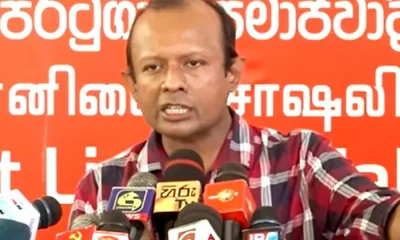

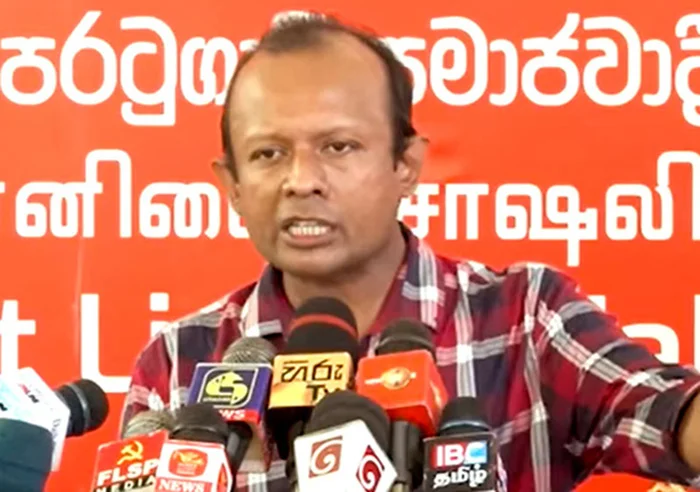
The Frontline Socialist Party (FSP) yesterday accused the government of seeking to use the proposed Protection of the State from Terrorism Act (PSTA) to suppress popular political activity, claiming that some of its provisions were more repressive than those of the Prevention of Terrorism Act (PTA).
FSP Education Secretary Pubudu Jayagoda told a media briefing, in Nugegoda, that the definition of terrorism in the Bill was so broad that it could be used to label almost any form of popular political activity as terrorism.
He said the Bill’s approach to defining terrorism was based largely on attempts to compel a government, or an international organisation, to do, or refrain from doing something, rather than on internationally recognised criteria, such as killings, causing serious bodily harm, kidnapping or acts intended to spread terror among the public.
Jayagoda also alleged that the Bill transferred substantial powers from the judiciary to the executive, while extending powers of arrest, investigation and detention to the armed forces, in addition to the police.
He claimed that the government had sought to portray the Bill as a replacement for the PTA while retaining or introducing provisions that could facilitate political victimisation and repression.
The FSP also questioned the government’s decision to proceed with the Bill, despite having previously sought public views on an earlier draft.
Jayagoda said a draft had been published earlier this year, with the period for public submissions ending on February 28, but the Bill subsequently gazetted was essentially the same draft with some provisions rearranged.
Jayagoda also referred to a letter reportedly sent by Attorney-at-Law Saliya Peiris, a member of a Committee, chaired by President’s Counsel Rienzie Arsecularatne, that had been appointed to draft the legislation. He said Peiris had stated, in the October 06 letter, that changes had been made to the draft prepared by the Committee.
“This means that even the Committee, appointed to prepare the Bill, was a deception,” Jayagoda alleged.
He said that the PSTA was fundamentally similar to the Anti-Terrorism Bill introduced by the previous government, in 2023, which the National People’s Power (NPP) opposed and challenged in court.
“If the NPP opposed that Bill then and is now bringing the same legislation before Parliament, the government must explain its position,” he said.
Jayagoda called on NPP MPs to oppose the PSTA in Parliament and urged trade unions and other groups to build a broad public movement against the legislation.
He challenged the government to an open debate on the Bill.
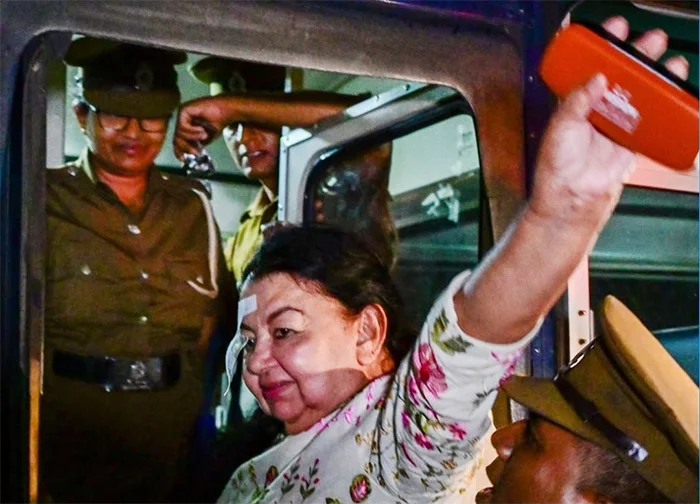
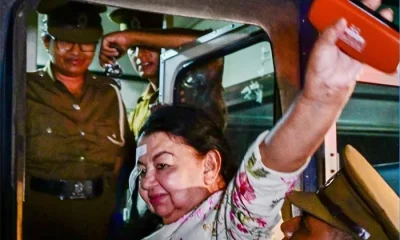
Former First Lady Shiranthi Rajapaksa was yesterday remanded until 13 October after being produced before the Colombo Magistrate’s Court following her arrest by the Commission to Investigate Allegations of Bribery or Corruption (CIABOC).
Shiranthi, wife of former President Mahinda Rajapaksa, was arrested at her residence on Poorwarama Road, Kirulapone, after CIABOC officers recorded a statement from her for nearly two hours.
According to the CIABOC, the arrest was made over allegations that Rs. 10 million obtained from the National Savings Bank through the Siriliya Saviya organisation was misappropriated.
The money was allegedly obtained to provide a Computed Tomography (CT) scanner to the children’s hospital. Investigators allege that the scanner was not provided and that the funds were instead unlawfully used.
CIABOC is investigating alleged offences under the Public Property Act and corruption-related provisions in connection with the transaction and other financial activities involving Siriliya Saviya, which was headed by Rajapaksa.
Rajapaksa returned to Sri Lanka on Monday night on a flight from Malaysia after travelling overseas for medical treatment. She left for Singapore on 16 September after being admitted to a private hospital in Colombo on 15 September following an illness.
She had been due to appear before the Financial Crimes Investigation Division (FCID) on 13 October in connection with its investigation into the financial affairs of Siriliya Saviya.
Meanwhile, her lawyers filed an anticipatory bail application before the Maligakanda Magistrate’s Court on Monday, seeking an order preventing her arrest in connection with the FCID investigation.
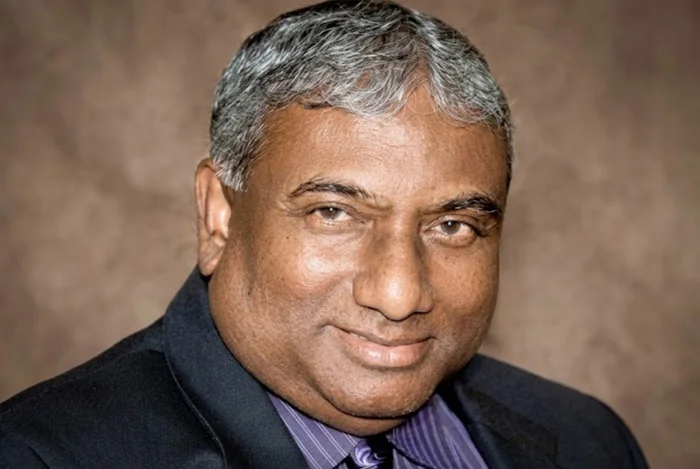
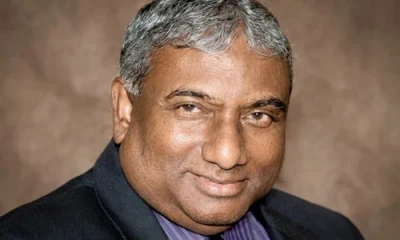
Former National Savings Bank (NSB) Chairman Pradeep Kariyawasam was yesterday granted bail by the Colombo Magistrate’s Court following his arrest by the Commission to Investigate Allegations of Bribery or Corruption (CIABOC).
Kariyawasam, husband of former Chief Justice Shirani Bandaranayake, was arrested in connection with the Bribery Commission’s investigation into the ‘Siriliya Saviya’ account linked to former First Lady Shiranthi Rajapaksa.
The investigation concerns financial activities involving the Siriliya Saviya initiative, which was headed by Rajapaksa, wife of former President Mahinda Rajapaksa.
CIABOC is continuing investigations into the alleged financial irregularities relating to the account.

Showers above 100 mm are likely at some places in the Western, Sabaragamuwa, Central, Uva and Southern provinces and in Anuradhapura district

PSTA worse than PTA: FSP

Shiranthi R remanded until 13 Oct.

Former NSB Chairman Kariyawasam granted bail

Katchatheevu row: India SC urges fishermen to avoid Sri Lankan waters

Remembering Juvenal, Coke, Acton and Machiavelli

‘Dates have the highest sugar content to fight Coronavirus’

Sunday Island 27 December – Headlines

#SundayIsland 17th December – Headlines

Sunday Island – 28th March

Sunday Island Headlines – 21 March

Sunday Island – 21st February – Headlines
-

 Editorial7 days ago
Colombo Port drug bust: The plot thickens
-

 Features5 days ago
The first woman in the foreign service or Ceylon Overseas Service it was then called
-

 Editorial6 days ago
Fuelling discontent and protest
-

 News4 days ago
Geneva takes up Sallay’s case and govt. ignores opportunity to answer accusations
-
 Foreign News5 days ago
Ten injured after car crashes into rugby supporters in Australia
-

 Latest News5 days ago
Tharindu Rathnayake, bowlers secure Asian Games Bronze for Sri Lanka
-

 News5 days ago
Nearly 20 Iranian tankers stranded off Lanka amid US sanctions
-

 Features4 days ago
Sri Lanka Cricket Bill: Governance reform is not yet a cricket strategy