
News
Parliament in turmoil over unseating of Ramanayake

By Saman Indrajith
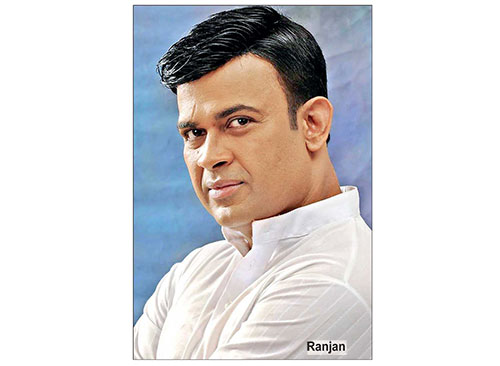
Parliament sittings were suspended for several minutes yesterday following an uproar over the unseating of SJB’s Ranjan Ramanayake, who is currently servig a jail term. The SJB MPs staged the protest after Speaker Mahinda Yapa Abeywardena announced that Ramanayake had lost his parliamentary seat owing to his conviction by the Supreme Court and incarceration.
The Speaker said: “I wish to bring to the notice of the House the correct position in respect of the letter that was sent by the Secretary General of Parliament informing the Chairman of the Election Commission that a vacancy has occurred in the membership of the Ninth Parliament due to the fact that Ranjan Ramanayake Member of Parliament for the Electoral District of Gampaha has ceased to be a Member of Parliament in terms of Article 66(d) of the Constitution of the Democratic Socialist Republic of Sri Lanka.
Ranjan Ramanayake was convicted by the Supreme Court on 12th January 2021 for the offence of contempt of court punishable under Article 105 (3) of the Constitution and was sentenced to a term of 4 years rigorous imprisonment. The conviction by the Supreme Court attracted the provisions of the Article 66 (d) of the Constitution which reads that “The seat of a Member shall become vacant if he becomes subject to any disqualification specified in Article 89 or 91. The Article 89 (d) of the Constitution goes on to say that ” No person shall be qualified to be an elector at an election of the President, or of the Members of Parliament or to vote at any Referendum if he is subject to any of the following disqualifications, namely, if he is serving or has during the period of seven years immediately preceding completed serving of a sentence of imprisonment (by whatever name called ) for a term not less than six months imposed after conviction by any court for an offence punishable with imprisonment for a term not less than two years or is under sentence of death or is serving or has during the period of seven years immediately preceding completed the serving of a sentence of imprisonment for a term not less than six months awarded in lieu of execution of such sentence ; Provided that if any person disqualified under this paragraph is granted a free pardon such disqualification shall cease from the date on which the pardon is granted.
Accordingly, by operation of the law Ranjan Ramanayake would cease to be a Member of Parliament from the date the conviction was entered upon by the Supreme Court. However, Ranjan Ramanayake through his lawyers, petitioned the Court of Appeal by way of a writ application that by virtue of the conviction he would not lose his seat and requesting the court to grant a prohibition or a restraining order preventing the Secretary General of Parliament from informing the Chairman of the Election Commission that a vacancy has arisen in the ninth Parliament consequent to Ranjan Ramanayake vacating his seat. The Court of Appeal has not accepted this position and has dismissed the case without issuing any formal notice to the Respondents. With the dismissal of the writ application before the Court of Appeal the temporary restraining order issued by the Court of Appeal preventing the Secretary General of Parliament from informing the Chairman of the Election Commission regarding the vacancy has also ceased to exist.
In the circumstances, once all the above requirements are fulfilled under Article 89 (d) of the Constitution to quote the very Order of the Court of Appeal in the writ matter in connection with this case it is stated as follows; “I do agree with the submission of the learned Senior Additional Solicitor General that the act of sending a communication to the Election Commission under Section 64 (1) of the Parliamentary Elections Act would tantamount to a physical act by the 1 st Respondent short of an exercise of power. In other words, with a vacancy staring in his face the Secretary General has no option but he is required by law to inform the Election Commission of such vacancy. In doing so he is carrying out a purely ministerial act. I have already referred to the fact that the exercise of a purely ministerial act is not subject to be quashed by a writ of certiorari nor is such an exercise subject to any restriction by a writ of prohibition. If the Secretary General fails to act at that stage, a writ of mandamus would lie to compel him to perform his legal duty.”
The reason for me to make this announcement is that yesterday in the House, the Leader of the Opposition made a statement that the Secretary General of Parliament has taken steps to inform the Chairman of the Election Commission that Ranjan Ramanayake has vacated his seat due to non-attendance of Parliament for a period of 3 months and the non-acceptance of his leave motion also contributed to this situation. As indicated above, I would like to inform the Leader of the Opposition that this position is not correct and the vacation of seat by a Member of Parliament for non-attendance for 3 months is envisaged in the Constitution in Article 66 (f) whereas the letter sent by the Secretary General is under Article 66 (d) the content of which has been explained above.
I wish to bring this matter to the notice of the House to provide greater clarity on this issue.”
SJB MPs wore black armbands to voice their objection to the decision taken by the Speaker to remove MP Ramanayake’s Parliamentary seat.
Opposition Leader Sajith Premadasa accused Speaker Mahinda Yapa Abeywardena of being part of a conspiracy to remove Ramanayake from Parliament.
Following their protest, the sittings were suspended and after several minutes the House resumed its sittings.


Latest News
Let us dispel the roots of greed, hatred, and delusion, and transform our lives into a nobel period that brings peace and serenity – PM

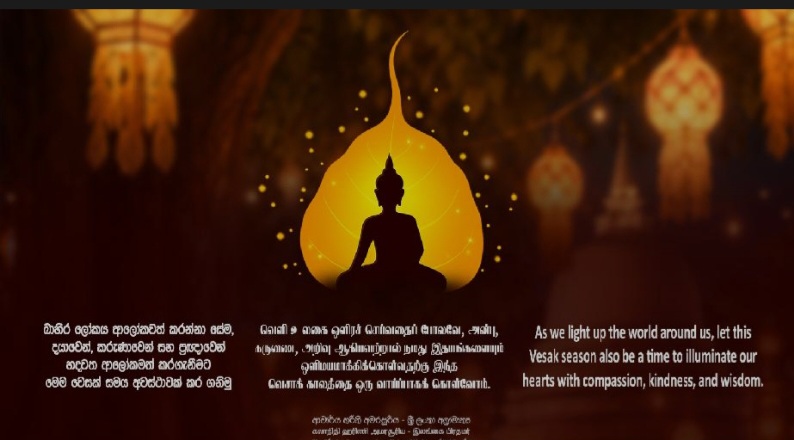
Prime Minister Dr Harini Amarasuriya in her Vesak day message called upon all Sri Lankans to dispel the roots of greed, hatred, and delusion, and transform their lives into a nobel period that brings peace and serenity
The Prime Ministers Vesak day message:
“It is an honor to extend Vesak day felicitations to all citizens of the nation during this sacred period in which lives are shaped in accordance with the noble teachings preached by Lord Buddha, and upholding the practice of Dhamma.
Just as the external world is illuminated by lanterns, this Vesak season should also be an opportunity to illuminate our own hearts with compassion, kindness, and wisdom. Let us dispel the roots of greed, hatred, and delusion, and transform our lives into a nobel period that brings peace and serenity.
“abhittharetha kalyāṇē” – Let us hasten towards the common good. The theme for this year’s State Vesak festival reflects the social needs of the present time. While eliminating narrow beliefs and mindsets, this Vesak festival should become a source of blessings and strength for us to build a nation dedicated to the common good and radiant with the values of the Dhamma.
Followed by the guidance of the Mahanayake Theros and the All Island Sasanarakshaka Mandalaya, I extend wishes for the State Vesak Festival, jointly organized by the Ministry of Buddhasasana, Religious and Cultural Affairs and the Ministry of Public Administration, Home Affairs, Provincial Councils and Local Government.
Through the deep bond that exists between the state and” Buddhism, the progress and prosperity of the country can be achieved through righteous governance. It is essential that we cultivate the patience needed to overcome the economic and social challenges we face as a nation, founded on the noble ideal of “May all beings be well, happy and at peace” where justice is ensured for all regardless of caste, race, or religion.
I respectfully invite all of you to join in celebrating an environmentally conscious and nature-friendly Vesak, walking the Middle Path. Let us move forward together towards a society grounded in principled conduct.
May everyone be blessed with a peaceful and meritorious Vesak!
News
Prime Minister and United Nations Resident Coordinator discuss post-Ditwah recovery and humanitarian cooperation
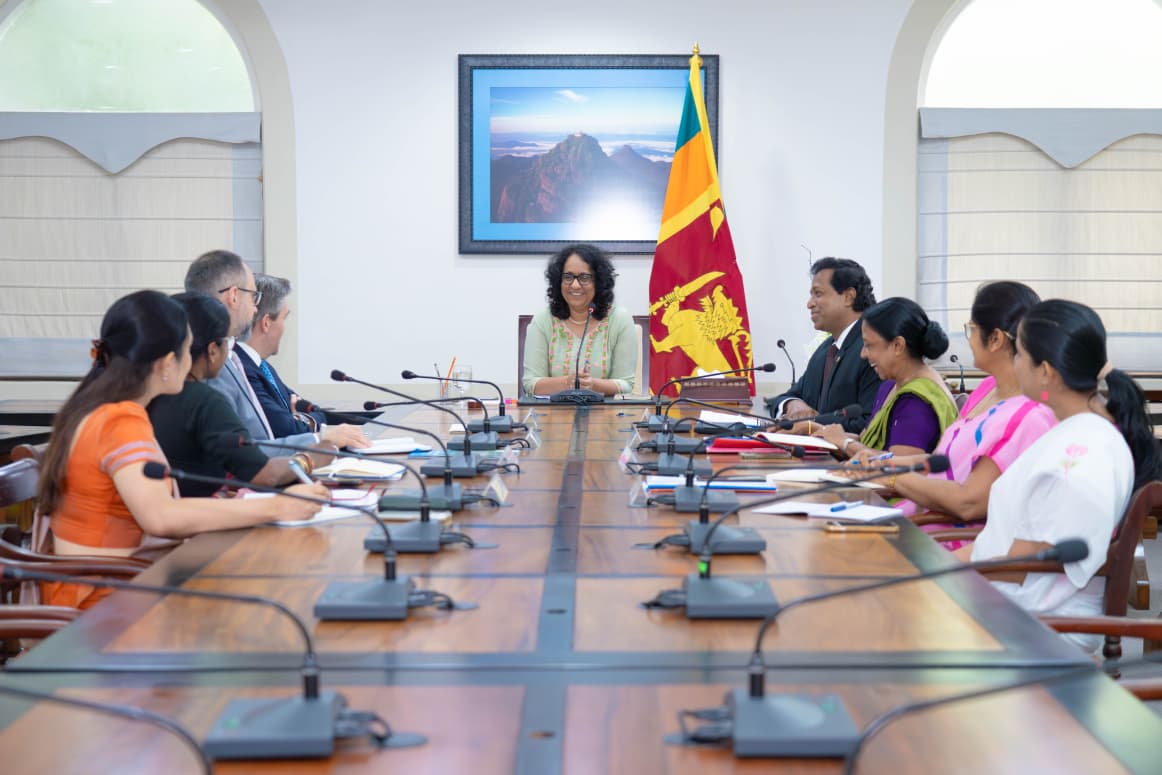
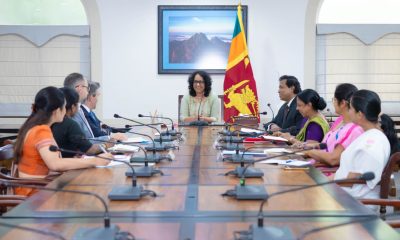
Prime Minister Dr. Harini Amarasuriya met with the United Nations Resident Coordinator in Sri Lanka, Marc-André Franche, at Temple Trees on Friday (29 May) to discuss post-Cyclone Ditwah recovery efforts and continued humanitarian cooperation between Sri Lanka and the United Nations.
Particular attention was drawn to the Humanitarian Priority Plan (HPP), launched in December 2025 to support communities affected by the cyclone. The initiative concluded on 30 April 2026 after providing humanitarian assistance to vulnerable populations across 25 districts through the collective efforts of 81 partner organizations.
The discussions highlighted the Government recognized the substantial international support mobilized through the HPP and noted the importance of sustained collaboration to ensure that recovery gains are maintained.
During the discussion the United Nations delegation formally presented the latest SRI LANKA Cyclone Ditwah Situation Report to the Prime Minister.
(Prime Minister’s Media Division)
Latest News
Further embrace the values of Buddhism founded upon non-violence, compassion and boundless loving-kindness towards all living beings – President
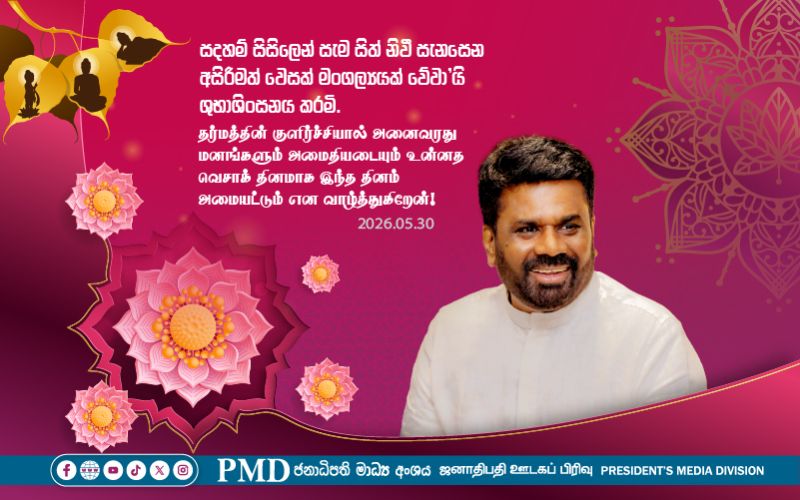
President Anura Kumara Dissanayake in his Vesak day message called upon all Sri Lankans to further embrace in their lives the values of Buddhism founded upon non-violence, compassion and boundless loving-kindness towards all living beings.
The full text of the Presidents message:
The Vesak festival, which commemorates the three pivotal milestones in the life of Lord Buddha: his birth, his attainment of enlightenment, and his passing (Nirvana), is the most sacred celebration for Buddhists across the world. The people of Sri Lanka, heirs to a proud culture enriched by Buddhist heritage, join Buddhists worldwide in devoutly observing this noble occasion.
Buddhism is the greatest philosophical teaching to have conveyed to the entire world a timeless and practical message of peace. The entirety of the Dhamma preached by the Gautama Buddha is founded upon the Four Sublime Virtues of loving-kindness, compassion, empathetic joy and equanimity.
Furthermore, peace, coexistence and reconciliation constitute the supreme teachings expounded not only by the Buddha but also by all enlightened teachers. Buddhism teaches that, in order to establish peace in the external world, inner spiritual peace within the individual must first be secured. We must recognise that this inward and peaceful approach, as advocated by Buddhism in guiding society towards collective noble objectives, is more relevant today than ever before. I believe that this was also the message brought to Sri Lanka recently by the Vietnamese monk Venerable Pannakara Thero, who undertook a pilgrimage on foot across the country.
Moreover, the celebration of Vesak is not merely a religious observance, but also a magnificent cultural festival that has, for thousands of years, reflected Sri Lankan identity, solidarity and artistic creativity. It is indisputable that the programmes organised alongside Vesak celebrations, giving prominence to acts of religious observance such as almsgiving, the observance of sil, meditation and Dhamma sermons, as well as the devotional offerings and festivities including dansals, Buddhist devotional songs, beautifully crafted lanterns and splendid pandals, greatly contribute towards fostering mutual understanding, reconciliation and coexistence among communities.
Inviting all people to further embrace in their lives the values of Buddhism founded upon non-violence, compassion and boundless loving-kindness towards all living beings, I extend my heartfelt wishes for a blessed Vesak festival in which all hearts may find peace, comfort and serenity through the soothing grace of the Dhamma.

Let us dispel the roots of greed, hatred, and delusion, and transform our lives into a nobel period that brings peace and serenity – PM

Prime Minister and United Nations Resident Coordinator discuss post-Ditwah recovery and humanitarian cooperation

Further embrace the values of Buddhism founded upon non-violence, compassion and boundless loving-kindness towards all living beings – President

Showers will occur at times in the Western, Sabaragamuwa and North-western provinces and in Galle, Matara, Kandy and Nuwara-Eliya districts

IMF urges Lanka not to meddle with exchange rate

Court orders arrest of Basil in Rs. 7.8m poll funds case

‘Dates have the highest sugar content to fight Coronavirus’

Sunday Island 27 December – Headlines

#SundayIsland 17th December – Headlines

Sunday Island – 28th March

Sunday Island Headlines – 21 March

Sunday Island – 21st February – Headlines
-

 News6 days ago
All-New GRAVITE launches at LKR 6.99 Mn
-
 Features6 days ago
The NPP’s pivot to the past
-
 News5 days ago
Police probe underway to ascertain links between criminals deported from UAE and local politicians
-
 News4 days ago
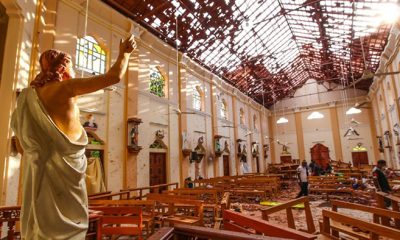
Easter Sunday carnage: Court told Maulana’s statement cannot be accepted without cross-examination
-
 Features6 days ago
End of Peacekeeping
-
 Opinion4 days ago
Undermining the democratic political framework
-
 News7 days ago
Ampara District special Coordination Committee meeting chaired by the President
-
 News4 days ago
UK passport holder hiding here wants to have deportation order rescinded to leave without blemish