
Latest News
Devine’s all-round masterclass hands New Zealand 2-1 series lead

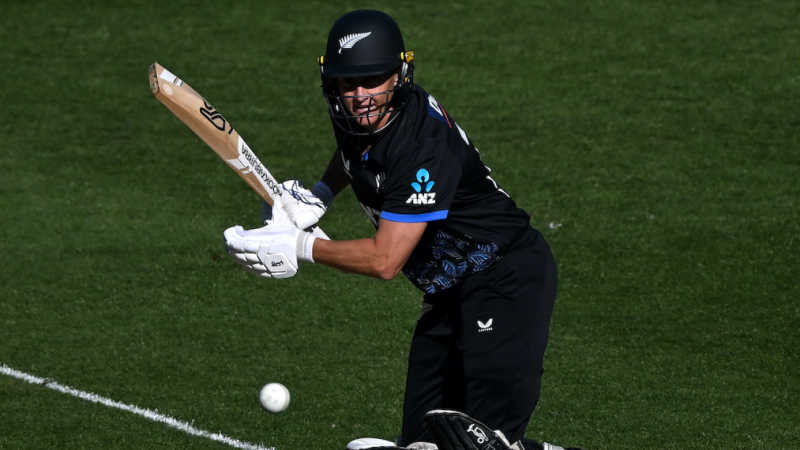
Sophie Devine made Eden Park her own little playground as she brought up her 22nd T20I half-century and carried New Zealand to a 2-1 series lead over South Africa with two games to go. She had also picked up a couple of wickets earlier in the day and backed up her words when she said South Africa’s 149 for 7 was a little bit under par.
New Zealand have never chased more than 150 at home. The small boundaries in Auckland were a friend in that regard, particularly with Annerie Dercksen and Ayanda Hlubi occasionally straying down leg. South Africa tightened up though and the wickets of Amelia Kerr and Brooke Halliday in the 10th over left the chase in a tense situation. New Zealand needed 82 off 60 with six wickets in hand. Devine was 13 off 10.
A pull shot off Chloe Tryon to start the 11th over signalled the shift in momentum. The square boundaries are bigger than the straight ones at Eden Park and yet Devine kept finding them. She collected 46 runs at a strike rate of 219 on the leg side. At the time the fifth-wicket partnership had hit 50, Maddy Green had made only 12 off 15. It was all Devine from the other end and it was all Devine till the end. Her superpowers now include winning the game without touching the ball. Dercksen missed the cut strip as she tried to hide it away from the batter’s reach.
Those five no-balls bringing an end to proceedings highlighted how wayward South Africa’s attack was compared to New Zealand’s. Jess Kerr’s early swing dominated the powerplay. Devine and Suzie Bates taking pace off kept control through the middle and barring another Kayla Reyneke onslaught, it was one-way traffic.
South Africa had to wait 23 balls for the first boundary off the bat on Friday. Dercksen made it worth the wait with a neat little flick off her legs that travelled all the way for six over deep midwicket. Dercksen arrived with the score on 9 for 2 in the third over and put the pressure back on New Zealand. While she was at the crease, she was responsible for more then half the boundaries (4 out of 7) her team scored. Thanks to that, Laura Wolvaardt could drop anchor and go at her preferred pace, though 37 off 39 wasn’t a good look for the captain, who later admitted they were well short of a competitive total.
A pitch with 10mm of grass offered enough for the seamers and even someone with their eye in was found out when Devine went into the pitch. The little legcutter – a response to being hit for six the previous ball – found Dercksen in two minds, whether to attack or defend, and took down her off stump. South Africa lost 59 for 5 between the eighth and the 18th overs, going 38 balls without a boundary.
Bates continued to find more success with the ball. She took a wicket in her first over and took responsibility in the death as well. New Zealand held their line and length really well, refusing access to the straight boundary and routinely cramping the batters up, guiding them to hit the areas – midwicket and square leg – that they had covered in the field.
Then Mair missed her length and was clubbed down the ground for six. It highlighted how a bowler had to be perfect against a batter of such power. Reyneke is immense when she can free her arms and go down the ground. She grew up playing in boys’ teams. She came into this series with a 75 off 63 for Western Province, who were 93 for 6 and still ended up winning the Pro50 game thanks to their 20-year-old phenom. She captained South Africa in the Under-19 World Cup when they went to the final last year. She’s marked for big things.
Reyneke’s presence forced Jess Kerr to go wide in the final over – too wide. The umpire penalising her made the bowler shift her line and that little bit was enough for Reyneke to smash two sixes and a four, all down the ground, and hoist South Africa to 149 for 7. She wasn’t given a lot to get under but as soon as she was given one, she smashed it out of the park. The margin for error was breathtakingly small.
Brief scores:
New Zealand Women 152 for 4 in 18.4 overs (Isabella Gaze 17, Amelia Kerr 30, Sophie Devine 59*, Maddie Green 34*; Annerie Dercksen 1-17, Ayanda Hilubi 1-31, Nonkululeko Mlaba 1-30 ) beat South Africa Women 149 for 7 in 20 overs (Laura Wolvaardt 37, Annerie Dercksen 27, Kayla Reyneke 34*; Jess Kerr 1-30, Rosemary Mair 1-32, Sophie Devine 2-21, Suzie Bates 2-10) by six wickets
(Cricinfo)


Several tankers carrying Iranian oil have crossed the United States blockade line in the Strait of Hormuz, according to a tracking website, two days before Washington and Tehran are to launch more talks after reaching a framework agreement to end their war.
The TankerTrackers website, which monitors oil shipments and storage, on Wednesday identified Iran’s “first crude oil exports in two months”, citing digital tracking data corroborated by satellite imagery.
The talks on a final settlement to end the war, triggered by US Israeli strikes on Iran on February 28, are to begin on Friday at Switzerland’s Burgenstock mountain resort as news that the Strait of Hormuz will reopen sent world oil prices tumbling.
According to TankerTrackers, two National Iranian Tanker Company (NITC) tankers – the Diona and Hero 2 – carrying a total of 3.8 million barrels of Iranian oil, exited the blockade line on Tuesday while another tanker, Stream, was sailing towards Iranian ports on Wednesday.
A third tanker operated by the NITC and carrying 1 million barrels of Iranian crude sailed past the US Navy’s blockade line in the Gulf of Oman on Wednesday, according to TankerTrackers.
In a post on X, the maritime tracking service said the Sonia I “exited the blockade line” at 01:11 GMT.
[Aljazeera]

An ODI between Canada and Netherlamds in King City Toronto on Tuesday was abandoned due to a dangerous pitch. The fixture was part of the ongoing ICC Men’s Cricket World Cup League 2 competition, which is part of the qualification pathway for the 2027 ODI World Cup.
The match was abandoned just 4.1 overs into the Netherlands innings after they had chosen to bat. They were 15 for 1, with Max O’Dowd the batter dismissed for a duck in the second over. The pitch had uneven bounce and the batters were struck several times during the short passage of play.
On June 12, four days before the abandoned match, the ICC had issued a statement saying the pitch at King City that was used for an ODI between USA and the Netherlands on June 8 had been given an “unsatisfactory” rating and one demerit point.
“This was a pitch that fell below the standard expected for this level of cricket,” match referee Phil Thompson had said about the surface for the USA-Netherlands match. “Both captains expressed disappointment with how it turned out, and the match officials assessed it as ‘very poor’. The inconsistent bounce created challenging and potentially unsafe playing conditions. Taking all factors into consideration, I believe the pitch merits an ‘unsatisfactory’ rating.”
According to the ICC’s pitch and outfield monitoring process, pitches that get an “unsatisfactory” rating will be given one demerit point, while an “unfit” pitch rating will result in three demerit points for the venue. Demerit points remain active for a rolling five-year period, and an accumulation of six demerit points will result in the venue being suspended from hosting international matches for 12 months (12 demerit points will lead to a 24-month ban).
(Cricinfo)

Joshua Da Silva and Amir Jangoo have earned recalls to West Indies’ squad for the two-match World Test Championship series at home against Sri Lanka starting later this month, while the two Josephs, Alzarri and Shamar, are back after missing the tours of India and New Zealand late last year because of injuries.
Trevin Imalch had kept wicket when West Indies last played Test cricket, in New Zealand last December, but Da Silva, 33 Test matches old, has returned after scoring 996 runs across the last two seasons of the West Indies Championship. Imlach, who failed with the bat in New Zealand with a total of 81 runs across six innings – after scoring 33 runs in his only Test in India – has been named captain of a West Indies Select XI to play the Sri Lankans in a tour match in Coolidge from June 18 to 21. Roston Chase will continue to captain the Test side.
West Indies vs Sri Lanka Tests
Jangoo, dropped after only one Test appearance, in Multan in January 2025, where he scored 0 and 30, has returned to the side following a fruitful WI Championship in which he scored 411 runs in seven innings. He finished second on the scorers’ table there, only behind Da Silva, who scored 413 in seven outing. The highlight of Jangoo’s season was the 203 not out he scored for Trinidad & Tobago against Leeward Islands
The pair of Alzarri Joseph and Shamar Joseph, meanwhile, last played Test cricket during the home series against Australia in mid-2025.”Every Test series is an opportunity for us to grow as a team and strengthen our identity,” Darren Sammy, the head coach, said in a Cricket West Indies statement. “Sri Lanka are a quality side, so we know we’ll have to be at our best, but we’re excited about the challenge ahead.”For us, it’s about playing with discipline, showing character when the game gets tough, and representing the West Indies with pride. The players have been putting in the work, and we’re looking forward to putting on a strong display for our fans across the Caribbean.”
Some of the squad members are currently participating in a high-performance training camp in Antigua, which began on June 12 and will run till June 22. The members of the Test squad who were also part of the white-ball series against Sri Lanka – West Indies lost the ODIs and won the T20Is – will join the camp on June 15. The Tests will be played in North Sound from June 25 to 29 and July 3 to 7.
“This is a key component of our preparations heading into the series, providing players and coaches with valuable time to enhance and improve the skills we want to see sharpened, based on the areas we need to focus our attention on when facing this opponent,” Sammy said about the camp. “It also gives us the opportunity to put clear objectives and plans in place for the conclusion of the summer against Pakistan.
“Additionally, the four-day warm-up game prior to the series provides the chance for some of our Test hopefuls to play in high-intensity action and create the avenue for more competition within the squad ahead of the upcoming and future series.”
West Indies are currently bottom of the nine-team WTC table, having lost seven of their eight games in the ongoing cycle.
West Indies squad for Test series against Sri Lanka

Iranian tankers exit US blockade zone before talks to end war

Hundreds of cats stolen for food in Vietnam rescued by police, welfare group says

Canada-Netherlands ODI abandoned due to dangerous pitch in Toronto

Da Silva and Jangoo earn recalls for West Indies’ Tests against Sri Lanka

Spinners make it two in two for England

Messi hat-trick fires holders Argentina to win over Algeria at World Cup

‘Dates have the highest sugar content to fight Coronavirus’

Sunday Island 27 December – Headlines

#SundayIsland 17th December – Headlines

Sunday Island – 28th March

Sunday Island Headlines – 21 March

Sunday Island – 21st February – Headlines
-

 News6 days ago
CIABOC summons Yoshitha over his participation in British Navy training programme
-

 Sports3 days ago
Tharanga set for high-profile javelin clash in Ostrava
-

 News3 days ago
Release of 2025 O/L results likely to be delayed
-

 News6 days ago
Justice Minister responds to social media claims he represented Easter Sunday ringleader
-

 Features4 days ago
Politics of protected species
-

 News5 days ago
Commonwealth lawyers urge Lanka to uphold rule of law
-

 News3 days ago
Theft of USD 2.5 mn from Treasury: CoPF accused of complicity in NPP cover-up
-

 News2 days ago
Beijing Capital Airlines to resume flights to Colombo signalling boost to tourism