
Business
New Anthoney’s Farms sponsors MasterChef Sri Lanka as Official Poultry Supplier


When MasterChef Sri Lanka began looking for an Official Poultry Supplier for its debut season, the answer was not a difficult one. New Anthoney’s Farms, the only producer in the country to raise chicken without antibiotics at any stage of production, was the natural choice for a competition that is, at its core, about the integrity of what goes on the plate.
The partnership makes sense on multiple levels. MasterChef Sri Lanka is a platform designed to celebrate the best of what Sri Lankan cooking can be. New Anthoney’s Farms has spent 40 years building the case that the best Sri Lankan cooking starts with the best ingredients, and that means chicken raised with no antibiotics, no shortcuts, and complete transparency from hatchery to household.
As the show’s contestants push their creativity in the kitchen, they will be doing so with chicken produce that meets the highest standard of independent verification. In January 2026, New Anthoney’s Farms formalised that commitment through a landmark five-year Memorandum of Understanding with the University of Peradeniya, not because they had to, but because giving Sri Lankan families the safest possible chicken has always been the founding principle of the business.
Under the agreement, the ISO/IEC 17025-accredited Food Safety and Quality Assurance Laboratory of the Faculty of Veterinary Medicine and Animal Science conducts systematic testing at every stage of broiler production, making New Anthoney’s the first and only poultry producer in Sri Lanka to back its claims with ongoing, independent scientific proof.
“We’ve always believed that Sri Lanka is an island full of culinary talent that the world is yet to see. MasterChef Sri Lanka is exactly the platform that talent deserves. For us, being part of this is not just a sponsorship. It is a statement about what Sri Lankan food can be when it starts with the right produce,” said Eranga Kurukulaarachchi, Executive Director and Business Development Manager, New Anthoney’s Farms
The timing carries weight. New Anthoney’s Farms is currently in the middle of its 40th anniversary year, having been founded in 1986 by Chairman Emil Stanley and Directress S.M.D. Marie Seetha Lakshmee. What began as a straightforward commitment to give local families better chicken has evolved into one of Sri Lanka’s most certified poultry operation, holding FSSC 22000, ISO 22000, HACCP, GMP, and local and international Halal certifications, and the only poultry company in the country with a GHG Verification Statement under ISO 14064-1:2018, certified by Control Union Netherlands. The company was also named Best Exporter in the Processed Food Category at the 26th Presidential Export Awards.
The brand’s decision to take on a sponsorship of this scale also reflects a deliberate shift in how it communicates its public health mission. New Anthoney’s Farms has led Sri Lanka’s conversation on antimicrobial resistance in recent years. MasterChef Sri Lanka brings that same message to a far wider audience, embedding the idea of safe, quality produce into the country’s most watched food content.
The MasterChef partnership also arrives alongside the company’s most significant expansion into professional kitchens. In November 2025, New Anthoney’s Farms launched Chicken Havens, a premium eight-product range developed specifically for the HORECA sector. The range was built from the ground up to meet the demands of high-volume professional kitchen environments such as portion consistency, prep-ready formats, and the flexibility that executive chefs and catering operations require, while carrying the same zero-antibiotic, fully certified quality standard that defines the brand. With aggressive scaling planned through the first half of 2026, Chicken Havens positions New Anthoney’s Farms as a serious player not just in retail but across Sri Lanka’s fast-growing food service industry.
Across its broader portfolio, the company operates the flagship HarithaHari antibiotic-free chicken range, which features Sri Lanka’s first fully compostable poultry packaging; Crizzpys, the country’s first ready-to-eat frozen crispy chicken brand; Meatlery, its chain of luxury meat retail outlets; and Dorakadapaliya, a free island-wide home delivery service. As New Anthoney’s Farms enters its fifth decade, the MasterChef Sri Lanka partnership is perhaps the clearest expression yet of what the brand has always stood for and that Sri Lankan families, and Sri Lankan chefs, deserve nothing less than the best.



Sri Lanka Insurance Corporation General Limited (SLICGL) unveiled Beechat, the country’s first generative AI‑powered insurance assistant, heralding a milestone for Sri Lanka’s insurance industry and move towards digital services.
Beechat is designed to transform the customer experience. Available through the SLICGL website (https://www.slicgeneral.com/) and customer portal, the Assistant offers customers instant access to policy information, real-time claim status updates, and insurance-related help 24 hours a day, seven days a week.
For customers, Beechat makes insurance simpler and always available. Instead of waiting in queues, calling hotlines, or being limited to business hours, customers can check policies, track claims, and receive instant answers in Sinhala, Tamil, or English, empowering every customer, whatever their language, to manage their insurance with ease.
The inclusivity ensures every customer, regardless of language preference, can engage with insurance services seamlessly. The AI‑driven platform reduces complexity, eliminates delays, and builds trust. Ultimately, Beechat transforms insurance from a process often seen as slow and complicated into a smooth digital journey that fits modern lifestyles.
The launch of SLICGL Beechat is strategically important for the organization because it strengthens its position as a leader in innovation within Sri Lanka’s insurance industry. Introducing the country’s first generative AI‑powered, trilingual insurance assistant, SLICGL demonstrates a commitment to digital transformation and technology‑driven service excellence.
The initiative reaffirms the company as forward‑thinking and customer‑centric and differentiating from competitors who still rely on traditional service models. It signals to industry stakeholders that SLICGL is setting new standards for accessibility, efficiency, and convenience in insurance.
Pioneering AI‑driven customer engagement, the company sets a new benchmark. Beechat demonstrates how technology can elevate insurance from a traditional service into a dynamic, futuristic experience, strengthening SLICGL’s relationship with the people it services. (SLICGL)
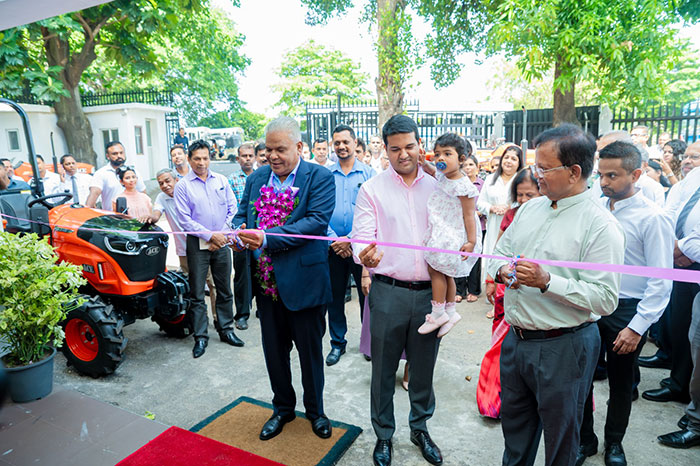
Lanka Tractors Limited officially reopened its original showroom in Colombo 11, marking the return of one of Sri Lanka’s most recognised agricultural machinery companies and the official launch of the ACE Tractor brand in the country.
Located at 343 Olcott Mawatha, Colombo 11, the showroom was ceremonially declared open by Chief Guest Dudley Sirisena, Chairman of the Araliya Group of Companies, in the presence of Upul Jayasuriya, Chairman of Lanka Tractors Limited, Thilina Abeysuriya, Managing Director, Nishantha Yapa, Head of Business, and Rajiv Gunawardena, CEO of Asia Asset Finance PLC.
Originally established in 1971 as the State Trading (Tractor) Corporation, Lanka Tractors was restructured in 1991 and became one of Sri Lanka’s largest importers and distributors of agricultural machinery. Over the decades, the company represented internationally renowned brands including Massey Ferguson, Kubota and TAFE, earning the trust of generations of Sri Lankan farmers through quality products, technical expertise and dependable after-sales support. The reopening of its original Colombo 11 showroom, first established in 1982, marks the revival of an institution that has played a pivotal role in the mechanisation of Sri Lankan agriculture for more than five decades.
The company’s revival commenced in late 2025 through an exclusive partnership with ACE Tractors, the agricultural division of Action Construction Equipment (ACE) Limited, one of India’s leading engineering and manufacturing companies. ACE manufactures tractors, agricultural machinery, construction equipment and industrial equipment, with annual production capacity exceeding 9,000 tractors, exports to more than 37 countries, and a dealer and service network spanning over 100 locations worldwide.
Prior to the commercial launch, Lanka Tractors adopted an extensive validation programme to ensure the products were ideally suited to Sri Lankan farming conditions. Three introductory models—the ACE VEER 3000 (26 HP 4WD), ACE DI 350 NG (40 HP 2WD) and ACE DI 450 NG (45 HP 4WD)—underwent rigorous field testing across multiple agricultural regions under the supervision of ACE technical specialists. Following several product refinements based on local operating conditions, the tractors were introduced to the market in April 2026.
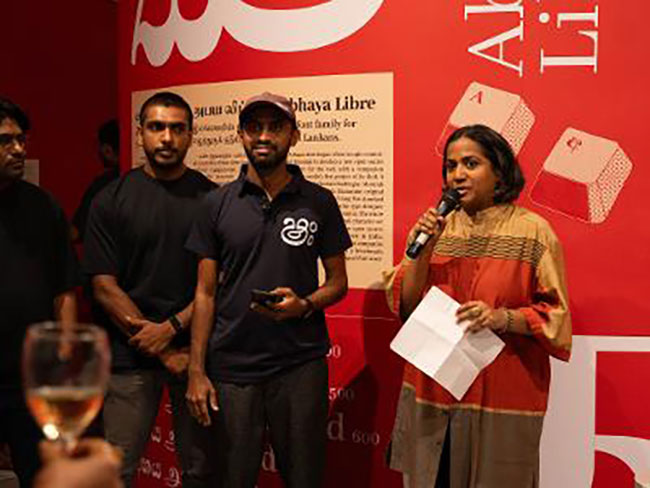
The desire to communicate and be understood is at the heart of what it is to be human. In contemporary life, digital infrastructure underpins how we work, live, and share information, but the letterforms that carry our languages are rarely neutral.
Arkurugraphy, a new exhibition at the Geoffrey Bawa Space, explores the history, culture, and future of letterforms across Sri Lanka’s three official languages. Presenting the decade-long practice of Colombo-based type foundry Mooniak, it examines how decisions about the digitisation of Sinhala, Tamil, and Latin scripts impact legibility and carry deep consequences for who is seen, who is heard, and whose language endures.
Writing systems carry human thought and knowledge across time and space. Letterforms can become a form of cultural artefact, unique graphic symbols representing identity and belonging. Today, these inherited letterforms often take shape as digital fonts, their design demanding fluency across history, aesthetics, linguistics, and technical standards. Akurugraphy asks audiences to look at letterforms beyond the act of reading: to appreciate their form, trace their past, and consider the decisions that impact their future.
Akurugraphy brings together typographic specimens, archival material, and software development spanning Mooniak’s full body of practice. It is a celebration of letterforms as art and an examination of the technical and political stakes of designing scripts for the digital age. As part of the exhibition, the Geoffrey Bawa Space will host a programme of monthly talks, curatorial tours, workshops, and children’s programmes.
Akurugraphy is open Wednesday through Sunday, 10:30 a.m. – 5:30 p.m., and will be on view until 8 November 2026. The exhibition is designed to be accessible and welcoming to all visitors. The Geoffrey Bawa Space offers step-free access and wheelchair accessible facilities. Tactile elements are available throughout the exhibition. More information is available at geoffreybawa.com/akurugraphy .

Dharmaraja and Kingswood set for historic rugby clash on Saturday

Sri Lankan singer Mariazelle Goonetilleke passes away at the age of 68

Tensions erupt in Indian state after 11-year-old raped and murdered

US and Iran trade attacks as Khamenei is buried

Several spells of showers will occur in the Western, Sabaragamuwa and North-western provinces and in Galle, Matara, Kandy and Nuwara-Eliya districts

Canadian PM visits Saudi Arabia to strengthen energy, mining partnerships

‘Dates have the highest sugar content to fight Coronavirus’

Sunday Island 27 December – Headlines

#SundayIsland 17th December – Headlines

Sunday Island – 28th March

Sunday Island Headlines – 21 March

Sunday Island – 21st February – Headlines
-
 News5 days ago
Singapore-based Buddhist monk marks nearly four decades of humanitarian service
-

 News6 days ago
Freedom 250: US Embassy celebrates America’s 250th Independence Day through magic of American cinema
-

 News4 days ago
AI concerned over proposed SL military deployment in Haiti
-

 Midweek Review2 days ago
Unexpected focus on ‘pieces of tin’ worn by military men
-

 Features5 days ago
The NPP’s New Challenge: Balancing Easter Lawfare and Economic Welfare
-
 Latest News3 days ago
Nyamhuri and Ngarava stun Bangladesh by defending 141
-

 Latest News6 days ago
Ukrainian suspect hunted by police after Monaco bomb attack was ‘disguised as a man’
-

 News1 day ago
Negombo Prison riot: Ensuring protection of prisoners fundamental responsibility of the state – UN