
Business
Protecting the Public Interest: Why mid-month revisions and targeted welfare are vital to defeating fuel hoarding


We commend the Government’s decisive move to revise fuel prices mid-month without prior notice. This action protected consumers from artificial scarcity and market manipulation. By breaking the traditional end of month cycle, the Government removed incentives for hoarding by both consumers and retailers. Had the Government waited until April 1st, 2026, fuel stations and bulk buyers would likely have restricted supply to profit from selling cheap stock at higher revised rates. This intervention ensures fuel remains a public utility rather than a tool for private profiteering during a global crisis.
These immediate implementations serve as a shield for national resource management by reflecting global costs to ration scarce foreign exchange and fuel reserves. When resources become expensive globally, the most efficient way to prevent depletion is by rationing through price rather than queues. Furthermore, these market-reflective prices incentivize the adoption of substitutes. Delaying these hikes would have encouraged wasteful consumption of fuel the country can no longer afford to replace at previous prices. Conversely, market reflective pricing incentivizes citizens to travel only when necessary and to transition toward a green economy.
Because prices act as a signal wrapped in an incentive, keeping them artificially low sends a false message of abundance, leading to waste. Furthermore, cost reflective pricing is an economic necessity. Blanket fuel subsidies disproportionately benefit the wealthy, who consume approximately 70 percent of the country’s fuel despite being only 30 percent of the population. Correct pricing and VAT (Value Added Tax) collection generate higher tax revenue that can be funneled directly to the poor, creating a more equitable and resilient Sri Lanka.
Fuel accounts for a staggering 15 percent of Sri Lanka’s current account outflows. The outdated monthly revision cycle is a relic that fosters a gambling environment where panic buying and hoarding are common. We urge the Government to adopt a system of weekly adjustments, an interim step toward daily pricing similar to regional neighbors like India. Gradual adjustments spread economic pressure and prevent the sudden shocks that disrupt industries.
We further commend the Government’s consistent application of these principles to the LPG sector. Immediate adjustments prevent supply shortages and ensure the financial viability of providers like Litro Gas. While a bitter pill, this reflects a mature energy policy prioritizing long-term security over short-term political gain.
However, we call for greater institutional transparency regarding the Ceylon Petroleum Corporation’s (CPC) pricing. Given that fuel has a significant impact on the Colombo Consumer Price Index (CCPI), transparency must be a mandate. In an oligopolistic market where the CPC is the leader, the public has a right to an audited breakdown of the formula. This ensures that price hikes truly reflect global costs rather than masking internal inefficiencies or a lack of cost control.

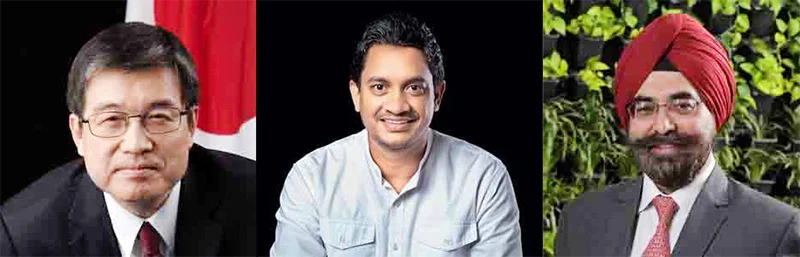
As Asia continues to account for a growing share of global economic activity, Sri Lanka faces an important opportunity to strengthen its links with regional trade networks, supply chains and economic corridors. How the country can make better use of these connections to attract investment, expand trade and strengthen its position in regional value chains will be among the key questions at the Sri Lanka Economic & Investment Summit 2026, organised by The Ceylon Chamber of Commerce on 12-13 October 2026.
Titled “Linking Sri Lanka to Asia’s Growth Networks: Trade, Corridors, and Value Chains,” the session will examine the opportunities for Sri Lanka to deepen its integration with the wider Asian economy and build stronger connections with regional and global markets.
The session keynote will be delivered by P.D Singh – Chief Executive Officer, India and South Asia, Standard Chartered Bank. He will be joined for a panel discussion by Chathuranga Abeysinghe – Deputy Minister of Industry and Entrepreneurship Development, Akio ISOMATA – Ambassador of Japan to Sri Lanka, MASAAKI Kawabata – Chairman – Toyota Lanka (Private) Limited, and Ravi Jayawardena – Group Chief Executive Officer-Maliban Biscuits (Private) Limited. The session will be moderated by Ms. Subhashini Abeysinghe – Research Director- Verité Research.
For Sri Lanka, stronger regional integration can open opportunities beyond traditional export markets. Greater participation in regional supply chains, improved trade connectivity and closer links to economic corridors can support investment in areas such as logistics, manufacturing, export services and other sectors connected to international production networks.
The discussion will consider what Sri Lanka needs to do to strengthen its position within these networks, including improving trade connectivity, attracting investment and creating a business environment that enables companies to participate more effectively in regional and global value chains.
It will also look at the experience of businesses and international institutions operating across the region, providing perspectives on how companies assess markets, build supply chains and identify locations for investment. With supply chains and investment flows increasingly shaped by regional connectivity, the session will also consider the partnerships and strategies needed to position Sri Lanka as a more competitive participant in Asia’s growth networks, while creating opportunities for trade, investment, innovation and economic growth.
The session will form part of the second day of SLEIS 2026, held under the theme “Positioning Sri Lanka in a Changing Global Economy: Resilience, Reform, and the Future of Economic Policy.”
The Sri Lanka Economic & Investment Summit 2026 is supported by its valued sponsors and partners. Platinum Sponsor – Standard Chartered Bank Sri Lanka, Gold Sponsor – VISA Worldwide (Pvt) Ltd., Bronze Sponsor – South Asia Gateway Terminals (Pvt) Ltd., Strategic Development Partner – Asian Development Bank, Telecommunication Partner – Dialog Telecommunication, Television Partner – Dialog Television, Session Sponsors – David Pieris Motor Company (Pvt) Ltd., Hemas Holdings PLC, Sunshine Holdings PLC, International Construction Consortium (Pvt) Ltd., Official Logistics Partner – Hayleys Advantis Limited, Official Airline – SriLankan Airlines Ltd., Official Hospitality Partner – Shangri-La Colombo, Airline Partner – China Eastern Air Holding Co. Ltd.
Registrations are now open at https://sleis.chamber.lk/. For more information, contact Alikie on 011 558 8805 (alikie@chamber.lk) or Shanuka on 0701082541 (events.division@chamber.lk).
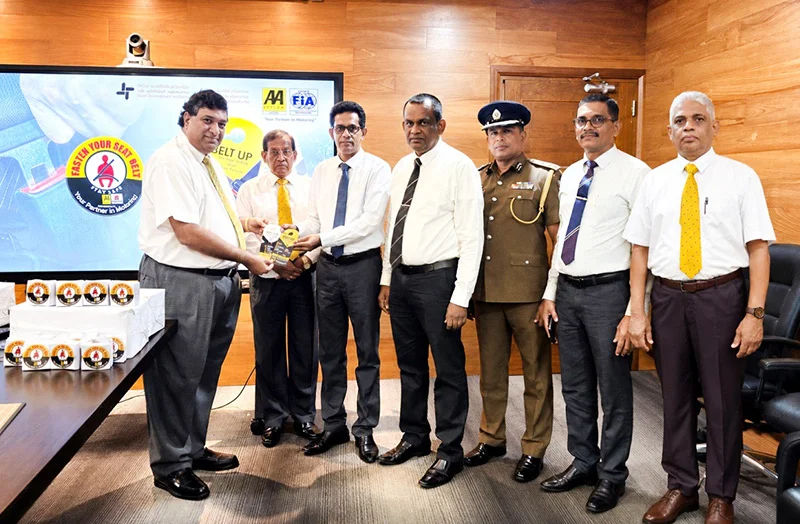
The Automobile Association of Ceylon (AAC), in collaboration with the Road Development Authority (RDA) and Police – Traffic Division, will conduct a special Road Safety Awareness Programme to promote the importance of wearing seat belts in vehicles specially on the express highways in order to reduce road fatalities and serious injuries.
The official handing-over ceremony took place at the Chairman’s Office of the Road Development Authority on 14th September 2026, where specially designed Seat Belt Safety Hanging Tags & Stickers prepared by the Automobile Association of Ceylon were handed over to the RDA for distribution to motorists at entry points to the expressways.
The initiative is being conducted in connection with the seat belt law coming into effect on 19th September 2026 and is intended to create greater public awareness of the importance of wearing seat belts in both the front and rear seats of vehicles.
Representing the Automobile Association of Ceylon at the ceremony Dhammika Attygalle, President; Prasanna De Zoysa, Sectional Chairman – Road Safety; and Devapriya Hettiarachchi, Secretary, Senior Superintendent of Police -Traffic Sisira Peththrathanthri, participated in the programme.
The Automobile Association of Ceylon has consistently maintained that road safety is one of its foremost priorities. Through awareness campaigns, educational programmes and collaboration with government authorities and other stakeholders, the Association continues to encourage responsible driving and safer behaviour among all road users.
AAC believes that the proper use of seat belts, including by rear-seat passengers, is a simple but vital safety measure that can help reduce serious injuries and save lives in the event of a road crash.
The programme further strengthens the cooperation between the Automobile Association of Ceylon, the Road Development Authority and the Police in their shared commitment towards safer roads and saving lives in Sri Lanka.
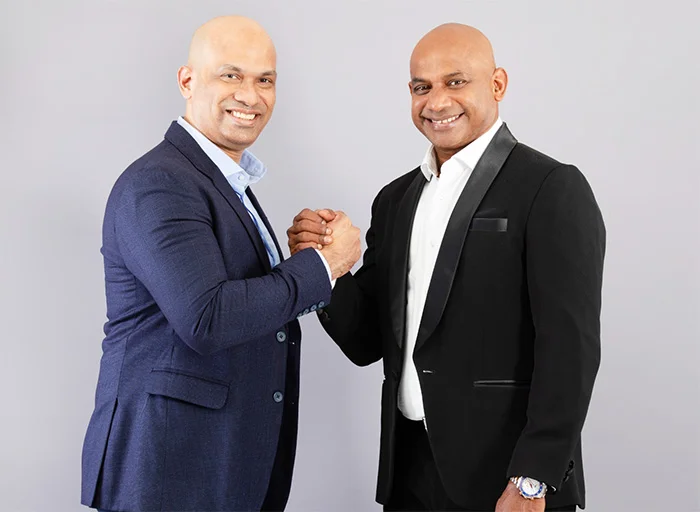
Global Housing & Real Estate (Pvt) Ltd (GHR) has announced a landmark partnership with Sri Lankan cricket legend Sanath Jayasuriya, as its Brand Ambassador as GHR enters a new chapter in its journey within Sri Lanka’s luxury real estate sector.
The partnership was officially unveiled at a press conference held at Cinnamon Life, Colombo, on 14 September 2026, bringing together industry leaders, investors and members of the media under the theme “Two Gamechangers, A New Beginning.”
The collaboration brings together two names associated with challenging convention in their respective fields: Sanath Jayasuriya, whose fearless approach transformed the dynamics of international cricket, and GHR, which has sought to introduce new approaches to property investment and luxury living in Sri Lanka.
Over the past two decades, GHR has built its presence in Sri Lanka’s real estate sector with a focus on quality, structural integrity and long-term investment value.
A significant milestone in the company’s journey came in 2016, when GHR introduced the hotel residency concept to the Sri Lankan market. The model brought together luxury hospitality and real estate investment, creating opportunities for property ownership with the potential to generate investment returns while contributing to the growth of the country’s high-end tourism offering. GHR has since continued to expand its portfolio across key destinations in Sri Lanka.
Speaking at the announcement, Dasun Wickramarathna, Chairman of Global Housing & Real Estate (Pvt) Ltd, said, “For over twenty years, Global Housing & Real Estate has strived to push the boundaries of what property development can achieve in Sri Lanka. As pioneers who introduced the hotel residency concept back in 2016, our mission has always been clear: to provide high-yield investment opportunities for our clients while taking Sri Lanka’s condominium industry into a new frontier.”
Commenting on the decision to partner with Sanath Jayasuriya, he added, “When looking for a voice to represent GHR’s ethos, Sanath Jayasuriya was the natural choice. Just as Sanath disrupted traditional international cricket and redefined how the world viewed the opening overs, GHR challenged traditional approaches to real estate and established a new benchmark in luxury living. This partnership represents a true convergence; Two Gamechangers, A New Beginning.”

Construction of Accident and Emergency unit at Mannar District General Hospital begins under President’s patronage

Special Cabinet Subcommittee and Officials’ Committee appointed to address El Niño Climate Impact meet

Showers about 75 mm are likely at some places in the Western, Sabaragamuwa, Central and Southern provinces

Brook, Buttler, Baker star as Sri Lanka slump to 119-run rout

Where is Gnanasara Thera?Police pass buck to court

Russian citizens in Lanka to vote in State Duma elections

‘Dates have the highest sugar content to fight Coronavirus’

Sunday Island 27 December – Headlines

#SundayIsland 17th December – Headlines

Sunday Island – 28th March

Sunday Island Headlines – 21 March

Sunday Island – 21st February – Headlines
-

 Sports6 days ago
DDS set to lose Test captaincy
-

 News6 days ago
Sri Lanka faces new grid challenge as rooftop solar surges: former CEB GM
-

 Latest News6 days ago
Shafali, Deepti power India into sixth T20 Asia Cup final
-

 Latest News5 days ago
Sri Lanka thwart Fatima Sana challenge to secure Asia Cup final spot
-

 News4 days ago
Gnanasara Thero absconding after SC ruling
-

 Features7 days ago
Lost for 90 years: Rare Goby resurfaces in Jaffna
-

 News5 days ago
Ammunition cache found in old Kandy bungalow
-

 Latest News7 days ago
Italian Naval Vessel ‘ITS Giuseppe Garibaldi’ arrives in Colombo