
Features
Sarath Silva googly gives CBK year less than expected, Helping Hambantota


Trips to Washington for IMF and World Bank meetings, bargain book sales
We were in the beginning of the year 2005 and the next Presidential election was coming ever closer. CBK had taken Chief Justice Sarath Silva’s advice and had taken oaths as President for the second time soon after the assassination attempt in 2001 in the belief that the balance period of her first term would be added to the tail end of her current tenure. Imagine her consternation when it was held that her second term ended exactly five years after her second oath taking.
It was a double blow in that her faith in Sarath Silva was shattered and her plans to undertake a year of reforms and groom a successor were now stymied. Sarath’s decision was tailor-made for his friend Mahinda Rajapaksa for if CBK had another year she may not have selected him to be the standard bearer of the PA in the forthcoming Presidential election. At this stage with Lakshman Kadirgamar’s demise, the odds on favourite was Anura Bandaranaike. But he was getting deeper into the cups and was not as proactive as his erstwhile protege MR.
The MR camp was busy demoralizing Anura. At the SLFP convention held in Kurunegala there was a well orchestrated hooting when Anura arrived on stage. Day by day pressure was brought on CBK to turn to MR and she was not helped by Anura’s reputation for drinking and indolence. No one knew that he had developed a cancer in his liver which Tissa Vitarana – a superb doctor, told me was caused by excessive drinking. The UNP which worked hand in glove with Mahinda to embarrass CBK now discovered that their favourite SLFPer (MR) whom they had nurtured could become a formidable candidate.
They filed a case through Kabir Hashim challenging Mahinda’s conduct in setting up “Helping Hambantota”, as a fund to collect money for the rehabilitation, presumably, as its name indicates, of Hambantota District. If found guilty he could have been imprisoned for four years as Sarath Silva proclaimed in retirement many years later. The “Helping Hambantota” fund created a dilemma for the Finance Ministry. Only the Treasury is entitled to set up special funds and when I was questioned about it in Parliament I had to frankly admit that “Helping Hambantota” was not properly constituted.
However MR’s Secretary Lalith Weeratunga had managed to get a letter from the Treasury stating that they were aware of this fund which proved to be a sufficient handle to save Mahinda. Kabir Hashim not only lost his case but was reprimanded by the CJ. He narrowly escaped being thrown in jail instead of MR.
Alternate Governor
As a prelude to a budgetary exercise the Ministry of Finance undertakes many discussions about foreign financial contributions which help in formulating our “foreign exchange budget”. All such inflows are depicted in the national budget under the relevant subheads. These discussions are held with both multilateral and bilateral donors. Among multilateral donors we transact business mainly with the IMF, the World Bank group and the ADB. In all these cases the Minister of Finance is an Alternate Governor who attends the annual sessions of these institutions.
The IMF-World Bank meetings are held twice a year as spring and autumn sessions and ADB meetings are held once a year. All these institutions have a practice of having their meetings in Washington and Manila as the case may be. However on every third year meetings are held in a member state. I was the Alternate Governor of these institutions from 2004 to 2015 which adds up to a considerable amount of travelling to all parts of the world. While innumerable ‘pilgrimages’ were made to Washington and Manila during this time, I also travelled to Ankara, Nagoya, Tokyo, Astana, Hyderabad, Singapore, Bali, Shanghai, and Bangkok for these multilateral sessions. Since most Finance Ministers of the world tend to attend these meetings, we also had fruitful meetings with many of them on bilateral issues. It was a good opportunity to review existing projects as well as discuss new requests. Many Ministers were accompanied by heads of their organizations that funded development efforts in the Third World. For instance the heads of the Saudi Fund, Norad, CIDA, UNDP, the Gulf Fund and many others who were funding Sri Lankan projects were present for a review of our joint efforts.
The agenda for IMF meetings was not too complicated. It began with the address of the heads of the IMF and World Bank followed by an overview of the global/regional economy and projections for the future by its Chief Economist. During my time, the post of Chief Economist was held by Raghuram Rajan, the distinguished scholar of Indian origin from the Economics Department of the University of Chicago. He was the first economist to predict the impending economic crisis of the late 20th century beginning with the failing housing market in the US.
He later became the Governor of the Reserve Bank of India at the invitation of Finance Minister Chidambaram. However having fallen out with the Modi government he went back to Chicago. We then had a meeting of the G40 which was a grouping of the developing countries. Here the concerns of the “receivers of aid” were articulated in the presence of the MD of the IMF and the President of the WB. At these meetings I was invariably asked to intervene by our group. Accordingly I characterized our plight as those of “innocent bystanders” whose economies were hit by the financial crisis which enveloped the developed world.
It must be remembered that this was the time when the global financial architecture was shaken to its roots following the American financial debacle. It was aptly described as a system “too big to fail”. The G40 meeting was followed by a luncheon hosted by the Indian Finance Minister for the South Asia group. Our geographical group comprised India, Bangladesh, Nepal, Bhutan and Sri Lanka. In my time our hosts were P. Chidambaram and Pranab Mukherjee who were the relevant Finance Ministers of India.
Afterwards many bilateral meetings were held on the sidelines of the main meetings. We invariably had meetings with India, the Gulf States, US, Japan, China and the Nordic countries where we could discuss progress in the projects underway funded by those countries as well as future funding for projects which had been submitted by the External Resources Division of the Finance Ministry. The grand finale was the plenary session where member states could make their interventions. Usually only eight minutes were allocated for each country.
The meeting ended with the formal responses of the heads of the IMF and WB to the concerns raised by delegates and a “family photograph”. I also had short “one to one” meetings with the MD of the IMF and the head of the World Bank. When De Rato the MD of IMF retired I called on him and presented him with a few packages of Ceylon tea and thanked him for his support extended to us particularly during the Tsunami. He remarked ruefully that I was the only representative of the developing countries who came to bid him farewell.
Country meetings
Perhaps the most important of our meetings were the “country meetings” when the senior officials of the IMF and WB reviewed the status of our economy as well as country projects spanning all aspects of the aid programme. I began the meeting with an introduction which reviewed the economy of Sri Lanka since our previous meeting. This was followed by a statement by the Governor of our Central Bank Nivard Cabral or his representative. One of the senior most officials of the IMF – Dr Kato a Japanese national, would then respond and turn over the discussion to the divisional leaders who would take up specific issues in project implementation. For example the Director overlooking education projects would review their activities in Sri Lanka while the Director in charge of budgetary reform would present his divisions analysis of our current budget and their recommendations for the forthcoming one.
It was an interesting high level discussion since we had come to know each other over a period of time and could speak frankly about our concerns. At the end of these discussions I would host the participants for a lunch usually at a top class Chinese restaurant close to the IMF building. Since we had an officer of the Central Bank attached to the IMF in Washington he took care of all these arrangements. He took care to invite a few other senior officials attached to the Maaging Director’s secretariat for that meal.
These and other public relations operations, including arranging a tour of our tourist hotspots when they were on mission in Sri Lanka, helped in smoothing our conversations and we were able to create a sense of goodwill which was very useful when it came to gaining the assent of the governing board which depended heavily on staff recommendations.
IMF ideology
A constant refrain about the IMF is that it follows a neo-liberal economic agenda. Since the West led by the US are the main shareholders of the IMF its Board usually toes a line which is favourable to Western interests. These interests include the regulation of the banking system and careful management of the global currency and exchange system which depended on US money supply and interest rates. Since the US dollar was the reserve currency of the world it held all the cards in the global financial game.
Part of our discussions were with the US Secretary to the Treasury and the Chairman of the Federal Reserve. When I first participated in IMF meetings the head of the Fed was Alan Greenspan [1987-2006] the legendary economist who dominated US economic policy for decades. He was followed by Ben Bernanke and Janet Yellen. They all participated in IMF meetings and Yellen in particular had special meetings with Finance Ministers to warn them of the possible consequences for their economies due to changes in the monetary policies of the US. For instance when the US raises interest rates money invested in developing countries tend to flow back to the US. When the US Fed reduces its interest rates there is a reverse flow to the poorer economies which offer higher rates.
Discussion with IMF officials in Colombo
When it comes to developing countries facing economic crises the IMF helps “by offering loans, technical assistance and surveillance of economic policies”. Loans are conditional on the following of a mutually agreed recovery programme for which funds are released in tranches after staff reviews which are endorsed by the Governing Board of the IMF. Sri Lanka has had 16 such programmes but none of them have been completed because the Sri Lankan side has aborted them mid stream due to political considerations.
In countries which go to varying types of polls almost every year, leaders find it difficult to accept the bitter economic recommendations of the IMF and the Central Bank. This is particularly true of Rajapaksa regimes because an electoral loss meant that “their occupation is gone” to use Shakespearean language. Subsidies however deleterious to growth is sacrosanct in this country and governments of the day prefer to pass on the hard decisions to future generations even if it means the breaking of its understandings with the IMF.
However there are some critics who challenge the model of growth adopted by the IMF. ‘Ihey find an alternative in closed economies where consumption is curtailed through a regime of restrictions and production is more for a domestic market. The economic models of such closed economies (also called “fortress economies”) have failed in the last 50 years and with the fall of the Communist blocs and the new trade policies of China, such an alternative is now hardly credible as a viable economic solution. Russia, China and Vietnam are keen members of the IMF and they jealously guard their interests in a globalized economy.
Donor meetings
In 1978 Ronnie de Mel established the practice of holding an annual meeting with our donor community as a prelude to preparing the budget. Since the new administration under JRJ was popular with western countries there was no dearth of supporters from among non-Communist countries. This was best seen in the foreign financing of the giant Mahaweli scheme. A large amount of money was provided as grants while many of the loans were given on concessionary terms.
The funding of this “Jumbo”project – both bilateral and multilateral – was so extensive that it is unlikely that such funding would be repeated in the future. Germany, Canada, Sweden and the UK financed the building of dams in Randenigala, Rantembe, Kotmale and Victoria. Japan which wanted to join the bandwagon but could not be accommodated under Mahaweli, opted to donate a whole new TV system and a 1001 bed hospital in Jayawardenepura as outright grants. When Scandinavian countries and Canada drew up “short lists”of developing countries earmarked for foreign funding Sri Lanka ranked among the top three.
Donor meetings were held because it was difficult to manage foreign funding on a one to one basis. It was more feasible to bring our donors together with the External Resources Division of the Treasury for a three-day long meeting when project performance could be reviewed and new funds pledged for the coming year and sometimes even beyond on a three year cycle. The World Bank agreed to host such a meeting and its European office in Paris was selected as the venue.
Thus from 1978 Treasury officials and the Minister of Finance wended their way to Paris for this much anticipated donor conference. Pledges were wrapped up and the meeting concluded with a grand dinner at the Ritz hosted by Ronnie in which all heads of relevant financial institutions participated. This model was so successful that the World Bank prescribed such meetings for many countries which were on the “beggars list” for extensive foreign support. This procedure worked well under the JR regime but was reduced to a shambles by Premadasa who preferred private foreign investment particularly for his garment manufacturing enterprises.
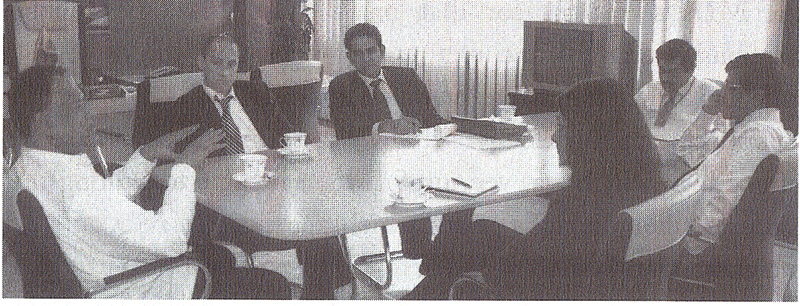
Discussion with IMF officials in Colombo
It must be stated here that this strategy did not entail obtaining a range of loans which would come home to roost later. Funding was provided by private investors. Premadasa’s favourite official in the Treasury – the super efficient Civil Servant Paskaralingam and his handpicked Treasury officials managed to steer the foreign exchange budget to success as well as start many urban infrastructure projects which began to alter the Colombo skyline. But the raging war – LTTE in the North and East and the JVP in the South – put paid to Premadasa’s dream of making Sri Lanka economically resurgent like Singapore, South Korea and Germany – countries that he admired. He was no great fan, unlike JRJ, of the USA and UK.
When CBK took over the reins in 1994 she had to confront an ongoing northern war. Premadasa had by then physically eliminated the JVP and its top leadership. All CBK’s efforts to quickly solve the “national question” became a tragic failure which blighted her regime. It particularly affected her management of the economy which declined over time to zero growth. As Minister of Finance I managed to reverse this trend and achieve a five percent plus growth and a significant increase in per capita income.
Her presence at the Paris donor meetings enabled western countries and Japan to complain to her about the escalating war in the North and East. To add to the countries security concerns several senior ministers Kadirgamar, CV Goonaratne and Jeyaraj Fernandopulle were assassinated and she herself had a narrow shave – all highlighting the stresses in a war torn country which were noted by the donors. Her strategy of taking her deputies GL Peiris and SB Dissanayake to Paris backfired in that they were exposed to the details of our economic debacle and the persisting concerns of western donors.
As SB told the media later he and GL realized at these meetings that CBK could not meet the challenge of managing the economy and therefore decided to cross over to Ranil and the UNP. To add to the misery the Tsunami of 2004 derailed all her plans and called for a concerted effort to put our foreign funding on a sounder footing.
We in the Finance Ministry decided to take the bold step of holding the Development Forum in Kandy. Earlier an attempt was made by Japan to host the Forum in Tokyo. It was decided then to move the venue from Paris to Tokyo largely due to the initiative of Japan’s roving ambassador Akashi who was well known for formulating his “Akashi Doctrine”. According to this policy Japan pledged substantial funds for development if the countries’ domestic conflicts were ended. It had been tested and tried successfully in Cambodia. This approach had been welcomed by Ranil’s regime.
But the LTTE had pulled out at the last minute and the Tokyo meeting had to be canceled. Our decision to shift to Kandy was welcomed by the donor community. We invited Bill Clinton for this meeting and he responded positively by sending a recorded message through his “alter ego” Erskine Bowles, the son of Chester Bowles – the former US ambassador to India, who attended on his behalf. The Deputy Managing Director of the IMF Praful Patel and deputy MD of the ADB Li Jin (who later headed the China backed Asian Infrastructure Development Bank) also attended together with senior officials of the World Bank.
The Ceylon Observer newspaper reported “More than 150 representatives from over 50 countries and international donor agencies will participate at this meeting. According to sources, the Government aims to cut down the budget deficit for 2005 with the assistance from donor countries and agencies. Sri Lanka maintains a 5.6 percent economic growth rate even in the midst of its largest ever disaster”.
After the ensuing discussions in which attention was drawn to the need to increase funding for Tsunami relief and strengthening the peace process, more specifically P-TOMS (Post-Tsunami Opertionl Mnsgement Structure), the international community pledged three billion US dollars for reconciliation and reconstruction activity in Sri Lanka. The holding of the development Forum in Sri Lanka was welcomed by the donors and it was continued the next year in Galle. However with the change of management a few years later it was abandoned by MR and successive administrations. Those Finance Ministers preferred to have bilateral discussions by themselves with donors and their contractors which led to many accusations of corruption which became more strident by the day. Instead of donor meetings emphasis was placed by MR and Basil Rajapaksa on “unsolicited proposals”.
Sunday off
Sunday in Washington was a free day which we used to visit the bookshops in Washington and go to the theatre. There was a bargain bookshop near Dupont Circle close to our hotel which was patronized by our delegation. It had many rare books donated to it by publishers since the sales collection went to charities. It was manned by students from top universities who were only too happy to engage in discussions about new books. Another memorable event was the closing down sale of the famous Borders bookshop since the company had gone bankrupt.
All books in the shop were sold at one dollar apiece. Borders bookshops in downtown Washington and Georgetown were stormed by “egg heads” who bought up not only books at a dollar each but even the shelves and safes which were on offer in the fire sale. I also visited my Peradeniya friend and colleague Professor HL Seneviratne and his family in Charlottesville, Virginia. Once I visited Stanley Tambiah my old teacher at Peradeniya. He had retired from teaching at Harvard and was installed in an old folks home by his ungrateful family. That was my last encounter with our much loved teacher from the fifties since Tambiah died a few months later.
The practice then was to attach a senior Central Bank officer to the IMF for a two year stint. It began with AS Jayawardene who later became Governor of our Central Bank. He was followed by Karunaratne, Jayatissa, Herath, Nandalal Weerasinghe, Dheerasinghe and Ranasinghe (the last three of whom we referred to as the “The three Sinhas”- lions). They all entertained us to dinner in their homes in Maryland. There were a large number of IMF and World Bank professionals who lived close to each other in the district.
It was no surprise therefore to learn that the Democratic Senator representing Maryland was Christopher Van Hollen Jr., the son of Chris Van Hollen, a long serving US Ambassador in Colombo who was a good friend of mine. Senator Van Hollen had his early schooling in Colombo. He was a Sri Lanka supporter who was always available for meetings with us. I was happy to present a book edited by his father to mark the historic relations between Sri Lanka and the USA to mark the bicentennial.
Our Ambassadors in Washington also assisted us. They participated in our IMF-WB meetings and arranged receptions so that we could meet IMF-WB staffers socially and also meet important US politicians and officials. As they say, Washington “inside the beltway” is the happy hunting grounds of politicians and bureaucrats. I particularly remember an Ambassador joining me for a memorable concert by Ravi Shankar and his daughter Anoushka held at the Kennedy Centre. Though our work in Washington was arduous and we had to burn midnight oil, we also had a lot of fun during our visits to the US capitol.
(Excerpted from vol. 3 of the Sarath Amunugama autobiography) ✍️


 It was a few years back that a former President of Sri Lanka took it on himself to pronounce SAARC ‘dead’. Since then there have been other sections of Sri Lankan opinion that have joined the critics of SAARC and taken the solemn stance that SAARC has indeed died what may be called a natural death.
Their fatalism is understandable. SAARC has failed to meet at heads of government or state level for the past several years to take the SAARC process notably forward. Regional cooperation has more or less been only an appealing idea. No substantive concrete projects have taken off to make the idea a hard reality. ‘Inner paralysis’ seems to be SAARC’s lot. Hence the fatalism in these circles.
However, being one of the worst cash-strapped regions of the world and a teemingly populated one with people virtually left to their devices, what choices do the ‘SAARC Eight’ have other than to try their best to band together and continue with their cooperation efforts, however small they may be?
There is no escaping the mounting debt trap for many of these countries and bankrupt Sri Lanka is a glaring example, but ‘throwing in the towel’ and abandoning themselves entirely to the diktats of the strongest economies and their agencies will prove a ‘living death’ for many countries in the SAARC fold.
The gains may be meagre but giving-up on SAARC cooperation in full would prove self-defeating for the organization and South Asia. Right now, the collective intention ought to be to salvage what the region could from the tenuous cooperative efforts. Moreover, such initiatives could go some distance to generate a degree of goodwill among the Eight and help in sustaining a dialogue process.
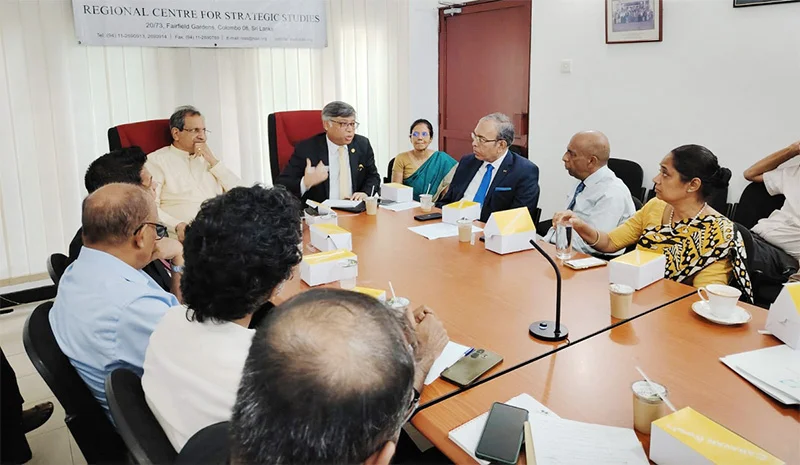
Given this backdrop it proved ‘a stich in time’ for the Regional Centre for Strategic Studies (RCSS), Colombo, to recently host the SAARC Secretary General Ambassador Md. Golam Sarwar to a round table discussion on the unifying potential of SAARC and its future possibilities, besides other related issue areas.
Held on June 24th and moderated by RCSS Executive Director and former ambassador Ravinatha Aryasinha, the forum brought together a vibrant, wide ranging audience comprising academicians, diplomats, senior public servants, civil society activists and many others. Following the presentation by Ambassador Golam Sarwar titled, ‘Reigniting SAARC: Achievements, Challenges and the Way Ahead’, a lively Q&A followed.
The above forum could be described as an act of lighting the proverbial ‘candle’ rather than ‘cursing the darkness.’ It surely is a ‘darkness’ that could be seen as daunting considering that the region’s pivotal powers, India and Pakistan, are failing to act in a spirit of accord but are engaged in bitter finger-pointing on a number of questions of vital importance to SAARC.
On the other hand, what is the rest of the region doing to bring the above sides together? It is disappointing that to date the rest of SAARC has failed to launch a major diplomatic drive to bring peace between the feuding regional heavyweights. It needs to act without delay and establish its earnestness and this effort would need to prove SAARC’s staying power in the unfolding months and even years.
In assessing SAARC’s seeming failure local opinion in particular has failed to factor in what could be described as weak leadership. Since Sheikh Mujibur Rahman of Bangladesh, the founding father of SAARC, the region has failed to produce a visionary leader who could advance the SAARC cause with charisma and drive.
Among other reasons, weak leadership accounts considerably for the faltering and stuttering status, as it were, of SAARC. Badly needed are leaders who could go the extra mile, think less of narrow national interests and work diligently towards the collective well being of the region but SAARC’s millions of ordinary people have been made to wait in vain for leaders of such stature. Instead, they have been burdened with politicians who seem to be relishing the apparently moribund state of SAARC.
Looking back, it could be said that it was the dynamic leadership factor that led to the launching of the Non-Aligned Movement and for its sustenance for a few decades. True, it could be seen in some quarters that NAM is no more, but as in the case of SAARC, the former too has been unfortunate to be burdened over the years with politicians who lack the vision and drive to unflaggingly advance the fortunes of the South. NAM and SAARC lack the dynamism and vision of leaders of the stature of Jawaharlal Nehru, for example, to give them the required guidance and intellectual depth.
The reasons are complex for there not being among us currently political leaders with the vision and the steadfast commitment to advance the legitimate interests of the South. However, it could be stated with conviction that the majority of Southern leaders have too easily caved in to the demands of the global North and its financial agencies.
These leaders have failed to see, for instance, that the largely market economy oriented Northern governments would not view with favour a centrist economic model that attaches priority to the interests of the dis-empowered publics of the South. This realization ought to have dawned on the current government in Sri Lanka, for instance, some while ago but it has no choice but to abide by IMF dictates since economic survival at present is unthinkable without the latter’s succour.
Accordingly for SAARC this should be the time for some soul-searching. Priority needs to be attached to ending the feuding between India and Pakistan since at present the material fortunes of the region hinge largely on these regional giants giving peaceful relations among them a try. This is no easy challenge to meet but some daring, visionary diplomacy needs to take hold among the rest of SAARC.
There is some sense in SAARC bringing the peoples of the region together through programs that address their best collective interests. A meeting of minds among SAARC nations could enable SAARC and its agencies to build a region-wide people’s movement for progressive political and economic change that could in turn lead to the region’s political leaders sensitizing themselves more to the neglected needs of their publics.
However, the time is ‘now’ for the initiation of these progressive changes and the voice of SAARC well wishers would need to drown out those of their critics.
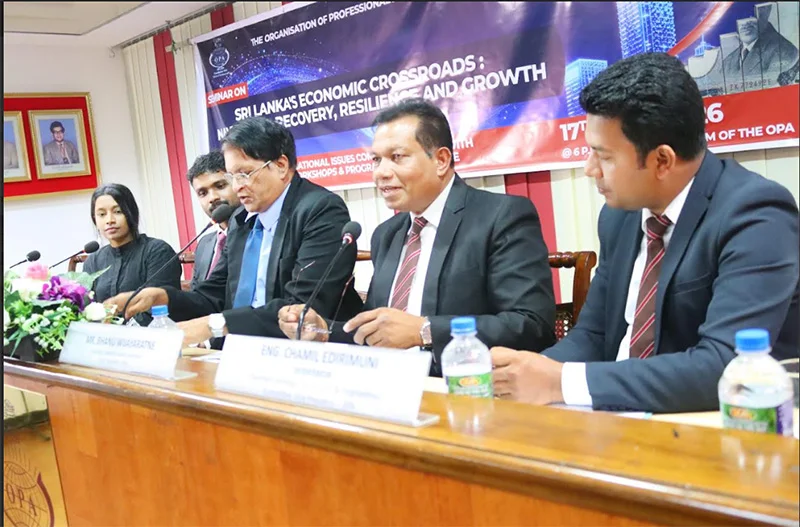
A seminar, “Sri Lanka’s Economic Crossroads: Navigating Recovery, Resilience and Growth” was recently held by the Organisation of Professional Associations of Sri Lanka (OPA) at the OPA Auditorium, bringing together economists, OPA members, and professionals from diverse fields for an insightful discussion on Sri Lanka’s economic recovery and future growth prospects.
The event was held under the patronage of Jayantha Gallehewa, President of the OPA, and was jointly organised by the National Issues Committee (NIC) and the Seminars, Workshops and Programmes Committee of the OPA. The event reaffirmed the organisation’s commitment to advancing professional excellence, fostering insightful intellectual engagement, facilitating interdisciplinary knowledge exchange and creating a constructive platform for informed dialogue on issues of national importance.
The panel of speakers comprised Dr. Harsha Aturupane, Lead Economist and Programme Leader for Human Development at the World Bank for Sri Lanka and the Maldives; Dr. Achinthya Koswatta, Senior Lecturer in Economics at the Open University of Sri Lanka, and Anushan Kapilan, Lead Economist at Verité Research.
In his welcome address, the President of the OPA emphasised that Sri Lanka was at a critical juncture in its economic recovery journey where sustained reforms, effective implementation, and collective national commitment are essential to achieving long-term stability, resilience and inclusive growth. He noted that the country had experienced one of the most severe economic crises in its history with the economy contracting by 7.8 percent in 2022 and a further 11.5 percent in 2023, resulting in significant economic and social challenges.
Delivering his introductory remarks Bhanu Wijeyaratne, Vice President of the OPA and Chairman of the National Issues Committee, underscored the need to move beyond short-term economic stabilisation towards a comprehensive agenda of structural transformation. He observed that the economic crisis had revealed deep-rooted weaknesses within the economy, including persistent fiscal pressures, rising public debt, foreign exchange limitations, and insufficient diversification of the export base. He stressed that addressing these challenges through strategic reforms, institutional strengthening and long-term economic planning would be essential to establishing a more resilient and competitive economy.
While acknowledging recent positive developments, including improved inflation management, tourism recovery and signs of economic stabilisation, Wijeyaratne stressed the need to advance reforms aimed at strengthening fiscal discipline, enhancing productivity, improving competitiveness, developing human capital and reinforcing governance and institutional effectiveness.
He further highlighted the important role of professionals, businesses, academia and other stakeholders in contributing to evidence-based dialogue and supporting Sri Lanka’s journey towards a resilient, inclusive and sustainable economic future.
Delivering the keynote presentation, Dr. Harsha Aturupane provided a comprehensive assessment of Sri Lanka’s economic prospects within the broader context of global economic transformation. He argued that Sri Lanka functioned as a small open economy whose performance is significantly influenced by developments in the global marketplace. External factors could not be controlled, and the country must strengthen its domestic capacity and resilience to respond effectively to international economic shifts, he noted.
Tracing the evolution of global economic systems, Dr. Aturupane highlighted the transition from ideological divisions between state-controlled and market-oriented economies towards increasingly pragmatic approaches focused on growth, competitiveness and development. He noted that Sri Lanka’s own economic journey reflects a similar evolution, with contemporary policy debates now centred on practical solutions for sustainable economic progress.
The presentation also examined the transformative impact of globalisation. Dr. Aturupane observed that global economic integration had enabled several East Asian economies, including South Korea, Singapore, Taiwan and Hong Kong, to achieve remarkable economic advancement through export-led growth strategies. Sri Lanka similarly benefited from this process through the expansion of its apparel industry and increased integration into global value chains.
Turning to Sri Lanka’s recovery programme, Dr. Aturupane emphasised that the ongoing stabilisation process should be viewed as a national programme supported by the International Monetary Fund rather than solely as an IMF initiative. He observed that strong worker remittances, improved tourism earnings, enhanced government revenue mobilisation and prudent import management have contributed significantly to economic stabilisation.
Despite this progress, he cautioned that rebuilding foreign exchange reserves and meeting future debt obligations remain major challenges. He underscored the need to strengthen export performance, attract investment and generate sustainable foreign exchange earnings to ensure long-term economic resilience.
The discussion also focused on monetary stability, inflation management and exchange-rate policy. Dr. Aturupane stressed that maintaining price stability was fundamental to sustainable growth and household welfare, while sound monetary policy remains essential for preserving economic confidence.
Looking beyond stabilisation, he argued that Sri Lanka must transition towards a broader economic transformation agenda. Sustainable growth, he noted, will depend on expanding productive capacity through investment, technological advancement, innovation, skills development and structural reforms.
Among the key constraints identified was the high cost of energy, which continues to affect competitiveness and investment attractiveness. Dr. Aturupane emphasised the importance of improving efficiency and affordability within the energy sector to enhance Sri Lanka’s business environment.
He further highlighted the social dimensions of the crisis, noting the rise in poverty and economic vulnerability among households. Strengthening social protection systems and ensuring inclusive growth, he argued, must remain central components of the national development agenda.
Another critical challenge identified was Sri Lanka’s demographic transition. With an ageing population, outward migration and evolving labour market dynamics, the country is increasingly confronting labour shortages in several sectors. Dr. Aturupane suggested that greater automation, increased labour-force participation and strategic workforce planning would be necessary to address these emerging realities.
Concluding his presentation, he emphasised the need to improve governance, strengthen institutions, enhance competitiveness and create an enabling environment for private sector investment. Sri Lanka’s future success, he noted, will depend on its ability to move decisively beyond crisis management towards a development model founded on resilience, innovation, productivity and inclusive growth.
Dr. Achinthya Koswatta reiterated the importance of policy consistency and predictability in fostering investment and industrial development. She observed that frequent policy changes create uncertainty and discourage long-term investment decisions, whereas stable and coherent policy frameworks build confidence and support sustainable economic transformation.
Meanwhile, Anushan Kapilan highlighted the substantial progress achieved in restoring macroeconomic stability following the recent crisis. He noted significant improvements in fiscal performance, including increased government revenue, reduced reliance on debt financing and a historically low fiscal deficit.
He further observed that public debt levels are declining faster than anticipated, economic growth has exceeded expectations and inflation has been brought under control more rapidly than forecast. Nevertheless, he cautioned that the recovery remains uneven, particularly within the industrial sector and that many households have yet to experience a meaningful improvement in living standards.
The seminar was expertly coordinated by Eng. Chamil Edirimuni, Vice President of the OPA and Chairman of the Seminars, Workshops and Programmes Committee, while the technical moderation and interactive discussion session were facilitated by Bhanu Wijeyaratne, Vice President of the OPA and Chairman of the National Issues Committee.
The event was attended by Tisara De Silva, President-Elect of the OPA, Eng. Ravi Rupasinghe, General Secretary, Past Presidents, members of the Executive Council, representatives of the General Forum and professionals representing a wide range of disciplines.
The seminar concluded with a vibrant exchange of ideas and perspectives, reaffirming the importance of evidence-based policy dialogue, institutional collaboration and collective national commitment in advancing Sri Lanka’s economic recovery, resilience and sustainable growth.

 Yes, for UK-based presenter and artiste Samantha Kay, home is where the heart – and the roots – are. And her roots run deep in Sri Lanka.
In an exclusive interview with The Island, Samantha says “I’m proud to be Sri Lankan. My mum is from Kandy and my dad is from Colombo, so Sri Lanka has always held a very special place in my heart.
“Whenever I visit Sri Lanka, I love spending time on the beautiful south coast, especially Hikkaduwa and Mirissa. It’s somewhere I always feel connected to my roots and completely at peace.”
Now living in Bournemouth, on the south coast of England, where, she says, she is lucky to be close to some of the UK’s most beautiful beaches, including the iconic Sandbanks, Samantha has built a career that refuses to fit into one box.
She is a radio presenter, podcast host, singer-songwriter, personal trainer and life coach.
“I genuinely love the variety because every role allows me to connect with people and, hopefully, make a positive difference in someone’s day.”
Of course, music has taken her far.
One of her proudest achievements, she says, was releasing a song with 90s music icon Angie Brown, which reached No. 9 in the UK Club Charts.
She also reached the final stages of The X Factor and performed at Wembley Stadium in front of thousands.
Beyond music, Samantha competed in bikini bodybuilding across the UK, winning several titles. “It taught me discipline, resilience and self-belief,” she recalls.
Today, her focus is on radio, podcasting and coaching women. Her podcast encourages people to live life on their own terms rather than feeling pressured to follow society’s expectations.
Says Samantha: “Whether someone is single, changing careers, travelling solo or simply trying to find their purpose, I want them to know that it’s never too late to create a life that feels authentic. If you’ve ever felt like you don’t fit into the box, maybe you were never meant to.”
Samantha Kay also spent a year in Dubai, performing at five-star hotels, including FIVE, and coaching at the iconic outdoor gym on Palm Jumeirah.
“I taught strength and conditioning classes, and hosted wellness retreats, combining my passion for music, health and inspiring others.”
However, with family matters calling her back to the UK, she made the choice to return. “Family comes first,” she says.
Looking ahead, Samantha plans to grow her radio and podcast work, release more music, and expand her wellness retreats.
“My biggest passion is helping people, especially women, build confidence and believe in themselves,” she says.
“Wherever my career takes me, I hope to continue inspiring others to live with courage, kindness and authenticity, while never forgetting my Sri Lankan roots.”

Current El Niño Status in Sri Lanka

A few showers may occur in the Western, Sabaragamuwa and North-western provinces and in Kandy, Nuwara-Eliya, Galle and Matara districts.

Argentina face fine for Falklands banner in semi-final win

US launches fresh strikes on Iran as Trump warns Tehran it ‘better behave’

Govt. move to extend retirement ages of top judges: Opp. complains to UN

Dengue surge pushes hospitals to the brink as cases near 70,000

‘Dates have the highest sugar content to fight Coronavirus’

Sunday Island 27 December – Headlines

#SundayIsland 17th December – Headlines

Sunday Island – 28th March

Sunday Island Headlines – 21 March

Sunday Island – 21st February – Headlines
-
 News6 days ago
Herath warns prospective migrant workers not to get fleeced by racketeers
-
 Features4 days ago
Prison riots and politics: NPP’s biggest challenge and Sri Lanka’s biggest opportunity
-

 Editorial5 days ago
What’s the world coming to?
-
 Foreign News6 days ago
Tensions erupt in Indian state after 11-year-old raped and murdered
-
 Features6 days ago
Devanesan Annan – in Memoriam
-
Editorial6 days ago
Punishment in hellholes
-
 Features1 day ago
Dirty Money
-
 News7 days ago
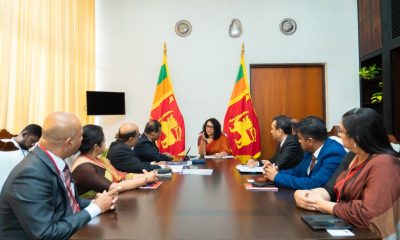
Representatives of the Organization of Professional Associations (OPA) of Sri Lanka meet the Prime Minister