
News
EC proposes tough measures, seeks additional powers


… MPs skipping sittings to lose seats
By Shamindra Ferdinando
The Election Commission (EC) has recommended unseating of lawmakers who failed to attend at least one third of the total number of sessions in the first two years of the five-year term without justifiable reasons.
The unprecedented subject matter is among eight far reaching proposals Commissioner General of EC Saman Sri Ratnayake recently submitted to Romesh de Silva, PC, heading the ninemember committee, tasked with formulating a new draft constitution.
The EC emphasised that lawmakers unless suffering from some illness, or specific justifiable reason, should attend the stipulated number of parliamentary sessions or face the consequences. Major political parties have repeatedly admitted parliamentary attendance is low. On a number of occasions during yahapalana administration, sittings had to be suspended due to lack of quorum.
The five-member EC chaired by attorney-at-law Nimal G. Punchihewa include S.B. Diwarathne, M.M. Mohommed, K.P.P. Pathirana and Jeewan Thyagaraja.
Punchihewa said that their recommendations in respect of issues at hand and matters that required urgent attention were submitted to the constitution making body. The Election Commission Chairman said so when The Island sought an explanation regarding the UNP deliberately delaying the filling of its National List slot for eight months. The issue was raised at a workshop organized by the EC at its Rajagiriya headquarters on March 16.
President Gotabaya Rajapaksa, in terms of the 20th Amendment to the Constitution enacted in last October, expanded the EC from three to five members.
The EC at a meeting held on January 29, 2021 decided the following as part of constitutional measures to improve the political environment (1) inclusion/acceptance of the right to vote as a fundamental right (2) Categorized Local Government and Provincial Council polls in addition to Presidential and Parliamentary polls to be included in the Constitution (3) Empower the EC to unseat elected members who failed to furnish accurate information regarding funds received and campaign expenses within 30 days after the release of results. In the case of defeated candidates, to deal with them on the basis of having committed an election violation (4) Elected lawmakers to lose their seats in case they failed to attend at least one third of total number of sittings within the first two years of their five-year term (5) Introduce necessary amendment/amendments to expand the provisions in respect of Referendum to pave the way for obtaining public opinion as regards some sections of a particular Act. In terms of the 1978 constitution a referendum can be conducted to ascertain public opinion on a particular matter (6) Empower the EC to take tangible measures to unseat lawmakers, Provincial Council and Local Government members in case they are convicted by a court of law after having examined the relevant cases (7) Authorize the EC to fill National List vacancies in terms of National Lists submitted by political parties along with nominations if a particular political party failed to name its appointed members within seven days after the declaration of results and (8) Provision for specific percentage for women members in parliament, Provincial Councils and Local Government bodies.
Authoritative sources told The Island that in the wake of President Gotabaya Rajapaksa calling for much delayed Provincial Council polls as soon as possible relevant authorities were discussing ways and means to finalize consensus on formula. Sources said that in the absence of consensus various interested parties pushed for different agendas. Sources said that it was not yet clear whether an agreement could be reached on 70:30 (70 per cent elected and the remaining 30 chosen from the defeated candidates).
The EC hasn’t received an opportunity yet to make representations to Romesh de Silva’s team though written submission was made several weeks ago.
Asked whether the recommendations that had been submitted to the expert group received the blessings of political parties represented in parliament, sources said that the matters therein were taken up with political parties, both in and outside parliament, in addition to polls monitoring groups. Sources said that a meeting with the expert group was necessary to explain some matters. Responding to another query, sources said that perhaps the third recommendation should be expanded to cover campaign financing received by political parties at presidential and parliamentary elections.
In spite of a section of the media and some lawmakers raising foreign funding made available for political parties at presidential and parliamentary polls, the EC was yet to take tangible measures, sources acknowledged.
In fact the former US Secretary of state John Kerry even crowed about spending several hundred million dollars to ensure leadership changes in several countries, including Myanmar and Sri Lanka after they were carried out to fruition. In the latter case the toppling was engineered in January 2015.



Former first lady Shiranthi Rajapaksa, wife of former President Mahinda Rajapaksa was produced before the Hulftsdorp court, after being arrested by officers of the Commission to Investigate Allegations of Bribery or Corruption (CIABOC) and produce
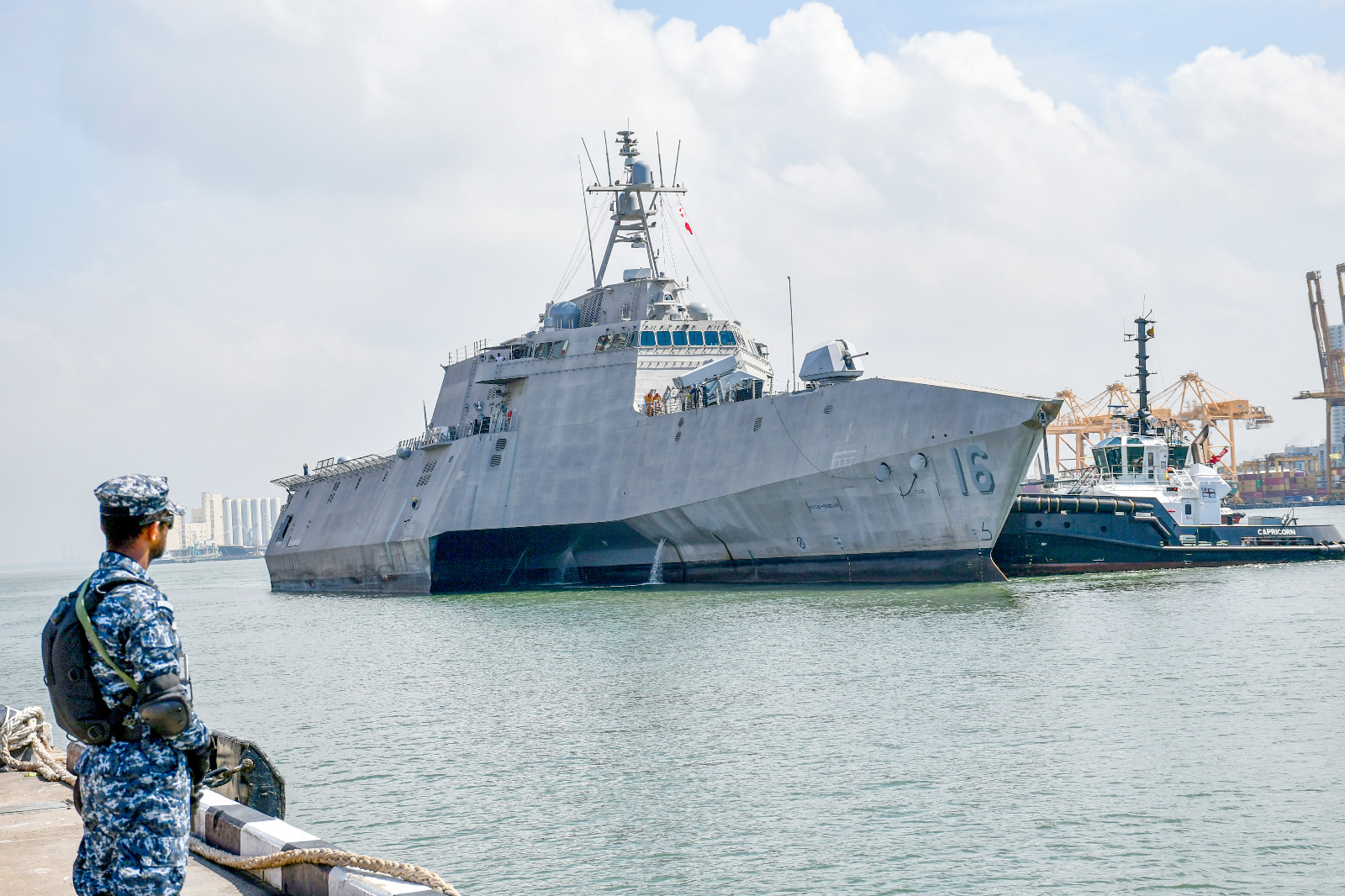
The U.S. Navy ship USS Tulsa (LCS 16) arrived at the Port of Colombo this morning, 7 October 2026 for replenishment purposes.
The visiting ship was welcomed by the Sri Lanka Navy in accordance with naval traditions.
The 127.7-metre-long platform is a Littoral Combat Ship commanded by Commander BM Wanier. Commissioned on 16 February 2019, USS Tulsa has since been in service with the US Navy.
The ship previously made a port call in Sri Lanka on 27 August 2025.
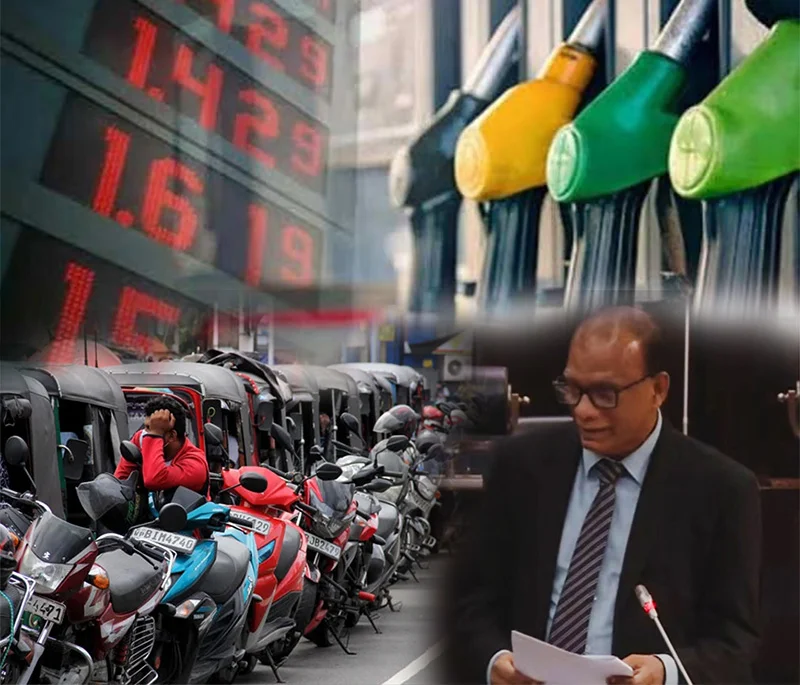
Govt. tells fuel distributors to maintain stocks to ensure uninterrupted supplies
by Saman Indrajith and Norman Palihawadane
The government had instructed private fuel distributors to maintain minimum stocks and ensure uninterrupted supplies to the market, Energy Minister Anura Karunathilaka told Parliament yesterday (06).
Karunathilaka said the Ministry of Energy Secretary had notified the relevant companies of the requirement, following a reduction in supplies by some private distributors, amid higher international fuel prices.
The Minister said private companies had informed the government that they were facing losses because international prices had risen while fuel was being sold, locally, at prevailing prices. As a result, some companies had reduced the volumes released to the market.
The reduced supplies had increased the burden on the Ceylon Petroleum Corporation (CPC), whose share of the diesel market had risen from about 54% to 82%, the Minister said.
“The CPC currently holds an 82% share of the market,” he said, adding that it had increased its supplies, compared with February, to compensate for the reduction by private distributors.
Karunathilaka said the government could not, under the existing agreements with private companies, specify the quantities they should supply to individual filling stations. However, it could require them to maintain minimum stocks in the country.
The Minister said the Energy Ministry had already instructed companies that had failed to maintain the required stocks to take steps to prevent supply disruptions.
The Minister attributed the queues reported at some filling stations to reduced supplies from private distributors, as well as normal variations in fuel distribution. He also said demand for CPC fuel had increased because private companies generally did not provide fuel to dealers on credit, while the CPC offered a three-day credit facility.
“We expect that, as the Ceylon Petroleum Corporation takes on this additional burden, the problem will ease to some extent by Wednesday or Thursday,” Karunathilaka said.
He said instructions had also been issued to increase supplies to CPC filling stations. A special discussion on the issue is scheduled for today (07), with officials of the Energy Ministry and CPC expected to participate,
along with President Anura Kumara Dissanayake.
Meanwhile, Petroleum Dealers’ Association officials have called for an early solution to the supply issue. Association Chairman D.V. Shantha Silva said queues had been reported at many filling stations, mainly those operated by private distributors.
He said the situation was not due to an overall shortage of fuel, but was linked to reduced orders by Lanka IOC, Sinopec and R.M. Parks amid concerns over losses incurred on fuel sales.
The Ceylon Petroleum Private Tanker Owners Association has urged motorists to refrain from panic buying, saying there was no nationwide disruption to fuel supplies.
The government earlier increased fuel prices and introduced a per-litre diesel subsidy following concerns raised by distributors over rising international prices.

Former first lady Shiranthi Rajapaksa arrested by CIABOC

U.S. Navy ship USS Tulsa arrives in Colombo for replenishment visit

Smriti Mandhana appointed India captain across formats

Ronaldo apologizes for Portugal walkout; says Jesus broke promise

Showers in the Western, Sabaragamuwa, Central, Uva, North-western and Southern provinces and in Anuradhapura and Mannar districts

Fuel crunch looms

‘Dates have the highest sugar content to fight Coronavirus’

Sunday Island 27 December – Headlines

#SundayIsland 17th December – Headlines

Sunday Island – 28th March

Sunday Island Headlines – 21 March

Sunday Island – 21st February – Headlines
-

 News7 days ago
US-assisted ‘Ice’ detection: NPC to examine IGP’s move to transfer drug-busting team
-

 Editorial6 days ago
Colombo Port drug bust: The plot thickens
-

 Editorial7 days ago
Drug busting, transfers and trust deficit
-

 Features4 days ago
The first woman in the foreign service or Ceylon Overseas Service it was then called
-
 News7 days ago
Sri Lankan facing death penalty in Saudi Arabia: Mano G appeals to Crown Prince
-

 Editorial5 days ago
Fuelling discontent and protest
-

 News3 days ago
Geneva takes up Sallay’s case and govt. ignores opportunity to answer accusations
-

 Latest News4 days ago
Tharindu Rathnayake, bowlers secure Asian Games Bronze for Sri Lanka