
News
Education Reforms: Academics, activists condemn personal attacks on PM


“Reform process must expand and protect the right to free education”
A group of academics, professionals, and social activists yesterday issued a joint statement backing the government’s education reforms and condemning attacks on Prime Minister and Minister of Education Dr. Harini Amarasuriya by sections of the Opposition.
The statement described the attacks as hateful and indecent, warning that such conduct promotes misogyny, undermines women’s political leadership, and restricts space for constructive debate on urgently needed reforms.
Full text of the statement titled ‘Calling on the Government to Preserve the Credibility of Ongoing Education Reforms Amidst Vulgar and Hateful Propaganda’: We, the undersigned, are closely monitoring the educational reforms currently being rolled out by the government with the aim of designing a system of education to suit the future of the country, as well as the public discourse being created within society about those reforms by various parties. The attacks being directed at the Prime Minister and Minister of Education Dr. Harini Amarasuriya by certain opposition groups and individuals are not only hateful, indecent, and a disgrace to the moral values of any civilized society, they also normalise misogynistic attitudes that belittle progressive women’s political leadership and shrink the space needed for constructive engagement and a meaningful discourse on urgently needed education reforms.
It is widely acknowledged that our country requires an education system grounded in forward-looking principles, as articulated in the National People’s Power (NPP) Education Policy, which is now the government policy after the approval of an overwhelming majority of the people. As clearly established in the National People’s Power Education Policy, the new education system should view education not merely as a commodity but as a process for developing more advanced and civilized citizens through a progressive approach grounded in visionary leadership, ethics, integrity, social mobility, community participation, increased inclusion of diverse social groups, and effective communication.
We further emphasize that these reforms should aim at and be implemented in a manner that:
· ensures equal access to education for all segments of society.
· eliminates the severe disparities in the access to edutation among the privileged and underprivileged groups.
· affirms the state’s responsibility to provide education to all
· equips learners with the knowledge, skills, attitudes, practices, and values required to become mature and democratic citizens
· contributes to employment generation that meets changing social needs and enhances productivity.
· embraces cultural diversity and pluralism across all nationalities and communities.
· eliminates discrimination against any social group.
· promotes social, economic, and environmental well-being and quality of life.
· responds effectively to both global and local conditions.
Moreover, this reform process must expand and protect the right to free education for both present and future generations.
There is no doubt that such a far-reaching, transformative, and positive reform initiative is a serious undertaking that demands a high level of responsibility from all institutions within the education system.
However, the conduct of the National Institute of Education (NIE)—one of the key institutions entrusted with this responsibility—has raised serious concerns about the credibility of this agenda for transformation. Allegations related to editorial errors and problematic textbook content warrant careful and serious consideration. However, the delays and lapses in responsibility on the part of the National Institute of Education is deeply problematic. In this context, we urge the government to take the following steps to restore public confidence in this critical reform process:
1. Review the the new textbooks for Grades 1 to 6 as well as future text books to correct tgeir editorial errors and mistakes in content through an independent mechanism, separate from the NIE officials responsible for the current process. This requires maintaining mutual understanding through effective coordination among all institutions and government agencies responsible to lead and implement the transformation of the education system.
2. Restructure the National Institute of Education through a specially appointed committee, commission, or mechanism, following a comprehensive review of its role and performance in overseeing school education content.
3. During this period, conduct a more formal and inclusive dialogue on education reforms with relevant stakeholders including Teachers’ unions, based on the principles of the NPP Education Policy, while ensuring transparency and public accountability.
4. Allocate a substantial portion of the national budget to ensure that public expenditure on education reaches the target of 6% of GDP.
At the same time, the government must intervene decisively and with confidence, in line with how civilised socieites deal with these issues, without yielding to propagations that dehumanize and degrade sexuality and identity. The crude and hateful rhetoric propagated by certain groups run counter to the fundamental objective of educational reform: the development of a progressive and mature citizenry that respects all social identities. We remind the government that this transformative vision for education continues to receive strong support not only from the majority of the academic and professional community, but also from the broader public. This support remains steadfast for an educational system grounded in the principles outlined above—one that refuses to be derailed by the hateful, immoral, and uncultured conduct of a small minority.
Signatories of the statement are: Prof. Emeritus Jayadeva Uyangoda, Prof. Emeritus Jagath Weerasinghe, Prof. Anbahan Ariyadurai, Prof. Uthpala Jayawardena, Prof. Rohan Fernando, Prof. Prince Jayadevan, Dr. S. Arivalzahan, Prof. Nirmal Ranjith Devasiri, Dr. N. Varathan, Sandun Thudugala (Law & Society Trust), Dr. Mariadas Alfred, Dr. Athulasiri Samarakoon, Senior Lecturer Saminathan Wimal, Dr. Dileepa Withrana, Dr. S. Selvaganesh, Vangeesa Sumanasekera (Colombo School of Philosophy), Eng. M. Sooriasegaram, Vidura Munasinghe (Attorney-at-Law), Dr. Amali Wedagedara, Senior Lecturer Janaha Selvaras, Dr. Thyagaraja Waradas, Sanjee Goonathilake (Social Activist), Dr. Visakesa Chandrasekaram, Senior Lecturer Sithumina Rathnamalala, Dr. Vivimarie Vander Poorten, Shreen Saroor (Social Activist), and Hiranyada Devasiri (Researcher)

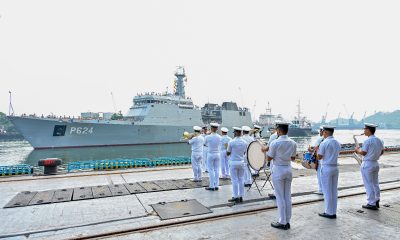




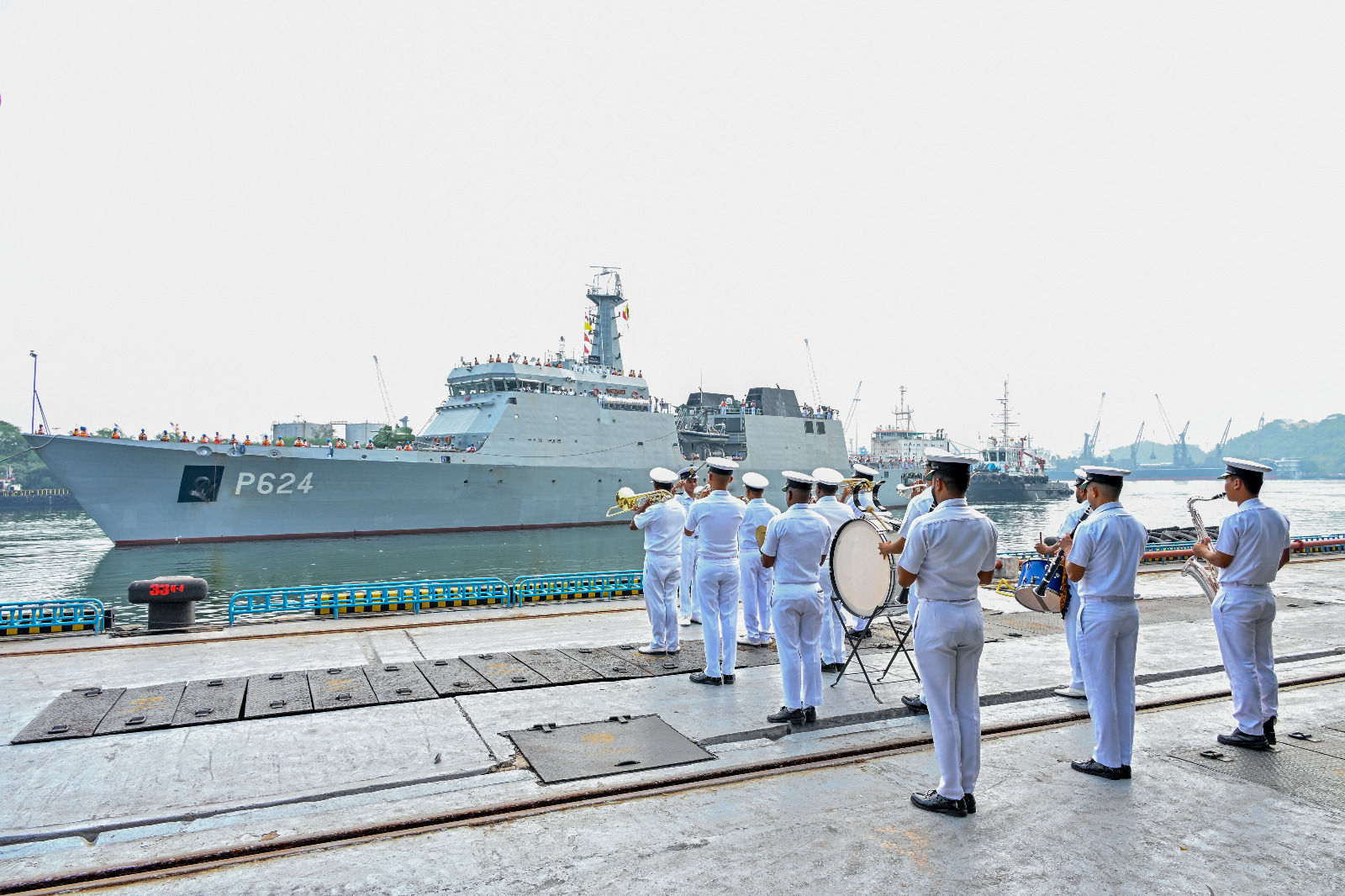
Sri Lanka Naval Ship (SLNS) Sindurala arrived at the port of Visakhapatnam in India on 17 September 2026, to participate in the bilateral naval exercise ‘SLINEX – 2026’.
The Indian Navy formally welcomed the SLN vessel upon its arrival, adhering to naval traditions.
The joint exercise will take place on 20 and 21 September in the seas off the east coast of India. On 18 September, the Commanding Officer SLNS Sindurala, Captain Sunanda Appuhamy, held official discussions with Commander Suraj Aiyappa, Commanding Officer Indian Naval Ship (INS) Kavaratti, aboard both vessels.
The annual exercise aims to enhance cooperation, interoperability, and professional exchange between the two navies. During the exercise, crew members from SLNS Sindurala will also participate in several professional and cultural exchanges organized by the Indian Navy.
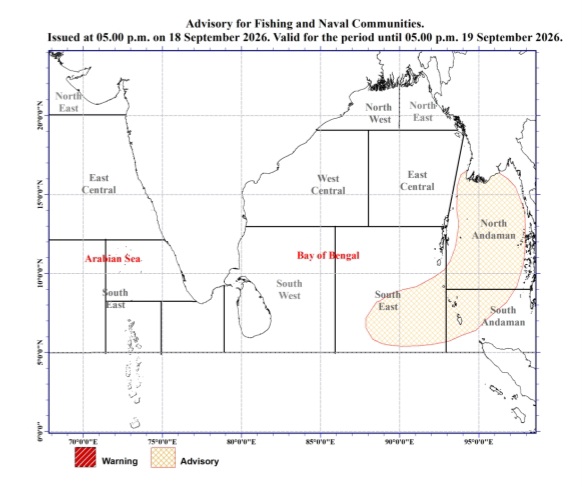
Advisory for strong winds and rough seas for Multi-day boats in the Bay of Bengal deep sea areas
Issued by the Natural Hazards Early Warning Centre
Issued at 05.00 p.m. 18 September 2026, valid for the next 24 hours.
PLEASE BE AWARE!
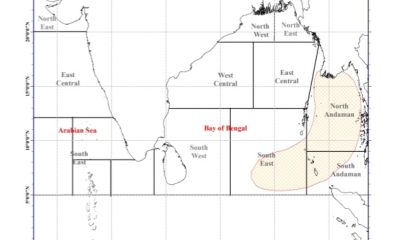
The atmospheric disturbance to the North of the Andaman Islands in the Bay of Bengal, is likely to develop into a low pressure area within the next 24 hours.
Due to its influence, wind speed over the Bay of Bengal sea areas will increase during the next few days starting from
tomorrow (19th).
The wind speed in the sea areas marked under the “Advisory” category on the map below will increase to 55-65 kmph at times and those sea areas will be rough or very rough at times.
Navel and fishing communities engaging the activities over this sea area are advised to be vigilant and be attentive to the future forecasts and bulletins issued by the department of Meteorology in this regards.

Text and Pic by Priyan de Silva
Director General of the Commission to Investigate Allegations of Bribery and Corruption (CIABOC) Ranga Dissanayake has questioned whether some promises contained in the National People’s Power (NPP) manifesto, A Thriving Nation – A Beautiful Life, could be fulfilled even if the government wanted to implement them.
Dissanayake raised the issue during a discussion following the release of the third biannual report on manifesto monitoring by the March 12 Movement, at the BMICH, on Wednesday.
He questioned whether the report had taken into account legal and institutional constraints affecting the implementation of certain pledges.
Citing the proposal to establish Anti-Corruption Investigation Offices in each district, Dissanayake said such offices could be established only with the agreement of CIABOC and that amendments to the Anti-Corruption Act would be necessary.
He also referred to the pledge to abolish the Executive Presidency, noting that successive governments had made similar commitments since 1994. He questioned whether there had been adequate consideration of where the powers vested in the Executive President would be transferred if the system were abolished.
On the proposal to establish a Public Prosecutor, Dissanayake questioned whether the Government intended to maintain the office alongside the Attorney General, who currently performs prosecution-related functions.
Executive Director of the Institute for Democratic Reforms and Electoral Studies (IRES) Manjula Gajanayake said Dissanayake’s remarks should be regarded as his personal views and not as Government policy.
Monitoring and Evaluation Consultants M. Thilakarajah and D.D. Mataharaarachchi presented the third-phase findings, covering January to June 2026.

SLNS Sindurala arrives in Visakhapatnam for SLINEX 2026

Advisory for strong winds and rough seas for Multi-day boats in the Bay of Bengal

Showers in the Western, Sabaragamuwa and North-western provinces and in Galle, Matara, Kandy and Nuwara-Eliya Districts

Some NPP manifesto promises may be difficult to fulfil – CIABOC DG

Yoshitha and ex-Navy chief Karannagoda’s case fixed for PTC

Court orders probe into Wimal’s rally speech

‘Dates have the highest sugar content to fight Coronavirus’

Sunday Island 27 December – Headlines

#SundayIsland 17th December – Headlines

Sunday Island – 28th March

Sunday Island Headlines – 21 March

Sunday Island – 21st February – Headlines
-

 News7 days ago
Gnanasara Thero absconding after SC ruling
-

 Opinion6 days ago
From Galkissa (Mount Lavinia) to Tambuttegama
-

 Business7 days ago
HNB Finance strengthens Board with four independent directors
-

 News3 days ago
US embassy won’t comment on IGP’s probe into joint drug raid
-

 Sports7 days ago
Culture within cricket team worrying authorities
-

 Features6 days ago
Sri Lanka’s university crisis: Brain drain and union action demand urgent reform
-

 Features5 days ago
The emptying university: why are academics leaving?
-

 News7 days ago
House to debate 22A, Judicature Bill next week