
Editorial
A dirty political war


Tuesday 13th January, 2026
What began as a debate on the government’s education reforms has descended into a dirty political war, with the propaganda brigades of both the JVP/NPP and the Opposition carrying out vilification campaigns against the key figures in the rival camps. Prime Minister Dr. Harini Amarasuriya, who is also the Minister of Education, has become a victim of a savage character assassination campaign, which no reasonable person will hesitate to condemn unreservedly. Shame on those who have stooped so low as to carry out personal attacks on her!
What has led to the current dispute in the education sector is basically the government’s intransigence. While claiming to be willing to consider dissenting views, it is all out to shove its reform package down the throats of other key stakeholders who unfortunately want the baby also thrown out with the bathwater, so to speak. A prerequisite for resolving the current conflict, which has the potential to cripple the education sector, is for both warring parties to soften their stands and negotiate.
President Anura Kumara Dissanayake is scheduled to meet the representatives of the trade unions representing teachers and principals shortly, we are told. One can only hope that two sides will move towards a rapprochement, which is the need of the hour.
The government ought to stop cherishing the delusion that its mandate is carte blanche for it to do as it pleases with no heed for dissent. It is only wishful thinking that the government will be able to ensure the implementation of its education reforms without the fullest cooperation of the frontline stakeholders—school teachers and principals.
Even the staunchest opponents of the education reforms at issue agree that the education system has to be reformed. What they are opposing tooth and nail is the manner in which the government has set about the task of introducing education reforms and its attempts to impose a fait accompli on other key stakeholders. The Opposition is not without a political agenda where its campaign against the education reforms is concerned; it will go to any extent to gain political mileage.
The government has erred by compressing the process of formulating education reforms into a year or so and proceeding at a pell-mell pace to implement them. Teachers’ and principals’ trade unions are of the view that some modules were prepared in just three months.
By rushing to reform the education sector, the government has provided the Opposition with a fresh rallying point and the latter is making the most of it. Various associations have sprung up overnight purportedly to ‘save free education’, and some Opposition politicians are planning to launch fasts against the education reforms.
A collective of Opposition parties held a protest in Matugama, the other day, claiming to safeguard free education. A group of NPP supporters staged a demonstration in the same township against the malicious propaganda attacks on Prime Minister Amarasuriya. They vehemently condemned the Opposition for insulting women. Their message must have struck a responsive chord with the public regardless what the Opposition politicians and their propaganda hitmen may say about them. Worryingly, the female JVP/NPP supporters have remained silent on scurrilous attacks the pro-government propagandists carry out on women in the Opposition; they have launched a vilification campaign against a young woman who spoke at a joint Opposition rally at Nugegoda recently. Politicians and propagandists in both the government and the Opposition must do unto others as they would have others do unto them.
Since all stakeholders agree that the education system needs reform, the government should put its controversial reform package on hold immediately and invite teachers, principals, the Opposition and others to a serious discussion.
The government would do well to refrain from crossing the Rubicon and be flexible enough to listen to the other stakeholders and make a course correction. It is hoped that the focus of the talks to be held between the government and the opponents of the education reforms will be on how to retain the baby while throwing away the bathwater.



There is much more to state visits of world leaders than a mere desire to strengthen bilateral relations. US President Donald Trump had several key items on his agenda when he visited China. So did his host, President Xi Jinping. The so-called summit diplomacy for Trump is an opportunity to strike trade deals, and pursue other commercial interests more than anything else. This time around, there was a difference. He sought to promote a peace plan as well.
Trump is keen to secure Beijing’s cooperation to end the Iran conflict, which has taken a turn neither he nor the Pentagon ever expected. Its fallout has dented Trump’s approval rating and adversely impacted the Republicans’ prospect of winning the upcoming midterm elections. Disruptions to global oil and fertiliser supplies due to the closure of the Hormuz Strait and other economic consequences of the war have not spared the US economy; they have caused inflation to rise in the US, and the Republicans fear that they might lose control of the Congress in November’s midterm elections. So, Trump sought China’s help to manoeuvre out of the Iran imbroglio.
The West Asia conflict became a live-fire laboratory for China, and Beijing would have gained from its prolongation if not for the fact the Chinese economy, which has shown signs of slowing down, is reeling from energy shocks. So, an early end to the conflict will serve China’s interests as much as America’s. However, for strategic reasons, China is not likely to go all out to pressure Iran to strike a peace deal with the US at least in the short run.
Few things apparently worry Trump more than the US trade deficit with China. His “tariff war” did not yield the desired results, and a recent court ruling has stood in the way of his power to increase tariffs whimsically. So, he expected to persuade China to buy more goods and services from the US. He announced, in a press interview, that China had agreed to purchase 200 Boeing jets, but the speculation was that the Chinese order would be much bigger. Trump also wanted to defuse trade tensions with Beijing and work towards a tariff deal favourable to the US. It is too early to say whether his efforts will reach fruition. Another item high on his agenda was securing improved market access for US companies, especially tech giants. He was accompanied by more than a dozen top CEOs, including SpaceX and Tesla’s Elon Musk, Apple’s Tim Cook and Goldman Sachs’s David Solomon. On Wednesday, Trump proudly introduced them to President Jinping as “distinguished representatives from the American business community who respect and value China”. The inclusion of those top business executives in Trump’s entourage prompted comedian and talk-show host, Stephen Colbert, to call Trump’s China visit “a fabulous billionaire boys’ trip”.
Having ruined his image internationally by carrying out unprovoked attacks on Iran, Trump needed some diplomatic success to boost his image amidst economic and geopolitical pressures. On the diplomatic front, Trump sought to use his Beijing visit to work towards stability in US-China relations without further escalation over Taiwan or trade.
Foremost on President Jinping’s mind is arresting an economic slowdown, and he obviously expected Trump’s visit to help soften the US position on tariffs and export restrictions hurting China. Jinping also sought expanded US cooperation on trade, AI and energy security. He is also keen to avoid a direct confrontation with the US and desirous of a continued dialogue. He was not so naïve to expect an assurance from Trump that the US would not resort to provocative actions regarding Taiwan. Hence, his warning to Trump on Thursday that mishandling the two nations’ disagreements over Taiwan could endanger China-U.S. relations. He has been quoted as saying, “If [they are] mishandled, the two nations could collide or even come into conflict, pushing the entire China-US relationship into a highly perilous situation.” Whether this warning would make the US mend its ways is a moot point.
Trump’s visit was a huge diplomatic success for Beijing, for it has demonstrated to the world that China is a very influential global actor, especially during international crises. Referring to his meeting with Jinping, Trump said on Wednesday, “There are those who say this may be the biggest summit ever.”
All in all, the Xi-Trump summit ended well. However, the prospects of positive outcomes from the high-level meeting hinges on how the two rival powers navigate contentious geopolitical and economic issues in a crisis-ridden world.

Saturday 16th May, 2026
A group of undergraduates seized what remains of a mansion that belongs to the State, in Malwana, on Thursday. They represent the new Inter University Students Federation (IUSF), created by the JVP-NPP government as a counter to the original IUSF controlled by the breakaway JVP group, the Frontline Socialist Party (FSP). The protesters’ JVP links became clear from the subservient manner in which the police behaved.
It was alleged after the 2015 regime change that the Malwana Mansion belonged to Basil Rajapaksa, but that allegation could not be proved in court. Nobody claimed ownership of the house, which the court subsequently vested in the state.
The pro-government student union is desperate to outshine the original IUSF, and therefore needs media attention. Thursday’s mansion grab can therefore be considered a publicity stunt aimed at having university students believe that the government-controlled IUSF is doing something for them. The JVP may also have sought to use the incident to distract attention from the ongoing controversy over a palatial house built by a minister who claimed, during the 2024 election campaign, that he was struggling to make ends meet.
It will be interesting to see the government’s reaction to the forcible occupation of the Malwana Mansion. The protesters are demanding that the sprawling house, which was damaged by goons during the violent phase of Aragalaya in 2022 be repaired urgently and handed over to a university. Chances are that their demand will be granted so that both the government and its student wing can score political points.
On Friday, the police, who are notorious for resorting to disproportionate force to crush protests, at the drop of a hat, behaved for once. They pretended to resist the protesters’ efforts to enter the property, and what was described as a scuffle by a section of the media looked more like a friendly Kabaddi match. Unsurprisingly, the police gave in, and the students overran the house. They were there at the time of going to press. They don’t have to worry about legal action or a police crackdown, for the government supporters are above the law. They can grab others’ properties, park buses in undesignated areas on expressways and even carry out scams, causing staggering losses to the state, with total impunity.
If the CID cannot so much as trace the owner of a palatial house abandoned after a regime change, how can it be considered equal to the task of finding out the masterminds behind the Easter Sunday terror attacks? Unlike the herb-bearing mountain Hanuman brought here from the Himalayas, according to Ramayana, the Malwana Mansion was built over a period of time, and it is a shame that the police and other investigators have failed to find out its owner.
Thursday’s incident at Malwana reminds us of how a group of JVP cadres, led by a couple of NPP MPs, seized an FSP office at Yakkala last year, with the police looking the other way. The violent mob assaulted the FSP members and produced what they claimed to be the copy of a judicial order that permitted them to occupy the office. The police accepted their claim unquestioningly and went so far as to put up barricades near the disputed office to protect the JVP cadres. A case was filed, and the Gampaha Magistrate’s Court ruled that the FSP could occupy the party office.
President Anura Kumara Dissanayake never misses an opportunity to claim that his government has restored the rule of law, and nobody is above the law. He repeated this claim the other day in Matale. But his party members are free to violate the law in full view of the police. No action has been taken against the JVP cadres and MPs who committed a serious offence by seizing the property of another political party and furnishing a bogus document to mislead the police. So much for the new political culture that the JVP/NPP promised to usher in.
Friday 15th May, 2026
Politics is full of unexpected twists and turns. No sooner had newly elected Tamil Nadu Chief Minister Joseph Vijay punched above his weight to win a crucial trust vote in the Tamil Nadu Legislative Assembly to consolidate his power than he had to roll back the appointment of an astrologer as an Officer on Special Duty (OSD) due to protests. One of the first few things Vijay did after being sworn in as Chief Minister was to appoint famous astrologer Radhan Pandit Vettrivel, as an OSD. It has been reported that Vettrivel predicted Vijay’s electoral victory, and on his counsel Vijay rescheduled his oath-taking ceremony. The new Chief Minister had to give in to pressure from his political allies and rivals and make a volte-face; they questioned his wisdom of appointing an astrologer as a top aide when the need was for the new government to “foster a scientific outlook”.
Vijay should consider the removal of Vettrivel as a foretaste of what is to be expected in coalition politics, where the tail tends to wag the dog, so to speak. Perhaps, by taking up the issue of the astrologer’s appointment, and pressuring Vijay to cancel it, the parties that enabled his TVK to secure a working majority have tested their ability to leverage their support for the TVK to influence the new government.
Intense opposition to an astrologer’s appointment to a Chief Minister’s staff in India, of all places, has come as a surprise. Astrologers wield tremendous influence on people and their political leaders in this part of the world despite the advancement of science and technology. Prof. Richard Lachman of the Toronto Metropolitan University, in an article in The Conversation, reproduced on this page today, discusses how AI Chatbots are believed to manipulate us and shape our opinions. He points out that scholars have long argued that “the algorithms used by social networking sites and search engines create filter bubbles, in which we are fed well-crafted text, video and audio content that either reinforces our worldview or exerts influence towards someone else’s.” It can be considered an instance of the creature manipulating the creator. However, in South Asian politics, astrologers are far more influential than AI Chatbots. Astrologer Vettrivel’s list of clients is said to include a number of prominent Indians.
According to media reports, the late Tamil Nadu Chief Minister J. Jayalalithaa was one of Vettrivel’s clients, and they fell out over his wrong prediction that she would not be found guilty in a disproportionate assets case and imprisoned. Astrologers have taken quite a few political leaders for a ride in this country as well. Some of them even let their guard down, believing in astrological predictions only to be killed in terror attacks, and others who took astrologers’ claims seriously even advanced elections and suffered humiliating defeats. An astrologer was appointed as a director of a state bank. Strangely, there were no protests though the astrologer’s plum job was a sinecure. Time was when Sri Lankans did as governments said; the governments did as the Presidents said, and the Presidents did as astrologers said.
Why Vijay’s allies and rivals have opposed the astrologer’s appointment at issue is not clear. Do they genuinely believe that the new Tamil Nadu government should promote science at the expense of pseudoscience and occult practices involving divination, or did their protests emanate from political and personal rivalries? Whatever the reason, astrologers are facing formidable challenges in this day and age, with a resurgence of global interest in space exploration and new scientific inventions and discoveries. While astrology is focused on interpreting the positions of the celestial bodies within the solar system, astronomy is examining the Milky Way and beyond. A new scientific research has proposed a striking alternative to the long-held scientific belief that a supermassive black hole lies at the centre of the Milky Way, but according to some researchers, the mysterious object may be an ultra-dense concentration of dark matter rather than a black hole. Scientists have long argued that there could be a ninth planet in the solar system, orbiting the sun at a huge distance.
There are several key factors that pose existential challenges to astrology. Some of them are rapid advances in the field of AI, the growth of the Internet with increasing access to information and scientific knowledge, the emergence of a digitally native generation, and the spread of scientific reasoning through modern education.
As for the political brouhaha in Tamil Nadu, the question is why Vettrivel, described as a competent astrologer, could not foresee political trouble for him and his master, Vijay, over his controversial appointment and did not decline the sinecure, when it was offered, without waiting to be removed unceremoniously.

Taskin, Mehidy, Taijul, Mahmudul put Bangladesh well in front

Pakistan name Iram Javed in Womens T20 World Cup squad

Expansion of PayPal services in Sri Lanka officially announced

Showers expected in the Western, Sabaragamuwa, Central, North-western and Northern provinces and in Galle and Matara districts

Rupee slide rekindles 2022 crisis fears as inflation risks mount

Kapila Chandrasena case: GN phone records under court scrutiny

‘Dates have the highest sugar content to fight Coronavirus’

Sunday Island 27 December – Headlines

#SundayIsland 17th December – Headlines

Sunday Island – 28th March

Sunday Island Headlines – 21 March

Sunday Island – 21st February – Headlines
-
 News5 days ago
Ex-SriLankan CEO’s death: Controversy surrounds execution of bail bond
-
Features6 days ago
High Stakes in Pursuing corruption cases
-
 Features6 days ago
When University systems fail:Supreme Court’s landmark intervention in sexual harassment case
-

 Features20 hours ago
Sri Lankan Airlines Airbus Scandal and the Death of Kapila Chandrasena and my Brother Rajeewa
-
 Midweek Review5 days ago
A victory that can never be forgotten
-
 News2 days ago
Lanka’s eligibility to draw next IMF tranche of USD 700 mn hinges on ‘restoration of cost-recovery pricing for electricity and fuel’
-
 News7 days ago
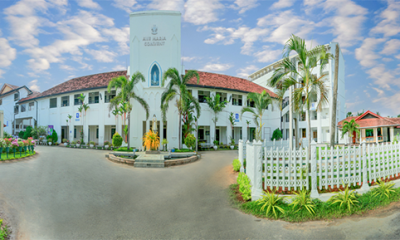
150th anniversary celebrations of Ave Maria Convent, Negombo
-
 Features3 days ago
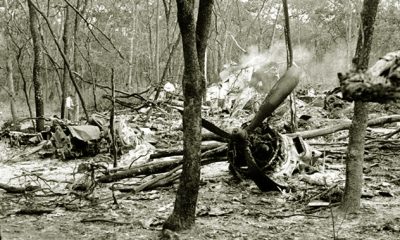
Mysterious Death of United Nations Secretary General Hammarskjöld