
Business
Foreign Minister defends India pacts, sidesteps transparency demand

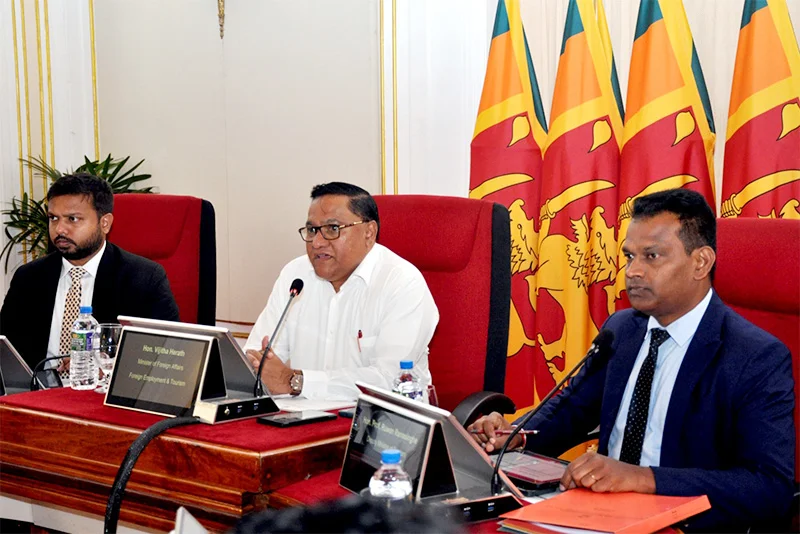
In a press conference marked by both clarity and pointed omission, Foreign Affairs and Tourism Minister Vijitha Herath, yesterday offered a robust defence of two controversial bilateral agreements with India but conspicuously avoided committing to tabling their full texts in Parliament.
The minister’s appearance, billed as a year-opening briefing, took a sharp turn when questioned on the strategic implications of the India-Sri Lanka Defence Cooperation Agreement and Sri Lanka’s acceptance of the Indian Pharmacopoeia.
“No Indian military camps on our soil”
Responding in Sinhala to a question posed in English, Minister Herath moved first to allay what he suggested were widespread misapprehensions about the defence pact.
“This agreement is especially for data and information exchange purposes regarding drug trafficking, drug mafias, human trafficking, and any terrorist activities that could threaten regional security and peace,” Herath stated.
He emphasised that it would also facilitate “various support related to the defence sector.”
In his most definitive assertion, aimed at quieting a persistent national anxiety, the Minister declared: “We must clearly say that there is no plan or possibility of setting up Indian defence camps on Sri Lankan soil.” He categorised the pact not as a “defence agreement” but a “defence cooperation agreement in its real sense,” claiming it creates an “advantageous position” for Sri Lanka.
He linked recent post-‘Ditwah’ cyclone disaster support from India, as well as U.S. aerial support during recovery efforts, to the frameworks established by such cooperation agreements, arguing they have proven beneficial.
Indian Pharmacopoeia: A reputation-based advantage
On the equally contentious acceptance of the Indian Pharmacopoeia – a standard synopsis for drug manufacturing – Minister Herath framed it as a logical step that formalises existing practice.
“We already import a significant share of medicines from India,” he noted. The agreement, he explained, signifies the acceptance of medicines exported by a “reputed Indian pharmaceutical company” approved by its national regulators.
He assured the public that Sri Lanka’s National Medicine Regulatory Authority (NMRA) will continue to remain the monitor. “By entering into this, no disadvantage will happen to us. Only an advantage will happen… it will only be beneficial to us,” he emphasised.
The unanswered question
Despite the detailed assurances, the Minister pointedly ignored the final and arguably most critical part of the question posed by The Island Financial Review : whether the government would table the full text of the two agreements in Parliament for transparent debate and discussion.
This omission is likely to fuel further controversy, as opposition parties, civil society groups, and independent analysts have repeatedly demanded full parliamentary scrutiny, arguing that agreements touching on sovereignty and public health mandate the highest level of public transparency.
Tourism Pride
Shifting to his tourism portfolio, Minister Herath struck an optimistic note, citing record tourist arrivals and foreign remittances in 2025 as a sign of resilient recovery post-Ditwah.
The conference also touched on global affairs. When asked about the U.S. arrest of Venezuelan President Nicolás Maduro, Herath presented a nuanced governmental position. He stated that while his party, the JVP, condemns the action, the government’s official stance is to urge respect for national sovereignty in line with the UN Charter – a reflection of the coalition’s delicate balancing act between ideological roots and diplomatic pragmatism once in governance.
Minister Herath’s explanations provide the government’s clearest public rationale yet for the India agreements, directly confronting fears over militarisation and pharmaceutical quality. However, the deliberate sidestepping of the transparency query left a communication deficit at the heart of the press conference.
High-stakes diplomacy
It reflected a perception that while the administration is willing to defend its policy outcomes, it remains reluctant to subject the processes of high-stakes diplomacy to the full glare of parliamentary and public scrutiny. As these agreements continue to shape Sri Lanka’s strategic and health landscape, the call for their full disclosure is now accompanied by a louder question about the government’s commitment to open governance.
by Sanath Nanayakkare

Business
Sri Lanka worthy of being ranked as the world’s top holiday spot – cricketing great Wasim Akram
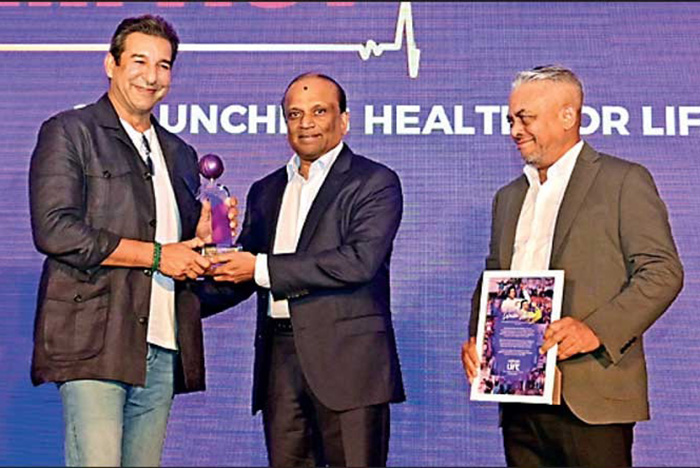
Pakistani cricketing legend Wasim Akram said Sri Lanka is the best tourist destination and is worthy of being ranked the world’s top holiday spot. ‘The island’s natural beauty and my decades-long connection with the country, are factors that enhance Sri Lanka’s value, he explained.
Speaking at a Softlogic Life investor forum in Colombo last Tuesday Akram said Sri Lanka remained one of his favourite destinations despite having traveled extensively around the world.
Akram who captained the Pakistani national cricket team and was celebrated as Softlogic Life’s brand ambassador said filming the company’s latest television commercial gave him another opportunity to experience some of the country’s most scenic locations, including Galle and the central highlands.
Akram said Sri Lanka’s landscapes, rivers and coastline were among the most beautiful he had beheld during his travels and expressed surprise that the country was not already considered one of the world’s leading tourism destinations.
Having first visited Sri Lanka as a teenager in 1985, Akram said he had returned numerous times over the years as a player, commentator and tourist. He added that he plans to continue visiting the island regularly and hopes to explore more of the east coast in the future.
Softlogic Life had impressive growth last year and is looking forward to introducing new life insurance products to the local market considering the increasing the aging population in Sri Lanka.
By Hiran H. Senewiratne
Business
Veenath Indrajith from the University of Sri Jayewardenepura wins the 2026 Saman Kelegama Memorial Research Grant

Veenath Indrajith, a fourth-year undergraduate from the Department of Business Economics at the University of Sri Jayewardenepura, has been selected as the winner of the Saman Kelegama Memorial Research Grant for 2026. Indrajith’s academic and professional interests lie in economics, finance, investment, and policy-oriented research. In addition to his undergraduate studies, he is currently pursuing the Chartered Accountancy qualification in Sri Lanka, demonstrating a strong commitment to analytical rigour and professional excellence. He aspires to contribute to evidence-based policymaking through applied economic research.
Indrajith’s research study, titled “Small Vehicle Businesses and Household Investors Using the Second-Hand Car Market as an Alternative Investment Method in the Colombo District of Sri Lanka,” will adopt a qualitative research approach to explore the motivations, experiences, perceived returns, and risks associated with investing in used vehicles. By analysing household-level decision-making and investment behaviour, the research aims to shed light on a relatively underexplored area of Sri Lanka’s alternative investment landscape. The findings are expected to provide valuable insights for policymakers, particularly in relation to financial literacy, household investment strategies, and the development and regulation of alternative investment markets in Sri Lanka.
The Saman Kelegama Memorial Research Grant, established in 2018, honours the legacy of the late Dr. Saman Kelegama, former Executive Director of the Institute of Policy Studies of Sri Lanka (IPS), whose work significantly shaped public policy discourse on socio-economic development in Sri Lanka and the broader South Asian region. The grant is awarded annually to an outstanding undergraduate student from a Sri Lankan university, with the aim of encouraging innovative, policy-relevant research and nurturing the next generation of policy thinkers. As part of this grant, Indrajith will receive training and mentoring from IPS senior researchers to complete the proposed study.

Delmege Consumer, the flagship FMCG cluster of the Delmege Group, has evolved into one of Sri Lanka’s most trusted household names, building lasting relationships with communities across the island through a diverse portfolio of quality products that have become an integral part of consumers’ everyday lives for generations. Renowned for enriching households with Delmege’s own brands, leading local brands, and world-renowned international brands, the company continues to strengthen its presence, reputation, and connection with consumers nationwide.
A key strength of the FMCG cluster lies in the strong and enduring partnerships it has cultivated with suppliers, enabling the company to establish a responsive, time-sensitive, and mutually beneficial distribution network that has made a significant impact across Sri Lanka. Through its extensive reach and customer-focused approach, Delmege Consumer serves retail, wholesale, HoReCa, export, and modern trade channels, supported by flexible channel management strategies and winning consumer-centric propositions that cater to evolving market needs.
Further strengthening its distribution network and expanding its digital footprint, Delmege Consumer has partnered with Daraz, Sri Lanka’s leading e-commerce platform, to offer customers a more convenient, seamless, and accessible way to purchase its extensive range of FMCG products online.
Commenting on the partnership, Anil Meegahage, CEO of Delmege Consumer, stated:
“At Delmege Consumer, we are committed to innovation, continuously strengthening our product portfolio, and enhancing customer convenience and experience. Our partnership with Daraz enables us to serve customers across the country more efficiently by providing them with an easy, secure, and reliable platform to purchase trusted Delmege FMCG products online.”
Adding further, Baratha Piyadigama, Head of Group Marketing, Delmege, said:
“This partnership with Daraz marks another important milestone in our journey to enhance brand positioning, visibility, and awareness, especially at a time when digital and online commerce continue to gain significant momentum. As one of Sri Lanka’s leading FMCG distributors, we are proud to extend our trusted portfolio of products into the digital space through Daraz, ensuring customers across the island can conveniently access their favourite products with just a few clicks.”
Delmege’s extensive FMCG portfolio includes well-known Delmege branded products such as Canned Fish, Hiru Kahata Tea, Delmege Soya, Flavours and Colours, Delmege Pasta,
Delmege Noodles, and Salt, together with the much-loved Motha range of dessert ingredients, beverages, and mixes. The company also represents globally renowned international brands including Kellogg’s cereals such as Corn Flakes, Muesli, and Oats; Pringles; and the Ferrero portfolio featuring Ferrero Rocher, Nutella, Kinder Joy, and Tic Tac. Through its diverse and trusted brand portfolio, Delmege Consumer continues to reinforce its position as one of Sri Lanka’s leading FMCG companies.

Lionel Messi scores brace as Argentina beat Austria 2–0 at World Cup 2026

Egypt denied flight to Seattle ahead of final World Cup group match

Mbappe leads France to win over Iraq in lightning-delayed World Cup game

US partially lifts Iran oil sanctions amid ‘encouraging’ talks

England lose 12 WTC points for slow over rate at The Oval

Showers expected in the Western, Sabaragamuwa and North-western provinces and in Galle, Matara, Kandy and Nuwara-Eliya districts.

‘Dates have the highest sugar content to fight Coronavirus’

Sunday Island 27 December – Headlines

#SundayIsland 17th December – Headlines

Sunday Island – 28th March

Sunday Island Headlines – 21 March

Sunday Island – 21st February – Headlines
-
 Features6 days ago
Killing of Colombo’s ancient trees — a warning on UN’s World Desertification Day – 17 June
-

 News4 days ago
Creditor receives USD 2.5 mn as Lankan public bears loss from theft of Treasury funds
-

 News3 days ago
Creditor not yet paid
-
 News3 days ago
Consumers bearing 22% tax burden despite 18% VAT claim: Dr. Harsha de Silva
-

 Opinion5 days ago
Beyond diagnosis: A strategic design for 7% growth by 2029 (Part I)
-
 News6 days ago
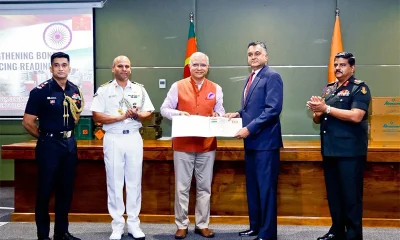
India provides military stores worth USD 5.5 mn to SL
-

 Opinion4 days ago
SriLankan Airbus struck by lightning
-

 Editorial2 days ago
Fuel crisis: Beyond price debate