
Editorial
It’s PC polls, stupid


Friday 2nd Junuary, 2026
The SJB yesterday called upon the NPP government to hold the much-delayed Provincial Council (PC) polls soon. Its call is bound to go unheeded, for the JVP/NPP is not ready for an election. Having suffered a string of defeats in the cooperative society elections during the past several months, the government is trying every trick in the book to postpone the PC elections further. The outcome of last year’s local government polls is not something the JVP/NPP can be really proud of; its efforts to sweep the polls did not reach fruition although it managed to bag a majority of local councils.
A midterm electoral setback could be the undoing of a government however powerful it may be. The fate that befell the Mahinda Rajapaksa government following the Uva PC polls in September 2014 is a case in point. The UPFA won the Uva PC, but the number of its seats dropped from 25 to 19. The number of UNP’s seats increased from 7 to 13. The JVP, which had only one seat in the previous council, secured 02 in 2014. President Rajapaksa, in his wisdom, advanced a presidential election, and lost the presidency to Maithripala Sirisena in January 2015.
So, it is highly unlikely that the NPP government will hold the PC polls anytime soon. The Opposition is not strong enough to pressure the government politically to take a huge electoral gamble by holding an election.
It is doubtful whether the Opposition is really keen to face an election at this juncture despite its rhetoric. The SJB and other Opposition parties have closed ranks and defeated budgets in a considerable number of NPP-controlled local councils and won cooperative society elections. But their fragile unity is not going to survive an election that they will have to contest separately. A split in the anti-government vote will stand the JVP/NPP in good stead. However, the situation is likely to change if the UNP and the SJB come together to contest future elections.
What enabled the UNP to improve its electoral performance in the Uva Province in 2014 and gain a strategic opening to topple the Rajapaksa government a few months later was a rapprochement between two factions led by Ranil Wickremesinghe and Sajith Premadasa.
The SJB leaders who are demanding that the PC polls be held soon ought to tender an apology to the public for the role they played in postponing the PC elections indefinitely in 2017 while they were in the UNP-led Yahapalana government. The UNP and the SLFP, as Yahapalana allies, were wary of facing an election in 2017 and therefore amended the PC Elections Act to delay the PC polls. None of the political parties represented in Parliament at the time, including the UNP, the SLFP/UPFA, the ITAK, the SLMC, and the JVP, opposed the obnoxious amendment to the PC Elections Act. The current SLPP leaders were dissident members of the UPFA. The original amendment Bill was to provide for a quota of 30% for female candidates on the nomination papers submitted for the PC elections, but it was changed beyond recognition at the committee stage to facilitate the postponement of the PC polls. Article 78 (3) of the Constitution says, “Any amendment proposed to a Bill in Parliament shall not deviate from the merits and principles of such Bill.” But the aforesaid political parties took the bad amendment for granted; the PC polls were made to disappear, as it were.
The incumbent government has said the PC polls will be held under the Mixed Proportional (MP) system. The delimitation of electoral boundaries, which is a prerequisite for holding the PC polls under the MP system, will take about one year, according to the Election Commission. The only way to hold the PC election soon is to legislate for it to be conducted under the existing Proportional Representation system. If the SJB is serious about having the PC polls held soon, it should campaign for amending the PC Elections Act, in Parliament. Let it be urged to fish or cut bait.


The Opposition asked the government, in Parliament on Friday, whether the latter would go ahead with its plan to close down low-attendance schools, and if so, what would happen to the students in them. The government said the number of students would not be the sole criterion for what it described as ‘school restructuring’, and factors such as population density and transport would also be taken into consideration. Its response smacked of obfuscation.
President Anura Kumara Dissanayake, speaking in Parliament, in July 2025, said 98 state-run schools were without new admissions. Pointing out that about 15% schools had fewer than 50 students each, and about two-thirds of schools had fewer than 100 students each, the President said a strategy to overcome the problem might necessitate the permanent closure of some of those seats of learning. According to teachers’ trade unions and organisations dedicated to protecting universal free education, most of these low-enrolment schools are situated in rural areas. The predicament of these schools is usually attributed to several factors such as the development of public transport, which has enhanced students’ mobility and lessened their dependence on rural schools which are in a state of neglect.
The Ceylon Teachers Union (CTU) has accused the government of trying to close down low-enrolment schools across the country, and redeploy teachers currently working in them to fill vacancies elsewhere. There are 10,146 state-run schools in Sri Lanka. Of them 9,750 are under Provincial Councils and 396 are national schools. About 800 rural schools have already been closed down during the past several decades, and it is feared that many more will face the same fate in the near future.
One of the pithy slogans the JVP coined during its second armed uprising in the late 1980s was ‘Kolombata kiri, gamata kekiri’ (‘milk for Colombo and melon for the village’), which highlighted the glaring urban bias in the allocation of state resources for development. Those who voted the JVP-led NPP into power, expected underprivileged schools to be developed as a national priority. But all signs are that they will be left with neither ‘milk’ nor ‘melon’.
Previous governments, which the JVP/NPP has condemned as a curse, bore the cost of operating low-enrolment schools. True, they also closed down some low-attendance schools but did not plunge head first into doing so. What one gathers from the statements made by the JVP/NPP heavyweights, including President Dissanayake, is that the government is planning to go full throttle on the school closure project.
Closing down low-attendance schools may make economic sense for the NPP and the Bretton Woods Twins, but that is bound to lead to serious social issues. The government has offered to provide the students in schools earmarked for closure with transport to other schools. This offer is based on the assumption that transport is the sole factor that has prevented them from attending urban schools. There are other reasons why they have had to stay in the underprivileged schools.
Prudence demands that the JVP-led NPP government refrain from rushing to close down the low-enrolment schools and explore ways and means of making them attractive to more students who cannot attend urban schools for reasons other than transport issues. Otherwise, there might be an increase in the school dropout rate in the rural sector. President Dissanayake, in his aforesaid speech, informed Parliament that the school dropout figures had risen from 16,673 in 2019 to 20,759 in 2022, before plateauing at 20,755 in 2024. Everything possible must be done to bring the dropout rate down in the shortest possible time. A steep school dropout rate is far more than a mere statistic; it is a symptom of systemic social issues.
The state has a strong justification for bearing the cost of operating low-attendance schools, for such expenditure helps reduce dropouts, promote educational equity, prevent social problems and build human capital. The government must handle this sensitive issue with great care and ensure that the poor students will have at least ‘melon’.
It is said that he who opens a school door, closes a prison. Ironically, questions happened to be raised in Parliament about the closure of underprivileged schools soon after the government’s declaration that it would spend Rs. 4.36 billion to construct a new prison in Kandy.

Saturday 24th Junuary, 2026
Doctors launched a 48-hour token strike yesterday in protest against what they have described as the government’s failure to implement a six-point agreement reached between the Government Medical Officers’ Association (GMOA) and the Ministry of Health. They are demanding that their allowances be increased and a separate service minute be introduced for the state sector doctors, among other things. The government has claimed that the doctors’ demands are unreasonable, and the strike did not cripple the state health institutions. It is sounding just like its predecessors.
The government is either misinformed or believing in its own propaganda lies. Doctors’ strikes always have a crippling impact on the state-run hospitals and cause unbearable suffering to patients who are dependent on free healthcare. The government should stop making false claims, and face reality.
Ideally, doctors should not strike at the expense of the sick, but there arise situations where they are compelled to flex their trade unions muscles to jolt governments into heeding their grievances. The incumbent government led by the JVP, which used strikes as part of its strategy to capture state power, has failed to be different from the previous administrations which mismanaged labour issues and provoked workers into trade union action, causing much inconvenience to the public. State workers and their trade unions backed the JVP-led NPP to the hilt, enabling its meteoric rise to power, and after winning the 2024 general election, the NPP declared that there would be no need for strikes thereafter because the new government would resolve all trade union disputes amicably without leaving any room for work stoppages. That pledge has gone unfulfilled.
Opinion may be divided on the striking doctors’ demands, but if the government has agreed to grant them, it must fulfil its pledge or have another round of negotiations and arrive at a compromise formula. It will be a mistake for the government to play a game of chicken with the GMOA or try to intimidate doctors with the help of its propaganda hitmen and front activists who stage protests against strikers, posing as patients and concerned citizens and calling for action to crush trade union struggles. Such tactics are counterproductive.
The warring doctors must also be flexible. Although the government, in its wisdom, has boasted that the state coffers are overflowing and it is free from pecuniary woes due to its proper economic management and its successful battle against corruption, the economic situation is not that rosy. Recent natural disasters have taken a heavy toll on the economy, and rebuilding and relief programmes will cost a great deal of state funds. So, the GMOA should factor in this harsh reality and act accordingly for the sake of the ordinary people who cannot afford to pay for healthcare. It is the interests of the public that must prevail.
The GMOA has threatened to stage a continuous strike unless the government grants its demands without delay. If the history of health sector strikes is anything to go by, the doctors are very likely to carry out their threat. The government should stop letting the grass grow under its feet and bring the GMOA to the negotiating table, and have a serious discussion. An assurance from President Anura Kumara Dissanayake himself that the government’s promises to the doctors will not go unfulfilled may help defuse tension and prevent a crippling health sector strike. A confrontational approach is bound to aggravate the situation.
Friday 23rd January, 2026
The JVP-led NPP government has delayed the appointment of one AG—Auditor General—and is in overdrive to oust the other AG—Attorney General. Determined to parachute a ruling party crony into the post of Auditor General, allegedly in a bid to cover up corrupt deals on its watch, the government is believed to be biding its time until the reconstitution of the Constitutional Council to achieve its goal. The JVP/NPP is unashamedly using its propaganda brigade to carry out malicious social media attacks on Attorney General Parinda Ranasinghe Jr., PC, and having public protests held against him in a bid to hound him out of office.
It is said that a bad workman blames his tools. Similarly, an incompetent government quarrels with vital state institutions and public officials when it finds itself in trouble or fails to deliver. Inefficient, arrogant politicians also launch witch-hunts against key state officials who have the courage to stand up to political pressure, fiercely defend their independence and carry out their duties and functions without fear or favour. This, we have witnessed during successive governments. It is no surprise that the JVP-led forces are all out to oust AG Ranasinghe.
Not that the Attorney General’s Department has been truly independent and blameless; it has its fair share of servile officials who pander to the whims and fancies of ruling party politicians. This newspaper has been critical of the manner in which the AG’s Department handled some cases and helped open escape routes for politicians in power and their cronies. There is a huge backlog of cases due to inordinate delays on the part of the AG’s Department. These institutional deficiencies have been there for decades, and the incumbent AG alone cannot be blamed for them. There is a pressing need to straighten up the AG’s Department, which is in need of restructuring. Devolution is among the proposed solutions.
Government supporters have been holding protests, making unsubstantiated allegations against AG Ranasinghe and calling for his ouster. The tendency to hold kangaroo trials is in the JVP’s DNA. The JVP acted as the prosecutor, judge, jury and executioner in the late 1980s; it gunned down quite a few professionals including University Vice Chancellors and the heads of some other state institutions during its reign of terror. Now, it has apparently shifted from assassinations to character assassination, which can be a fate worse than death for most people. It used death-dealing sparrow units to eliminate its targets in the past. Today, it deploys its propaganda brigade to destroy its opponents politically.
If anyone believes that the AG is at fault, he or she can invoke the jurisdiction of either the Appeal Court or the Supreme Court to seek redress. If the government has irrefutable evidence to prove its supporters’ allegations against AG Ranasinghe, then Parliament can remove him after a probe. Dirty social media attacks and protests are certainly not the way.
In 2012-13, the JVP rightly defended the then Chief Justice Dr. Shirani Bandaranayake, when the Mahinda Rajapaksa government targeted her for political reasons and launched a vilification campaign against her before wrongfully impeaching her. Now, the JVP-led NPP government stands accused of trying to get rid of the state prosecutor.
The ongoing propaganda campaign against the AG could also be part of a strategy to paint a black picture of the AG’s Department, turn public opinion against it and prepare the ground for setting up the proposed Independent Prosecutor’s Office.
When the present-day government leaders promised ‘a system change’ during their election campaigns in 2024, it was thought that they were planning to change the systems for the better, but now one wonders whether they are bent on changing the existing systems for the worse by politicising them more.
The Bar Association of Sri Lanka deserves praise for having taken up the cudgels for beleaguered AG Ranasinghe. Let all right-thinking Sri Lankans, particularly the state sector professionals, be urged to follow suit.

Three arrested with narcotics valued at Rs123 million at BIA

Navy intercepts 02 narcotics-laden trawlers with 11 suspects in southern seas

Indonesian Naval Ship ‘KRI SULTAN ISKANDAR MUDA – 367’ departs island

U19 World Cup: Japan defeat Tanzania by nine wickets

U19 World Cup: Ambrish’s four-fer powers India to third straight win

Josh Hoey breaks world 800m short track record with 1:42.50 in Boston

‘Dates have the highest sugar content to fight Coronavirus’

Sunday Island 27 December – Headlines

#SundayIsland 17th December – Headlines

Sunday Island – 28th March

Sunday Island Headlines – 21 March

Sunday Island – 21st February – Headlines
-

 Features7 days ago
Extended mind thesis:A Buddhist perspective
-

 Opinion6 days ago
American rulers’ hatred for Venezuela and its leaders
-
 Business19 hours ago
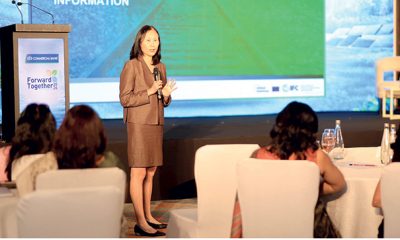
ComBank advances ForwardTogether agenda with event on sustainable business transformation
-
 Opinion4 days ago
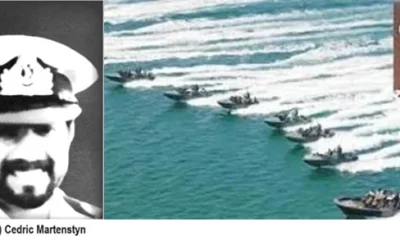
Remembering Cedric, who helped neutralise LTTE terrorism
-
 Business4 days ago
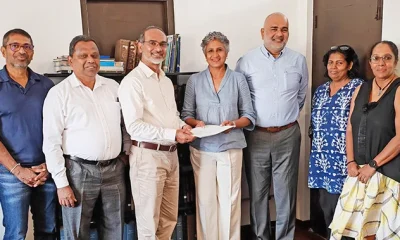
CORALL Conservation Trust Fund – a historic first for SL
-
 Opinion3 days ago
A puppet show?
-

 Opinion6 days ago
History of St. Sebastian’s National Shrine Kandana
-
 Opinion19 hours ago
Conference “Microfinance and Credit Regulatory Authority Bill: Neither Here, Nor There”