
Latest News
How a star-studded Kashmir cricket league bombed as organisers fled


Srinagar, Indian-administered Kashmir – Aasif Manzoor, a 32-year-old cricketer from Anantnag, a district in the south of Indian-administered Kashmir, was readying himself on Saturday morning to play a match in a star-studded tournament.
Retired global stars, local cricket icons and up-and-coming players were all part of the Indian Heaven Premier League (IHPL), which organisers had billed as a spectacle that they promised would grip the troubled region and draw large crowds.
Instead, Manzoor found himself huddled with his teammates in the corridors of the Radisson, a five-star hotel overlooking the Jhelum River in Srinagar, Indian-administered Kashmir’s biggest city, which was hosting the series.
Their hotel bookings had been arranged by the Yuva Society, a private group based in India’s northern state of Punjab, which had also organised the tournament. “The staff was refusing to let us check out,” Manzoor told Al Jazeera.
The reason? The organisers had vanished the night before, allegedly after running out of money midway through the tournament.
As the hotel bills mounted and ran into millions of rupees, dozens of players like Manzoor found themselves trapped. Scoring runs and taking wickets wasn’t on their minds any more. Getting out of the hotel was.
They eventually were able to leave, but the rest of the tournament was scrapped.
The embarrassing debacle has raised questions about the event’s planning and the role of the region’s administrators. But to many, the episode is also the latest example of the pitfalls of attempts by the Indian government and corporate entities backed by it to portray a sense of “normalcy” in Kashmir, six years after Prime Minister Narendra Modi’s government scrapped the region’s semi autonomous special status.
“It was a shocking experience for us,” Manzoor said.

The fortnight-long cricket tournament kicked off on October 25 in chilly Srinagar as winter set in. The competition had eight teams, including 32 former international cricketers, with the bulk of the rest of the players from Kashmir.
Major global stars included former West Indies champion batsman Chris Gayle, ex-Sri Lankan all-rounder Thisara Perera, New Zealand batsman Jesse Ryder, South African Richard Levi and Omani player Ayab Khan.
“For the first time, we will have international cricket superstars like Chris Gayle playing for a local Kashmiri team,” Nuzhat Gul, who heads the Jammu and Kashmir Sports Council, said at the beginning of the tournament.
“The motive for organising such tournaments was to engage the young positively,” she said, adding that the government had offered infrastructure, publicity and logistical assistance to the organisers.
The tournament was supposed to conclude on Friday [8th November 2025].
But officials who spoke to Al Jazeera on condition of anonymity said the event ran into “sponsorship difficulties”. In other words, sponsors didn’t pay up as they had promised to. That challenge was amplified once it became clear that only a trickle of local Kashmiris was coming to watch the matches at the Bakshi Stadium, a sprawling sports facility in the middle of Srinagar.
Things came to a head when the organisers packed up and left in the middle of the night last Friday, leaving players haggling with hotels over unpaid room rents.
Trapped at the Radisson, Manzoor said he tried calling the organisers. But no one picked up or returned his calls.
“It took a while to understand what was going on.”
Eventually, Manzoor said, a senior member from the English Cricket Board, Melissa Juniper, who was also in Srinagar for the event, rang up the British high commission in New Delhi, whose officials spoke to the hotel staff.
“They worked out something, and the players were allowed to check out, including myself,” he added. Juniper, he said, stayed back at the hotel while British officials figured out how to clear the dues.
The British high commission did not return queries from Al Jazeera on its reported mediation with the hotel staff in Srinagar on behalf of the players. But on Wednesday, Mushtaq Chaya, owner of the Radisson in Srinagar, told reporters that the organisers had defaulted on payments of more than 5 million rupees ($57,531).
Meanwhile, FanCode, a cricket streaming app, has since Saturday listed the remaining matches of the competition as “abandoned”.

According to Manzoor, players had started realising that there was something wrong with the event even before the organisers packed up and left.
“Local players were demanding that the organisers must first sign a contract with them before they can proceed to play. They were assuring us that it would happen. But it did not,” Manzoor said. “Then suddenly, they left without anyone knowing about it. We did not expect it to end this way.”
Kashmiri authorities are now facing mounting questions from locals: How was the event given a go-ahead without background checks on the organisers? And did the tournament go through the rigorous scrutiny any event in Kashmir is usually subject to in a region known for sweeping restrictions and surveillance?
Police in Kashmir have announced an investigation as regional sports authorities — including Gul of the Jammu and Kashmir Sports Council — are now distancing themselves from the organisers.
“If they did this, the law would take its own course,” said Satish Sharma, the minister for youth services and sports in Kashmir. “An inquiry has started, and action will follow. Police have taken up the case.”
Al Jazeera tried to reach the Yuva Society but has not received any response. Meanwhile, the organisation’s website appears to be down since the debacle. Details about the organisers are no longer available on the portal.
All it still has is a single message flashing on the screen: “Get ready, something cool is coming!”

For a while, it did seem like something “cool” could be coming to Kashmir.
Social media visuals for the event show Gayle, who was one of international cricket’s biggest draws for two decades, taking heavy steps on the damp turf in the Srinagar stadium as his hair swung under a black bandana tied around his forehead.
In most shots, the seats around the venue during matches were sparsely occupied. But in one scene, a small crowd of young fans is jumping with jubilation as heavily armed members of the Indian paramilitary forces surround them.
“There was a lot of anticipation for this tournament,” Parvez Rasool, arguably Kashmir’s best-known cricketer, told Al Jazeera. “That local Kashmiri cricketers would share the same dressing room as these megastars was a major thing in itself.”
Rasool was also to play in the tournament. He rose to stardom in 2013 after briefly playing for the Indian cricket team – the first Kashmiri to do so. His inclusion in the national team was lauded by the Indian media and politicians as an example of the “mainstreaming” of Kashmiris at a time when the region was in turmoil after a crackdown on protesters. Since the late 1980s, Kashmir has been in the throes of an armed rebellion with separatists seeking independence from India.
Rasool said his payments have not been settled by organisers so far. “The people who approached me to take part are big names in Indian cricket, so I consented,” he said, without naming the individuals he was referring to.
“I don’t agree with the allegations that the event was organised in bad faith, but it seems that it may not have been properly planned. The sponsors have reportedly failed to turn up, and the audience wasn’t even 5 percent of what was expected,” he added.

Another Kashmiri cricketer who was part of the trials before the main tournament was held, said a lot of his peers were already disappointed with the league because of the absence of any formal contracts or payments.
“They took a fee of $14 from bowlers and batsmen and of $20 from all-rounders who took part in the trials,” the 24-year-old said on condition of anonymity because he feared repercussions for his comments.
“Everything seemed suspicious from the very beginning. Thisara Perera, the Sri Lankan star, played with us. It was embarrassing that even his uniform wasn’t tailored to his size. The size of his sportswear was 46 inches, but they offered him 42,” the Kashmiri player said, chuckling.
While some sports enthusiasts in Kashmir said it was the comparatively high price of the tickets at $4 each that kept spectators away, others blamed the timing of the event, which coincided with the annual apple harvest. As a result, many locals were busy tending to their orchards. Apples provide a livelihood for nearly half the region’s eight million people.
“Some matches lasted from 10am until 5 in the evening,” said a video journalist who filmed the tournament for his Instagram page. He spoke on condition of anonymity. “Obviously, who would turn up in the middle of the harvest?”
But to some analysts, the tournament’s collapse is also emblematic of the attempts by Modi’s government and local authorities to portray a sense of normalcy in Kashmir.
Critics argued that such state-backed events aim to depoliticise Kashmir’s realities even as surveillance tightens, dissent is curbed and political representation remains suspended.
In 2019, Modi’s government annulled Kashmir’s special status and downgraded the region into a federally controlled territory during a crackdown on journalists, human rights campaigners and opposition politicians.
Omar Abdullah, who returned as Kashmir’s chief minister during last year’s polls, has been pleading in vain with New Delhi to reinstate Kashmir’s pre-2019 powers.
Apoorvanand, a Hindi professor at the University of Delhi who writes literary and cultural criticism, told Al Jazeera that the cricket tournament fit a broader pattern.
“It’s been a part of Modi’s political repertoire right from 2014 to organise these celebrations to give an appearance of cheerfulness so that his critics don’t question him,” Apoorvanand, who goes by a single name, said, referring to the year Modi became India’s prime minister.
Similar events held in Kashmir in the past have come under criticism, such as last month when a popular New Delhi-headquartered television news channel organised a concert featuring popular Indian performer Sonu Nigam.
The concert was boycotted by many Kashmiris, citing the performer’s past tweets in which he had criticised the practice of loudspeakers being used for the Islamic call to prayer.
“The principal addressees of these events are Modi’s voters across what is known as the country’s Hindi-speaking belt. The message that his administration wants to telegraph is that everything is hunky-dory in the Kashmir Valley,” Apoorvanand said.
“It is to give them a sense of ownership over the region.”
Kashmiri researchers who have been observing the conflict for decades said that while large events such as the cricket competition are by themselves harmless, any effort to use them to send broader messages about the current state of Kashmir is problematic.
“If these events are meant to suggest Kashmir is ‘normal’, then what better way to demonstrate [that] than withdrawing the military forces, the draconian laws and the suppression of dissent?” said Mohamad Junaid, an associate professor of anthropology at the Massachusetts College of Liberal Arts in the United States.
If the Modi government “wants the world to see ‘normalcy’,” he said, “India could begin by releasing thousands of Kashmiri political prisoners from jails.”
[Aljazeera]

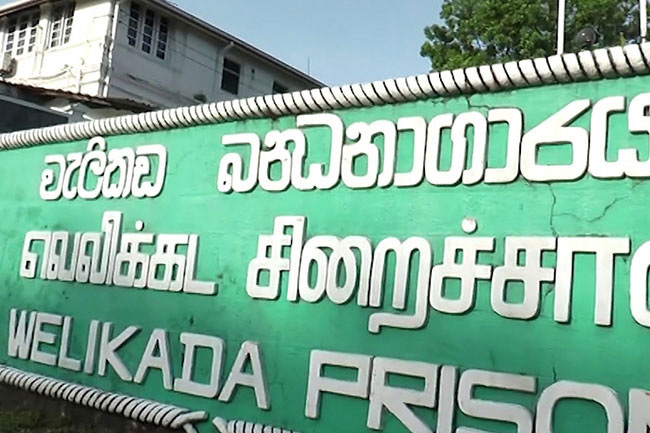
Three prison guards attached to the Welikada Prison have been arrested by Borella Police following the death of an inmate on Monday (04).
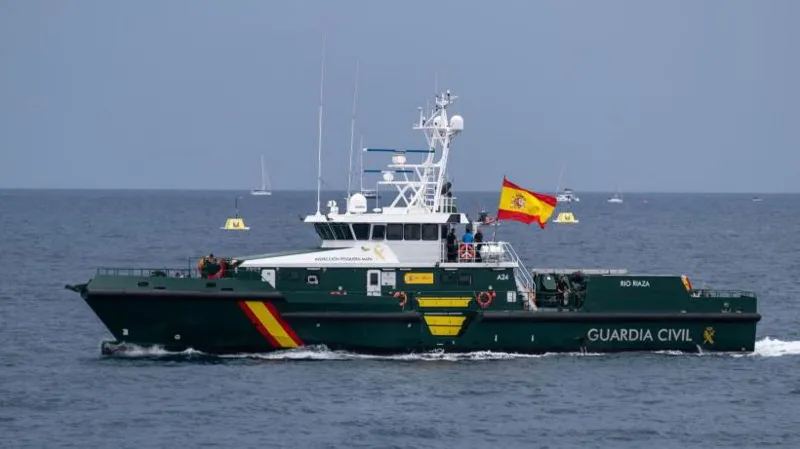
Spanish police have seized what is thought to be a national record haul of cocaine from a ship in the Atlantic Ocean.
Between 30,000 to 45,000kg were found when the Civil Guard intercepted a freighter in international waters, the body’s main union, the AUGC, announced. It called the move a “historic blow to drug trafficking”.
The vessel was intercepted off Spain’s Canary Islands on Friday and around 20 people were arrested, the AUGC told the AFP news agency. It had travelled from Sierra Leona and was on its way to Libya.
The Civil Guard has declined to give details of the investigation for legal reasons.
Interior Minister Fernando Grande-Marlaska told reporters in Madrid that the seizure was “one of the biggest, not only nationally but internationally”.
The Civil Guard shared a photograph on X showing the drugs stuffed into the hold of the intercepted vessel.
“Today history is being written in the Maritime Service of the Civil Guard,” it wrote.
“Intercepted in international waters the largest known seizure: between 30,000 and 45,000 kg of cocaine on board a freighter.”
While the boat was headed to Libya, AFP reported that the pattern of previous operations suggests that it was due to offload the drugs onto smaller vessels for distribution in Europe.
In January, Spanish authorities made its biggest seizure of cocaine at sea from a ship that was carrying almost 10 tonnes.
[BBC]

Three people have died and a UK national is seriously ill in hospital after a suspected hantavirus outbreak on a small cruise ship in the Atlantic Ocean.
The operator of the MV Hondius ship, tour company Oceanwide Expeditions, said a Dutch husband and wife, as well as a German national, had died but the cause has not yet been established.
However, the Dutch company said hantavirus has been confirmed in the case of the 69-year-old UK national who is in intensive care in Johannesburg, South Africa.
Hantavirus is usually passed to humans from rodents via their faeces, saliva or urine. It can cause severe respiratory illness. Rarely, it can be transmitted between people.
The MV Hondius vessel is currently off the coast of Cape Verde and has 149 people onboard.
Oceanwide Expeditions said there were also two crew members on board “with acute respiratory symptoms, one mild and one severe”.
They were of British and Dutch nationality and both required urgent medical care, it said. It said it had not been established that hantavirus had been confirmed in the pair. And it added that no other persons with symptoms had been identified.
Negotiations are in progress with local authorities following what Oceanwide Expeditions described as “a serious medical situation”.
Dr Aaron Motsoaledi, South Africa’s minister of health, said of the British patient that he was critical and had been admitted to a private facility.
“He’s being taken care of. As you know, hantavirus, like all viruses, don’t have any specific treatment, so they are giving symptomatic treatment and support as much as they could.”
He said health workers and anyone who had contact with the patient would now be traced and tested.
Outlining a timeline, the company said a passenger had become unwell while onboard and died on 11 April.
His cause of death could not be determined, and his body was taken off the ship after it docked at St Helena on 24 April.
The passenger’s wife also disembarked on St Helena and the firm said it was told she had become unwell during the return journey and later died.
“At this time, it has not been confirmed that these two deaths are connected to the current medical situation on board,” it added.
On 27 April, the firm said, another passenger – the British national – became seriously ill and was “medically evacuated” to South Africa.
The 69-year-old remains in a critical but stable condition in Johannesburg after it was confirmed a variant of hantavirus had been identified.
The firm added that on Saturday, a third passenger onboard MV Hondius died.
The cause of death has not been established, Oceanwide Expeditions said. It confirmed the passenger was German.
Oceanwide Expeditions said the cause of the deaths were being investigated.
“The disembarkation of passengers, medical evacuation and medical screening require permission from, and co-ordination with, the local health authorities,” it said. “Local health authorities have visited the vessel and assessed the situation.
“The medical transfer of the two ill persons on board has not yet taken place.”
It added that the option of sailing on to Las Palmas or Tenerife was being considered “to be the gateway for disembarkation, where further medical screening and handling could take place”.
The World Health Organization (WHO) said it was “acting with urgency” to support the MV Hondius, and thanked South African authorities for taking care of the British patient.
WHO’s regional director for Europe, Dr Hans Henri P Kluge, said: “I am in close contact with our teams to ensure a co-ordinated, science-based response.
“Hantavirus infections are uncommon and usually linked to exposure to infected rodents.
“While severe in some cases, it is not easily transmitted between people. The risk to the wider public remains low. There is no need for panic or travel restrictions.”
According to the South African government, MV Hondius departed from Ushuaia in southern Argentina about three weeks ago, before it completed its journey to Cape Verde, where it is anchored outside the capital, Praia.
It is described as a 107.6m (353ft) polar cruise ship, with space for 170 passengers in 80 cabins, along with 57 crew members, 13 guides and one doctor.
One passenger onboard the MV Hondius, who asked to remain anonymous, told the BBC: “The latest word is that a plane is on its way and once it gets here three people will be evacuated from the ship and flown straight to Europe.
“Then the rest of us will almost certainly sail to the Canary Islands.
“The Cape Verde authorities clearly want nothing to do with us. This is what we’re hearing from the captain and staff. From what I can see the mood (on the ship) is pretty good.
“Only one person has been tested (the one now in South Africa) and he tested positive for hantavirus. So, we don’t actually know yet if the other cases are that or something unrelated.
“If they are all hantavirus then the transmission is a bit mysterious. We’ve been informed that there are no rodents on board, and person-to-person transmission is difficult/rare.
“Hopefully the other patients on board will be tested soon and then we’ll know better what’s going on.”
President of the Cape Verdean Public Health Institute, Maria Da Luz, said passengers would not be disembarking in Cape Verde in order to protect the local population, Cape Verde’s media outlet A Nacao reports.
Oceanwide Expeditions said strict precautionary measures were in process on board, including isolation measures, hygiene protocols and medical monitoring.
“All passengers have been informed and are being supported,” it said.
“Oceanwide Expeditions is in close contact with those directly involved and their families, and is providing support where possible.”
Microbiologist Siouxsie Wiles told the BBC the time between people being exposed to hantavirus and showing symptoms could be anywhere from one to eight weeks.
“With this incubation period are we going to see more people coming down with the disease in the next days and weeks?”
The UK Foreign Office told the BBC it was monitoring reports, and ready to support British nationals.
Hantavirus was in the headlines last year after the wife of Oscar-winning actor Gene Hackman died from a respiratory illness linked to hantavirus in March 2025.
[BBC]

INS Sindhukesari arrives in Colombo

Minister of Health of the Russian Federation attends the Sri Lanka–Russia Medical Forum

Members of Sri Lanka Cricket Transformation Committee Officially Appointed

Three prison guards arrested following the death of an inmate

Showers or thundershowers will occur at most places of the island after 1.00 pm.

CJ urged to inquire into AKD’s remarks on May 25 court verdict

‘Dates have the highest sugar content to fight Coronavirus’

Sunday Island 27 December – Headlines

#SundayIsland 17th December – Headlines

Sunday Island – 28th March

Sunday Island Headlines – 21 March

Sunday Island – 21st February – Headlines
-

 News7 days ago
Treasury chief’s citizenship details sought from Australia
-

 News6 days ago
Rooftop Solar at Crossroads as Sri Lanka Shifts to Distributed Energy Future
-
 News5 days ago
“Three-in-one blood pressure pill can significantly reduce risk of recurrent strokes”
-

 News7 days ago
Central Province one before last in AL results
-

 Sports7 days ago
Well done AKD!
-
 News22 hours ago
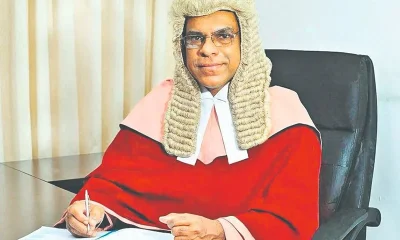
CJ urged to inquire into AKD’s remarks on May 25 court verdict
-

 News2 days ago
USD 3.7 bn H’tota refinery: China won’t launch project without bigger local market share
-

 News5 days ago
Alarm raised over plan to share Lanka’s biometric data with blacklisted Indian firm