
News
Sajith expresses concern over Sri Lanka’s ability to honour agreement with IMF

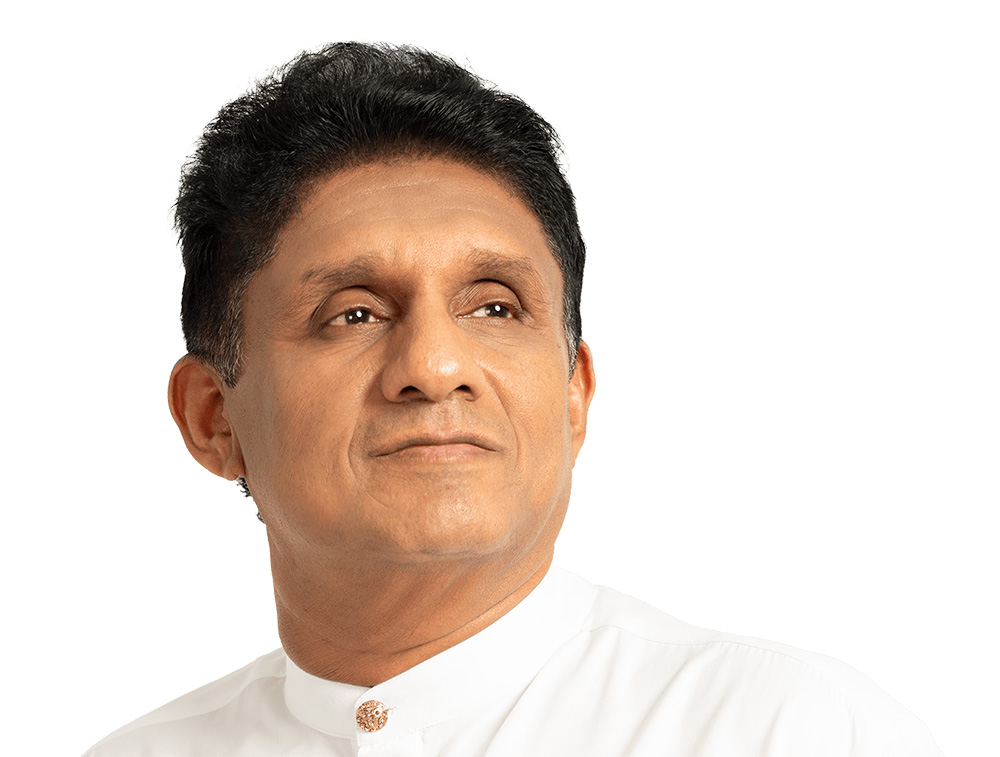
Vows to implement controversial 13 Amendment
SJB leader Sajith Premadasa has asserted that the National People’s Power government has not been able to create conditions for the country to start repaying lenders in 2028 in terms of the agreement with the IMF.
Premadasa, who is also the Opposition Leader expressed that view in an interview with Sidhant Sibal of the Indian media outlet WION.
Asked whether the NPP government would be able to fulfill the key mandate, key demand, key pledges made during the elections and able to find the money that needs to be returned to the international lenders beginning 2028, the SJB leader said: Well, I can say quite openly that there is a mismatch between declarations that were made and actions that are taking place. I will confine myself to that. 2028 is the year that brings us towards the decision day. That’s when our foreign debt obligations have to be fulfilled on a mass scale, on a large scale. In order to do so, we have to have fast economic growth, better foreign exchange reserves, vast improvements in export led growth and export led income, ensure our remittances at a very high level. And most important of all, we need to have mass scale foreign direct investment. So in all of those aspects, we seem to not be achieving according to the requisite targets, and 2028 should not be a repetition of 2022. So we all have to unite as a country to ensure that that social debacle is not repeated, but it’s very challenging. The path is full of obstacles, but with a determined approach, with the correct approach, with an authentic economic and development policy, we can achieve our objectives. Those challenges and obstacles are not insurmountable.
Sidhant Sibal:Do you have any sense why this region, the Indian subcontinent, has witnessed these protests which have toppled governments? What’s your sense like as a leading politician, as a statesman of this region?
Sajith Premadasa:I think it’s different from country to country. I think the economic disaster, coupled with pressures and distress that were put on people due to the consequences of terrorist bombing, Easter Sunday bombing, the covid-19 crisis, all these came together and created a very, very propitious environment for dissenting opinions to come onto the streets. You had large queues for fuel, for bread, consumer items, gas and various other items that are needed to fulfill basic human needs. So Sri Lanka’s case, primarily, was predicated upon the economic situation. So it changes from country to country. I think in democracies, this should not be the case. Primarily this takes place because we don’t have sound policy making structures and processes that give out positive policy results, because the democracy, the democratic nature and democracies have to be protected. It cannot be subjugated to mob violence or mob rule.
However, if the very same democratic systems result in constraining the democratic space. If the youth are not given their proper right to voice their opinions in the democratic structures, then we will have a problem. So it’s very important that the democratic structures are strengthened, strengthened to such an extent that we have sound policy making that results in good policies.
Sidhant Sibal: How do you see India’s support to your country during the economic crisis?
Sajith Premadasa:Sri Lanka went through triple tragedies, the Easter Sunday terrorist attack, the Covid health disaster, the bankruptcy situation due to ill-devised economic policies. When Sri Lanka was in trouble, when the people were in distress, India supported us, and India continues to support us. India has been the single largest donor to the tune of 4.2 billion US dollars in providing support that has provided some relief to the people of our country, so we are extremely grateful. I think we should base our relationship on authentic understanding of our own diversities in our countries, of our own national identities, and ensure that our roadmaps go hand in hand to bring about prosperity for the people, prosperity for the country, engage in constructive manner in all of the sectors, economic, political, social, educational, health, industrial. Ensure the connectivity is strengthened, and we will support that approach.
Sidhant Sibal: What’s your sense on the security dimension? In the past, there have been concerns in Delhi over visits of research vessels, especially from China to Sri Lanka. Sri Lanka introduced a moratorium as well. So what’s your sense like if we have a potential government led by you in the future? What will be your message to New Delhi?
Sajith Premadasa: From our perspective, security is established through perpetuation of peace. We need to have peace building. We need to cooperate, and we must have a much broader definition of security. It is not just political, military security, it spans other sectors, economic security, social security. So we have a very broad definition of security. Within that broad definition, if all of the countries that have misunderstandings, that have differing opinions on a variety of global issues, regional issues, in the name of peace building, if one can cooperate, come to understandings, as I see it from recent events, we see that there has been some normalization of relations between India and China. So that is good. That is good for peace. But as far as Sri Lanka and India are concerned, we have a special relationship. That special relationship has to be enhanced, has to be promoted and built upon. But working with India as a special friend, but also working with others, ensure that the security interests of all are protected through peace, through peace building, through peacemaking. That’s the approach that we will take.
Sidhant Sibal:What’s your sense like when it comes to your country’s relationship with China, your country’s relationship with India? I know it’s a tricky balancing act.
Sajith Premadasa: This word balance that comes about if we have these relations at a lower level. No, our relationship with all these countries is at a much higher level, common security, common prosperity, benefit for our peoples. So it’s an overarching approach that we have that does not go into petty political issues. We should look at the common interests. Common interests are best served by peace building, by prevalence of peace and security that will result in economic growth, prosperity and prosperity for our people. So what is of utmost importance is to reduce suspicion, have mutual respect, mutual respect for each other’s territorial integrity, sovereignty, political independence and its political character.If countries work on those principles in their international state relations, the world would be a better place.
Sidhant Sibal:In terms of the 13th Amendment as the leader of the opposition, what’s your sense like? What’s your view like?
Sajith Premadasa: All I can tell you is our position. Our position has been as always, as mentioned in our manifestos, that we will implement the 13th Amendment. People expect the implementation, not just the north and east. It covers all nine provinces of our country. It has provided political, economic, and social empowerment through provincial governments, and we must ensure that the present law of the land is part of the supreme law of the land, and part of the Constitution is implemented. So there is no need to speculate about our position. We are crystal clear about the fact that we have to implement the 13th Amendment, and we have said so, and we have done so through our pronouncements, our declarations, our proclamations, interviews, and most importantly, through our social contract with the people. That’s a political manifesto, and we will continue.
Sidhant Sibal:There is a joint opposition protest that is being planned later this month in your country, but your party is perhaps not taking part in it, any reason, any specific reasons,
Sajith Premadasa:What happens in our country as far as governance and opposition politics is concerned, I don’t think it’s right for me to come to India and have discussions regarding those things, but all I can say is, as a proactive opposition, we have addressed the shortcomings of the present policies, policies that have been anti-people, and of course, we will stand by the people and ensure that people’s rights, human rights, in its broad definition, political, civic, economic, social, cultural, religious and all other rights are protected. It’s very important that when we embark on programs, that those programs are done in a coherent manner.
What’s important is to have a common approach, a coherent strategy. And people want to see the viable alternative, and that viable alternative has to be formulated. It has to be coherent, and that ideology has to be accepted by the people, so at the end of the day, it’s the wish of the people, and we will mobilize the forces, the People’s forces, at the right time, to ensure that people’s grievances are addressed. That the national policies are formulated to serve the interests of the people, rather than the political hierarchy, and we will work according to our own political strategies to achieve those ends.
Sidhant Sibal:
Are Trump’s tariffs a worry for you?
Sajith Premadasa: Certainly, the reciprocal tariff efforts by the United States has created uncertainty, global uncertainty, uncertainty in the economic sectors and uncertainty in the business sectors. So Sri Lanka, for one, needs to approach, and needs to formulate an approach, to work with the US government to ensure that our tariff rates are further reduced.
As you may know, a vast majority of our garment exports go to limited destinations, of which the United States is one, along with, the UK and the European Union. So we have a problem having not diversified our trade destinations.
So we as a country should ensure that we promote a policy of export market diversification in terms of destinations are concerned, while at the same time working with the US administration and working in a constructive, progressive and productive manner to get the tariff rates that have been imposed, which I believe are 20% to a lower level.


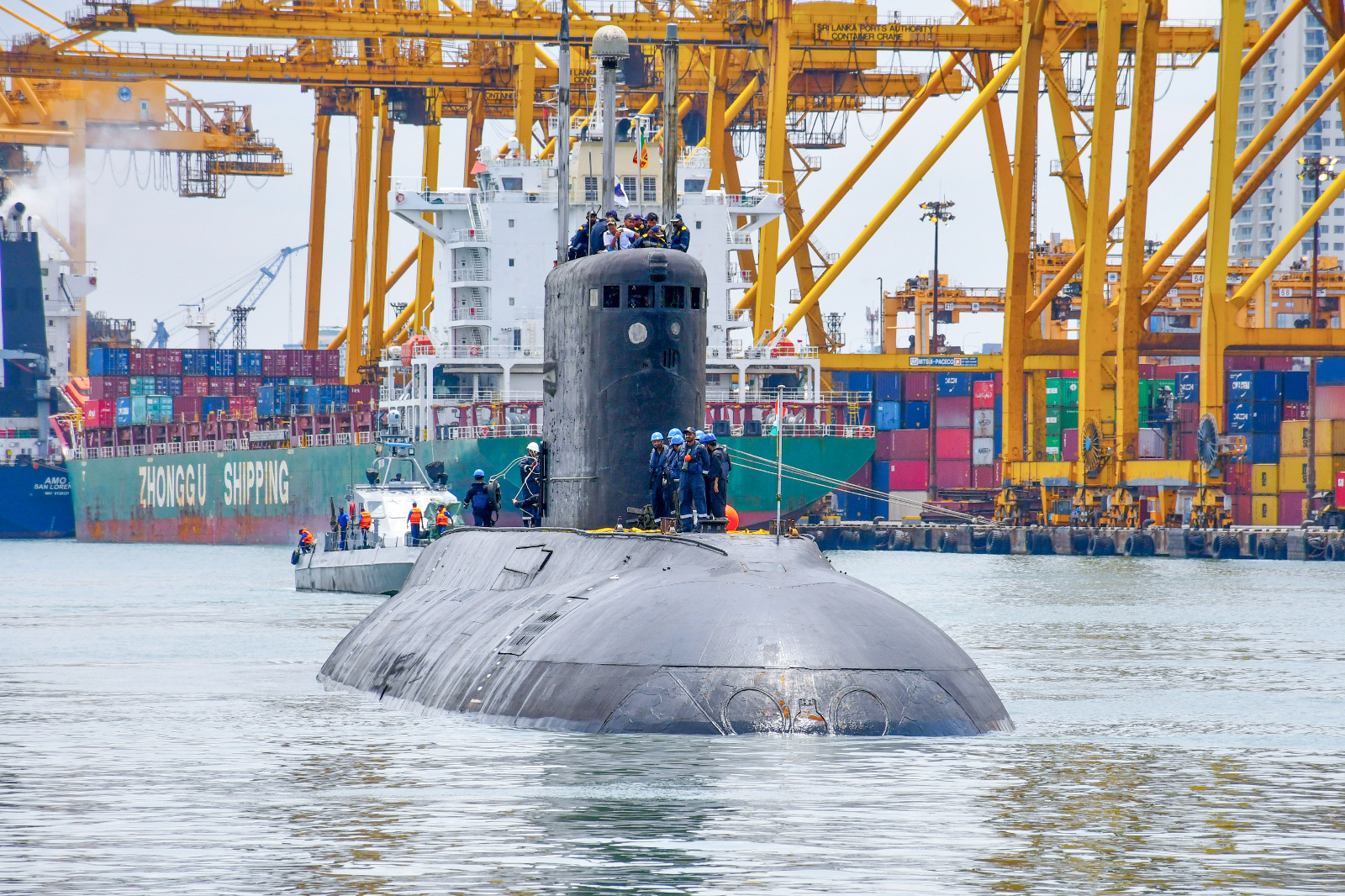
INS Sindhukesari, a submarine serving in the Indian Navy, arrived at the port of Colombo on 03 May 26 to undertake Operational Turnarounds.
The visiting submarine was welcomed by the Sri Lanka Navy in precision with naval traditions.
Throughout its stay in the island, the submarine’s crew is scheduled to participate in a variety of programmes organized by the Sri Lanka Navy, including visits to several tourist attractions in Sri Lanka.
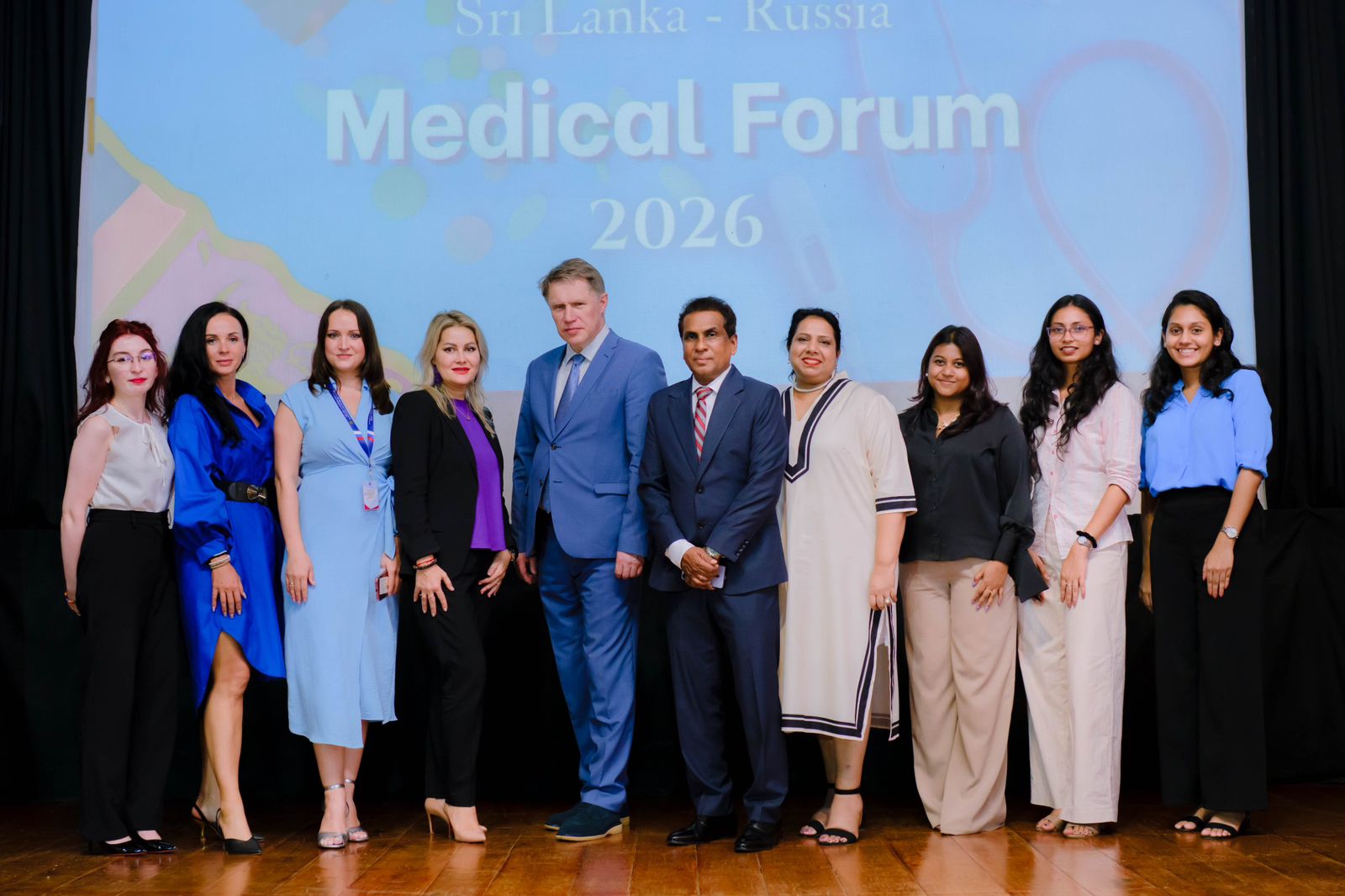
Mikhail Murashko, Minister of Health of the Russian Federation, officially visited the Russian House in Colombo to attend the Sri Lanka–Russia Medical Forum, where members of the Sri Lanka Russia Business Council and graduates from the Association of Sri Lankan Graduates from Socialist countries (ASLGSC) attended.
This historic gathering was graced by rectors and representatives from several world-class Russian medical institutions, including Kursk State Medical University, Sechenov First Moscow State Medical University, and Tver State Medical University, among others.
The forum commenced with an address by Minister Murashko, during which Russian medical graduates in attendance raised pertinent questions regarding medical and pharmaceutical sector opportunities in Sri Lanka.
Levan Dzhagaryan, Ambassador of the Russian Federation to Sri Lanka and the Maldives, together with Madam Maria L. Popova, Counsellor of the Embassy of the Russian Federation in Sri Lanka & the Maldives and Director of the Russian House in Colombo, graced the occasion. Both officials expressed strong support for continued collaboration and future initiatives between the two nations.
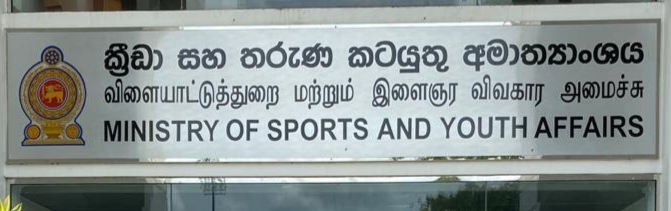
The official appointment letters for the members of the newly established “Cricket Transformation Committee” (CTC) were handed over on Monday (04) by the Minister of Youth Affairs and Sports, Sunil Kumara Gamage.
The following members received their letters of appointment at the Ministry premises:
Sidath Wettimuny
Thushira Radella
Prakash Schaffter
Ms. Avanthi Colombage
The Ministry also noted that veteran cricketers Roshan Mahanama and Kumar Sangakkara, who are key members of the committee, are currently overseas. Their official appointments will be formalised immediately upon their arrival in Sri Lanka.
The Cricket Transformation Committee has been mandated to oversee the administration and drive structural reforms within Sri Lanka Cricket (SLC) in accordance with the powers vested in the Minister under the Sports Act No. 25 of 1973.

INS Sindhukesari arrives in Colombo

Minister of Health of the Russian Federation attends the Sri Lanka–Russia Medical Forum

Members of Sri Lanka Cricket Transformation Committee Officially Appointed

Three prison guards arrested following the death of an inmate

Showers or thundershowers will occur at most places of the island after 1.00 pm.

CJ urged to inquire into AKD’s remarks on May 25 court verdict

‘Dates have the highest sugar content to fight Coronavirus’

Sunday Island 27 December – Headlines

#SundayIsland 17th December – Headlines

Sunday Island – 28th March

Sunday Island Headlines – 21 March

Sunday Island – 21st February – Headlines
-
 News7 days ago
Treasury chief’s citizenship details sought from Australia
-

 News6 days ago
Rooftop Solar at Crossroads as Sri Lanka Shifts to Distributed Energy Future
-
 News5 days ago
“Three-in-one blood pressure pill can significantly reduce risk of recurrent strokes”
-

 News7 days ago
Central Province one before last in AL results
-

 Sports7 days ago
Well done AKD!
-
 News2 days ago
USD 3.7 bn H’tota refinery: China won’t launch project without bigger local market share
-

 News5 days ago
Alarm raised over plan to share Lanka’s biometric data with blacklisted Indian firm
-
 News15 hours ago
CJ urged to inquire into AKD’s remarks on May 25 court verdict