
Foreign News
Kenyan opposition leader Raila Odinga dies of heart attack in India at 80


Kenyan opposition leader Raila Odinga, a key figure in African politics, has died at the age of 80 during a trip to India for medical treatment, according to local police and hospital officials.
The former prime minister, who as opposition leader had waged five unsuccessful presidential campaigns between 1997 and 2022, had suffered a heart attack, the Devamatha Hospital in the southern Indian state of Kerala confirmed to The Associated Press news agency on Wednesday.
Odinga was a dominant force in Kenyan politics, and his death will leave a significant leadership vacuum within the country’s political opposition ahead of elections in 2027.
An Indian police official told the AFP news agency that Odinga had been on a morning walk, accompanied by his sister, daughter, a personal doctor, and Indian and Kenyan security officers, when he collapsed.
“He was rushed to a nearby private hospital, but was declared dead,” said Krishnan M, additional superintendent of police in Ernakulam, Kerala.
Unnamed officials in Odinga’s office also confirmed the death to news agencies.
Indian newspaper Mathrubhumi had earlier reported the death, adding that Odinga had been undergoing medical treatment in the state’s Kochi city.

Born on January 7, 1945, Odinga was the son of the country’s first vice president after independence in 1963.
A member of the Luo tribe, he spent most of his adult life in politics, including time in exile and eight years in prison as a pro-democracy campaigner – but never achieved his goal of becoming Kenya’s president.
Odinga first entered parliament in 1992, and ran unsuccessful presidential campaigns in 1997, 2007, 2013, 2017 and 2022.
He claimed to have been cheated of victory in the last four elections, and led protests after the disputed 2007 election that led to Kenya’s most serious bout of political violence since independence.
About 1,300 people were killed and hundreds of thousands displaced from their homes in the battles. Large-scale protests also broke out during the 2017 election, in which the Supreme Court annulled the results of an initial poll, and Odinga withdrew from the follow-up, saying it would not be free and fair.
Odinga’s pro-democracy activism over the years helped drive two of the country’s most significant political reforms: multiparty democracy in 1991 and a new constitution in 2010.
In March, he signed a pact with Kenyan President William Ruto that saw his opposition Azimio la Umoja party involved in critical policymaking and its members appointed to the cabinet.
Kenya’s former chief justice and presidential hopeful, David Maraga, said he was “shocked” by news of Odinga’s death.
Odinga was “a patriot, a pan-Africanist, a democrat and a leader who made significant contributions to democracy in Kenya and in Africa”, Maraga wrote on X.
“Kenya has lost one of its most formidable leaders who shaped the trajectory of our beloved country. Africa has lost a leading voice in pushing for peace, security and development. The world has lost a great leader,” he added.
Ethiopian Prime Minister Abiy Ahmed was among the first to react, posting on X: “On behalf of the Government of Ethiopia, I extend my sincere condolences on the passing of former Kenyan Prime Minister Raila Odinga. May he Rest In Peace.”
[Aljazeera]

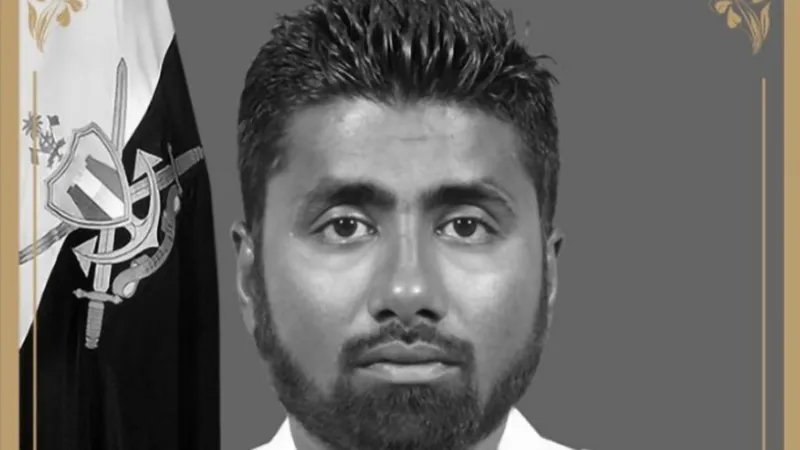
A rescue diver has died while searching for the bodies of a group of Italians who died in a scuba-diving accident in the Maldives.
Staff Sgt Mohamed Mahdhee was taken to hospital in critical condition and later succumbed to his injuries, a government spokesman told the BBC on Saturday.
Five Italians died while attempting to explore caves at a depth of around 50m (164ft) on Thursday. So far, the body of one of them is thought to have been recovered, in a cave at a depth of around 60m (197ft).
The incident is believed to be the worst single diving accident in the tiny Indian Ocean nation, a popular tourist destination because of its string of coral islands.
Maldivian President Mohamed Muizzu travelled to Vaavu Atoll on Saturday to observe the search operations.
“Eight rescue divers went into the water today. When they surfaced, they realised Mahdhee didn’t come up,” Mohamed Hossain Shareef, a Maldivian government spokesman told the BBC.
The other divers immediately went into the water again and they found Mahdhee had blacked out.
The Maldives military has described the operation as very high risk, with unfavourable weather conditions.
Italian Foreign Minister Antonio Tajani sent condolences: “These days of grief for Italy are compounded by the news that one of your brave soldiers… died while attempting to dive to reach the bodies of our fellow Italians.”
“This tragedy unites Italy and the Maldives in grief and respect for the victims,” he added.
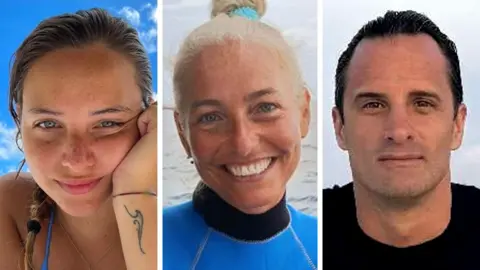
Four of the Italian divers were part of a University of Genoa team, including professor of ecology Monica Montefalcone, her daughter and two researchers. The fifth was a boat operations manager and diving instructor.
The five entered the water at Vaavu Atoll on Thursday morning, local media said, and were reported missing when they failed to resurface later on.
Police said the weather was rough in the area, about 100km (62 miles) south of the capital, Male. A yellow warning was issued for passenger boats and fishermen.
Shareef said recreational scuba divers were only allowed to dive up to a depth of 30m and it was not clear why the Italians went into a cave that’s 60m under water.
Italy’s foreign ministry said earlier that another 20 Italian nationals aboard the Duke of York yacht, from which the five divers took off, were unharmed and receiving assistance from the Embassy of Italy in Colombo, Sri Lanka
[BBC]
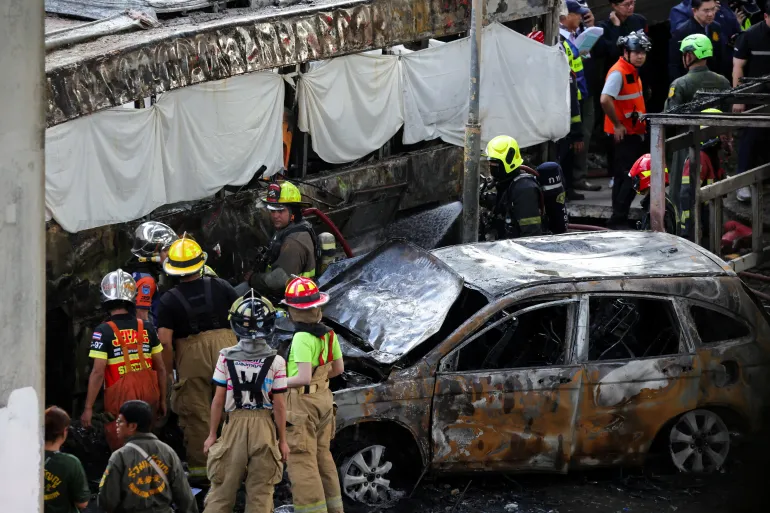
At least eight people have been killed, and dozens injured, after a freight train crashed into a public bus in Thailand’s capital.
Flames engulfed the bus and nearby vehicles near an airport rail link station in the centre of Bangkok Saturday afternoon.
The city’s emergency services Erawan Medical Center confirmed the number of deaths, while Bangkok police chief Urumporn Koondejsumrit told AFP news agency at least 35 people were injured.
Speaking to reporters at the scene, Deputy Transport Minister Siripong Angkasakulkiat said that all the bodies were found on the bus. It was not yet clear how many people were on board in total.
Prime Minister Anutin Charnvirakul ordered an investigation into the crash, according to a statement from his office.
Al Jazeera’s Tony Cheng, reporting from Bangkok, said the crash unfolded around 3:40pm local time (08:40 GMT), when the bus appeared to get stuck on an intersection with the rail line after the safety barriers descended.
As the freight train rammed into the stationary bus and continued travelling, it dragged several nearby vehicles along with it before the bus burst into flames.
Siripong would not confirm whether the bus had stopped on the railway track or discuss reports that the barriers may not have lowered properly, saying the matter still needs to be investigated.
Firefighters and rescue crews were dispatched to pull people from the wreckage and battle the flames as motorcyclists and passersby attempted to redirect traffic.
The fire has since been brought under control.
[Aljazeera]
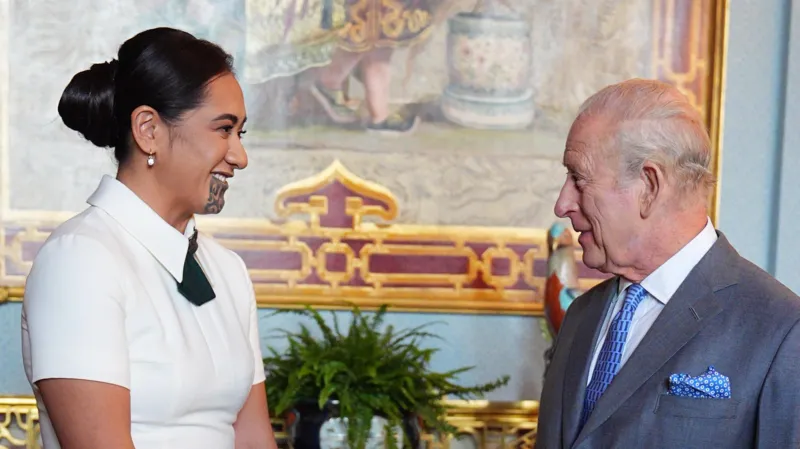
New Zealand’s Māori Queen Te Arikinui Kuini Nga Wai hono i te po has met King Charles III at Buckingham Palace.
The meeting with the British monarch was Te Arikinui’s first since she became queen in 2024, following the death of her father, Kiingi Tuheitia.
The visit marks a near 200-year relationship between the indigenous peoples of New Zealand and the crown, formalised in the Treaty of Waitangi, one of New Zealand’s founding documents.
A spokesperson for the queen says the two discussed the former king’s death in what was a “heartfelt” discussion, as well as the strengthening of their relationship.
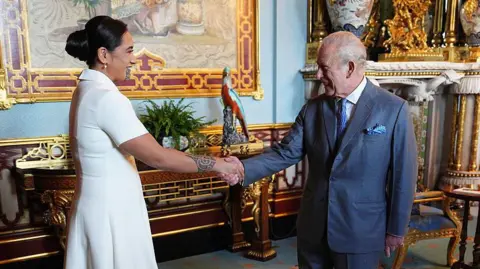
Earlier this week, the Māori queen was also welcomed by Prince William to Windsor Castle.
In a post on Instagram, Prince William acknowledged the visit, saying, “it was a pleasure to meet with the Queen.”
A statement released after the meeting from the Kīngitanga said the Māori queen discussed a range of global topics with Prince William.
“Te Arikinui affirmed her belief in the power of indigenous knowledge and intergenerational stewardship to help solve the world’s environmental and social challenges.”
Te Arikinui was crowned in 2024 after the death of her father – becoming only the second Māori queen, the first being her grandmother, Te Arikinui Dame Te Atairangikaahu.
The Māori monarchy dates back to the 19th Century, when different Māori tribes decided to create a unifying figure similar to that of a European monarch in order to try to prevent the widespread loss of land to New Zealand’s British colonisers and to preserve Māori culture. It is a largely ceremonial and symbolic role.
[BBC]

Expansion of PayPal services in Sri Lanka officially announced

Showers expected in the Western, Sabaragamuwa, Central, North-western and Northern provinces and in Galle and Matara districts

Rupee slide rekindles 2022 crisis fears as inflation risks mount

Kapila Chandrasena case: GN phone records under court scrutiny

Sri Lankan Airlines Airbus Scandal and the Death of Kapila Chandrasena and my Brother Rajeewa

Inland Revenue (Amendment) Bill takes centre stage in Parliament Tuesday

‘Dates have the highest sugar content to fight Coronavirus’

Sunday Island 27 December – Headlines

#SundayIsland 17th December – Headlines

Sunday Island – 28th March

Sunday Island Headlines – 21 March

Sunday Island – 21st February – Headlines
-
 News4 days ago
Ex-SriLankan CEO’s death: Controversy surrounds execution of bail bond
-
 Features5 days ago
When University systems fail:Supreme Court’s landmark intervention in sexual harassment case
-
Features5 days ago
High Stakes in Pursuing corruption cases
-
 Midweek Review4 days ago
A victory that can never be forgotten
-
 News6 days ago
150th anniversary celebrations of Ave Maria Convent, Negombo
-
 Features2 days ago
Mysterious Death of United Nations Secretary General Hammarskjöld
-
 Business3 days ago
Lime trees to crack HEC conundrum
-
 News4 days ago
Sri Lanka and Belarus to sign several MoUs