
News
Legal expert: Proposed IPO should be answerable to Parliament, not Executive


The proposed Independent Prosecutor Office (IPO) should be answerable to the Parliament, former Human Rights Commissioner Prof. Prathibha Mahanamahewa, says.
Prof. Mahanamahewa said so in answer to a query raised by The Island regarding the Justice and National Integration Minister Attorney-at-Law initiating process meant to introduce an IPO in line with United Nations Human Rights Council (UNHRC) dictates. He emphasised the proposed mechanism shouldn’t be placed under the executive under any circumstances.
The intended establishment of an IPO is in line with UNHRC 55/1 and 60/L/1 resolutions, lawyer Mahanamahewa said, adding that a similar set up had been discussed here in the ’70s. “Such mechanisms are in operation in the UK (Crown Prosecution Service), Kenya (Office of the Director of Public Prosecutions), South Africa (National Prosecuting Authority) and Jamaica (Director of Public Prosecutions).”
The Independent Prosecutor’s Office couldn’t successfully operate in isolation, Prof. Mahanamahewa said, underlining the responsibility on the powers that be to ensure wide reforms in the police department as well as in the court system. The desired objectives couldn’t be achieved unless the government was ready to go the whole hog, he noted.
Pointing out that the proposed IPO would take over some duties and responsibilities of the Attorney General, Mahanamahewa said duplication of work had to be prevented.
Declaring the setting up of IPO had been endorsed by the electorate at the presidential and parliamentary polls last year, Mahanamahewa said, urging political parties represented in parliament to take tangible measures to introduce the proposed IPO in the new Constitution that would be enacted in the future.
Claiming that if Sri Lanka failed to meet UNHRC expectations, the issue would come up again in Geneva, Prof. Mahanamahewa stressed that it had to be borne in mind that the Constitution enacted in 1978 had done away with the IPO, empowering the AG, who advised the government in respect of legal matters ,to do the prosecutions as well. He added that the UNHRC intervention must be examined taking post 1978 developments, too, into consideration. Pointing out that in September 2024 the UNHRC had proposed the establishment of IPO as a matter of urgency, he said the Cabinet of Ministers on 7 May 2025, had decided to implement what was proposed in Anura Kumara Dissanayake’s manifesto for the 2024 September presidential election.
Accordingly, in line with the proposal made by Minister Harshana Nanayakkara to appoint a Committee of Technical Experts (CTE) to examine and report on introducing new legislation for the establishment of such an office and to make recommendations to introduce necessary amendments to the laws currently in force, where found necessary, Justice Yasantha Kodagoda, PC, Judge of the Supreme Court has been named the head of that CTE.
The UNHRC has repeatedly alleged that the Attorney General has failed to prosecute those accused of war crimes. Sri Lanka brought the war to a successful conclusion in May 2009.
Prof. Mahanamahewa said that the government could consider appointing the Independent Prosecution Commission (IPC) to achieve the same objectives. IPC could be appointed by the Constitutional Council, he said, urging the government to examine the issues at hand comprehensively before proceeding. “The UNHRC expects the mechanism to be under the legislature not the executive,” the lawyer said.
“The UNHRC gave us two years to bring the project to a successful conclusion,” he said, warning all concerned to be cautious of conflict of interests involving the AG and IPO that may cause tensions. That would be detrimental to the ongoing efforts meant to restore public faith in the judicial system.
The Island also sought the opinion of former President of BASL Saliya Pieris, PC. Declaring that establishment of IPO may not be the answer to the post-war issues experienced, the PC said: Whilst there is a need to secure the independence of public prosecutions, I am a little vary about new offices being set up given the practical difficulties relating to resources and administration. Frankly in Sri Lanka establishing new State Institutions is a nightmare. What is important is to secure the independence of the prosecution arm of the State so that it does not act on the whims and fancies of the government of the day.”
by Shamindra Ferdinando

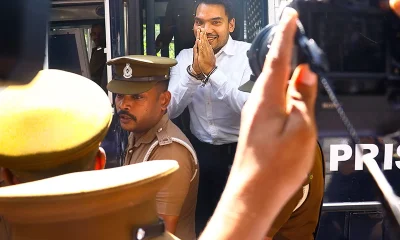


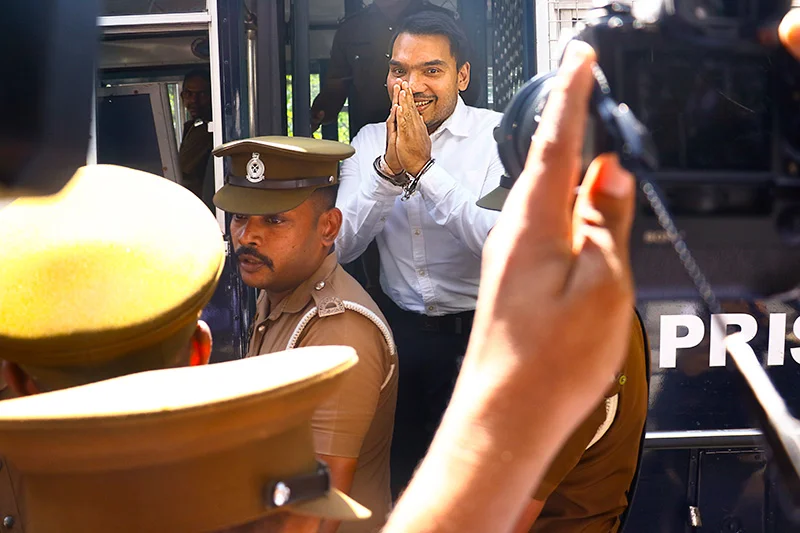
MP Namal Rajapaksa, who is in remand custody over the controversial Airbus deal, was further remanded until October 27 by the Colombo Magistrate’s Court yesterday (13).
Colombo Chief Magistrate Asanga S. Bodaragama made the order after considering submissions by officers of the Commission to Investigate Allegations of Bribery or Corruption and lawyers representing Rajapaksa.

Sri Lanka’s economy is expected to sustain its recovery over the next two years, although growth is projected to moderate amid mounting global uncertainties, according to the International Monetary Fund’s (IMF) latest World Economic Outlook.
In its World Economic Outlook 2026: Resilience Under Strain, Urgent Choices, the IMF projects Sri Lanka’s economy to expand by 4% in 2026, slowing to 3.7% in 2027, following estimated growth of 5% in 2025.
Inflation, meanwhile, is forecast to rise to 5.3% in 2026 and 5.4% in 2027, reversing the average deflation rate of 0.5% recorded in 2025.
Unemployment is expected to remain steady at 3.9% throughout the forecast period.
The projections come amid growing pressure on the global economy from the ongoing conflict in the Middle East, elevated energy prices, geopolitical tensions and trade disruptions.
Sri Lanka’s external position is also expected to weaken, with the current account balance projected to shift from a surplus of 1.6% of gross domestic product (GDP) in 2025 to deficits of 0.5% in 2026 and 0.3% in 2027.
The IMF’s outlook points to continued economic expansion in Sri Lanka, but with slower growth, rising inflation and a narrowing external surplus giving way to current account deficits over the forecast period.
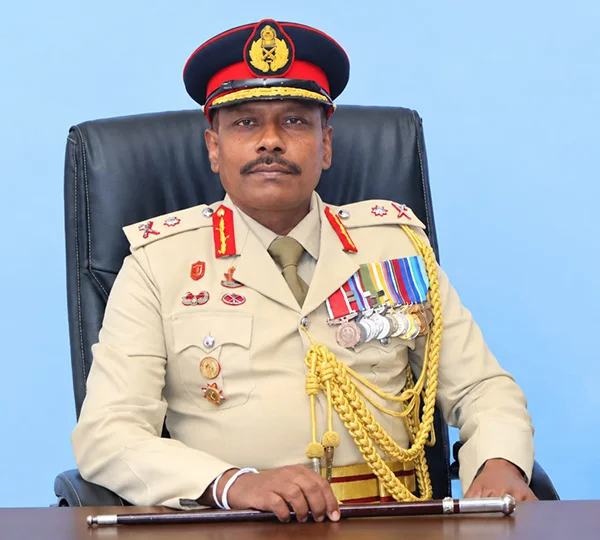
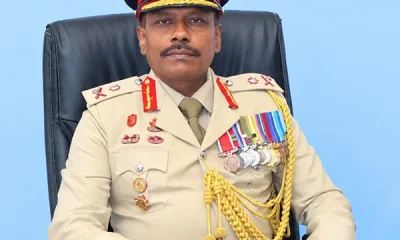
Major General Asitha Pushpakumara has assumed duties as the General Officer Commanding (GOC) of the Sri Lanka Army’s 56 Infantry Division, headquartered at Kokeliya, Vavuniya.
An alumnus of Colombo Thurstan College, Major General Pushpakumara has served in the Sri Lanka Army for more than three decades, contributing to military operations during the country’s three-decade-long conflict.
He is a recipient of several military decorations, including the Rana Wickrama Padakkama (RWP) and Rana Sura Padakkama (RSP), in recognition of his gallantry and service. He has also received 17 other military decorations during his career.
Recognised as one of the youngest General Officers Commanding in the Sri Lanka Army, he has undergone extensive military training and acquired professional qualifications during his service.
He holds two master’s degrees, one from the University of Northampton in the United Kingdom and the other from the Indian Institute of Technology Madras in India.

Namal further remanded

IMF projects Lankan economic growth to moderate amidst mounting global uncertainties

Major Gen Pushpakumara assumes command of 56 Infantry Division

Dickwella axed, Bandara earns maiden Test call up

President signals priority for domestic economic policy autonomy

Mano urges Sajith to address remarks on Tamil, Muslim communities

‘Dates have the highest sugar content to fight Coronavirus’

Sunday Island 27 December – Headlines

#SundayIsland 17th December – Headlines

Sunday Island – 28th March

Sunday Island Headlines – 21 March

Sunday Island – 21st February – Headlines
-

 Features6 days ago
The Sri Lankan who made Scottish history
-

 Sports6 days ago
Nissanka absence opens door for Sri Lanka’s young guns
-

 News5 days ago
NDB fraud Rs 60mn more than reported
-

 News5 days ago
Removing monk’s robes matter for Sangha to decide: Mahanayake Theras
-
 News6 days ago
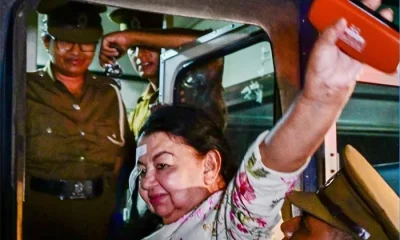
Shiranthi R remanded until 13 Oct.
-

 Features6 days ago
Future of Sri Lanka’s state university system: Should it be shut down and reopened?
-

 News3 days ago
Sri Lanka escalates anti-graft drive with Shiranthi’s jailing
-
 Latest News4 days ago
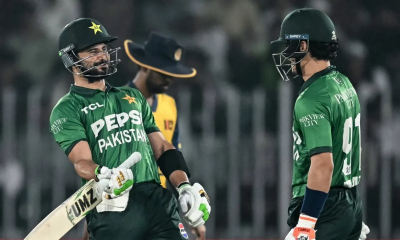
Farhan, Sadaqat help Pakistan ace 183 chase to go 1-0 up