
Foreign News
Battling a rare brain-eating disease in an Indian state


On the eve of Onam, the most joyous festival in India’s Kerala state, 45-year-old Sobhana lay shivering in the back of an ambulance, drifting into unconsciousness as her family rushed her to a medical college hospital.
Just days earlier, the Dalit (formerly known as untouchables) woman, who earned her living bottling fruit juices in a village in Malappuram district, had complained of nothing more alarming than dizziness and high blood pressure. Doctors prescribed pills and sent her home. But her condition spiralled with terrifying speed: uneasiness gave way to fever, fever to violent shivers, and on 5 September – the main day of the festival – Sobhana was dead.
The culprit was Naegleria fowleri – commonly known as the brain-eating amoeba – an infection usually contracted through the nose in freshwater and so rare that most doctors never encounter a case in their entire careers. “We were powerless to stop it. We learnt about the disease only after Sobhana’s death,” says Ajitha Kathiradath, a cousin of the victim and a prominent social worker.
In Kerala this year, more than 70 people have been diagnosed and 19 have died from the brain-eating amoeba. Patients have ranged from a three-month-old to a 92-year-old man.
Normally feeding on bacteria in warm freshwater, this single-cell organism causes a near-fatal brain infection, known as primary amoebic meningoencephalitis (PAM). It enters through the nose during swimming and rapidly destroys brain tissue.
Kerala began detecting cases in 2016, just one or two a year, and until recently nearly all were fatal. A new study has found only 488 cases have been reported globally since 1962 – mostly in the US, Pakistan and Australia. And 95% of the victims have died from the disease.
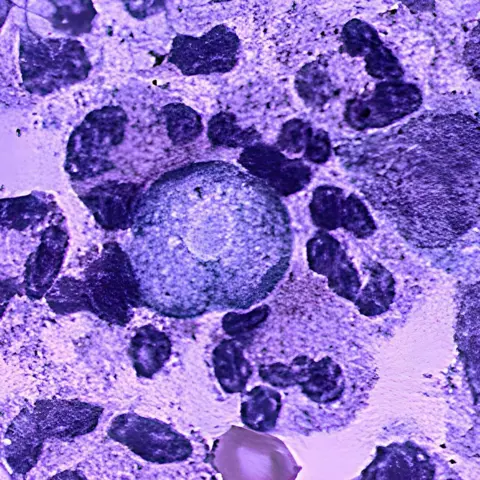
But in Kerala, survival appears to be improving: last year there were 39 cases with a 23% fatality rate and this year, nearly 70 cases have been reported with about 24.5% mortality. Doctors say the rise in numbers reflects better detection, thanks to state-of-the-art labs.
“Cases are rising but deaths are falling. Aggressive testing and early diagnosis have improved survival – a strategy unique to Kerala,” said Aravind Reghukumar, head of infectious diseases at the Medical College and Hospital in Thiruvananthapuram, the state’s capital. Early detection allows customised treatment: a drug cocktail of antimicrobials and steroids targeting the amoeba can save lives.
Scientists have identified around 400 species of free-living amoebae, but only six are known to cause disease in humans – including Naegleria fowleri and Acanthamoeba, both of which can infect the brain. In Kerala, public health laboratories can now detect the five major pathogenic types, officials say.
The southern state’s heavy reliance on groundwater and natural water bodies makes it particularly vulnerable, especially as many ponds and wells are polluted. A small cluster of cases last year, for example, was linked to young men vaping boiled cannabis mixed with pond water – a risky practice that underscores how contaminated water can become a conduit for infection.
Kerala has nearly 5.5 million wells and 55,000 ponds – and millions draw their daily water from wells alone. That sheer ubiquity makes it impossible to treat wells or ponds as simple “risk factors” – they are the backbone of life in the state.
“Some infections have occurred in people bathing in ponds, others from swimming pools, and even through nasal rinsing with water which is a religious ritual. Whether in a polluted pond or a well, the risk is real,” says Anish TS, a leading epidemiologist.

So public health authorities have tried to respond at scale: in a single campaign at the end of August, 2.7 million wells were chlorinated.
Local governments have put up sign boards around ponds warning against bathing or swimming and evoked the Public Health Act to enforce regular chlorination of swimming pools and water tanks. But even with such measures, ponds cannot realistically be chlorinated – fish would die – and policing every village water source in a state of more than 30 million people is unworkable.
Officials now stress awareness over prohibition: households are urged to clean tanks and pools, use clean warm water for nasal ablutions, keep children away from garden sprinklers and avoid unsafe ponds. Swimmers are advised to protect their noses by keeping their heads above water, using nose plugs and avoiding stirring up sediment in stagnant or untreated freshwater.
Yet, striking a balance between educating the public about real risks – of using untreated freshwater – and avoiding fear that could disrupt daily life is challenging. Many say despite guidelines issued for more than a year, enforcement remains patchy.
“This is a difficult problem. In some places [hot springs], signs are posted to warn of the possibility of the amoebae in the water source. This is not practical in most situations since the amoebae can be present in any source of untreated water [lakes, ponds, pools],” Dennis Kyle, a professor of infectious diseases and cellular biology at the University of Georgia, told the BBC.
“In more controlled environments, frequent monitoring for proper chlorination can significantly reduce chances of infection. These include pools, splash pads and other man-made recreational water activities,” he said.

Scientists warn climate change is amplifying the risk: warmer waters, longer summers and rising temperatures create ideal conditions for the amoeba. “Even a 1C rise can trigger its spread in Kerala’s tropical climate and water pollution fuels it further by feeding bacteria the amoeba consumes,” says Prof Anish.
Dr Kyle adds a note of caution, noting that some past cases may simply have gone unrecognised, with the amoeba not identified as the cause.
That uncertainty can make treatment even harder. Current drug cocktails are “sub-optimal,” Dr Kyle explains, adding that in rare survivors, the regimen becomes the standard. “We lack sufficient data to determine if all the drugs are actually helpful or needed.”
Kerala may be catching more patients and saving more lives, but the lesson reaches far beyond its borders. Climate change may be rewriting the map of disease – and even the rarest pathogens may not stay rare for long.
[BBC]

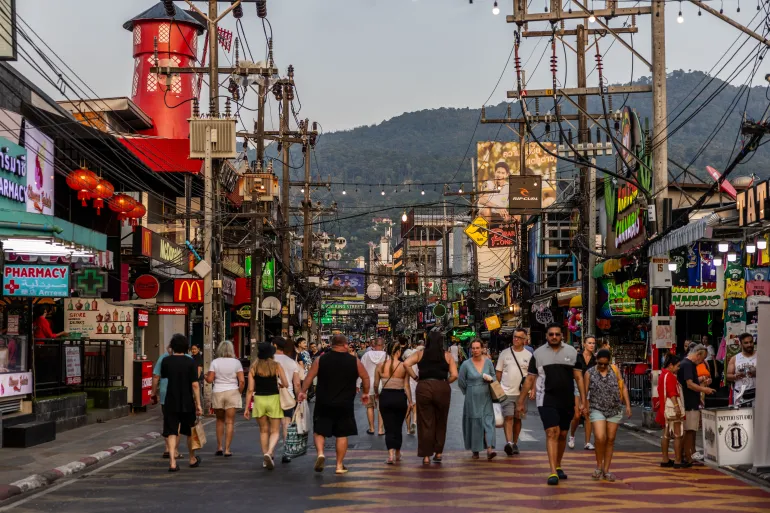
On paper, it was registered as a nail salon.
In reality, it was allegedly a front for an adult content business run by an Israeli woman through the subscription-based website OnlyFans.
The woman’s company in the southern province of Krabi was just one of nearly 500 businesses – ranging from beauty salons to cannabis farms – that Thai authorities say were registered by a single accounting firm.
All of the companies were linked to foreigners who had falsely listed a Thai “nominee” as the majority owner to get around the law on foreign ownership, according to authorities.
Under the Foreign Business Act, non-citizens are generally prohibited from holding more than a 49 percent stake in local businesses.
To get around the rule, some foreign entrepreneurs pay locals to fill out paperwork stating that they own at least 51 percent of their company despite having little or no involvement in the business.
After years of turning a blind eye to the dubious use of Thai nominees, authorities are now cracking down and demanding proof that citizens listed as local partners have real holdings in the firms they are registered to.
After launching a wave of inspections across popular tourist areas and cross-checking official databases using artificial intelligence, the government has identified 50,000 foreign-linked companies for greater scrutiny.
Legal firms say they are being inundated with inquiries from foreign businesses and property owners who fear their assets could be frozen or seized if they are found to be part of illicit nominee schemes.
“All of them fear losing their investment and being charged with a criminal case,” Brian Ramsden, general manager of foreign affairs at Lawyers for Expats Thailand, told Al Jazeera.
“It’s always the same excuse: ‘We knew it was illegal, but the lawyers told us it’s OK,’” Ramsden said, explaining that his firm has been getting more than 100 calls a day, “asking us what to do”.
“If the company is not trading, it’s a red flag,” Ramsden added.

Thai Prime Minister Anutin Charnvirakul has been among those leading the charge against fraudulently registered companies.
On a tour of popular tourist areas in southern Thailand last month, Anutin pledged to throw the book at illegal businesses and take down any criminal organisations using shell companies, a matter of growing concern amid the proliferation of cyber-scam networks in Southeast Asia.
“In cases where … one person holds shares and owns over 200 companies, it is essentially selling companies, selling shells so that foreigners can go and conduct business,” he said.
“This violates the legislative intent of the law, and it is believed that we will be able to prosecute in this regard.”
On resort islands Koh Samui and Koh Phangnan alone, about 70 percent of the 16,800 “registered legal entities” are part-owned by foreigners, the Ministry of Commerce said following an audit last month, though it added that their foreign links did not necessarily mean they were breaking the law.
Last week, authorities said they had referred 28 foreign suspects to prosecutors following an investigation into fraudulently registered firms in the provinces of Phuket and Surat Thani.
The arrests came after authorities in Koh Phangan had earlier announced the confiscation of 30 plots of land worth approximately 150 million baht ($4.5m) and arrested two Thai nationals linked to illegal companies.
The enforcement push comes as some local businesses complain about being undercut by foreigners.
“There are foreigners who invest in villas and convert them into Airbnbs, and once they’ve developed them, Thai people can no longer touch them price-wise,” Thong, a prominent Thai businessman who asked to be identified only by his nickname, told Al Jazeera.
“It is not right for foreigners to own them completely because it means many Thai people get left behind. That’s the real problem.”
The crackdown has also prompted fears that legitimate foreign investors could find themselves on the wrong side of the law unawares, damaging Thailand’s reputation as a place to invest.
While condominium ownership rules mean that 51 percent of any development must be reserved for Thais, it is not unheard of for developers in hot spots such as Bangkok, Phuket and Pattaya to sell entire apartment blocks to foreign clients.
On online forums, foreigners have shared horror stories about buying and leasing property in Thailand, including learning that they did not legally own the condo they bought because it had been reserved for Thai ownership.

Across Pattaya, foreign business-people and investors are in a state of “heightened wariness and stress”, said Victor Wong, a foreign investment and tax specialist based in Pattaya.
“The system is tightening without simultaneously expanding lawful entry points,” Wong told Al Jazeera.
“Clients are no longer looking for shortcuts; they are looking for sustainable, lawful structures that will allow them to continue operating in Thailand with confidence,” he said.
While the sudden enforcement of decades-old rules has sent a chill through the expat community, not all foreign residents are sympathetic to concerns about the crackdown.
“This isn’t Thailand’s fault,” said Ramsden of Lawyers for Expats Thailand.
“No one put a gun to the foreigners’ heads. They come to Thailand, and most of their common sense goes out the window,” he said.
“This is about the people not following the rules. This crackdown is going to be better and safer for Thailand.”
[Aljazeera]
In January 2024, the publication Axios reported that the United States president at the time, Joe Biden, was “running out of patience” with Israeli Prime Minister Benjamin Netanyahu.
Israel’s genocidal war on Gaza had been raging for months by that point, and Biden was facing public backlash over US support for the conflict.
The assault would continue for the rest of Biden’s term and bleed into the first 10 months of Donald Trump’s second presidency.
Since then, media outlets have continued to publish anonymous accounts of rifts and “frustrating” calls between Trump and the Israeli prime minister. But US support for its Middle East ally has never wavered.
Another anonymously sourced report about a furious, expletive-laden call between US and Israeli leaders came out this week, and it spread rapidly across international media.
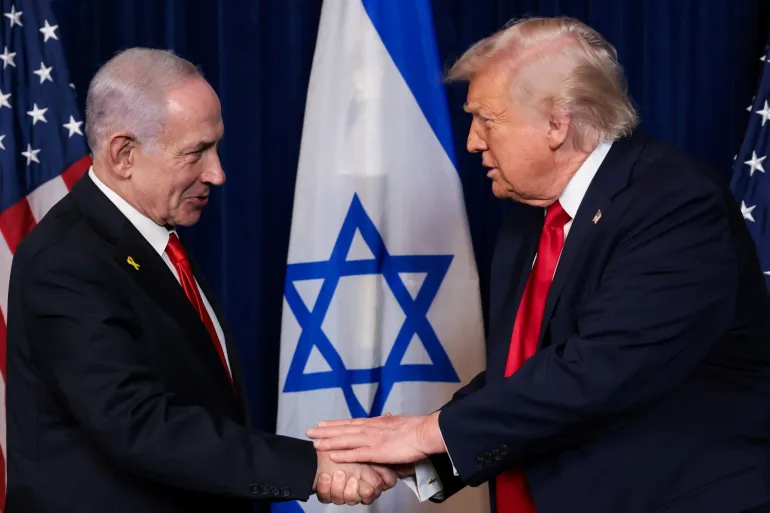
Axios reported on Monday that Trump called Netanyahu “f***ing crazy” and berated him over Israel’s escalation in Lebanon.
Around the same time, an Israeli attack killed six people, including two children, in the southern Lebanese town of al-Marwaniyah.
Experts say that despite leaks of feuds and harsh words between US leaders and Netanyahu, policies are ultimately what matters, and they have changed very little.
Ryan Costello, the policy director at the National Iranian American Council Action (NIAC), said political observers have grown to “mock” reports of closed-door anger from US presidents against Netanyahu.
“What’s really important is what actually happens in practice,” Costello told Al Jazeera.
Though there are reports of Trump giving Netanyahu a dressing-down, Isabelle Hayslip, an advocacy manager at the US-based rights group DAWN, said that US policy remains aligned with Israeli interests.
“Single-source reporting of Trump as a strongman who picks up the phone and yells at Netanyahu for undermining US policy is contradicted by the actual policy outcomes where Netanyahu gets exactly what he wants,” Hayslip told Al Jazeera.
“Trump has no final say over Israeli actions. Like his predecessors, the president has proved completely unable to prioritise American interests, instead catering to Israel’s expansionist whims.”
The latest report comes as Trump faces increasing pressure from his Democratic rivals and segments of his base over his handling of the war on Iran, which he launched jointly with Netanyahu on February 28.
The conflict, which saw Iran close the Strait of Hormuz, has sent gasoline prices soaring in the US and fuelled inflation.
Critics have accused Trump of allowing Israel to drag the US into a war that does not advance Washington’s priorities.
With negotiations to end the war stagnating, Israel’s escalation in Lebanon and its threat to bomb Beirut risks derailing the fragile truce that came into effect in April.
Iranian officials have suggested that they cut off contact with the US over the Israeli attacks in Lebanon.
Before the Axios report, Trump announced he had spoken to Netanyahu and an unidentified Hezbollah representative, and both sides agreed that “all shooting will stop”.
But Netanyahu was quick to assert that the Israeli military “will continue to operate as planned in southern Lebanon”, where it is deepening its invasion and turning entire towns into rubble.
Advocates say Israeli atrocities in Lebanon and across the region could not have happened without US backing.
Since the start of Israel’s genocidal war on Gaza in October 2023, the US has provided Israel with nearly $25bn in military aid, helped fend off retaliatory Iranian attacks against the country and vetoed several ceasefire resolutions at the United Nations Security Council.
Nonetheless, anonymous accounts that the US president is angry at Netanyahu have become a regular feature in the media.
Such reports are attributed to US officials, but it is unclear how leaks with a similar message on the same topic have continued across two administrations from different political parties.
Publicly, aides of both Biden and Trump have largely refrained from criticising Israel.
Trump has regularly praised the Israeli prime minister, arguing on more than one occasion that Israel would have ceased to exist without Netanyahu’s leadership.
In December, the US president also called the Israeli prime minister a “hero” during a meeting in Florida.
“We’re with you, and we’ll continue to be with you,” Trump told Netanyahu.
Two weeks earlier, Axios reported that the White House had “scolded” Netanyahu over Israel’s ceasefire violations in Gaza.
“The White House message to Netanyahu was: ‘If you want to ruin your reputation and show that you don’t abide by agreements, be our guest, but we won’t allow you to ruin President Trump’s reputation after he brokered the deal in Gaza,” the publication quoted a US official as saying.
Few people know the exact content of high-level calls at the White House. Sometimes, top officials, including members of the National Security Council, sit in on conversations between the president and world leaders after briefings.
Negar Mortazavi, a senior fellow at the Center for International Policy, a research nonprofit, said the leak about the tense call between Trump and Netanyahu may be aimed at making Trump look tough on Israel to quell outrage over the war.
“It could be sort of a way of moderating the anger or the blame at the US for continuing this unpopular, illegal, unnecessary war,” Mortazavi told Al Jazeera.
She added that the message it sends is, “Look, we’re very angry at Israel. We yell at them. We call them names.”
But Mortazavi stressed that policy is more important than rhetoric: “Does that change the facts on the ground?”
For his part, Costello argued that the leak was likely directed at Iran.
“I see this one primarily as a signal to the Iranians that Trump is serious, and he wants to insulate what’s happening in Lebanon and Israel’s attacks from the Iran negotiations,” Costello said.
“It remains to be seen the extent to which that excoriation has actually led to a change in Israel’s policies, and I think there is a strong incentive for continued defiance from Netanyahu.”
Axios, meanwhile, has defended its coverage.
“We stand by our reporting, which by the way noted ‘Trump and Netanyahu have had several tense calls in the past but have still coordinated closely on Iran and other issues,’” Jake Wilkins, a spokesperson for the publication, told Al Jazeera in an email.
Mortazavi warned that all sides of the war on Iran are trying to influence public perceptions of the conflict.
She pointed to recent reports that Iranian President Masoud Pezeshkian had resigned, a rumour that was promptly denied by his office.
“This is a very hybrid war. It’s a war on the battlefield. It’s an intelligence war. It’s a war of narratives,” Mortazavi told Al Jazeera. “And then there’s also an information war, which includes disinformation, half-truths and strategic leaks.”
[Aljazeera]
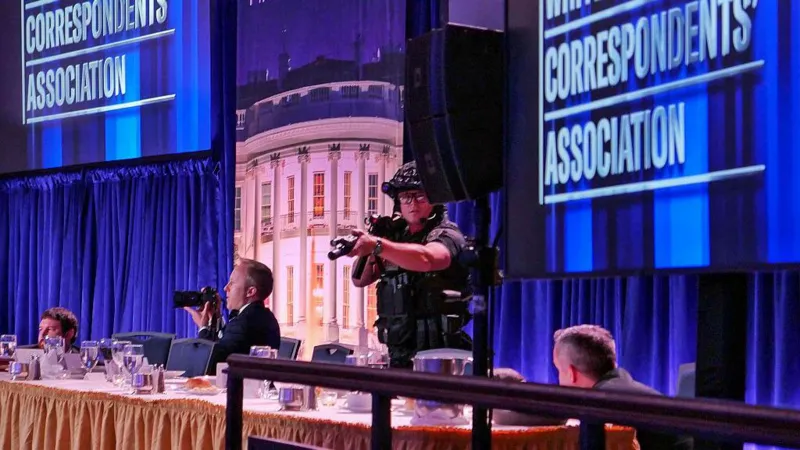
The annual White House Correspondents’ Dinner has been rescheduled after the original event on April 25 was suspended after a gunman attempted to access the venue, resulting in an exchange of fire with Secret Service agents.
The new event will be held on July 24 with “significantly enhanced safety measures and new access procedures”, Weijia Jiang, president of the White House Correspondents’ Association (WHCA), wrote in a letter to members.
US President Donald Trump said he would attend the rescheduled dinner, which will be held at the Waldorf Astoria in Washington DC.
The April shooting saw Trump and Vice-President JD Vance, among others, rushed off stage by Secret Service agents.
The suspect was subdued by agents on the scene, and one Secret Service agent was injured by shotgun fire, according to the Department of Justice.
Trump said the rescheduling of the event, which is meant to honour journalists and the freedom of the press, is a “sign of Strength and Fortitude”.
“This announcement is a very good thing in that we cannot allow Lunatics to change our way of life, or even its scheduling,” the president wrote on social media.
The WHCA spent the last several weeks raising funds to make sure that its members who purchased tickets to the April event do not have to pay again for the July event, which will be a “more intimate gathering”, Jiang said.
The association is also offering financial support to scholarship winners who wish to travel back to Washington DC for the dinner, Jiang said.
Trump said he has accepted an invitation to speak at the rescheduled event, adding that he’s not sure if he will “give the same rather nasty statements” that he had planned to in April.
“But we will soon find out,” the president said.
The April event – attended by the president, vice-president, members of Congress and Trump’s cabinet, and hundreds of journalists – was already underway when a gunman stormed through a security checkpoint.
The suspect was later identified as 31-year-old Cole Tomas Allen, who police said was armed with the shotgun, a handgun and knives.
At a press conference immediately after the shooting, Trump said he would work to get the event rescheduled in the following 30 days.
The Waldorf Astoria, where Trump says the July event will take place, was first converted from an old post office into a luxury hotel by the Trump Organization more than a decade ago. The Trump family leased the building in 2012 and opened the Trump International Hotel there in 2016, before selling the lease in 2022.
[BBC]

Thailand cracks down on foreign companies using fig leaf of local ownership

US strikes Iran’s Qeshm, says Tehran attacks Kuwait, Bahrain

Heavy showers likely at some places in the Western and Sabaragamuwa provinces and in Galle, Matara, Kandy and Nuwara-Eliya districts.

Trump berated Netanyahu? Analysts question US-Israel feud rumours

India should be kept out of PC polls, matters related to 13 A – Mano

US boost for SLAF

‘Dates have the highest sugar content to fight Coronavirus’

Sunday Island 27 December – Headlines

#SundayIsland 17th December – Headlines

Sunday Island – 28th March

Sunday Island Headlines – 21 March

Sunday Island – 21st February – Headlines
-
 News4 days ago
IMF urges Lanka not to meddle with exchange rate
-

 Business5 days ago
Sri Lanka’s construction industry losing ground while no one watches
-

 Business2 days ago
IMF’s unstated rate:Sri Lanka’s $695m loan costs about 5.33% per annum
-
 News4 days ago
State of emergency extended
-

 Features5 days ago
The Division Bell Mystery
-

 News2 days ago
UNP challenges NPP move to amend Vihara – Devalagam Act
-

 Features3 days ago
Are threats to Buddha Sasana external or from within?
-
 News6 days ago
RTI query of Ditwah funds: Presidential Secretariat mum on key questions