
Opinion
Sri Jayewardenepura Dental Faculty – The truth


This article is written in response to the campaigns, requesting government intervention to address a perceived issue in a faculty that has been operating for four years. It appears there is a malicious campaign to close this faculty. The context of this campaign is noteworthy. This faculty has been functioning for four years and has admitted four batches of students. The senior most batch is currently into their clinical training, and preparations are underway to enrol in the fifth batch. Such campaigns have not been visible in the past four years. The reasons for the recent surge of interest in the second dental faculty in Sri Lanka which is at the University of Sri Jayewardenepura remain unclear and may become apparent in the future. While it is not our place to speculate on their motives, we aim to clarify some facts to provide a balanced perspective regarding the faculty of Dental Sciences, University of Sri Jayewardenepura.
Where It All Began: The Story of Dental Education in Sri Lanka
Examining the history of dental education is particularly significant for those interested in understanding the development of the Faculty of Dental Sciences at the University of Peradeniya. Contrary to popular belief, the faculty did not achieve its status overnight. Comparisons between the new faculty and our original faculty often lack common sense and context.
Dental education in Sri Lanka began in 1943 in Colombo within the Faculty of Medicine at the University of Ceylon as the Department of Dental Surgery. Due to spatial constraints, it relocated to Peradeniya in 1954. However, pre-clinical subjects continued to be instructed at the Faculty of Medicine in Colombo, as there was no medical faculty established in Peradeniya at that time.
With the establishment of the Faculty of Medicine at Peradeniya in 1961, the Dental School was restructured as a department within the Faculty of Medicine, Peradeniya, conferring the BDS Degree sanctioned by the University of Ceylon, Peradeniya. In 1974, pursuant to the University Act, the medical, dental, and veterinary schools were merged into the Faculty of Medical, Dental & Veterinary Sciences of the Peradeniya Campus, University of Sri Lanka, with each school led by a chairman. The chairman of the medical school also acted as the dean of the faculty. In 1986, a distinct faculty named the Faculty of Dental Sciences was inaugurated at the University of Peradeniya. Dental students continued to study foundational sciences—Anatomy, Biochemistry, and Physiology—alongside the medical students until 1997 when a new Department of Basic Sciences was established.
Why Sri Lanka Needs a Second Dental Faculty
The necessity for a second Faculty of Dental Sciences was recognized long ago but never came to fruition.
Our current dental surgeon-to-population ratio significantly lags behind the ideal standards. The World Health Organization recommends a benchmark of 1:7,500 for developing countries, yet Sri Lanka’s current ratio remains approximately 1:13,282. These statistics clearly justify the need for a second Dental faculty. It is essential and imperative that the challenges faced by the existing cadre of government dental surgeons are addressed by the relevant authorities.
Currently Sri Lanka has 12 medical faculties recognized by the SLMC (including KDU). By contrast, only one dental faculty existed in the country until 2021. Across the world, countries at every income level have significantly more dental schools relative to their population than Sri Lanka.
This issue became critical following 2019 Advanced level examinations. As the UGC was compelled to increase the intake by 30% as there were two Advanced level batches that year including the old syllabus and the new syllabus. The sole faculty of dental sciences at the time in Peradeniya refused to increase the requested student intake due to insufficient space and facilities. Consequently, the University Grants Commission invited both Ruhuna and Sri Jayewardenepura universities to propose the establishment of a second dental faculty. Owing to its strategic location, the University of Sri Jayewardenepura was chosen to host the second Dental Faculty in Sri Lanka.
As per the Gazette Extraordinary No. 2257/28 dated December 8th, 2021, the second Faculty of Dental Sciences in Sri Lanka was formally established as the ninth faculty at the University of Sri Jayewardenepura. The Faculty of Dental Sciences at the University of Sri Jayewardenepura was inaugurated on January 6th, 2022, on the second floor of the Library Building. This is the accurate chronology of events that led to the opening of the Faculty of Dental Sciences at the University of Sri Jayewardenepura.
The Faculty of dental sciences at the university of Sri Jayewardenepura, offers a five-year Bachelor of Dental Surgery (BDS) degree, going in par with the UGC’s “Subject Benchmark Statement”. The curriculum was approved by university quality assurance cell and Quality Assurance Council of the UGC. It was further approved by the standing committee (medical & dental) and the selection committee of the UGC which comprises of all vice chancellors prior to be approved for student intake.
Novel Model in Dental Education – The FDS-USJ Approach
The Faculty of Dental Sciences, University of Sri Jayewardenepura has adopted an integrated model of dental education structured into three distinct phases: Phase I (Preclinical), Phase II (Paraclinical), and Phase III (Clinical). The preclinical and paraclinical phases are conducted in close collaboration with the Faculty of Medical Sciences, USJ, allowing dental undergraduates to learn alongside their medical counterparts. We share laboratory facilities, dissection halls, and lecture halls with medical students. No new buildings have been constructed for this purpose. We are grateful to the staff and students of the Faculty of Medical Sciences for their generosity in sharing existing facilities, which shows an empathetic approach in a world where collaboration among professionals is often lacking.
Before transitioning to patient care, students undergo intensive practical preparation at the fully-fledged dental skills laboratory located at the university premises. This facility is equipped with manikins enabling students to master essential clinical techniques and procedures in a controlled, low-risk environment.
The clinical phase of training is primarily based at the Dental Professorial Unit of the Colombo South Teaching Hospital (Kalubowila). This unit is equipped with modern dental chairs, and instruments, ensuring extensive, supervised hands-on experience across all major dental disciplines.
This model mirrors the long-established Professorial Unit system in medical education, where Ministry of Health teaching hospitals are integrated with university faculties to deliver joint training and patient care. While this approach is well established in medical faculties, FDS-USJ is the first dental faculty in Sri Lanka to adopt it, representing a significant advancement in the country’s dental education framework. Notably, the annual cost per dental student at the University of Peradeniya is approximately LKR 1.2 million, whereas at the University of Sri Jayewardenepura it is only LKR 0.6 million, demonstrating that this innovative model is not only academically progressive but also highly cost-effective.
Our Journey, the Opposition, and the Fight to Save a Thriving State Faculty.
The faculty currently accommodates four batches of approximately 30 students each, supported by a core team of permanent academic staff members. In addition, an extended faculty comprising professors and consultants across various specialties contribute to the teaching program on an honorary or contract basis, ensuring a broad spectrum of expertise and clinical experience is available to students
The sequence of events unfolded as follows. Initially, we commenced our journey and will continue to progress accordingly. We all received our education at the Faculty of Peradeniya, and there is no rivalry with our alma mater. It is a natural phenomenon that when two faculties coexist, improvements are likely in both, which greatly benefits our profession. Unfortunately, efforts to close the second faculty would only hinder the advancement of dental education in the country.
After four years of operation since its establishment, it is surprising that some individuals still question the necessity of a second Dental faculty. A key point regarding the targeted criticism is that we do not have an ultramodern building. Critics assert that constructing such a facility would be prohibitively expensive, with various figures quoted between 15 million to 19 million as the per-student cost for dental education. However, this criticism overlooks the unique model we employ at Sri Jayewardenepura. To clarify, we currently do not have, nor plans to construct, a state-of-the-art building in the near future.
The clinical training skills simulation lab has been established with 14 manikins. We have not invested in large constructions for clinical patient treatment centers. At Kalubowila, we received a donated house which was refurbished, and 14 dental chairs have already been installed for clinical training. At the Institute of Oral Health (IOH) in Maharagama, a building that was never used for patient care is planned to be refurbished, and more dental chairs have been purchased through a grant for student training. Delays in construction were due to unforeseen obstacles presented by certain individuals, who are behind the current campaign of closing down the faculty.
Necessary staff have been approved and have started work. Considerable progress has been made while efficiently using available resources and avoiding unnecessary government expenditure. When questioned about the absence of a large building, it is important to consider the reasons for such queries. The focus is on utilizing resources effectively to train skilled and empathetic dental graduates rather than constructing new buildings. A new state-of-the-art building will be constructed in the future based on the performance and assessment of the current model. It should be noted that Peradeniya took considerable time to secure a JICA grant since its inception. This goal will eventually be achieved. Many professors and leading clinicians practicing locally and internationally are graduates of the old Dental faculty at Dangolla hill. The old buildings have not hindered their professional achievements. We are confident that our students will succeed in their profession with the proper mentorship and guidance which is abundant in our faculty.
But we are not without our share of problems like any new faculty. Recruitment of new academic staff has to progress. Construction of facilities in Maharagama needs to speed up. However, these problems do not mount to a ‘crisis’ by any means. So, exaggerating these issues whilst manipulating other true facts to gain some undesirable gain is not warranted and should not be supported. People with real vested interests and their real ulterior motives will become evident in the future and it is not for us to be bothered by such activities.
Finally, some parties have claimed that we use our students as shields. No. We have students in our hearts. We will strive to do the best we can for them, and we vouch that Jayewardenepura will produce clinically skilled dental surgeons who are empathetic towards our patients. Sri Lanka was never known for fancy buildings. We were known for our skilled workforce and quality of work. That is our true strength, and we will strive to do the best we can. So that one day our efforts will be appreciated by the majority of the grateful Sri Lankans.
So, the call to close down the second dental faculty and transfer them to Peradeniya is a clear act of sabotage. This of course is a call to curtail both free education and right to education. Such malicious attacks and unfounded rumours are causing significant mental distress and uncertainty for our students, who have chosen to pursue their education at FDS-USJ with pride and commitment. These are students who have earned their place through the proper national Z-score system, competing on merit. Instead of being able to focus fully on their studies and training, they are being subjected to unnecessary anxiety, undermining their confidence and detracting from the supportive learning environment we strive to maintain. We will not bow down to such hypocritical claims and we will finish what we have started in the name of dental education in this country.
May common sense prevail, and may our truth resonate far and wide!
Teachers’ Association
Faculty of Dental Sciences
University of Sri Jayewardenepura


Tariff Increase: Visible and Real Impact
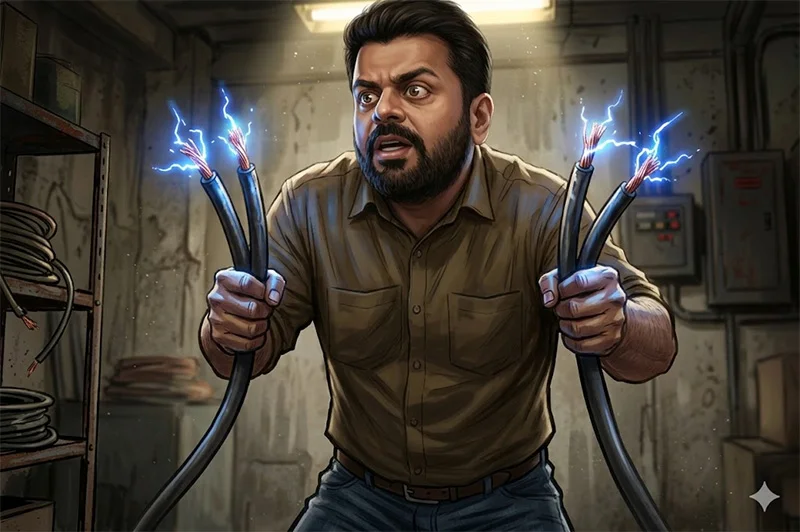
The recent increase in electricity tariffs in Sri Lanka has created serious social and economic concerns. The increase applies especially to consumers who use more than 180 units of electricity. Their bills may rise by more than 18%.
At first, this may look like a decision that affects only “high electricity users.” But in reality, the impact is much wider. It affects households, businesses, industries, services, inflation, investment, and national competitiveness.
Sri Lanka is now facing a situation where electricity bills continue to rise again and again. This should not be seen as a one-time tariff revision. If the price of one unit of electricity keeps increasing, the deeper problem is not only household consumption. The real problem is the high cost of electricity generation. Therefore, the unit price of electricity cannot be reduced in a sustainable way unless the cost of generation is reduced first.
The main concern is that Sri Lanka still does not seem to have a clear, practical, and measurable long-term plan to reduce generation costs. What we often hear are political explanations, temporary promises, and hopeful statements. But hope alone cannot reduce electricity tariffs. What the country needs is a realistic national plan. It must focus on low-cost power generation, efficient management, renewable energy investment, and serious reforms in the electricity sector.
Electricity is a basic foundation of a modern economy. When its price increases, it affects the cost of living, business costs, production, and national competitiveness. According to the Public Utilities Commission of Sri Lanka (PUCSL) announcements, the May 2026 revision applies especially to domestic consumers above 180 units, government institutions, large industries, and several GP2 and GP3 categories.
Direct Impact: Pressure on the Middle Class
The tariff increase directly affects middle-class and upper-middle-class families that use more than 180 units of electricity. In urban and semi-urban life, many electrical appliances are now part of daily life. These include refrigerators, water pumps, computers, internet devices, washing machines, fans, rice cookers, and other household equipment.
Many families exceed 180 units not because they live luxuriously, but because modern life requires electricity. Therefore, it is not realistic to say that this decision affects only the rich. Children’s education, online learning, work from home, small home-based businesses, water supply, communication, and basic household safety all depend on electricity.
According to PUCSL examples, a household using 210 units may see its bill increase from Rs. 9,570 to Rs. 11,330. This is an increase of about Rs. 1,760 per month, or nearly Rs. 21,000 per year. For families whose incomes are not rising at the same pace, this is a serious burden. It reduces savings. It affects education, health, food, and daily consumption. When electricity bills, food prices, fuel prices, and loan costs rise together, middle-class confidence falls. Families begin to cut non-essential spending. This also reduces market demand. Therefore, the electricity tariff increase is not just another monthly bill. It is a deeper pressure on living standards, savings, and economic security.
Impact on the Business Sector
The wider impact of electricity tariff increases is seen most clearly in the business sector. Factories, hotels, restaurants, supermarkets, cold storage facilities, bakeries, printing businesses, IT firms, and small and medium enterprises all depend heavily on electricity.
When electricity costs rise, production and service costs also rise.
In 2024, the industrial sector alone used 4,622 GWh of electricity. This was 30.4% of total electricity sales. The General Purpose category used 3,472 GWh, or 22.9%. This shows that a large share of electricity consumption takes place in the production and service economy.
For large industries, electricity is essential for machinery, refrigeration, lighting, packaging, water pumping, and quality control. When the unit price of electricity rises, the cost of producing each item also rises. Businesses then have only a few choices. They can pass the cost to consumers. They can reduce their profit margins. Or they can reduce production.
For small and medium businesses, the pressure is even greater. Large companies may be able to invest in solar power, energy-efficient machinery, or special credit facilities. But small businesses have limited options. For a bakery, salon, grocery shop, or small restaurant, a higher electricity bill directly affects daily cash flow. In the end, these costs enter the prices of goods and services. The price of food at a restaurant, goods at a shop, products from a factory, and services at a hotel can all rise because of electricity costs.
In the long run, this can also affect employment, wage increases, business expansion, and overall economic activity.
Inflation and the Cost of Living
Higher electricity tariffs can create a risk of rising inflation. Electricity is not only a household bill. It is also a key cost in food production, storage, transport, industry, hotels, hospitals, schools, and many services.
When electricity costs rise, that cost gradually enters the prices of goods and services.
Sri Lanka’s recent experience shows how dangerous this can be. In September 2022, annual inflation based on the Colombo Consumer Price Index reached 69.8%. Food inflation reached 94.9%, while non-food inflation reached 57.6%. This shows how quickly living costs can rise when fuel, electricity, transport, and exchange rate pressures come together. In April 2026, CCPI-based annual inflation also increased from 2.2% in March to 5.4%. Non-food inflation rose from 2.9% to 6.8%. This is an important warning.
Under the CCPI base year 2021=100, the category “Housing, Water, Electricity, Gas and Other Fuels” carries a weight of about 31.6% in the consumer price index. Therefore, higher electricity and fuel costs can have a direct impact on inflation. The risk is that an electricity bill increase does not stop with the electricity bill. It can later spread into food prices, medicine prices, school services, hospital services, restaurant prices, and transport costs. This is known as a second-round effect.
When inflation remains high, real household income falls. Even if salaries remain the same in numbers, people can buy less with that salary. There is another danger. If people and businesses expect prices to keep rising, businesses may raise prices early. Workers may demand higher wages. Suppliers may sign contracts at higher prices. This can create a wage-price spiral. Therefore, the inflationary impact of electricity tariff increases should not be treated lightly. The country needs more than tariff increases to cover institutional losses. It needs a long-term plan to reduce the cost of electricity generation, diversify the energy mix, and protect the cost of living.
Coal, Oil, and the Cost of Power Generation
One major reason for rising electricity tariffs is the way electricity is generated. Consumers see only the final bill. But behind that bill are fuel choices, power plant efficiency, import costs, exchange rates, and weaknesses in energy planning.
A major part of Sri Lanka’s electricity generation still depends on coal and fuel oil. In 2024, total electricity generation was 16,802 GWh. Coal accounted for 32.6%. CEB oil-based generation accounted for 9.3%. IPP oil-based generation accounted for 4.6%. Together, coal and oil-based generation made up nearly 46% of total generation. This is very important for tariff decisions.
Coal power plants such as Norochcholai provide relatively low-cost base power. But when such plants face maintenance problems, technical failures, or unexpected shutdowns, the country loses low-cost electricity. It then has to use more expensive oil-based power plants.
According to CEB 2024 data, the fuel cost of one unit of electricity from Lakvijaya coal power was Rs. 17.96 per kWh. But some diesel and LAD power plants cost more than Rs. 40 to Rs. 100 per kWh. This clearly shows how the generation mix affects the unit price of electricity.
Coal and oil are also imported fuels. They depend on foreign exchange. When global fuel prices rise, when the rupee weakens, or when geopolitical risks increase, electricity generation costs also rise. Therefore, a real discussion on reducing electricity tariffs must begin with reducing generation costs. Sri Lanka needs a practical plan to move towards lower-cost, reliable, and locally available energy sources.
Inefficiency and Policy Weaknesses
Another major reason for repeated tariff increases is long-term inefficiency in the electricity sector. Old transmission systems, power losses, delayed projects, inefficient procurement, political interference, and the absence of a stable energy policy have weakened electricity planning.
An efficient electricity system needs timely investment in low-cost power plants. Existing plants must be properly maintained. Transmission and distribution systems must be modernized. Renewable energy projects must be connected to the grid without unnecessary delay. When these steps are not taken on time, the country becomes dependent on expensive emergency solutions. Sri Lanka has natural advantages in solar, wind, and small hydro power. But delays in approvals, limited grid capacity, legal uncertainty for investors, and frequent policy changes have prevented the country from using this potential fully. This is a lost economic opportunity.
Another weakness is that decisions in the electricity sector are often driven more by politics than by technical and economic logic. Tariff decisions, power plant selection, project approvals, and institutional reforms should be based on professional judgment. When decisions are made for short-term popularity, the long-term cost is paid by the public.
Therefore, a plan to reduce electricity tariffs cannot be only a tariff announcement. It must be a full reform programme. It must reduce generation costs, reduce dependence on imported fuel, strengthen the grid, speed up renewable energy, and reduce institutional inefficiency. Without such a plan, electricity bills will continue to remain a burden on the people.
Impact on National Competitiveness
High electricity costs do not affect households alone. They also affect production costs, export prices, investment decisions, tourism costs, and the service economy. Therefore, electricity tariffs are a key factor in national competitiveness.
When electricity costs rise, it becomes harder for exporters to compete on price. Sectors such as apparel, food processing, rubber, plastics, packaging, printing, and light manufacturing all depend on electricity. International buyers are highly price-sensitive. If Sri Lanka’s production costs rise, its export competitiveness weakens.
Tourism is also affected. Hotels, restaurants, guest houses, and villas need electricity for air conditioning, lighting, laundry, kitchens, water heating, and digital systems. When electricity bills rise, room rates and service charges may also rise. This can make Sri Lanka less attractive compared to regional competitors. The IT, BPO, software, and digital service sectors also need reliable and affordable electricity. Higher power costs and uncertainty about supply can reduce the confidence of foreign clients and investors.
Foreign investors consider energy costs when choosing a country. They also look at labour costs, tax policy, legal stability, market access, and infrastructure. If electricity is expensive, the system is inefficient, and policy is unstable, investors see the country as risky. In the long run, this can affect new investment, jobs, wage growth, and economic growth. Therefore, electricity tariff increases must also be seen as a national competitiveness issue. If Sri Lanka wants to expand exports, strengthen tourism, attract investment, and create jobs, it needs a reliable electricity system at a reasonable cost.
A Positive Side: An Opportunity for Energy Efficiency
This situation should not be seen only negatively. Higher electricity prices can also encourage people to think more seriously about energy efficiency.
According to CEB 2024 data, electricity exported to the grid through rooftop solar increased from 632 GWh in 2023 to 867 GWh in 2024. This is a 37% increase. The number of rooftop solar accounts increased from 39,827 to 73,050, an 83% increase. This is a positive sign. It shows that people are looking for energy alternatives. But this alone is not enough. Individual solar adoption is useful, but the country still needs a reliable, coordinated, and long-term national energy plan to reduce overall generation costs.
What Should Be Done?
Sri Lanka cannot depend only on short-term solutions. The country needs a national policy that builds long-term energy security and economic stability.
Renewable energy must be accelerated. Sri Lanka has strong natural advantages in solar, wind, and hydro power. But delays in projects, policy instability, and investment barriers have prevented the country from using this potential fully. Households and businesses should be encouraged to use solar power. This can be done through affordable loans, tax relief, and a clear legal framework. If people can produce part of their own electricity, pressure on the national grid will also reduce.
Efficiency, Transparency, and Public Responsibility
To solve this problem, inefficiency and waste in the electricity sector must be reduced. Transmission losses, delayed projects, weak management, and political interference must be addressed. Financial transparency and professional management in institutions such as the Ceylon Electricity Board are also essential. This can help rebuild public trust.
The public also has a role. People should use electricity responsibly. They should use energy-efficient appliances, reduce waste, and change consumption habits where possible. But public responsibility alone cannot solve the problem. Even if people save electricity, the unit price cannot fall if national generation costs remain high. Therefore, responsible consumption by the public and a serious government plan to reduce generation costs must go together.
Rising electricity tariffs are not only about a higher electricity bill. They affect the entire economy. They influence household living costs, business costs, inflation, investment, and national competitiveness. The long-term solution is not repeated tariff increases. It is an efficient, diversified, and sustainable energy policy. The price of one unit of electricity can be reduced only when the cost of producing that unit is reduced. Political hope is not enough. Sri Lanka needs a practical national programme with clear targets, a timeline, investment support, faster renewable energy development, and reforms to reduce inefficiency in the electricity sector. Without such a programme, promises to reduce electricity bills will sound to the public like another political explanation and another hopeful statement.
by Prof. Ranjith Bandara

For more than sixty years, Sri Lanka has suffered repeated man-made disasters. Every few years, something man-made (manufactured) happens that pushes the country back by almost a decade. These setbacks did not come from natural disasters; they came from selfish people, from violence, from poor leadership, and from decisions made without thinking about the nation’s future.
Since 1971, uprisings, terrorism, and political chaos have taken thousands of young lives. Each time, the country lost not only its youth but also its stability, its economy, and its hope.
But the deeper problem began even earlier. From the 1960s onward, many political leaders stopped caring about long-term development. They focused on personal gains and power, not the progress of the country. They made decisions for personal gain (financially and politically), not national benefit.
In recent years, the situation has become even more alarming. People who exposed corruption—whistleblowers, honest officers, financial scandals, and potential witnesses—have been threatened, silenced, or even killed. A mafia-style political culture has taken root, far worse than what existed decades ago. It reminds many of the fear and instability that surrounded the events of 1971.
How can a nation move forward when:
* Law and order is weak,
* Financial fraud happens repeatedly,
* Uninformed politicians make decisions for short-term gain and neglect the growth of the country,
* The unitary nature and sovereignty of the country are threatened, and
* The judiciary is manipulated, weakening justice and democracy?
No country can progress and maintain true democracy under these conditions. If this continues, Sri Lanka risks falling into a deeper crisis—possibly worse than the collapse seen in Ethiopia’s recent turmoil.
A Message to Every Voter
From now on, at each election, the responsibility lies with the people.
Don’t vote for untrustworthy people or those who have committed violent or fraudulent activity,
Don’t blindly vote for a party—study their policies (not gimmicks) and see whether you can trust them.
Don’t be carried away by posters, advertisements, and slogans (these are paid activities by beneficiaries), with empty promises.
Every voter must think carefully about:
* The nation’s future, maintenance of the unitary nature and its sovereignty,
* Law and order and the safety of their children,
* The stability of the economy, and
* The protection of democracy and the independence of justice.
Sri Lanka cannot afford to repeat the same mistakes. It cannot afford leaders who bring fear, division (religious, ethnic, etc.), or corruption. It cannot afford another decade lost.
The ballot box is the only peaceful tool the people have to protect the country. Use it wisely. Choose stability over chaos, integrity over corruption, and national interest over personal loyalty.
The future of Sri Lanka depends on the choices that you make now.
Sri Lanka has suffered one man-made disaster after another. Every few years, something (manufactured) happens that pushes the country’s development and economy back by nearly a decade. Since 1971, much of this damage came first from the JVP uprisings and later from the LTTE conflict. Each time, it is unfortunate that thousands of young people lose their lives for no good reason, and the nation (innocent) families) paid a heavy price.
Since the early 1960s onward, many so-called political leaders have stopped thinking about Sri Lanka’s long-term future. They focused on grabbing power at any cost in national elections, not progress. False promises and misleading voters mostly accomplished these.
In recent years, the situation has become even worse. People who raised genuine concerns, exposed major governmental corruptions and scandals, or acted as whistleblowers have been threatened, silenced, or even killed. A real mafia-like system now operates in the country—far worse than anything seen before. It feels dangerously similar (or can become worse) to the atmosphere that led to the 1971 tragedy.
How can a nation move forward when there is no law and order, when significant financial fraud happens one after another, and when politicians chase short-term personal gain instead of protecting the country’s future? How can democracy survive when the judiciary is manipulated, when judicial freedom is weakened, and when the unitary nature and sovereignty of the nation are put at risk? This cannot continue.
Unless something changes soon, Sri Lanka may face an even deeper financial, unruly, and social collapse—possibly worse than what happened in Ethiopia’s economic crisis.
by Dr. Sunil J Wimalawansa
Professor of Medicine

Where the mind is without fear
And the head is held high
Where knowledge is free
Where the world has not been broken up
Into fragments by narrow domestic walls
Where words come out from the depths of truth …
Into that heaven of freedom, my Father,
Let my country awake
That was not a man ‘for all seasons’ (who are plentiful) but a man for the ages, writing those words in this kali yugaya.
Do you hear them? Now? Now, as ever, as everywhere?
Fifty years ago, I wrote commentaries on each poem in Gitanjali, from which those lines are taken. They were a kind of ‘crib’, paid for by an early tutory, Atlas Hall, which sort of prepared students for examinations at tertiary level here and in London. One might note that Gitanjali and other works by writers in South Asia (other than those touted by spurious academics as ‘post-modernist’ and ‘post-colonial’, – read ‘pro-colonial’) – have long been sent out of the window of classrooms in this country.
The immediate occasion that called for these comments was the presentation of a selection of songs, from Tagore’s extensive body of work, at the Wendt last Monday. It was by the foremost exponent today of robindra sangeeth, Rezwana Chowdhury Bannya of Bangladesh & Santiniketan (yes, that sounds as if Santiniketan is a nation by itself). In a singularly happy namaskar towards each other, it was co-hosted by the High Commissions of Bangladesh & India. The fact that both have adopted Tagore’s songs as their national anthems may be indicative of ‘the breaking down of narrow domestic walls’. ‘The Partition of Bengal’, first attempted by the British over a hundred years ago, failed because the people, Tagore active among them, did not want it. Four decades later they, the Brits again, succeeded in rebuilding that wall though it remains porous. As Sarath Amunugama observed, in a felicitous address in which he referred both to ‘the partition’, and to national anthems, and as is well known here, Ananda Samarakone’s namo, namo matha was inspired by his stay at Santiniketan. In the 1930s to the 1960s the latter connection has vitalised our dancing, singing, ‘music-making’ and our knowledge of theatre.
A somewhat hilarious outcome of the latter occurred about ten years ago at the Tower Hall, when Suchitra Mitra, whose name would for the foreseeable future be inextricably associated with robindra-sangeeth, invited our ‘old boys’ of Santiniketan to come up and join her in their school song. Most of them had lost the words and more than there seemed to be of them had lost their voice, leaving Suchitra Mitra up there encouraging and reprimanding them like a Montessori teacher.
And now we have, before our astonished gaze, a Cricket World Cup with loads of some kinds of drama, including a battle royal among three South-Asian giants of that English game with the sort of statutory-leaders of India, Pakistan and Sri Lanka present, polishing or twirling moustaches and waving gaily in the general direction of our millions of hoi polloi via TV cameras.
Sorry, yuga purusha, no trace of awareness around. So how could you and all of us whom you left behind (not that it could any longer matter to us as it did not to you), expect guilt?
The special issue of INDIA Perspectives (IP) that marked this occasion is a handsome work. The IP journal has always been a high-quality production but this was a revelation. Specialists in each area of Tagore’s interests and activities have contributed articles on his views on schooling, theatre, painting, religion, nationalism and internationalism, science, rural economics and so on, each from his/her perspective. What follows is drawn from that work.
Although he and Gandhi were friends and, says Amartya Sen, he had popularised the appellation Mahatma for Gandhi, Tagore had seen that the chakra was not the route to India’s future. There could be many views on that: Tagore may have overlooked its symbolic value or significance. After all, the bottom-line is that the European tribes became rich by pillaging the rest of the world and rendering those people poor. The textile industry in England, for instance, ‘developed’ by destroying the textile industry in Bengal; the methods adopted were various, the most direct being that of chopping off the fingers of the weavers. Tagore should have been aware of that.
The brutality of the British ‘raj’ was not unknown to him. Following the massacre of over 1,000 unarmed people at a gathering at Jaliawallah Bargh by a Brigadier (named Dyer) Tagore returned a ‘knighthood’ ‘bestowed’ on him by their monarch. A dozen years later, the oh-so-valiant Brits followed up the massacre at Jaliawallah Bargh by, in Tagore’s words, ‘a concerted homicidal attack, under cover of darkness, on defenseless prisoners undergoing the system of barbaric incarceration’. Any other examples, anyone?
Tagore had been an inveterate traveler and the questions that arise in ‘looking inwards and outwards’ tend to remain unresolved. He had foreseen that ‘science’ would be prostituted, that it would not serve the world community of living things, that it would become a man-made calamity: ‘Science is at the beginning of the invasion of the material world and there goes on a furious scramble for plunder. Often things look hideously materialistic, and shamelessly belie man’s own nature.’
Nevertheless he seems to have retained golden visions for what it was going to do: ‘But the day will come when some of the great processes of nature will be at the beck and call of every individual and at least the prime necessities of life will be supplied with very little care and cost’. (We have seen how Monsanto, Del Monte and fellow predators, have set about doing that). ‘To live will be as easy to man as to breathe, and his spirit will be free to create his own world.’ He was fortunate indeed in not being around to witness how the country he was born in and which had nourished his creativity has gone in the pursuit of command of the great processes of nature (and of her neighbours). Besides, the mega-mega weddings, etc., we are witness to the operations of an imperium hell-bent on evicting people from the lands, waterways and beaches that ‘the market’ covets.
How such a culture of science would choose to help the sick or, just a step further for such minds, to make the healthy ill, or, indeed, how such ‘science’ would be used to create, in Ralph Pieris’s term, ‘illth’ (not ‘wealth’), did not quite come to pass in his lifetime. Since his passing, we share a common experience of ‘patents’ on traditional medicines, including the most ubiquitous and widely / wisely used, kohomba or neem, of kotala himbutu and many others, acquired via ‘laws’ constructed by the ‘developed’ people aforementioned, and India’s experience in developing an antidote to the AIDS virus. They affirm the validity of Tagore’s ‘gut reaction’ to where ‘science’ may take the world and has indeed taken it.
Forty years ago Senaka Bibile initiated the construction and adoption of a formulary that reduced the number of drugs required in this country by some 80% and identified them by their generic name, and battle was joined. (Senaka was eventually eliminated/killed by a mercenary, from this part of this world, of Big-Pharma). That entity, Big-Pharma, has acquired control not only over the production of drugs and their marketing but over the entire range of activity that relates to health-care – systems of ‘referral’ and lab tests where such weren’t needed, so with hospitalisation or indoor treatment usually with yet more ‘tests’, ‘prescription drugs’, ‘insurance’ from an ‘approved’ company of blood suckers. Its control is most scandalously evident in the USA and includes a species of corruption that Tagore could not have conceived of. (robindra–sangeeth does not address such yet-to-be reality, nor do his plays and paintings). When Big-Pharma got their obedient servants in the USA administration to send in marines to force Bangladesh to allow their drugs in, the government and the people of Bangladesh, all honour to them, physically ‘repelled the boarders’.
Tagore lived in and came to terms with a changing world, and he responded to all of what he saw in terms that had not occurred to his contemporaries anywhere in ‘the known world’. There were others of course who had a like foresight. Though too numerous to mention here, I should think that Blake and Whitman belonged among them, – as did such great poets as Bharathari from centuries ago, and Subramaniam Bharathi, consigned to a pauper’s grave, from yesteryear. So many more through all the hundreds and thousands of years that don’t quite make up a kalpa.
We learn through the IP that Tagore’s name had been put up for the Nobel prize by a single member of the Royal Society, T S Moore, while 97 other members had collectively recommended Thomas Hardy. The Swedish Academy had picked Tagore out of 28 nominees. In a telegram conveying his acceptance of the award, Tagore expressed his appreciation of ‘the breadth of understanding which has brought the distant near, and has made the stranger a brother’. In these times, Sarkozy, Cameron and their ilk seem intent on making strangers of brothers.
A fallout of the instant fame it brought had been a loss of privacy (as Garcia Marquez and others discovered many decades later) and of the use of his time to get on with his work. Gitanjali was for the most part a rendering into English, by the poet himself, of his songs in Bangla. Translating a novel, short story or a play is no easy matter (as, with respect to Sinhala works, Ashley Halpe, Lakshmi de Silva, Vijitha Fernando et al could confirm). Hemingway had found the great Russians unreadable till he came upon the translations by Constance Garnett. Translating poetry is infinitely more difficult, (as Ranjini Obeyesekere and Lakshmi have shown) and Tagore was hounded by admirers to translate more of his work into English. He was called on to make his poetry accessible to those who had only English. His poems have since been put into English; among them, an effort I liked, a whole volume, was titled ‘I will not let you go’. Simply put, the title poem will not let you go.
Nevertheless, the task of translating works in other south Asian languages, to begin with, into Hindi, Bangla and Urdu and the other way is one that needs attention. Bangla has the second largest numbers of speakers in South Asia after Hindi – about two-thirds the number of Hindi-speakers. Bangladesh might consider setting up a kind of clearing house for such work, perhaps with SAARC support and located perhaps, at Silaideh, around Tagore’s ancestral land in Bangladesh. Maybe, as Tagore’s examples show, ‘start small’ would be a good approach.
On matters that have to do with ‘religion’, Tagore’s activities may be seen as being eclectic. He was a member of Brahmo, (of which Satyajit Ray and his father’s family were members), which took the Upanishads for text and had no truck with caste-orders of ‘Hinduism’ including the rationalization for it given in the Gita. He admired Sufism, presented a ‘Christothsava’ akin to Christmas, wrote on ‘Devotion to Buddhism’. His view on Siddhartha Gautama was: ‘This wisdom came, neither in texts of scripture, nor in symbols of deities, nor in religious practices sanctified by ages, but through the voice of a living man and the love that flowed from a human heart.’ The concept of nirvana had not attracted him and in that sense his perception of Buddhism seems to have been closer to that of the northern form than to the Theravada familiar to us here and in south-east Asia.
As with his experiments in theatre, where he moved away from the westernised urban mode to the folk-inspired dance-drama, so with music and song he moved away from the classical raag to folk music. That is a trajectory that our musicians should explore. He drew from other cultures – among the vibrant renderings given by Rezwana Chowdhury Bannya was one that gave a celebratory edge to ‘Ye banks & braes o’ bonnie Doon’.
My first encounter with robindra sangeeth occurred in Dhaka at the home of Mohamed Sirajuddin. When the late Prof. P P G L Siriwardena introduced us, Siraj exclaimed, ‘We are batch-mates’; what he meant was that he had joined the CSP (Civil Service of Pakistan) around the same time as I joined the CCS. As Secretary for Rural Development he did much to support cottage industries in Bangladesh and was familiar with our experience in that field. He invited artistes he valued, some, to my ears, at master level in robindra sangeeth, to perform at his place. I was struck by the variety of those who turned up to listen; there were friends, people from down – or off – the road, the Governor of the Central Bank, Ministers, colleagues … It reminded me of the glory days at Chitrasena’s in Kollupitiya. In an environment that seemed designed for chamber music, those songs sank into my heart. Among those who sang were a young couple who were TV stars but gave tribute to a middle-aged man, Farook, who was a master. Yes, robindra sangeeth, does need the male voice.
As Rezwana mentioned, delicately, as ‘in passing’, a problem that arises in appreciating such songs is that they are more sadly incomplete for the listener who has no Bangla than the emotions they do convey regardless. The affinity between Bangla and Sinhala is well known. (Some twenty years ago I sent a farmer from Berelihela, off Tissamaharama, to Dhaka for extended chats with fellow farmers from Asia and the Pacific. When I myself got there a few days later on allied business, I found that he had communicated very well indeed with people there in the only language he knew: his own). The present moment seems to offer an excellent opportunity for the High Commissions of Bangladesh and India to harness the active support of our government to set up an infrastructure for making Bangla accessible to our people. If, in these sort-of ‘market’ days a further incentive is required at this end, policy makers should be aware that workers and managers from here have contributed much to the resuscitation of a textile industry in Bangla that had been of an unparalleled excellence through the centuries.
by Gamini Seneviratne

Gujarat Titans go No.1 after Rabada and Holder rout Sunrisers Hyderabad

Showers will occur in the Western, Sabaragamuwa, Central, North-western and Northern provinces and in Anuradhapura, Trincomalee, Galle and Matara districts

Ex-SriLankan CEO’s death: Controversy surrounds execution of bail bond

Law applies to all, regardless of power or influence – Prez

Sri Lanka and Belarus to sign several MoUs

Compensation paymentsto voluntary retirees in power sector to begin soon

‘Dates have the highest sugar content to fight Coronavirus’

Sunday Island 27 December – Headlines

#SundayIsland 17th December – Headlines

Sunday Island – 28th March

Sunday Island Headlines – 21 March

Sunday Island – 21st February – Headlines
-

 News6 days ago
MIT expert warns of catastrophic consequences of USD 2.5 mn Treasury heist
-

 News3 days ago
Lanka Port City officials to meet investors in Dubai
-

 Editorial6 days ago
Clean Sri Lanka and dirty politics
-
 News4 days ago
SLPP expresses concern over death of former SriLankan CEO
-

 Editorial5 days ago
The Vijay factor
-
 News4 days ago
Police inform Fort Magistrate’s Court of finding ex-CEO of SriLankan dead under suspicious circumstances
-

 Features5 days ago
Palm leaf manuscripts of Sri Lanka – 1
-
 News9 hours ago
Ex-SriLankan CEO’s death: Controversy surrounds execution of bail bond