
Latest News
Budgetary allocations should be fully utilised within the respective financial year to deliver benefits to the public -President

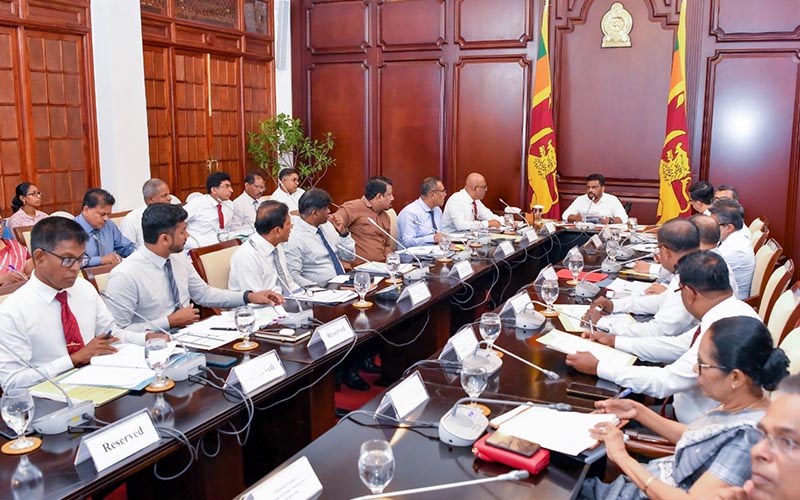
A review on the implementation of the 2025 budget allocations for the Ministry of Youth Affairs and Sports, together with preliminary discussions on the 2026 budget proposals, was held on Friday (15) morning at the Presidential Secretariat under the patronage of President Anura Kumara Dissanayake.
During this discussion, the allocations made in 2025 to eight institutions under the Ministry of Youth Affairs and Sports and the current status of the related projects were reviewed separately.
The President pointed out that the long-standing issue in all sectors, including youth affairs and sports, is the failure to allocate budgetary provisions properly for their advancement. He further noted that although the last budget allocated the necessary funds for all sectors, there has been dissatisfaction regarding their proper utilisation for the relevant projects. The President emphasised that such allocations should be fully utilised within the respective financial year to deliver benefits to the public, treating this as a priority task.
During the discussion, the President stressed the importance of preparing the 2026 budget proposals with the objectives of creating a sports culture in the country, developing sports-related infrastructure, implementing programmes to identify athletes with international potential and elevating athletes to the global stage.
The President instructed that a plan be prepared to establish a sports culture and also advised that, in promoting sports, the maximum possible participation of sports associations should be secured and the necessary facilities be provided to them.
President Dissanayake also emphasised that the allocation of funds for this purpose is not merely an investment in sports development, but one that simultaneously achieves multiple goals such as improving the nation’s health, enhancing social welfare, reducing crime, combating drug use, fostering social cohesion and creating a dynamic workforce.
The President also stated that in sports, vigour alone is not sufficient; in this era, training and technology are decisive factors and therefore, providing athletes with the necessary opportunities in these areas should be a primary responsibility of the Ministry of Sports.
At this meeting, the President also instructed officials to expedite the renovations and construction of sports complexes for which funds have already been allocated, including the Sugathadasa Stadium in Colombo, those in the Kilinochchi and Mannar districts and others being built across the island.
The discussion also touched on the significance of employing experts for specialised construction in sports infrastructure development, establishing an advisory company under the government for this purpose and obtaining consultancy services at an international level.
The President instructed officials to focus on the development of school sports and expressed his readiness to allocate the necessary funds for this purpose.
Taking all the above points into consideration, President Dissanayake further instructed ministry officials to prepare and present a new integrated plan for sports development as soon as possible.
Attention was also drawn to the upcoming plans of the Ministry of Youth Affairs, which are to be implemented with the participation of the young men and women who took part in the 2025 National Youth Conference held recently.
The event was attended by the Minister of Youth Affairs and Sports Sunil Kumara Gamage Minister of Labour and Deputy Minister of Economic Development Dr Anil Jayantha Fernando, Deputy Minister of Youth Affairs Eranga Gunasekara and Deputy Minister of Sports Sugath Thilakaratne, Secretary to the President Dr Nandika Sanath Kumanayake, Secretary to the Ministry of Finance Dr Harshana Suriyapperuma, Senior Additional Secretaries to the President Russell Aponsu and Kapila Janaka Bandara and a group of senior officials from the Ministry of Youth Affairs and Sports.

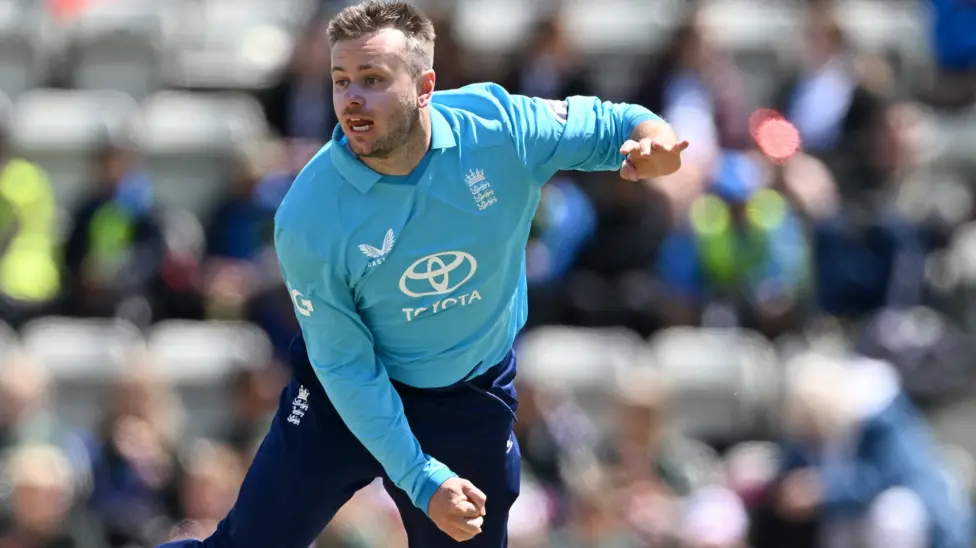
Leg-spinner Mason Crane could play for England for the first time in eight years after being recalled for the one-day international tri-series in Pakistan.
The 29-year-old won his only Test cap against Australia in Sydney in 2018 and is now given an opportunity in the series which also involves Sri Lanka next month.
Crane, who also played two T20 internationals in 2017, could also push his case in the fight to be England’s number one spinner in Test cricket.
Sam Curran and Adil Rashid both return after injuries, and uncapped pair James Coles and Henry Crocombe are included.
Jos Buttler is out with the hamstring injury he sustained last week, while Jacob Bethell is continuing his recovery from knee surgery.
Brydon Carse, who is under an investigation from the Cricket Regulator following an incident outside a nightclub in Derby in August, remains absent.
England are on a diet of white-ball cricket until three Tests in South Africa in December as they build up to the 50-over World Cup in southern Africa next year.
The tri-series in Pakistan involves the three teams taking part playing each other twice, with the top two advancing to the final. Following the trip to Pakistan, England play three one-day internationals and five T20s in Australia in November.
As England continue to shape their backroom staff following the arrival of Stephen Fleming as Test coach, Jeetan Patel, Mike Yardy, David Saker and Carl Hopkinson will assist white-ball head coach Brendon McCullum in Pakistan.
That means Marcus Trescothick, who took temporary charge of the Test team for the series against Pakistan in the home summer, misses the trip.
It is understood the make-up of the coaching staff is part of a plan to rotate the coaches – fielding coach Sarah Taylor and fast-bowling coach Tim Southee are also not going to Pakistan.
All of Trescothick, Taylor and Southee are likely to be part of England’s coaching team for other tours this winter.
England squad for tri-series in Pakistan:
Harry Brook (Yorkshire – captain), Gus Atkinson (Surrey), Sonny Baker (Hampshire), Tom Banton (Somerset), James Coles (Sussex), Jordan Cox (Essex), Mason Crane (Glamorgan), Henry Crocombe (Sussex), Sam Curran (Surrey), Liam Dawson (Hampshire), Ben Duckett (Nottinghamshire), Will Jacks (Surrey), Jamie Overton (Surrey), Adil Rashid (Yorkshire), Joe Root (Yorkshire), Josh Tongue (Nottinghamshire).
(BBC)
Latest News
I extend my heartfelt wishes to all the sons and daughters of our country for a Happy World Children’s Day – President

Children’s Day Message from President Anura Kumara Dissanayake:
“Children are the most valuable asset of a nation. Ensuring their physical and mental well-being and creating an environment conducive to their proper development is a primary responsibility of any government. Children’s imagination, aspirations and creativity will determine the shape and colour of the country tomorrow. The country we build for children must not merely be a country prepared to be handed over to them in the future; it must be a country that gives space to their dreams today, listens to their voices and provides opportunities for them to realise their potential.
For the best interests of children, we are taking the necessary steps to ensure equal access to education, guidance, social protection, opportunities for sport, leisure and recreation, proper nutrition and access to healthcare, while protecting children from all forms of violence and discrimination and safeguarding their rights.
Race, religion, economic status, geographical background or any other circumstance should not be a barrier to any child’s education or proper development. Every child should have equal and fair opportunities to realise their potential, pursue their dreams and create the future they wish for themselves. To this end, we have already begun the process of reforming the education system in Sri Lanka, transforming it towards a skills-based system suited to the new world, one that does not place a burden on parents or cause distress to children.
Our aim is to ensure that no child is left behind in the new Sri Lanka we are building, and to provide every child with opportunities for development in a safe environment. It should be emphasised that the fundamental objective of all the programmes being implemented, from expanding educational scholarships to securing the future of children growing up in child development centres and those in need of care, is to create a dignified and secure tomorrow for every child in the country.
It is the aspiration of every parent to give their children a better life than the one they themselves experienced. We are currently steering the country’s economy towards a correct and stable direction in order to provide children with a safe and happy childhood, free from the shadows of an unstable economy. At the same time, we have launched the national operation “A Nation United” (Ratama Ekata), bringing everyone together to free the younger generation from the menace of illicit drugs.
At a time when we are working towards the goal of building a safe and better country for children, I greatly appreciate the initiative of the Ministry of Women and Child Affairs in organising this year’s World Children’s Day celebrations under the theme “Strong Minds – Enriched Children”, declaring a National Children’s Day Week and conducting a range of meaningful programmes aimed at strengthening children’s rights, well-being, protection, education and freedom.
I extend my heartfelt wishes to all the sons and daughters of our country for a Happy World Children’s Day”.

Showers or thundershowers will occur in most parts of the island after 1.00 p.m.

Unions resist tripartite EPF management plan

Two arrest warrants issued for Gnanasara thera

CA dismisses GR’s writ petition against arrest

ADB-backed virtual net metering project faces policy contradiction

Media action group flays NPP over new anti-terrorism law

‘Dates have the highest sugar content to fight Coronavirus’

Sunday Island 27 December – Headlines

#SundayIsland 17th December – Headlines

Sunday Island – 28th March

Sunday Island Headlines – 21 March

Sunday Island – 21st February – Headlines
-

 Editorial6 days ago
Birth of a bad law
-

 News4 days ago
Police remove Thileepan statue in Jaffna
-

 News6 days ago
TIN mandatory for key transactions from Nov. 1
-

 Features4 days ago
The 22nd Amendment, constitutional recovery and illiberal slippage
-

 Features4 days ago
Of foreigners as CEOs of Lankan ventures
-

 News4 days ago
Sajith rejects Jt. Opp. protest sabotage claim; SJB TU chief demands remedial action
-

 Latest News2 days ago
Gold winner Tharanga gets brand-new Honda Vezel from SLAAJ
-

 Features3 days ago
Thailand’s biggest new global star …