
Sports
The agony, the ecstasy: 56 minutes of Test cricket at its most glorious


56 minutes of hell. 56 minutes of heaven. 56 minutes of the wildest ride of your goddamn life. 56 minutes that will change you forever.
It is enough time to move from the northern-most part of the Victoria Line to its lower reaches, brush shoulders as you walk up the escalator of Vauxhall Station and turn into the Harleyford Road to see the Kia Oval on the horizon.
Enough time to believe in new heroes. Enough time to laud old ones. Enough time to have your heart broken. Enough time to count yourself lucky that Test cricket, handed down by older generations more than it is ever picked up by newer ones, was handed to you. Enough time to find yourself a whole new world.
Enough time, on this rare occasion, to pick it up as a new convert. Because there would have been some in this pocket of south London who will have experienced Test cricket for the first time on Monday. Firstly, welcome. Usually, it lasts longer than this. And no, you will never see abything like this again.
The very existence of List A and T20 cricket – and yes, the Hundred, which begins on Tuesday – comes from the idea that the longest format is too long, too convoluted, too inconvenient to really grab you. Who knew all it takes was a small taste of the hard stuff to grab you by the throat and stir your soul.
This was 100% proof, undiluted, unhinged Test cricket. All you needed was a shot of 56 minutes. No human body, not even those reared on it, including those out there providing the action, could have dealt with much more.
Day five at the Kia Oval was sold out well before this match threatened to spill over from Sunday’s longer-form chaos. The gripping finale of the third Test, on the other side of the river at Lord’s, had resulted in Surrey selling over 5000 day five tickets in 24 hours. Eventually, 17,545 punters had what, unbeknownst to them, would prove to be the most golden of tickets.
At only £25 a pop for adults (20 for members) and £1 for kids, it was a sound investment given that refunds would be given if the day saw no play. Rarely has just 8.5 overs felt like a steal.
Such pricing usually brings a different kind of crowd to the first four days – especially at Lord’s – but, down at The Oval, the mix of English and Indian fans was as it had been throughout the match already. The state of the game, however, created a more feverish atmosphere, making this bowl ground feel taller and deeper, and even more self-contained. For 56 minutes, there was no outside world, for the outside world was every bit as transfixed with what was going on in here. Even the construction on the new apartment blocks in the old Gasholders ground to a halt.
The clamour as the players entered the field was louder than it had been all match. The English roars when Jamie Overton pulled the first ball for four were more guttural. The Indian jubilation when victory was sealed in Mohammed Siraj’s 186th over of the series came crashing back and forth like Atlantic-sized waves in a goldfish bowl.
The overnight break helped add to the tumult, even amid the fury of Sunday’s hastily called stumps, though an extra night’s sleep brought anything but. A new day’s new opportunity was now riddled with even more jeopardy.
How on earth did 35 more runs turn into the impossible job when 301 of the 374 had been cleared with such ease? Since when has getting through a tail that includes a man with only one functioning arm come replete with truly eternal legacy-making rewards and, thus, incomprehensible pressure?
There were simpler questions, too. Who wanted it? And the one we were all asking ourselves – who could bear it?
A familiar trope of Test cricket is that, at its best, it is a universal force. Happening to people, beyond their control and comprehension.
But that does a disservice to the protagonists. To Joe Root and Harry Brook, who dragged this fourth innings into legendary territory. And, finally, Siraj, who had bowled on 18 of the 25 days of these five Tests, sending down 50 or more balls on 12 of them. And his 1122nd delivery (including extra balls), sent down with as much vigour as the previous 1121, was his fifth-fastest of them all at 89mph/143kph. And the one that will live forever.
Moments like these always give you heroes. But they also give you kindred spirits. Those you are drawn to as much for their heroics as their fallibility.
Akash Deep, face down in the green beyond the boundary at midwicket, palms still stinging from Gus Atkinson’s heave to cow, wondering if he’d be to blame for an impending loss. Dhruv Jurel wanting that same turf to swallow him as Siraj and Shubman Gill berated him for missing the stumps with an underarm that would have sealed the match. His shot at immortality scuttled a yard past the striker’s stumps.
Atkinson crestfallen, one hit away from a tie that would have given England the series win, doubled over, smelling the earth where his off stump used to be. A lionhearted Chriis Woakes, dislocated left shoulder strapped to his torso, secured by a sleeveless jumper, arm guard on his “wrong” side with a view to batting southpaw.
Even umpire Ahsan Raza, assuming the role of good Samaritan, helping the infirm Woakes readjust himself after sprinting the bye Jurel failed to prevent, a moment that left his left arm loose despite all the binding.
And hey, let’s hear it for the Dukes ball. Pilloried for the last seven weeks but thriving in its final 85.1 overs of the English Test summer.
Was 2-2 a fair result? On balance, yes. But England’s failure to punch their card for a hat-trick of 370-plus chases against India should be regarded as a misstep from 301 for 3 and 332 for 4.
That only enhances India’s feat in squaring the series, even if they will depart a long tour with issues of their own. Selection decisions remain inconsistent, and their batting needs to take cues from their bowling when it comes to getting a grip of sessions that are turning against them.
With the best will in the world, who cares about any of that right now? As both sets of players reflected on how such a hard-fought series could reach such a climax, they would do well to appreciate how lucky they were, too.
Test cricket has been going on for almost 150 years, and we were still treated to a one-of-a-kind finish. And perhaps more importantly, at a time when other Test-playing nations are unwelcome and unable to participate in series that allow such fairytales, both sides should count themselves lucky. Lucky to play regularly in a format that can lift you to higher plains. Lucky to afford to do it.
As it happens, Monday was the 20-year anniversary of the start of the 2005 Edabaston Test between England and Australia. A Test that, ultimately, defines an Ashes series regarded as the greatest ever.
That two-run victory was England’s slimmest margin. Here in 2025, India bagged theirs, by six. Maybe the universe is up to something.
Many have wondered throughout these five Tests if the Anderson-Tendulkar Trophy could rival 2005’s offerings. In these 56 minutes, it did.
[Cricinfo]

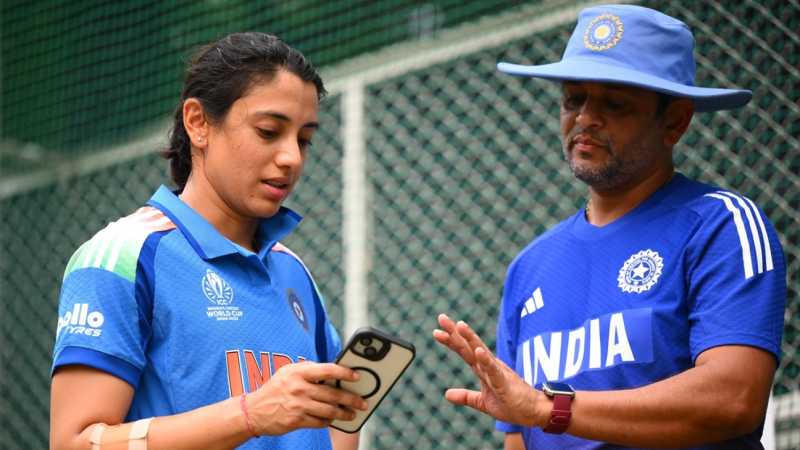
The India and Zimbabwe women’s teams are all set to play an international fixture against each other for the first time when Zimbabwe tour India for white-ball fixtures this October.
The tour comprises three T20Is and three ODIs and will be Zimbabwe’s first visit to India; India are yet to tour Zimbabwe for bilateral fixtures.
The three T20Is will be played in Raipur on October 16, 18 and 20, and the ODIs are on October 23, 25 and 28 in Baroda.
The fixtures were announced by the BCCI on Wednesday, along with two home series for the India A women’s side against Australia A in September and England A in December. Both those series comprise three T20s, three List A games and one multi-day fixture.
The India Under-19 women’s team will also host Sri Lanka U-19 in June and July for three T20s and three 50-over games, and England U-19 in November and December for five T20 fixtures.
The Australia A men’s side will tour India for two multi-day fixtures and three one-dayers in September and October, while the Australia U-19 side will visit India for two multi-day fixtures and three one-dayers also in September and October.
[Cricinfo]
Sports
Fast bowlers to get more opportunities as new format introduced for Under-15 Division I tourney

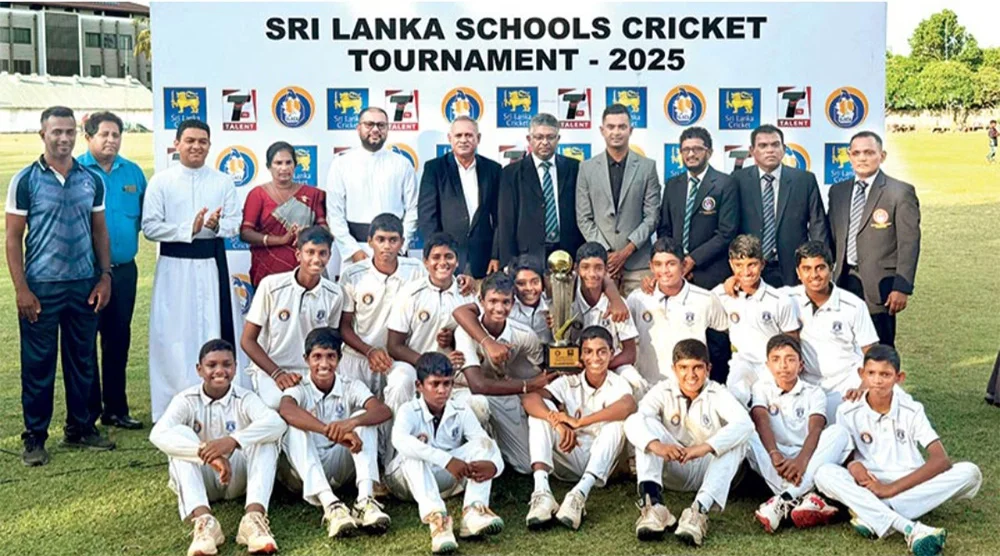
The Inter-Schools Under-15 Division I cricket tournament will be conducted under a revamped format this year, with organisers shifting the focus back to limited-overs cricket while introducing new rules aimed at promoting fast bowling.
The tournament, organised by the Sri Lanka Schools Cricket Association (SLSCA), will see only the top-tier Division I competition played in a 50-over format. Meanwhile, Division II and Division III matches will continue under the one-day, four-innings structure.
SLSCA Secretary Saman Hettiarachchi said the changes were made following consultations with experts from Sri Lanka Cricket, with a clear objective of providing greater opportunities for pace bowlers.
”We opted for the limited-overs format for Division I in consultation with Sri Lanka Cricket. The lower divisions will copete in the innings format as we have observed matches ending early without utilizing the full quota of overs,” Hettiarachchi told ‘The Island’.
A key feature of the revised rules is the compulsory allocation of overs for fast bowlers. In a full 50-over innings, a minimum of 20 overs must be bowled by pacemen. Additionally, during the first 10 overs, at least eight overs must be delivered by fast bowlers. If an innings is reduced to 30 overs or fewer, at least six of the first eight overs must be bowled by pace.
”It was made mandatory to give more opportunities to pacemen,” Hettiarachchi explained.
Meanwhile, the official draw for the Division I tournament has been released, featuring 70 teams divided into 16 groups from Group A to Group P for the preliminary round. Each team is guaranteed multiple matches during the opening stage.
Defending champions St. Joseph’s College headline Group A, where they will meet Nalanda College, Dharmapala College, St. John’s College, Lumbini College and De La Salle College.
With traditional cricketing powerhouses spread across the groups, it will be interesting to see how the first round pans out in the new-look tournament.
Under 15 Division I Tournament First Round Groups
GROUP A
St. Joseph’s College, Colombo
Nalanda College, Colombo
Dharmapala College, Pannipitiya
St. John’s College, Nugegoda
Lumbini College, Colombo
De La Salle College, Colombo
GROUP B
D.S. Senanayake College, Colombo
S. Thomas’ College, Mt. Lavinia
Presidents’ College, Kotte
Wesley College, Colombo
Carey College, Colombo
Sri Dharmaloka College, Kelaniya
GROUP C
St. Anthony’s College, Wattala
St. Sebastian’s College, Moratuwa
Dharmapala Vidyalaya, Kottawa
St. Peter’s College, Colombo
C.W.W. Kannangara MV, Colombo
Ashoka College, Colombo
GROUP D
St. Benedict’s College, Colombo
Royal College, Colombo
Gurukula College, Kelaniya
Lyceum International School, Wattala
Bandaranayake MMV, Gampaha
St. John’s College, Panadura
GROUP E
De Mazenod College, Kandana
Isipathana College, Colombo
Christ King College, Ja-Ela
Thurstan College, Colombo
Ananda Shastralaya NS, Kotte
St. Joseph Vaz College, Vennappuwa
GROUP F
Mahanama College, Colombo
Piliyandala MMV, Piliyandala
Ananda College, Colombo
Sri Jayawardenapura NS, Kotte
Presidents College, Maharagama
St. Thomas’ College, Kotte
GROUP G
Wadduwa MMV, Wadduwa
Sri Sumangala College, Panadura
Prince of Wales College, Moratuwa
Moratu Vidyalaya, Moratuwa
Revatha College, Balapitiya
Royal College, Panadura
GROUP H
Dharmaraja College, Kandy
St. Mary’s College, Kegalle
Kegalu Vidyalaya, Kegalle
Kingswood College, Kandy
Vidyartha College, Kandy
Ibbagamuwa MMV, Ibbagamuwa
GROUP J
Maris Stella College, Negombo
Maliyadeva College, Kurunegala
Harischandra College, Negombo
Maliyadeva Adarsha MV, Kurunegala
Galahitiyawa MMV, Ganemulla
Sandalankawa MMV, Sandalankawa
GROUP K
St. Anthony’s College, Kandy
St. Sylvester’s College, Kandy
Trinity College, Kandy
Royal College, Polonnaruwa
St. Thomas’ College, Matale
Jaffna Hindu College, Jaffna
GROUP L
Sri Pangnananda MMV, Raddoluwa
St. Anne’s College, Kurunegala
St. Mary’s College, Chilaw
Sri Sumangala NS, Wariyapola
St. Peter’s College, Negombo
St. Xavier’s College, Marawila
GROUP M
Devapathiraja College, Rathgama
St. Aloysius College, Galle
Holy Cross College, Kalutara
Dharmasoka College, Ambalangoda
Kalutara Vidyalaya, Kalutara
Vidyaloka College, Galle
GROUP N
Mahinda College, Galle
Tissa MV, Kalutara
Rahula College, Matara
Debarawewa NS, Debarawewa
St. Thomas’ College, Matara
Meepawala Amarasuriya MV
GROUP P
St. Servatius’ College, Matara
Richmond College, Galle
Sri Devananda College, Ambalangoda
Karandeniya MMV, Karandeniya
P. De S. Kularathna MV, Ambalangoda
President’s College, Embilipitiya.
by Reemus Fernando
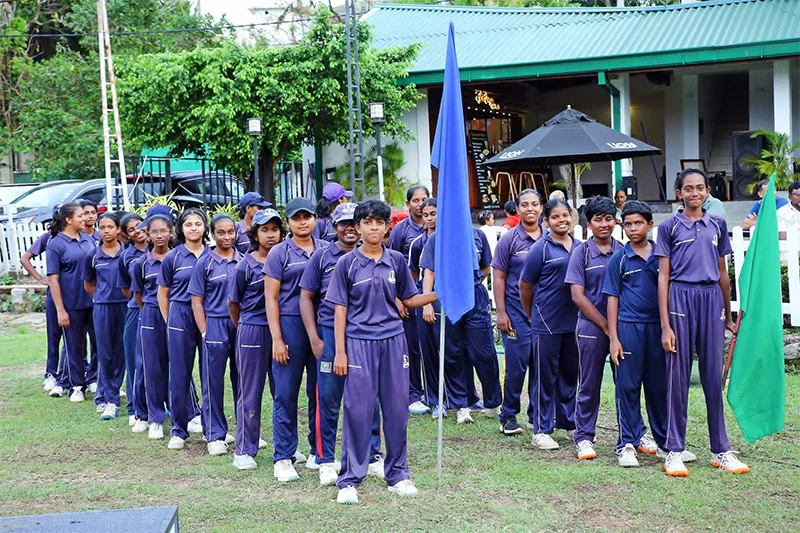
With the success the seven MCA men’s cricket tournaments have achieved, the Executive Committee of Mercantile Cricket Association (MCA) have decided to give Women’s Cricket in Sri Lanka a boost by introducing a hard ball Women’s Cricket Tournament for the corporate sector.
With the international recognition women’s cricket has gained at present, it is no secret that there still are many talented lasses aspiring to reach the zenith of the game.
Even with the measures Sri Lanka Cricket (SLC) the game’s governing body through the Schools Cricket Association (SLSCA) have taken to promote girls cricket in schools, a considerable number of talented players, specially in the provinces do not have an opportunity to be recognized.
It is the MCA’s belief that with the introduction of a MCA Women’s Cricket Tournament, the corporate sector will be encouraged to field teams, and in doing so will give a hand to talented lasses and school leavers by providing them with employment as well as the opportunity to realise their aspirations in the Women’s Cricket arena.
At present in addition to the seven major Men’s tournaments the MCA organise the
Mercantile Six-a-Side tournament, the Over-40 Sixes competition, the 20×20 league, and the esteemed MCA Inter Academy Invitational tournament,
As an initial step, the MCA will be conducting a Women’s six and side soft ball cricket tournament for the corporate sector teams on Saturday 23rd May 2026 at the Mercantile Cricket Association grounds.
For further information please contact Chamara on 0759592488 or Prasad 0759809777.

Joint programme between President’s Fund and Janashakthi Foundation to expand healthcare facilities for children

Maldivian President concludes state visit to Sri Lanka

India to host Zimbabwe for maiden women’s bilateral series

Showers above 75 mm are likely at some places in the Sabaragamuwa, Central, Uva, Southern and North-central provinces

Govt. draws flak over Rs. 500 mn excess Aswesuma payments

NDB fraud: Ravi asks govt. to appoint independent forensic auditor

‘Dates have the highest sugar content to fight Coronavirus’

Sunday Island 27 December – Headlines

#SundayIsland 17th December – Headlines

Sunday Island – 28th March

Sunday Island Headlines – 21 March

Sunday Island – 21st February – Headlines
-
 News2 days ago
CJ urged to inquire into AKD’s remarks on May 25 court verdict
-
 News6 days ago
“Three-in-one blood pressure pill can significantly reduce risk of recurrent strokes”
-

 News3 days ago
USD 3.7 bn H’tota refinery: China won’t launch project without bigger local market share
-

 News6 days ago
Alarm raised over plan to share Lanka’s biometric data with blacklisted Indian firm
-

 News4 days ago
Easter Sunday Case: Ex-SIS Chief concealed intel, former Defence Secy tells court
-

 News5 days ago
Ten corruption cases set for court in May, verdict ordered in one case – President
-

 News6 days ago
USD 2.5 mn fraud probe: Interdicted MoF official found dead at home
-

 Editorial3 days ago
Deliver or perish