
Foreign News
US strikes did not destroy Iran nuclear programme, says intelligence assessment


The US strikes on Iran’s nuclear facilities did not destroy the country’s nuclear programme and probably only set it back by months, according to an early Pentagon intelligence assessment of the attack.
The Islamic Republic’s stockpile of enriched uranium was not eliminated in Saturday’s bombings, sources familiar with the Defense Intelligence Agency evaluation told the BBC’s US partner CBS.
The White House said the “flat-out wrong” assessment was leaked by “a low-level loser in the intelligence community”.
President Donald Trump again declared the nuclear sites in Iran “completely destroyed” and accused media of “an attempt to demean one of the most successful military strikes in history”.
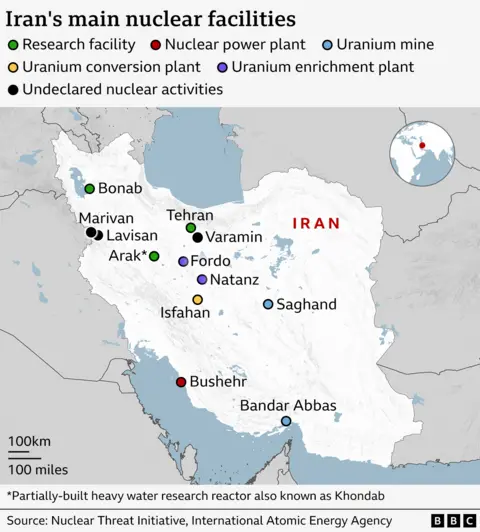
The US struck three nuclear facilities in Iran – Fordo, Natanz and Isfahan – with “bunker buster” bombs capable of penetrating 18m (60ft) of concrete or 61m (200ft) of earth before exploding.
But sources familiar with the Pentagon’s intelligence assessment say Iran’s centrifuges are largely “intact” and the impact was limited to above ground structures.
Entrances to two nuclear facilities were sealed off, and some infrastructure was destroyed or damaged, but much of the facilities, which are deep underground, escaped the brunt of the blasts.
The anonymous sources told US media it is estimated the attack only set Iran back “a few months, tops”, and that any resumption of its nuclear programme may be based on how long it takes the country to dig out and make repairs.
Sources also confirmed to CBS that some of Iran’s enriched uranium stockpile was moved before the strikes, according to the intelligence assessment.
The US 30,000lb (14,000kg) Massive Ordnance Penetrator bomb was thought to be the only weapon capable of destroying Iran’s underground enrichment facilities. Tehran had always said its nuclear programme is for peaceful purposes.
In the hours that followed the Saturday strikes, Gen Dan Caine, chairman of the joint chiefs of staff, told reporters that it would take time to assess the damage to the facilities.
But he added that “all three sites sustained extremely severe damage and destruction”. Satellite images showed six fresh craters clustered around two entry points at the Fordo nuclear sites, as well as grey dust and debris.
It is unclear from the images, however, how much damage the sites sustained below the surface.
Hassan Abedini, the deputy political director of Iran’s state broadcaster, claimed the three sites targeted by the US had been evacuated a “while ago”, and that Iran “didn’t suffer a major blow because the materials had already been taken out”.
US officials, on the other hand, hailed the mission as a success, as have Israeli officials.
In a statement on Tuesday, Defence Secretary Pete Hegseth said that “based on everything we have seen – and I’ve seen it all – our bombing campaign obliterated Iran’s ability to create nuclear weapons”.
“Anyone who says the bombs were not devastating is just trying to undermine the President and the successful mission,” Hegseth said.
US Congressman Brad Sherman, a Democratic member of the House Foreign Affairs Committee, told the BBC the Trump administration was using vague terms to declare victory – when it’s still unclear what the bombing mission accomplished.
He said the administration hasn’t said whether the strikes destroyed Iran’s ability to weaponise its uranium, its uranium-enriching centrifuges or depleted its stockpile, which he said would be enough to create nine nuclear weapons.
“When they say obliterate the programme, they’re not even saying whether it’s obliterated the centrifuges and the ability to create uranium in the future or whether it is obliterating the stockpile,” Sherman told BBC.
“All indications, including Vice-President Vance’s statement, indicate that we don’t think we got the stockpile,” he said, noting images that show trucks going to one of the facilities days before the strikes.
Prime Minister Benjamin Netanyahu said on Tuesday that since hostilities with Iran began on 13 June, Israel has been successful in curbing Iran’s nuclear ambitions, as well as destroying its missiles arsenal.
“We have removed two immediate existential threats to us – the threat of nuclear annihilation and the threat of annihilation by 20,000 ballistic missiles,” Netanyahu said in video remarks issued by his office.
A report in Saudi news outlet Al Hadath, citing an unnamed Israeli source, said that Israel believes most of Iran’s enriched uranium is buried under the rubble.
The US has 18 intelligence agencies, which sometimes produce conflicting reports based on their mission and area expertise. For example, the American intelligence community is still not in agreement over the origins of Covid-19.
It is possible future intelligence reports will include more information showing a different level of damage to the facilities.
David Albright, president of the Institute for Science and International Security and an expert on secret nuclear weapons development, said the damage Iran sustained by the US attacks will mean “it will take significant time, investment and energy” for it to restore its nuclear programme.
In a post on X, Albright added that Iran is “under intense scrutiny and observation from the United States and Israel”, and it risks further attacks if it tries to rebuild.
On Monday, Iran retaliated against the US airstrikes by launching a missile attack on Al-Udeid Air Base in Qatar, which is home to thousands of US troops.
That attack was largely intercepted, and no casualties or injuries were reported.
Since Iran’s retaliation, an Iran-Israel ceasefire – brokered by President Trump and Qatari mediators – is in place.
[BBC]

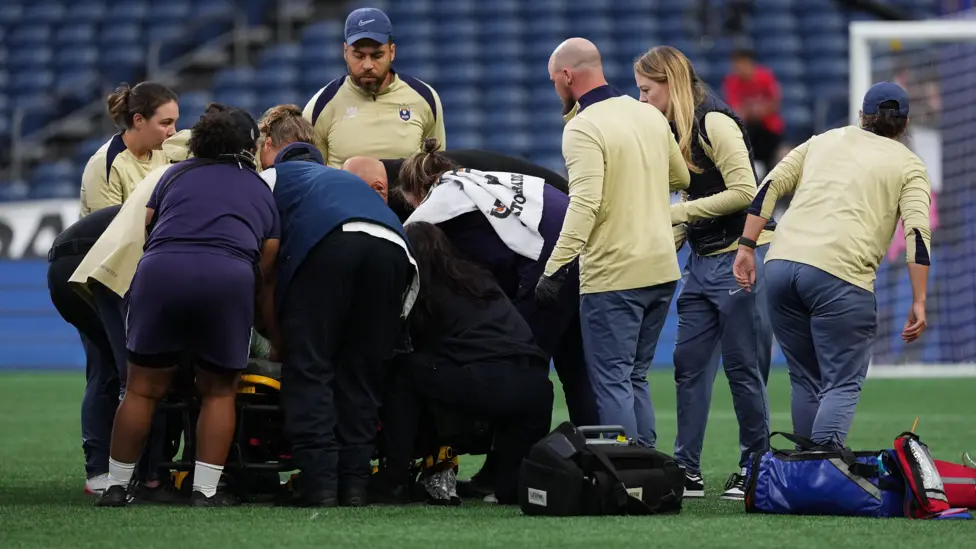
United States women’s national team player Savannah DeMelo is suing a hospital and two doctors after she suffered a cardiac arrest on the pitch last year.
Midfielder DeMelo, who has seven senior caps for the USA, has filed a lawsuit against University of Louisville Health (UofL Health) for negligence.
The 28-year-old, who plays for Racing Louisville, collapsed in the first half of a National Women’s Soccer League (NWSL) match on 14 September 2025.
According to documents seen by BBC Sport, the case was filed on Tuesday morning with Jefferson Circuit Court in Kentucky, where her club is based – a year and a day after her on-field collapse.
DeMelo’s filing claims UofL Health and two doctors, Dr Sarabjeet Suri and Dr Jennifer Daily, “failed to act as a reasonably prudent and competent medical practice, and such negligence was a substantial factor in causing DeMelo to suffer severe physical injuries, including, but not limited to, her cardiac arrest”.
Dr Daily, according to her online UofL biography, is Racing Louisville’s chief medical officer. The lawsuit states DeMelo was under the care of Dr Daily from January 2024 to July 2026.
It states that in March 2025, Dr Daily referred DeMelo to Dr Suri for “evaluation and treatment” after she had been complaining of chest pain, dizziness and shortness of air; Dr Suri obtained a history, performed a physical examination and ordered diagnostic tests.
Nearly six months later, DeMelo suffered the cardiac arrest.
“She was subsequently diagnosed and treated for ventricular tachycardia [an abnormal heart rhythm],” the suit states.
DeMelo, who has spent her entire professional career with Racing Louisville, has not played since her collapse.
In a post to her instagram page on Tuesday, De Melo – who was picked in the USA squad for the 2023 Women’s World Cup and started their first two games – marked the anniversary of the incident.
“A year ago today, while playing soccer, I collapsed due to an undiagnosed cardiac arrhythmia, that caused me to go into cardiac arrest,” she wrote.
“I respect and appreciate the privacy everyone has met me with while going through everything I have this year. I’ll never be able to fully put into words how emotionally hard this year has been. There has been a lot of uncertainty and emotions intertwined with it all.”
[BBC]

The Philippine Coast Guard says it has recovered 41 bodies from the wreckage of a ferry that caught fire this week, bringing the total death toll to 76.
More than 130 people were on board the MV June Aster when the blaze erupted on Wednesday as it neared its destination at the tourist hotspot of Coron, after departing from Manila.
The coast guard said on Saturday the number of survivors remained 43, with many receiving treatment in hospital, but 13 people remain unaccounted for.
Recovery of bodies had been hampered due to toxic fumes and lingering heat, which meant authorities were unable to board until Friday.
Geronimo Tuvilla, an official for the Philippine Coast Guard, said the priority was identifying victims and determining the cause of the blaze.
Kristine Ablana, a tourism official in Coron, said relatives were being asked to help identify family members through personal items and DNA testing.
“Once someone is able to verify that this photo or these belongings are indeed those of their relative, they will be asked to provide a DNA sample,” she said.
Coast Guard spokesperson Commodore Noemie Cayabyab said the fire began in a cargo hold before spreading.
She said survivors had described hearing a loud explosion, “the appearance of smoke and then fire. It spread very quickly”. She added that those who had made it off the ship did not have time to put on lifejackets.
A survivor who was hauled to safety on a rescue boat told the BBC he had heard frantic cries onboard when the fire erupted, and was trampled by panicked people as he tried to escape.
The ferry, built in 2002, held valid safety certificates and passed an enforcement inspection in March, but investigators are looking into potential manifest discrepancies, cargo loading integrity, and crew emergency response protocols, the Palawan Daily reported.
The vessel was carrying 117 passengers and 17 crew members.
Atienza Interisland Ferries, the vessel’s operator, has pledged full co-operation with the inquiry.
[BBC]
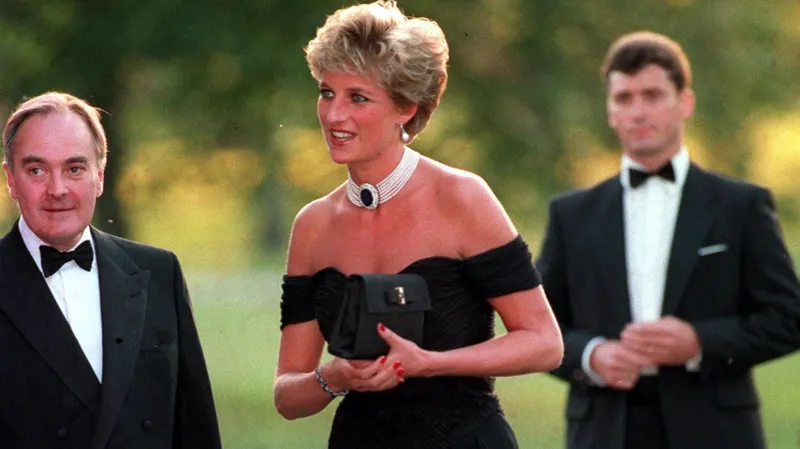
A dress worn by Princess Diana to a party in London hours after a documentary was televised in which the then-Prince Charles admitted to committing adultery during their marriage is going up for auction.
Her dramatic arrival at the Serpentine Gallery in 1994 in a custom-made black silk evening dress by designer Christina Stambolian became an iconic pop-culture moment.
The media dubbed her outfit the “revenge dress”.
Auction house Sotheby’s expects the dress to sell for up to £220,000 ($300,000) when it goes under the hammer on 9 December.
A press release from Sotheby’s said it is the first time the dress has been offered at auction since 1997, when the late princess sold 79 of her dresses to raise money for charities.
Morgane Halimi, Sotheby’s Global Head of Handbags and Fashion, said in a statement that Princess Diana “understood instinctively” that fashion can be a language in its own right.
“On her own terms, Princess Diana turned the dress into one of the most powerful messages she ever made, during one of the most scrutinised and emotionally charged episodes of her life,” Halimi said.
“She walked into a moment in which so much of her story was being told for her and, through what she chose to wear, reclaimed the narrative for herself.”

According to Sotheby’s, Anna Harvey, her stylist at the time, said Diana “wanted to look a million dollars”.
The princess made a last-minute wardrobe change for the fundraising dinner and chose the strapless evening dress by the Greek designer Christina Stambolian – which she accessorised with a royal jewel, a black clutch and black heels.
The vintage Jaguar XJ40 car that Diana arrived in at the event was sold at auction earlier this year for £66,250.
The revenge dress is expected to fetch a considerably higher price.
If it does, it will not be the first time an item from the princess’s wardrobe has sold for a significant sum.
Princess Diana’s sweater featuring a black sheep among rows of white ones was sold for £920,000 at an auction by Sotheby’s in New York in 2023.
[BBC]

Charani, Shafali power India past Japan and into Asian Games semi-finals

Athapaththu and Dilhari muscle Sri Lanka past Malaysia in mismatch

Abhishek Sharma hits record T20 ton as India beat Afghanistan by 127 runs

Trump administration approves sale of F-35 jets to Saudi Arabia

Banton steers England into unassailable 2-0 series lead

Showers expected in the Western, Norrh-western and Sabaragamuwa provinces and in Galle, Matara, Kandy and Nuwara-Eliya Districts.

‘Dates have the highest sugar content to fight Coronavirus’

Sunday Island 27 December – Headlines

#SundayIsland 17th December – Headlines

Sunday Island – 28th March

Sunday Island Headlines – 21 March

Sunday Island – 21st February – Headlines
-

 Latest News7 days ago
Sri Lanka thwart Fatima Sana challenge to secure Asia Cup final spot
-

 News5 days ago
Gnanasara Thero absconding after SC ruling
-

 News7 days ago
Ammunition cache found in old Kandy bungalow
-

 News6 days ago
Prof. Pieris says Buddha Dhamma recognised as source of law under Constitution
-

 News6 days ago
Green Climate Fund (GCF) Regional Dialogue for East and South Asia will be held from 14 to 17 September 2026 at Cinnamon Life at City of Dreams Hotel, Colombo
-

 Opinion5 days ago
From Galkissa (Mount Lavinia) to Tambuttegama
-

 News7 days ago
Bambalapitiya Railway Station renovated under the “Dream Destination” project opened to the public
-

 Latest News6 days ago
ITS Giuseppe Garibaldi’ departs Colombo