
Sports
Prasad’s eccentrics will be missed not his service

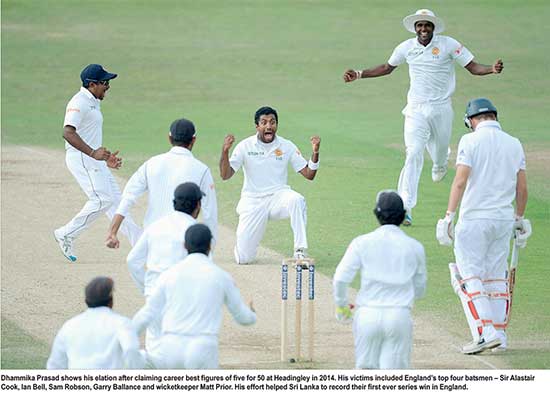
There is a bus stop in Nagoda, just before Kandana junction on Negombo road. It’s called ‘No ball Handiya’. Not because of Dilhara Fernando but as even Dhammika Prasad, who represented Sri Lanka in 25 Test matches, hails from the same vicinity. Both fast bowlers attended the same school – De Mazenod. They had a fine coach – Vernon Senanayake, even he couldn’t rectify their overstepping problems.
Prasad was quite a handful with the new ball as he could generate genuine pace. Once in Galle he dismissed Chris Gayle and celebrated it by lying down on the pitch with outstretched arms. The embarrassment was just around the corner. Umpire Richard Kettleborough approached him to inform that it was a no ball. Gayle would go onto score a career best 333 with 34 fours and nine monstrous sixes with most of them landing on the Galle bus halt!
Not sure whether any other Sri Lankan fast bowler has had an impressive debut as Dhammika Prasad. It was against India at P. Sara Oval. He took three wickets in the first innings. Guess the names? Sachin Tendulkar, Rahul Dravid and Virender Sehwag.
There was lot of bad blood during Sri Lanka’s tour of England in 2014. The England and Wales Cricket Board had reduced Sri Lanka’s Test matches to two and instead hosted India for five Tests. Sri Lanka’s Head Coach Paul Farbrace had defected to England ranks just two weeks prior to the tour. Then, there was the Mankading of Jos Buttler, ordered by of all people Marvan Atapattu, one of the nicest guys to play the game of cricket.
The first Test at Lord’s was a thrilling draw. Kumar Sangakkara playing his last Test at The Home of Cricket scored a hundred. Sri Lanka’s last pair saw off some tensed moments thanks to the DRS.
The tourists fought tooth and nail in the second Test at Headingley. After conceding a lead of over 100 runs in the first innings, they fared better in the second innings. Sri Lanka were 150 runs ahead with four wickets in hand and needed 100 or so more to set England a decent target. Captain Angelo Mathews was their biggest hope. When Dhammika Prasad joined him, the instructions were clear. Mathews was going to do the scoring, Prasad had to block. But our man had a brain fade. The first ball he faced, Prasad slashed Liam Plunkett and was caught at third man. Mathews was furious and threw his bat away.
As Prasad was nearing the dressing room, team manager late Michael De Zoysa told all his players and support staff to give the batsman, who had just collected a pair, the cold shoulder. Not a single person in the dressing room spoke to Prasad that afternoon.
This angered Prasad. What followed was an aggressive spell of fast bowling. Prasad finished with career best figures of five for 50. More importantly, Sri Lanka went onto win their first ever Test series in England.
By 2015, Prasad had emerged as Sri Lanka’s leading fast bowler. That year he finished as one of the top ten wicket takers in the world in Test match cricket. We weren’t short of Prasad’s eccentrics. He picked up a fight with India’s Ishant Sharma at SSC. Prasad peppered Ishant with a barrage of short pitched bowling and exchanged words. Team mate Dinesh Chandimal came to Prasad’s aid and even brushed shoulders with the lanky Indian fast bowler. All three were charged by the Match Referee Andy Pycroft.
Later that day, as Pycroft entered Taj Samudra he saw a sight that warmed his heart. Prasad and Ishant were having coffee at the lobby. The Match Referee treated Prasad with kid’s gloves but banned Chandimal for one match. Chandimal did not speak with Prasad for several weeks.
We never saw Prasad’s full potential. He was very unlucky with injuries; like ahead of the ICC Cricket World Cup in 2015. On the eve of the curtain-raiser in Christchurch, Prasad hurt his hand attempting a return catch and was sent home. He played little cricket from thereon.
Despite all eccentrics, Prasad’s team mates vouch that the bloke has a heart of gold. Successive Sri Lankan captains have valued his service for he makes their jobs so easy.
Most cricketers can be found in Colombo-7s posh clubs socializing with friends when they have day-offs. To trace Prasad you have to go to the local bar. He will either be found spending time with his villagers at Sensasia in Peralanda or CASA in Ragama. Once established, most players prefer to move to Colombo. Prasad has remained in his village – Ragama, not too far away from No Ball Junction.
Prasad feels the pain of his fellow Sri Lankans. As the country went into a lock-down following the outbreak of the pandemic last year, Prasad was busy collecting dry rations and distributing them among daily wage earners. Jesus fed 5000 people in Capernaum. Prasad fed 2000 families in Gampaha, week after week. He will announce his retirement from cricket today. He will be missed.





Power World Gyms, Sri Lanka’s leading fitness brand with over 30 years of promoting healthier lifestyles, has partnered with Kings Hospital Colombo as its Official Wellness Partner. This collaboration brings together expertise in fitness and healthcare to introduce a dedicated wellness programme for the hospital’s staff, supporting their physical and mental well-being. Through this partnership, Power World reinforces its commitment to making fitness and preventive wellness accessible, impactful and sustainable for those who care for our communities every day.
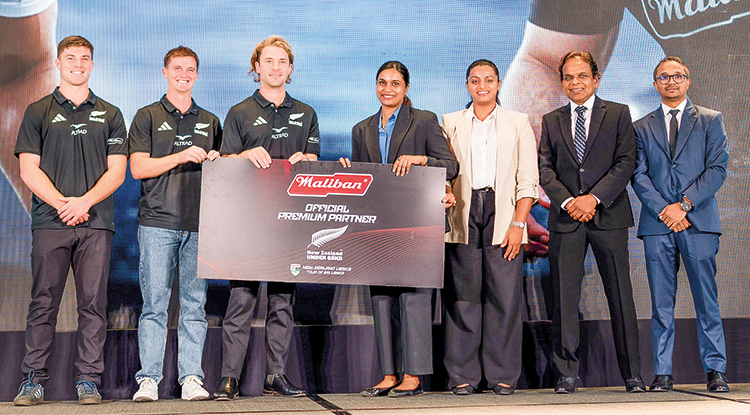
With international rugby taking center stage in Sri Lanka, Maliban Biscuits continues to play a pivotal role in advancing the sport, coming on board as the title sponsor of the New Zealand U85kg Rugby Tour 2026, the Official Premium Partner of the New Zealand U85kg team and the Main Sponsor of Sri Lanka Rugby.
This multi-tier partnership reflects the brand’s deep and ongoing commitment to growing rugby in Sri Lanka while supporting meaningful international sporting exchange.
As one of Sri Lanka’s most trusted household brands with a legacy spanning over 70 years, Maliban’s continued involvement with the touring side-marking the second consecutive partnership that highlights its sustained investment in sporting platforms that inspire young athletes and elevate the standard of the game locally.
The tour will feature key matches at the Colombo Racecourse Grounds on 25 April and at Nittawela Grounds on 3 May, promising high-quality rugby action for fans across the island. Beyond the competition itself, the New Zealand side will also engage in community outreach initiatives, contributing to the development of the game and encouraging greater youth participation in sport.
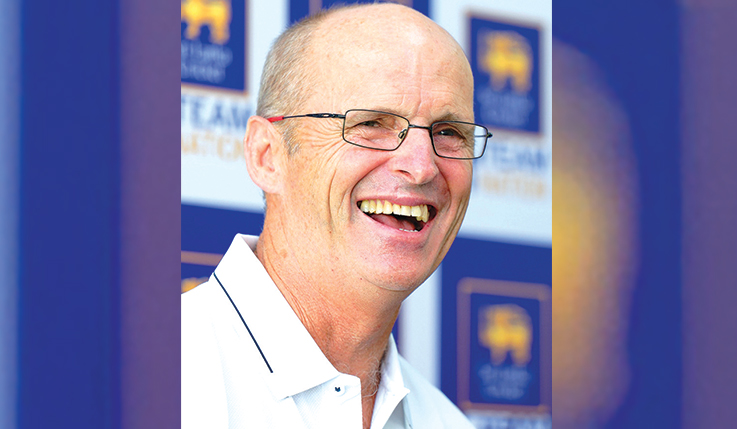
When Gary Kirsten fronted the media for the first time as Sri Lanka’s head coach, he didn’t pad up with clichés. He went straight on the front foot, making it clear that the 2027 World Cup in his own backyard is the big ticket item.
This was no airy-fairy lip service. Kirsten, as methodical during his playing days, mapped out the kind of personnel required for South African conditions, quicks who can make the ball talk and climb awkwardly off a length, batters who won’t flinch when the ball spits at chest height. In short, horses for courses, not square pegs in round holes.
That’s vintage Kirsten. Whether with India or his native South Africa, he has built success brick by brick, not by rolling the dice. His coaching mantra could well be: well prepared is half the battle won.
Sri Lanka have 17 months and roughly 25 ODIs to get their house in order. That’s enough time to build a core, provided they don’t keep shuffling the team like a pack of cards. More importantly, the bowling template needs a rethink. For far too long, Sri Lanka have leaned on spin. But South Africa is no place for gentle tweakers, it’s a quicks’ paradise where seamers earn their bread.
Even at home, where the slow tracks of RPS traditionally favour spin-heavy combinations, there’s a case to start backing seam-bowling all-rounders. It may seem like swimming against the tide, but World Cups aren’t won by playing safe in familiar waters.
The last time South Africa hosted the World Cup was back in 2003, a different era altogether. Nelson Mandela was still a towering presence, while across the border, dictator Robert Mugabe ruled Zimbabwe with an iron fist. Kenya, then more than just makeweights, punched above their weight to reach the semi-finals, a fairy tale that now feels like ancient folklore.
Fast forward to today and Kenyan cricket has fallen off a cliff, replaced in the hosting roster by Namibia.
Sri Lanka have a template from that 2003 campaign, one worth dusting off. They made the semi-finals then, and not by accident. It was a well-oiled machine, driven by sharp minds and strong leadership.
At the helm was Hemaka Amarasuriya, a corporate heavyweight who handled off-field storms like a seasoned captain riding out a bouncer barrage. When the ICC’s ambush marketing clause triggered a global player revolt, with Indian stars leading the charge, Sri Lanka’s dressing room too got restless, nudged by Charlie Austin. But Amarasuriya, unfazed, played it late and under the eyes, guiding matters through choppy waters until contracts were signed.
Selection, meanwhile, was in the safe hands of Guy de Alwis, a man who didn’t blink, even when the heat was turned up. When then Sports Minister Johnston Fernando tried to poke his nose into team affairs, Guy de Alwis stood his ground like a batter refusing to be sledged into submission. No excuses, no conspiracy theories that we see these days from selectors, just accountability. A trait that seems to have gone missing these days.
On the coaching front, Dav Whatmore and Duleep Mendis plotted their moves with chess-like precision, while team manager Ajit Jayasekara ensured discipline didn’t slip through the cracks. A senior Air Force officer, Jayasekara was a god fearing man and a gentle soul off the field, but one who could lay down the law when egos within the dressing room threatened to run riot.
Then there was Sanath Jayasuriya, the captain who led from the front, scoring runs for fun and brooking no nonsense. Legend has it he gave his deputy Marvan Atapattu the cold shoulder for a fortnight after a dropped catch off Brian Lara.
Add to that the wizardry of Aravinda de Silva and the raw pace of Dilhara Fernando, whose bouncer famously floored Ramnaresh Sarwan. It was a side that could dish it out as well as take it, a rarity in those days.
Sri Lanka’s semi-final exit in 2003 still stings. They had Australia on the ropes at Port Elizabeth, restricting them to 212, but fluffed the chase despite batting deep. A missed opportunity, no doubt, but the campaign proved one thing beyond doubt: Sri Lanka could hold their own on seaming, bouncy tracks.
Kirsten would do well to note that Whatmore had a strong support cast, men who knew their roles and didn’t drop the ball. The current set-up, by contrast, doesn’t inspire the same confidence.
Still, hope springs eternal. The South African dream isn’t a pie in the sky just yet. After all, Sri Lanka remain the only Asian side to have conquered South Africa in a Test series, proof that when they get their act together, they can punch above their weight.
by Rex Clementine

Getting Raked Over the Coals

Bleeding Treasury

Bringing the flavours and spirit of Jaffna to life

The Delcy Doctrine

Cenmetrix achieves ISO 9001:2015 certification, marking a milestone in quality excellence

Deconstructing Sugathapala de Silva (Part 1)

‘Dates have the highest sugar content to fight Coronavirus’

Sunday Island 27 December – Headlines

#SundayIsland 17th December – Headlines

Sunday Island – 28th March

Sunday Island Headlines – 21 March

Sunday Island – 21st February – Headlines
-

 News5 days ago
Rs 13 bn NDB fraud: Int’l forensic audit ordered
-

 Opinion6 days ago
Shutting roof top solar panels – a crime
-

 News3 days ago
Lanka faces crisis of conscience over fate of animals: Call for compassion, law reform, and ethical responsibility
-

 News2 days ago
No cyber hack: Fintech expert exposes shocking legacy flaws that led to $2.5 million theft
-
 News2 days ago
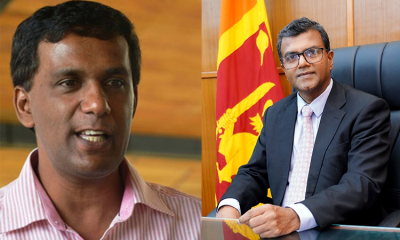
Whistleblowers ask Treasury Chief to resign over theft of USD 2.5 mn
-
 Life style7 days ago
After dark in Sri Lanka: Tiny wild cats step into the spotlight
-
 News6 days ago
Church calls for Deputy Defence Minister’s removal, establishment of Independent Prosecutor’s Office
-

 News7 days ago
‘Agents of the devil’ seeking to block Easter probe, Cardinal warns