
Latest News
Black box found at Air India crash site as families wait for answers

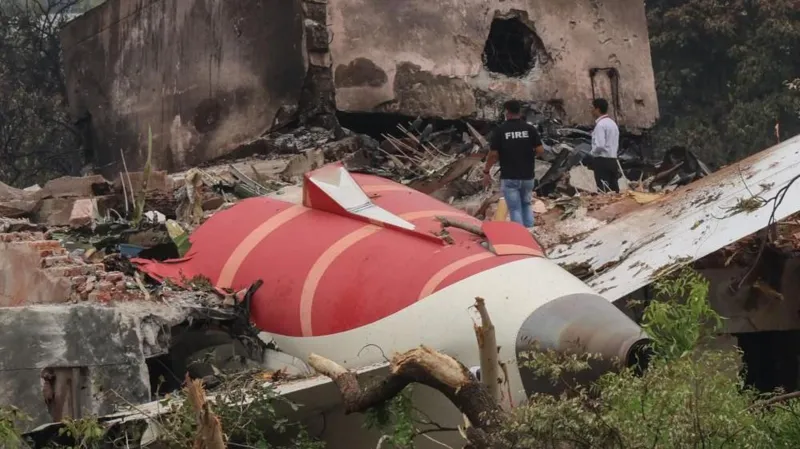
A black box has been found at the site of the Air India plane crash in Ahmedabad, India’s civil aviation minister said on Friday.
The flight data recorder was recovered within 28 hours by India’s Aircraft Accident Investigation Bureau (AAIB), Ram Mohan Naidu Kinjarapu confirmed.
All but one of the 242 people on the London-bound flight died when it crashed into a residential area less than 60 seconds after take-off on Thursday. An official told the BBC that at least eight people on the ground were also killed.
“The recovery of the black box marks an important step forward in the investigation” and will “significantly aid the inquiry” into the disaster, Kinjarapu said.
Planes usually carry two black boxes – small but tough electronic data recorders.
One records flight data, such as altitude and speed. The other records sound from the cockpit, so investigators can hear what the pilots are saying and listen for any unusual noises.
AAIB is leading the inquiry into the cause of the crash, helped by teams from the US and UK. Boeing’s chief executive, Kelly Ortberg, said the company was supporting the investigation.
Air India said there were 169 Indian nationals, 53 Britons, seven Portuguese and one Canadian on the Boeing 787 Dreamliner aircraft when it crashed moments after taking off from Ahmedabad’s Sardar Vallabhbhai Patel International Airport at 13:39 local time (08:09 GMT).
Flight AI171 was scheduled to land at London’s Gatwick Airport at 18:25 BST.
On Friday, the wreckage was still scattered across the crash site, including the blackened wing of the plane, with large pieces of the aircraft stuck in buildings.
Investigators arrived at the scene and crowds were moved further away from the wreckage.
A doctor told the BBC that they are relying on DNA from relatives to identify the victims. A police official at the post-mortem room told the BBC that the remains of six people had been released to families so far, as their relatives were able to identify them based on facial features.
The sole survivor of the crash, British national Vishwashkumar Ramesh, who was in seat 11A on the flight, is still recovering in hospital.
The plane crashed in a residential area called Meghani Nagar and, even though it had just taken off, the impact was severe. Wreckage spread over 200m (656ft), according to responders.
It is still unclear exactly how many were killed on the ground, but the BBC has been told that at least eight people, who were not on the aircraft, have died.
Dr Minakshi Parikh, the dean of the BJ Medical College and Civil Hospital, said four of their students died as the plane crashed into buildings on the campus.
“There were also four relatives of our doctors who were on the campus when the aircraft crashed – they too were killed,” Dr Parikh said.
“We are relying only on DNA matching to identify them and it is something where we simply cannot rush or afford mistakes.
“We are working with sincerity. We want relatives to understand, and be a bit patient. We want to hand over [the bodies] as soon as possible.”
On Friday, Indian Prime Minister Narendra Modi spent around 20 minutes at the site of the plane crash.
He did not speak to reporters afterwards but a video posted on his YouTube channel showed him walking around the site and inspecting the debris.
Modi also visited the location of a now-viral image that shows the tail of the crashed plane lodged in a building.
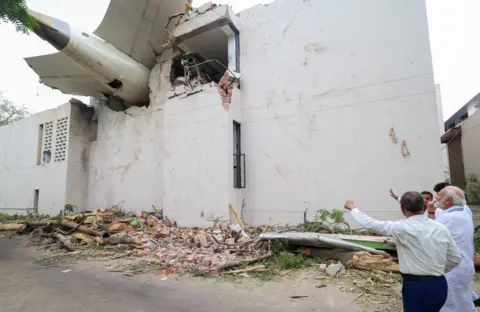
Earlier on Friday, Air India CEO Campbell Wilson also went to the crash site, later describing the visit as “deeply moving”.
According to data by tracking website, Flightradar24, the Boeing Dreamliner 787-8 had completed more than 700 flights in the year leading up to the Thursday’s disaster.
The Air India plane was 11 years old and its most common routes included flights between Mumbai and Dubai, as well as the capital New Delhi and European destinations such as Milan, Paris and Amsterdam.
The plane had operated 25 flights from Ahmedabad to London Gatwick in the past two years.
India’s aviation regulator, the Directorate General of Civil Aviation (DGCA), has ordered additional safety checks on Air India’s Boeing 787-8 and 787-9 fleet, describing it as a “preventive measure”.
[BBC]

Latest News
Sun directly overhead Dodanduwa, Rathgama, Yakkalamulla, Akuressa, Mulgirigala, Ranna, Kalamatiya and Ussangoda at about 12:13 noon today (05th April)

On the apparent northward relative motion of the sun, it is going to be directly over the latitudes of Sri Lanka during 05th to 15th of April in this year.
The nearest areas of Sri Lanka over which the sun is overhead today (05th) are Dodanduwa, Rathgama, Yakkalamulla, Akuressa, Mulgirigala, Ranna, Kalamatiya and Ussangoda at about 12:13 noon
Latest News
Heat Index at Caution Level in the Western, Sabaragamuwa, Southern, Eastern, North-western, Northern and North-central provinces and in Monaragala district

Warm Weather Advisory
Issued by the Natural Hazards Early Warning Centre
Issued at 3.30 p.m. on 04 April 2026, valid for 05 April 2026
The Heat index, the temperature felt on human body is likely to increase up to ‘Caution level’ at some places in the Western, Sabaragamuwa, Southern, Eastern, North-western, Northern and North-central provinces and in Monaragala district.
The Heat Index Forecast is calculated by using relative humidity and maximum temperature and this is the condition that is felt on your body. This is not the forecast of maximum temperature. It is generated by the Department of Meteorology for the next day period and prepared by using global numerical weather prediction model data.

Effect of the heat index on human body is mentioned in the above table and it is prepared on the advice of the Ministry of Health and Indigenous Medical Services.
ACTION REQUIRED
Job sites: Stay hydrated and takes breaks in the shade as often as possible.
Indoors: Check up on the elderly and the sick.
Vehicles: Never leave children unattended.
Outdoors: Limit strenuous outdoor activities, find shade and stay hydrated.
Dress: Wear lightweight and white or light-colored clothing.
Note:
In addition, please refer to advisories issued by the Disaster Preparedness & Response Division, Ministry of Health in this regard as well. For further clarifications please contact 011-7446491.

Iran has executed two men convicted of being members of the banned People’s Mojahedin Organization of Iran (PMOI/MEK) opposition group, in the latest action targeting dissidents, even as the United States – Israeli war on Iran drags on.
The two were executed on Saturday morning after the country’s Supreme Court upheld earlier sentences that convicted them of PMOI/MEK membership, and “armed rebellion through involvement in multiple terrorist acts”.
“Abolhassan Montazer and Vahid Baniamerian were hanged after trial and their sentences were upheld by the Supreme Court,” the Iranian judiciary website, Mizan Online, said on Saturday.
PMOI/MEK had initially supported the 1979 Islamic revolution that unseated the Iranian monarchy. However, in the 1980s, it fell out with the new leadership in Tehran and was designated a “terrorist” organisation. PMOI/MEK has since operated in exile.
Four other convicted members of the group were executed on March 30 and 31. According to information on the PMOI/MEK website, the men were: Mohammad Taghavi, Akbar Daneshvarkar, Babak Alipour and Pouya Ghobadi.
All six men were arrested and convicted by a Revolutionary Court in late 2024, according to PMOI/MEK.
The group condemned the executions in an April 2 statement, calling Tehran’s actions a “futile” attempt to suppress opposition.
“These brutal executions will not silence the opposition; instead, they will only intensify the resolve of Iran’s rebellious youth to overthrow the regime,” PMOI/MEK said.
Rights groups, too, have criticised the spate of hangings. Activists have long accused Iran of being the second most prolific executioner after China.
In a statement following the first set of hangings on March 31, Amnesty International accused Iranian authorities of torturing the men while they were held in prison and then abruptly transferring them to an unknown location shortly before their executions.
Amnesty further raised fears of more planned executions, including of protesters arrested during mass anti-government demonstrations in January, during which thousands were killed.
“It is unconscionable that even as the population is reeling from conflict and mass bereavement amid the ongoing aerial bombardment by Israel and the USA, the authorities of the Islamic Republic of Iran continue to weaponize the death penalty to eradicate dissenting voices and further terrify people,” said Diana Eltahawy, Amnesty International’s deputy regional director for the Middle East and North Africa.
Since the US and Israel’s war on Iran began on February 28, Tehran has executed several people, including Kouroush Keyvani, a dual Iranian-Swedish national convicted on charges of spying for Israel in a case that has drawn outrage from Stockholm and the European Union.
One man convicted of acting on behalf of Israel and the US during the protests was also executed on Thursday.
Earlier, on March 19, four people – Saleh Mohammadi, Mehdi Ghasemi, and Saeed Davoudi – arrested in connection with the uprising, were killed.
Amnesty warns that another five young protesters previously sentenced to death could soon be executed after they were moved from the Ghezel Hesar prison to an unidentified location this week.
[Aljazeera]

Sun directly overhead Dodanduwa, Rathgama, Yakkalamulla, Akuressa, Mulgirigala, Ranna, Kalamatiya and Ussangoda at about 12:13 noon today (05th April)

Showers expected in the Western, Sabaragamuwa, Central, Southern, Uva, Eastern and Northcentral provinces after 2.00 p.m.

Heat Index at Caution Level in the Western, Sabaragamuwa, Southern, Eastern, North-western, Northern and North-central provinces and in Monaragala district

Global ‘Walk for Peace’ to be held in Lanka

World Bank launches new 5-year partnership framework with Lanka

NASA’s Epic Flight, Trump’s Epic Fumble and Asian Dilemmas

‘Dates have the highest sugar content to fight Coronavirus’

Sunday Island 27 December – Headlines

#SundayIsland 17th December – Headlines

Sunday Island – 28th March

Sunday Island Headlines – 21 March

Sunday Island – 21st February – Headlines
-

 News3 days ago
2025 GCE AL: 62% qualify for Uni entrance; results of 111 suspended
-

 News5 days ago
Tariff shock from 01 April as power costs climb across the board
-
 News6 days ago
Inquiry into female employee’s complaint: Retired HC Judge’s recommendations ignored
-
 Features6 days ago
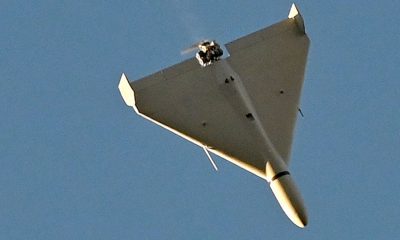
New arithmetic of conflict: How the drone revolution is inverting economics of war
-

 Editorial3 days ago
Search for Easter Sunday terror mastermind
-

 Business4 days ago
Hour of reckoning comes for SL’s power sector
-

 Sports6 days ago
Sri Lanka’s 1996 World Cup heroes to play exhibition match in Kuala Lumpur
-
 Features5 days ago
Seychelles … here we come