
Latest News
Bethell the headline act as Brook era begins with crushing 238-run win


Born in Barbados but stunning in Birmingham, Jacob Bethell’s devastatingly crisp 82 from 53 deliveries led England to 400 for 8, their second-highest score at Edgbaston, on their way to burying West Indies by 238 runs at the start of this three-match ODI series.
For Harry Brook’s first assignment as full-time limited-overs captain, it was the perfect start. However one-sided this might have been, the dominance goes some way towards bolstering confidence at the start of a new era. The result alone is a godsend, ending a run of seven consecutive defeats.
Bethell, 21, had only just arrived back from an IPL stint with Royal Challengers Bengaluru. And yet having missed the one-off Test match against Zimbabwe, he clicked through the gears, striking the majority of his eight fours and five sixes at the back end, to remind the world – and his head coach Brendon McCullum – of his unignorable claim for multi-format berths. This second half-century in the format also reinforced the scale of the talent England have pilfered from the Caribbean.
Bethell’s was the lead hand in an innings littered with impressive but unfulfilled starts, including half-centuries for Ben Duckett, Joe Root and Brook. The scoreboard pressure was suffocating enough before Saqib Mahmood – Brummie-born – produced an opening burst of 3 for 32 from his opening seven overs. The last of those three to fall was Shai Hope, stunningly clutched by a back-peddling Brydon Carse about five yards in from the deep square boundary.
It was an impressive piece of athletics from Carse, returning to international duty after a toe injury ended his Champions Trophy campaign prematurely. He looked back to his best with the ball with the dismissal of Brandon King – a Test-match length and nip away finding the edge through to Jos Buttler behind the stumps – and his fielding effort was in keeping with a broader, altogether more energetic performance with Brook leading from the front.
Stationed in the ring, Brook took five catches – having previously managed just three in 26 previous ODIs – level with the record for the most taken by a fielder in format (Jonty Rhodes against West Indies in 1993). It was Brook’s second dalliance with a record after he was one of seven batters to score 30 or more in the same innings – the first time that had been achieved in a one-dayer.
A shellacking of this magnitude was far from Hope’s mind when he won the toss and chose to bowl, but the game was up at the halfway stage when his side were faced with a record target and already shorn of the explosive Evin Lewis, who damaged his groin in training on Wednesday. But for the final-wicket stand of 38 between Alzarri Joseph and Jayden Seales, whose 29 makes him the seventh No.11 to top-score in an ODI innings, this would have been a record defeat. In the end, they were dismissed for 162 with 23.4 overs left on the table.
The travails of missing the 2023 50-over World Cup and the uncertainty that remains in the air regarding automatic qualification for 2027’s edition was reason enough to insert an experimental-looking England batting line-up on a muggy Thursday afternoon in the midlands. And West Indies, to their credit, stayed afloat for the majority of their time with the ball.
Alas, they were completely blown out of the water in the death overs. Seales’ figures of 4 for 84 from nine overs showed that even the few with rewards bore scars. The fast bowler, given the nod ahead of Shamar Joseph, suffered his most grotesque punishment in his penultimate over, sent for 19 as part of a bumper 98-run stand for the sixth wicket. Bethell was the aggressor, but Will Jacks, making his first appearance for England since November 2024, played an accomplished hand, bagging 39 off 24 from his first go at No.7 in ODIs.
The onus was immediately on a newly ordered, albeit not new-look, England batting card. The initial focus was on Jamie Smith, front and centre to face the first ball, moved to open for the first time in List A cricket.
His failures at No. 3 during the ICC Champions Trophy suggested more exposure to the new ball would not go down well. But Smith made hay, strumming crisp drives with the odd shuffle down the pitch, backing up McCullum’s view that the Surrey keeper-batter has the wares to cope with the early movement. Alas, having reached 37 in quick time, his 24th delivery – the number of runs he managed in three Champions Trophy knocks – stung the palms of Brandon King at midwicket, who held the catch, putting to shame Seales who had misjudged a far easier opportunity at mid-on the ball before.
Smith’s departure, at the end of the seventh over, with 64 on the board, probably should have been a hint for at least one of the others to bat through. And yet the senior trio of the top-order punched their cards without lasting the course.
Duckett looked the best of them, and probably should have set the platform for others to launch after moving through to a breezy half-century from 34 deliveries. But when he was done in at the start of the 20th over – Roston Chase taking a stunning one-handed grab leaping at backward point – both Root and Brook had to tend to a half-finished foundation.
The Yorkshire duo set about their task well, Root typically calm as Brook targetted Justin Greaves’ medium pace, striking him for two sixes in three deliveries – down the ground, then behind square – for his first boundaries. Then Root, after registering his 59th fifty-plus score in the format, opted for a booming drive to nick Seales through to Hope.
That was Seales’ first of three, the second coming when Brook lazily carved what was ultimately a long-hop out to deep point. By then, Jos Buttler was at the crease, stepping back having stepped down, with 4 off 6 to Brook’s 27 off 19 in their brief stand of 33.
The stage looked set for Buttler to return to the pack in blockbuster fashion, as he brought out the classics – charging Greaves for a straight six, then a slapped four before ramping Seales down the line. Alas, a well-disguised cutter from the latter meant a heave to leg landed neatly in the hands of midwicket.
It was at that point that Bethell took over, with 58 balls remaining in the innings. From 26 off 30, Bethell took it upon himself to put the game out of sight. From the 43rd over up to the 47th, Bethell hit a six in each over, before Jacks, who had played the straight man, tagged in for the 47th to blitz a six and four fours off Matthew Forde. That devastating five-over period brought 86 runs and effectively settled the match given the scale of the mountain West Indies had to climb.
Granted, it could have been far greater. The dismissal of Jacks – well-bumped by Greaves – and another special catch from Chase (this time running over his shoulder from mid-off to claim a steepling catch off Overton) kept the boundaries down to ensure Bethell was off strike for the entirety of the penultimate over. Regaining strike for the final over, a thin slice on a cut through to Hope brought his time to an end.
Just when it seemed West Indies were going to close out the final two overs without a boundary, and thereby deny England their 400, Seales’ well-directed yorker shot out of the footmarks, nutmegging Carse and flying away to the advertising boards to bring up the landmark from the final ball of the innings.
Once the first six West Indian batters had been seen off in the opening 12 overs, Brook was able to mix up his attack. That worked particularly well for Overton, who was able to finish with career-best figures of 3 for 22 despite having to leave the field during the eighth over after damaging his right hand trying to take a return catch off his second delivery.
Bethell completed Overton’s over, before Mahmood picked back up at the City End to claim two more dismissals. Overton, however, was back on the field to bowl the 16th over, bouncing out both Chase (caught Jacks at deep square leg) and Matthew Forde (caught Mahmood at fine) before fooling Gudakesh Motie with a slower delivery that was looped to point for Brook’s fifth and final catch.

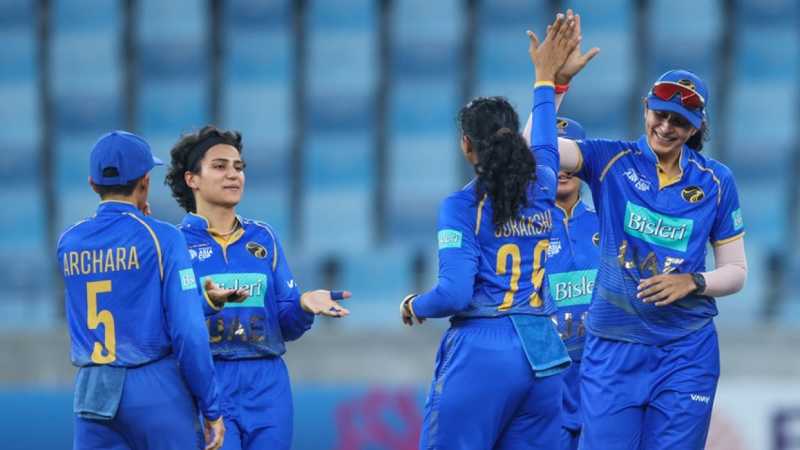
A complete performance from UAE’s bowling unit kept their semi-final hopes alive at the 2026 Women’s T20 Asia Cup, skittling Indonesia for 73 and then completing the chase with six wickets to spare. They now have to beat Bangladesh on September 8 and also hope other results go their way.
UAE were on top right from the first ball courtesy offspinner Suraksha Kotte, who starred with 3 for 16. Kotte struck with the first two balls of the innings, dismissing Indonesia opener Maria Corazon and No. 3 Ni Luh Dewi for first-ball ducks. UAE captain Esha Oza (2 for 11) then dismissed the other opener Rahmawati Pangestuti in the fourth over.
Indonesia captainN8 Puu Ayu Nanda Sakarini top-scored with a lone hand of 39 off 52 balls, with four fours and a six, accounting for 53.4% of Indonesia’s runs. But with little support, they could not find a way back in and were bowled out for 73.
Slow left-arm spinner Heena Hotchandani (2 for 6) and seamer Samaira Dharnidharka (1 for 12) also got among the wickets. Legspinner Vaishnave Mahesh struck twice in the 20th over to clean up the tail.
UAE openers Theertha Satish and Oza put on 17 for the first wicket. After losing Theertha in the fifth over, Oza hit two boundaries in each of the sixth and eighth overs. No. 3 Rinitha Rajith then hit three fours off Sofia Velic in the ninth over.
A brief wobble followed for UAE as they slid from 62 for 1 to 68 for 4. Oza fell for a 29-ball 30 at the start of the 11th over to Ni Ariani and Velic grabbed two wickets in the 12th. However, with only six runs needed, UAE wrapped up the chase at the start of the 14th over, the tournament hosts securing two points with 41 balls to spare. This was also Indonesia’s final match of the campaign, bowing out with losses in all three games.
Scores:
UAE Women 75 for 4 8n 13.1 overs (Esha Oza 30, Rinitha Rajith 22; Ni Riani 1-10, Sang Maypriani 1-17, Sofia Velic 2-25) beat IndonesiaWomen 73 in 19.4 overs (N8 Putu Ayu Nanda Sakarini 39, Desi Wulandari 12; Suraksha Kotte 3-16, Heena Hotchandani 2-06, Esha Oza 2-11, Samira Dharnidarkha 1-12 ) by six wickets
(Cricinfo)
Latest News
Sun directly overhead Moratuwa, Kesbewa, Handapangoda, Idalgashinna, Yudhaganawa, Kotiyagala and Panama about 12.08 noon today (05)

The sun is going to be directly over the latitudes of Sri Lanka from 28th of August to 07th of September due to its apparent southward relative motion.
The nearest places of Sri Lanka over which the sun is
overhead today (05) are Moratuwa, Kesbewa, Handapangoda, Idalgashinna, Yudhaganawa, Kotiyagala and Panama about 12.08 noon
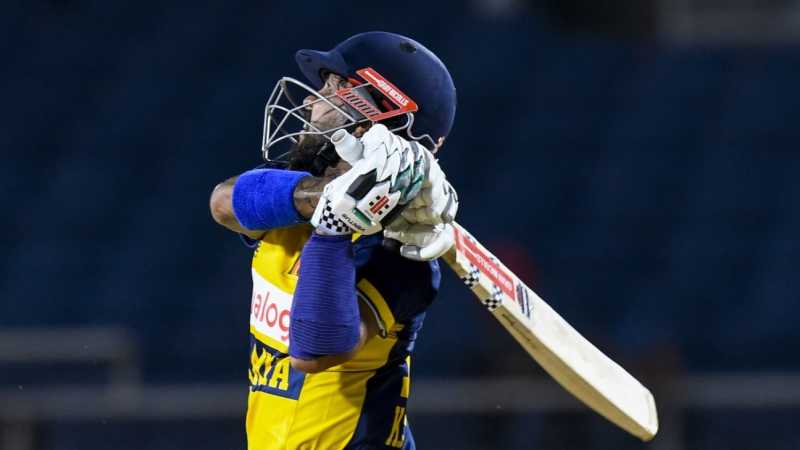
Kusal Mendis and Binura Fernando have been ruled out of Sri Lanka’s upcoming T20I series against England, with the SLC saying that the two were “still undergoing rehabilitation” after injuries picked up at the 2026 Lanka Premier League.
The update came just over a day after the two were named in the 16-member squad, with Kusal retained as captain of both the T20I and the ODI sides.Charith Asalanka, who had returned to the vice-captain’s position for the series, will now lead the side in the T20Is. Though Kusal hasn’t been ruled out of the ODIs just yet, were he to miss out, Asalanka, as the designated vice-captain, might step in there too.
Kusal has been out of action since July 19 with a right hamstring injury, while Binura hasn’t played since August 5, SLC putting his absence down to a back injury.
Pavan Rathnayake, the 24-year-old top-order batter, has replaced Kusal in the T20I touring party, while Dilshan Madushanka, the fast bowler who was in the squad for the Tests against India recently but didn’t get to play, has come in for Binura.
(Cricinfo)

Malaysia declares emergency in Sarawak as haze from Indonesia worsens

UAE keep semi-final hopes alive after convincing win over Indonesia

Sun directly overhead Moratuwa, Kesbewa, Handapangoda, Idalgashinna, Yudhaganawa, Kotiyagala and Panama about 12.08 noon today (05)

Showers above 75 mm are likely at some places in the Uva, Central and Eastern provinces and in Polonnaruwa and Mullaittivu districts after 2.00 p.m

Namal remanded until Sept. 18 over Airbus deal investigation

Dengue cases surpass 96,000 this year

‘Dates have the highest sugar content to fight Coronavirus’

Sunday Island 27 December – Headlines

#SundayIsland 17th December – Headlines

Sunday Island – 28th March

Sunday Island Headlines – 21 March

Sunday Island – 21st February – Headlines
-

 Features6 days ago
“Wrap Me Up in My Blazer”— A Gentlemanly Bradby Reminiscence
-

 Features5 days ago
When Sri Lankan stories find their own voice
-

 Features6 days ago
JVP/NPP government as seen from outside by Lionel Bopage now domiciled in Australia
-

 News5 days ago
BASL takes exception to Justice Ganepola being denied a place in SC
-
 Features6 days ago
Prof. Savitri Goonesekere: What has she done?
-

 News2 days ago
Denied of promotion to SC despite vacancies, justice Gurusinghe retires
-

 Latest News3 days ago
Grade 5 scholarship exam results released
-

 News2 days ago
22A: SC urged to suspend hearing, appoint full bench