
Midweek Review
Pahalgam massacre, Indian denial of Trump claims and Sri Lanka’s triumph over LTTE


There hadn’t been a previous instance of India having to contradict a sitting US President, literally, to his face. But, the swift Indian rejection of President Donald Trump’s offer to mediate in the renewed Indo-Pakistan conflict over flashpoint Jammu and Kashmir underscored India’s longstanding national policy that Kashmir wouldn’t involve any third party, under any circumstances.
US President Donald Trump’s claim that he warned both India and Pakistan that there would be significant increase in trade if they agreed on an immediate ceasefire was rejected by India. Pakistan appreciated the US President’s initiative.
Responding to Indian Premier Narendra Modi’s strongly worded statement on May 12, Pakistan, while declaring its backing for a “peaceful resolution of the Jammu and Kashmir dispute, in accordance with the UN Security Council resolutions and the aspirations of the Kashmiri people, reiterated their support for President Trump’s efforts aimed at the resolution of this dispute, which remains a source of instability in South Asia.”
For whatever reasons, Modi wanted to be in the high company of white Western powers and jumped headlong into being a member of the US-led quad to rub it into China without realising that the West only wanted to use India against Beijing and there was no quid pro quo in the event of an unforeseeable need for help by New Delhi. Had he not been so cussed to Chinese, Beijing would have been a friend- in-need whatever their differences of the past.
India, however, was explicit in its response to President Trump’s cheap shot that he brokered a ceasefire between India and Pakistan. In the wake of the humiliating Indian rejection, the US was compelled to call for direct communication between India and Pakistan.
In spite of the Indian blunt denial, President Trump, like so many of his other wild claims in recent weeks, on how he has got lucrative trade deal offers from many countries advantageous to Washington, reiterated his preposterous claim with regard to the ceasefire, nuclear escalation and trade when he addressed the US military, based in Qatar. India, in no uncertain terms, has denied President Trump’s repeated claims of nuclear escalation.
Close on the heels of the now-rejected claims regarding the ceasefire, nuclear escalation and increased trade, President Donald Trump again surprised India with another unsubstantiated declaration when he asserted, at a business forum in Qatar, that India had offered the United States a trade deal with “literally zero tariffs”.
Responding to President Trump’s claim, Indian External Affairs Minister S. Jaishankar declared that the ongoing negotiations were complex and far from final. Having to contradict a sitting US President is no easy task.
If India found the US propagating a narrative of its own problematic to counter, one can understand Sri Lanka’s plight in countering Western propaganda projects targeting it. But, India, unlike Colombo, swiftly and decisively set the record straight thereby prevented the US from disseminating a false narrative.
The Indian High Commission in Colombo recently reacted strongly to the Tribune report, headlined “India removes its top military spy after RAW leaks”, reproduced in the May 05 edition of The Island. Having faulted The Island for carrying the said factually incorrect news item on page 02 without a fact check, the Indian HC reminded us of the devastating 2019 Easter Sunday carnage here caused by terrorism. As expected the Indian HC statement made no reference to terrorism caused by India in Sri Lanka in the early ’80s. Terrorism sponsored by India bled Sri Lanka till May 2009.
India, too, paid a heavy price. The Indian-led destabilisation project almost overwhelmed Sri Lanka. India simultaneously conducted a proxy war while spearheading high profile diplomatic efforts meant to advance its own interests. The Indian intervention here in the ’80s should be examined keeping in mind their extremely close relationship with the then Soviet Union.
Universities of global terrorism
Prime Minister Modi’s May 12th address to the nation explained India’s stand on Pakistan vis-à-vis what he called terrorism. The Pahalgam massacre carried out on April 22, 2025, brought the country together and the armed forces were authorised to wipe out terrorist infrastructure in Pakistan.
Prime Minister Modi declared: “Terrorist bases, like Bahawalpur and Muridke, are universities of global terrorism. The big terrorist attacks of the world, be it 9/11, be it London Tube bombings, or the big terrorist attacks which have happened in India in the last many decades their roots are somehow connected to these terrorist hideouts. The terrorists had wiped out the Sindoor of our sisters and India responded by destroying their terrorist headquarters. More than 100 dreaded terrorists have been killed in these attacks by India. Many terrorist leaders were roaming freely in Pakistan for the last two and a half to three decades who used to conspire against India. India killed them in one stroke.”
Of course there was no reference to Sri Lanka. The English rendering of the Indian leader’s original speech, made in Hindi, conveniently left out Sri Lanka though there cannot be a better example than Sri Lanka to highlight the successful eradication of terrorism here through military means.
Modi joined the Bharatiya Janata Party (BJP) in 1987, the year India forced Sri Lanka to accept the deployment of the Indian Army here. One of the key objectives was to supervise the swift disarming of separatist Tamil groups that were fully sponsored by them. The Indian destabilisation project was meant to compel Sri Lanka to forgo its right to deal with terrorists militarily. A case in point is the Indian demand to call off ‘Operation Liberation’ aimed at clearing Vadamarachchi. India deployed its Air Forces across the Palk Straits in late June 1987 to rescue Prabhakaran and finalise an agreement that suited their overall objectives. Five years later Prabhakaran ordered the assassination of Congress leader Rajiv Gandhi who deployed the Indian Air Force to save Prabhakaran from certain death at the hands of the Sri Lanka Army. Had that happened, the India-created terrorist project could have collapsed. Thousands of lives, including that of Gandhi, and over 1,300 Indian soldiers, could have been saved and a sea-borne attack on the Maldives wouldn’t have materialised.
Premier Modi, too, contradicted President Trump’s claims of direct US role in the halt to Indian offensive action. Modi declared that the suspension of their retaliatory action was the result of the Pakistan Army reaching out to the Director General of Military Operations (DGMO), India.
Premier Modi’s declaration that their greatest strength is India’s unity against all forms of terrorism. “This is certainly not the era of war but this is also not the era of terrorism. Zero tolerance against terrorism is the guarantee for a better world.”
Obviously that hadn’t been India’s position during the Congress reign in the 1980s. India owed Sri Lanka an apology, at least now. Modi’s India should set the record straight, particularly against the backdrop of Western powers pursuing an anti-Sri Lanka campaign.
The anti-Sri Lanka project has taken a new turn with the unveiling of the Tamil genocide monument in Brampton, Ontario, Canada. The monument is widely reported to have been dedicated to the memory of Tamils killed in the war. The unveiling of the monument coincided with the preparations for commemorative events to mark, what the interested parties called, the Mullivaikkal massacre – 40,000 according to the highly exaggerated hatchet job of the UN Secretary General’s Panel of Experts (PoE) that inquired into military operations conducted in the Vanni theatre.
A section of the media quoted Mayor of Brampton Patrick Brown as having told the monument unveiling ceremony: “Genocide deniers, you are not welcome in Brampton, you are not welcome in Canada. Go back to Colombo.” Brown surely knows how to inspire Tamils living in his area. The Canadian media reported that about 12,000 Canadians of Sri Lankan origin live in the Brampton area.
Canada has some nerve to rake up such unsubstantiated claims against Sri Lanka despite so much innocent blood of natives there on its own hands from its colonial past. Even if we just go back to as recently as the mid-1990s when a growing outcry there forced them to close down for good church-run schools after finding remains of several thousand native children in unmarked graves on grounds of those schools that were used to ‘civilise’ them.
Tamil victims
Those who propagate the lie about deliberate massacre of Tamils during the last phase of war that was brought to a successful conclusion on May 18, 2009, conveniently forget that India launched the Sri Lanka terrorism project way back in early ’80s. Over the years various interested parties, both here and abroad, gave unsubstantiated claims regarding the number of dead. But their focus was always on those killed fighting for the LTTE. Let us remind the likes of Patrick Brown who spotlighted the fact that thousands of Tamils were killed by Tamils fighting for supremacy in the Northern and Eastern regions during the conflict.
(1) Members of various Tamil terrorist groups killed in intra-group fighting.
(2) Those killed in fighting between/among Tamil groups sponsored by India
(3) Members of Tamil groups killed in fighting Sri Lankan military and police
(4) Tamil youth killed during weapons training in India and transfer to and from Tamil Nadu via sea
(5) Terrorists killed by rival groups during their stay in India. The killing of 13 Sri Lankans, including EPRLF leader K. Padmanabha in Madras (now Chennai) in June 1990, about three months after the Indian military pulled out from Sri Lanka, exposed New Delhi’s failure to neutralise the LTTE. Their next major target was the assassination of Congress leader Rajiv Gandhi in the following year.
(6) LTTE terrorists killed by the Indian military in the Northern and Eastern regions
(7) LTTE terrorists killed during confrontations with the Indian Navy/Coast Guard
(8) Members of PLOTE (People’s Liberation Tigers of Tamil Eelam) killed by Indian forces deployed to avert Sri Lankan terrorist attack on the Maldives
(9) Tamil National Army (TNA), a group that had been hastily established by India ahead of the Indian military pullout from Sri Lanka in early 1990 to protect the EPRLF puppet administration, suffered significant loss of life as a result of LTTE operations facilitated by Sri Lanka. That was the period, May 1989 to June 1990, when slain President Ranasinghe Premadasa played ball with Velupillai Prabhakaran
(10) LTTE cadres killed on the orders of Velupillai Prabhakaran. Gopalswamy Mahendraraja alias Mahattaya, whom the writer met at Koliyakulam, near Omanthai, in early January 1990, was the senior most LTTEer executed on the orders of Prabhakaran. Having accused Mahattaya of betraying the LTTE’s cause to India, Prabhakaran demanded his surrender and carried out his execution.
(11) Indian law enforcement authorities killed those who had been involved in the heinous LTTE plot to assassinate Rajiv Gandhi in May 1991. Those who had been demanding justice for Tamils killed during the conflict do not talk of members of that community who perished in India following Gandhi’s assassination.
(12) Tamils who paid the supreme sacrifice fighting for the Sri Lankan government.
(13) Deaths among the LTTE fighting cadre following the breakup of the group in 2004 that eventually paved the way for the armed forces’ success in the north.
(14) The LTTE deployed thousands of children for combat. The number of children killed due to battlefield deployment remains unknown. Those who shed copious tears for terrorists must be reminded that until the Sri Lankan military eradicated the LTTE, Velupillai Prabhakaran continued the despicable practice of forcible recruitment of children.
Elimination of Tamil political leadership
The Tamil Diaspora believe that the world can be deceived with the blatant lie that all Tamils who had been killed during the conflict were civilians. If their lies were accepted, people from the moon must have fought for the LTTE.
There is no doubt that Tamils – men, women and children who had nothing to do with the LTTE or other Tamil terrorist groups that entered the political mainstream during President Ranasinghe Premadasa’s tenure – perished in government military action. There had been serious human rights violations. There is no point in claiming ‘zero’ casualties. That claim is stupid and the government shouldn’t have resorted to such foolish propaganda projects.
Immediately after the government declared victory over the LTTE on May 18, 2009, it should have tendered an apology to the innocent Tamil speaking people killed due to military action. The government should have explained the efforts made over the years to reach a consensus with Tamil terrorist groups with the direct involvement of India. Unfortunately, the war-winning government pathetically failed in its responsibility. President Mahinda Rajapaksa gravely erred in his refusal to make representations to the UN PoE. Had that happened, Sri Lanka could have explained the circumstances leading to the war in August 2006 and avoided falling victim to hatchet jobs done by UN bodies in support of Western agendas.
Those who had been propagating Tamil genocide narrative deliberately forget how the LTTE and other Tamil groups killed elected representatives of Tamil speaking people. They should be ashamed for playing politics with slain Tamil politicians. Have you ever heard of LTTE sympathisers questioning the assassination of Tamil political leader and former opposition leader Appapillai Amirthalingam along with ex-Jaffna MP Vettivelu Yogeswaran on July 13, 1989 at a rented house in Colombo 07.
Yogeswaran’s wife, Sarojini was shot five times at her residence near Jaffna on May 17, 1998. The LTTE assassinated her because she accepted the post of Jaffna Mayor. The LTTE killed indiscriminately. Sarojini Yogeswaran was killed as the LTTE couldn’t stomach Sri Lanka’s efforts to restore normalcy in the Jaffna peninsula.
Many people tend to forget that the Jaffna peninsula and the nearby islands were brought under government control in 1995 during Chandrika Bandaranaike Kumaratunga’s tenure as the President. The TULF decision to contest the Jaffna Municipal Council election on January 29, 1998, infuriated the LTTE. The TULF’s move weakened the LTTE’s position. Political process always frightened the LTTE.
The writer covered the Jaffna district local government elections conducted on January 29, 1998. The TULF contested only the Jaffna MC and Waligamam (north) Pradeshiya Sabha out of 17 local government authorities
Those who organised high profile events in honour of the LTTE dead must make a genuine effort to identify and formulate a list of Tamils – members of rival groups and politicians killed during the conflict. And a separate list of forcibly conscripted children. If Brampton Mayor Patrick Brown is so concerned about Tamils, he can easily check why those 12,000 Sri Lankan Tamils ended up in his area. Did they flee Sri Lanka armed forces, Indian military, or the LTTE? An attempt should be made to identify those who had fought for the LTTE or other Tamil groups living therein.
‘Forgotten Sri Lanka’s exiled victims’
Those who had been accusing Sri Lanka of, what they called, enforced disappearances during and after the conclusion of the war in May 2009, refuse to acknowledge thousands of ex-terrorists (of LTTE and other groups) who live overseas. Refusal on the part of Western governments to share information with Sri Lanka has deprived the country of an opportunity to address accusations of disappearances.
Sometime ago, an expensive survey carried out by the International Truth and Justice Project (ITJP), affiliated to the Foundation of Human Rights in South Africa, revealed ex-LTTE cadres taking refuge in western countries. The survey was titled ‘Forgotten Sri Lanka’s exiled victims.’
The release of the report in June 2016 coincided with the commencement of the on-going 32 sessions of the Geneva-based United Nations Human Rights Council (UNHRC). The report inadvertently revealed the existence of clandestine networks, facilitating Sri Lankans of Tamil origin, including former members of the LTTE, reaching Europe, through illegal means.
The study disclosed that LTTE personnel, including those who had been with Shanmugalingam Sivashankar alias Pottu Amman’s dreaded intelligence service, had secured citizenship in European countries, including the UK.
The report dealt with information obtained from 75 Tamils, living in the UK, France, Switzerland and Norway. Almost all of them had fled Sri Lanka after the conclusion of the war, in May, 2009. The vast majority of interviews had been conducted in London. However, an ITJP bid to include some of those ex-LTTE cadres, based in Germany, had gone awry. The report claimed that the targeted group declined to participate in the process, in protest against the role of the international community in supporting the transitional justice process in Sri Lanka.
Surprisingly, ITJP hadn’t bothered about those who took refuge in India during the conflict and post-conflict period.
A group of human rights experts, international prosecutors, investigators and transitional justice experts, who had previously served the United Nations (UN) International Criminal Tribunal for the former Yugoslavia (ICTY) and the International Criminal Court (ICC), produced the report under the guidance of Yasmin Sooka, one of the three persons on UNSG Ban Ki-moon’s PoE on Sri Lanka. Sooka teamed up with Marzuki Darusman and Steven R. Ratner to produce a Report of the Secretary General’s Panel of Experts on Accountability in Sri Lanka. Sooka functions as the executive director of the Foundation as well as ITJP
According to the report: “She is a former member of the South African & the Sierra Leone Truth and Reconciliation Commissions and was a legal advisor to Ban Ki-moon on Sri Lanka. She was the Soros inaugural Chair at the School of Public Policy and recently sat on the Panel investigating sexual violence by French peacekeeping troops in the Central African Republic.”
The writer sought a clarification from UNSG’s deputy spokesperson, Farhan Haq, regarding Sooka’s tenure as a Legal Advisor to UNSG on Sri Lanka. The Island received the following response from Haq: “Yasmin Sooka has been on high level panels, including on Sri Lanka, but she has not been the legal adviser to the Secretary-General.”
Unfortunately, Sri Lanka never really bothered to conduct a comprehensive investigation into unsubstantiated allegations taking into consideration all available facts. Thereby Sri Lanka deprived itself an opportunity to set the record straight, even 17 years after the conclusion of the conflict.
Wartime GoC of the celebrated 58 Division Shavendra Silva, who retired on Dec. 31, 2024, after serving the military for over four decades on the eve of 16th anniversary of triumph over the LTTE, squarely blamed successive governments of failing to counter war crimes accusations. In his exclusive interview with Derana anchor Chathura Alwis the Gajaba Regiment veteran held the governments, including the war-winning Mahinda Rajapaksa administration, of failing to clear the armed forces of false allegations.
Isn’t it an indictment on the entire political party leadership of this country?

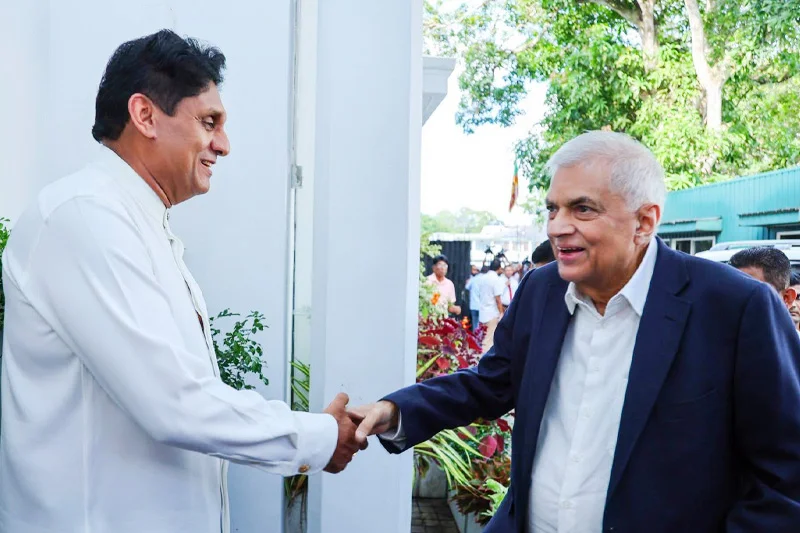
Silent petty backbiting among Opposition may result in it grabbing defeat from victory over NPP
There is no likelihood of the SJB and the UNP reaching consensus on a tangible arrangement in the near future though some asserted that they may agree on a united front against the ruling National People’s Power (NPP). Referring to
former President and UNP leader Ranil Wickremesinghe’s visit to Opposition Leader Sajith Premadasa’s Office on 23 July, a source familiar with the developments said that in spite of such gestures, underlying problems remain. Another source explained that a combined front may be useful in a campaign against a particular issue but the two parties needed a genuine arrangement ahead of the next countrywide election.
By Shamindra Ferdinando
United Republican Front (URF) leader Patali Champika Ranawaka recently thanked Health and Media Minister Dr. Nalinda Jayathissa for recognising the Janathawadi Joint Opposition as a real challenge to the National People’s Power (NPP) government. The NPP enjoys an unassailable 159 parliamentary seats.
The former Minister noted that Dr. Jayathissa, who is also the Cabinet spokesman, realised the political threat posed by them, though the main parliamentary Opposition party Samagi Jana Balawegaya consisted of 40 lawmakers.
Ranawaka refrained from naming the SJB as the main Opposition party he was referring to.
Addressing the media at the Flower Road Office of UNP leader Ranil Wickremesinghe, Ranawaka pointed out that the ruling party felt their challenge, though there were a plethora of Opposition parties in the Parliament.
Referring to Dr. Jayathissa’s recent accusation that they conspired at the Kirula Place, Colombo 5, residence of former External Affairs Minister Prof. G. L Peiris, Ranawaka appreciated the Minister’s declaration made at the expense of the SJB.
While the 40-member SJB group is the second largest group in Parliament, the Illankai Thamil Arasu Kadchi (ITAK) holds third position with eight seats whereas New Democratic Front (NDF) consists of five MPs. The NDF, that received the backing of Wickremesinghe at the 2024 parliamentary polls, is in fourth position, whereas the Sri Lanka Podujana Peramuna (SLPP) parliamentary group consists of just three members. The SLPP suffered a humiliating defeat at the hands of the NPP at the last parliamentary polls, held in November 2024. An angry electorate at the first parliamentary polls after the 2022 regime change project reduced the SLPP, from a commanding 145-seat group, to just three MPs. Defeated 2024 presidential election candidate Namal Rajapaksa was so fearful of the impending rout at the November 2024 polls, he took refuge in the SLPP National List.
The political grouping, based at the Flower Road office of Wickremesinghe, has gradually broadened its operation. The stepping up of the Flower Road operation must be examined taking into consideration the NPP targeting Wickremesinghe over his 2023 September visit to the UK. The NPP has alleged that Wickremesinghe squandered public funds at a time the country was undergoing extreme economic difficulties. The crux of the matter is whether Wickremesinghe, in his capacity as the President, spent Rs 16.2 man on a private visit.
In spite of the Flower Road project receiving the NPP’s attention, Wickremesinghe does not really command the NDF that contested under the ‘Gas Cylinder’ symbol. The NDF group in Parliament consists of former Badulla District SLPP lawmaker Chamara Sampath Dassanayake, former Kalutara District SLPP MP Rohitha Abeygunawardena, ex-SLPP Kandy District MP Andrada Jayaratne, ex-UNP Minister Ravi Karunanayake (National List) and former SLFP Minister Fizer Mustapha (National List).
It would be pertinent to mention that a major problem erupted within the NDF at the time of filling the two National List slots. Wickremesinghe is the undisputed leader of the NDF, though he lacked any formal recognition as such, fielded candidates for selected electoral districts outside the Northern and Eastern regions at the 2024 November polls. The NDL comprised the UNP, the SLFP and the SLPP breakaway faction ‘Podujana Eksath Nidahas Peramuna (PENP).’ All three elected members Dissanayake, Abeygunawardena and Jayaratne represented the PENP.
The SLFP received one National List slot whereas the General Secretary of the NDF, Sharmila Perera, regardless of strong objections by Wickremesinghe, accommodated Karunanayake as the other NDF National List nominee. Perera informed the Election Commission, in writing, while the coalition debated Karunanayake’s appointment. An influential section of the coalition favoured the appointment of Kanchana Wijesekera, of the PENP, as the other National List member.
Perera, in her capacity as the NDF’s General Secretary, chose Karunanayake whose involvement with the NDF is in the public domain. The Election Commission gazetted a notification on 18 November, 2024, naming Karunanayake to Parliament. Will discuss the NDF’s emergence as a significant political factor in the wake of the 2010 presidential election, the first national poll after the eradication of the separatist Tamil terrorist movement.
SJB strategy
Whether the SJB likes it or not, former Yahapalana Minister Ranawaka’s reaction to Dr. Jayathissa’s conspiracy claim highlighted the ongoing controversy surrounding the main Opposition party’s overall response to the NPP’s pet project, the enactment of the 22nd Amendment.
Some political commentators have harshly criticised SJB Chief, who is also the Opposition Leader, Sajith Premadasa, for failing to mount a large-scale counter offensive. Some of them have taken offence that Premadasa sort of played it safe in spite of the NPP seeking to bulldoze the Opposition, both in and outside Parliament. Various interested parties have asserted that Premadasa’s inaction has been influenced by his fear of the government hounding him with corruption investigations, targeting him and his wife Jalani.
In spite of much publicised gathering of recognised Opposition parties/groups at the Opposition Leader’s Office at No 30, Sir Marcus Fernando Mawatha, Colombo 07, on 23 July, 2026, also attended by Wickremesinghe, the SJB appeared to have failed to take the lead in the overall campaign against the 22nd Amendment. Had the government managed to neutralise the determined efforts of the Sri Lanka Bar Association (BASL) and the unexpected United Nations intervention, the Opposition campaign may have collapsed already.
The undeniable truth is the SJB never succeeded in taking command of the overall political strategy. Dr. Jayathissa’s claim and Ranawaka’s reaction clearly suggested the deterioration of the SJB’s status. But those who approve of the SJB’s handling of political developments seem confident the party is on the right track. They feel criticism directed at the SJB and Sajith Premadasa, in particular, unfair and utterly politically motivated. Social media criticism appeared to have troubled the SJB. Recently, the SJB contradicted and challenged the opinion expressed by Priyanjith Vitharana who posted political commentaries under the pseudonym ‘Rate Rala.’ The former General Secretary of the breakaway JVP group, the National Freedom Front (NFF), has emerged as one of the strongest critics of Premadasa’s style of Opposition politics. ‘Rate Rala’ relentlessly attacked the SJB leader and vigorously questioned what he called the Opposition Leader’s lukewarm reaction to the NPP’s challenge.
The SJB and the Wickremesinghe-led political grouping cannot turn a blind eye to President Anura Kumara Dissanayake’s impending high profile political campaign, countrywide. The NPP has declared that the campaign would be launched on 5 September. The NPP enjoys absolute political power to move large groups of people for their intended meetings as previous ruling parties did. But, in the absence of a cohesive political strategy, those in the Opposition are still unable to work out a strategy to counter the NPP campaign. The Cabinet spokesman has dared Wickremesinghe’s group to bring in people onto the streets instead of having clandestine meetings at the residence of Prof. Peiris, the convenor of the Janathawadi Joint Opposition.
Wickremesinghe’s five-member NDF group in Parliament is obviously divided over political strategy. It seems the members of the group are pulling in different directions. The SLFP’s Faizer Mustapha is somewhat silent on the 22nd Amendment and the remaining members haven’t been seen playing a role against the 22nd Amendment worth mentioning. Cobbling up alliances to overcome short-term political challenges is the bane of the Sri Lankan political setup. The NDF is no exception. Having suffered an expected defeat at the 2024 September presidential poll, Wickremesinghe utilised the NDF to bring together those at the mercy of the NPP. Wickremesinghe’s move dealt a devastating blow to the SLPP, struggling to cope up with the developing situation. The consequences of Wickremesinghe post-presidential actions caused irreparable damage. The fielding of SLPP candidates on the NDF ticket and also accommodating them on its National List, at the expense of the SLPP, undermined that party. Among those who betrayed the SLPP were former Prime Minister Dinesh Gunawardena and ex-Speaker Mahinda Yapa Abeywardena. But, Wickremesinghe didn’t care. By then, the SLPP had forgotten how in its capacity as the ruling party it elected Wickremesinghe as Gotabaya Rajapaksa’s successor at the expense of their own Dullas Alahapperuma who teamed up with the SJB to fight it out in Parliament.
The SLPP fell out with Wickremesinghe when the latter sought the ruling party’s backing at the 2024 presidential polls, the first post-Aragalaya (read regime change project) national election. At the end, Sajith Premadasa, Ranil Wickremesinghe and Namal Rajapaksa contested at the expense of a unified front. That enabled Anura Kumara Dissanayake to secure victory at the 2024 presidential race.
Unrealistic SJB-UNP partnership
In the run-up to the 2024 parliamentary polls, the writer, at a Flower Road Office briefing by UNP Deputy Leader Ruwan Wijewardena, raised the failure on the part of the UNP and the SJB to reach a consensus after Dissanayake won the presidency due to their dithering.
The former Deputy Defence Minister, struggled to explain the status on the SJB-UNP talks when the writer pointed out that Dissanayake polled 5,634,915 votes whereas Sajith Premadasa (4,363,035 votes) and Ranil Wickremesinghe (2,299,767) together polled 6,662,802- a staggering 1,027,887 votes more than the winner. Unfortunately, both camps remained adamant regarding the modalities of consensus/unification. Had the two parties realised the gravity of the situation and the extraordinary challenge the NPP posed, they could have shed whatever their differences to contest under one symbol. But the petty-minded SJB and UNP leaders squandered an opportunity that resulted in the NPP securing an unbeatable 159 seats at the presidential election.
The SJB and the UNP continue to move in different directions. Those who remain with the UNP appeared to be more comfortable having Dissanayake as the President than Premadasa. Wickremesinghe’s visit to the Opposition Leader’s Office seemed to have failed to achieve a genuine reconciliation between the two leaders. Soon after the 2019 presidential election that brought newcomer Gotabaya Rajapaksa to power, the internal crisis, within the UNP, intensified.
Defeated UNP contestant Deputy Leader Sajith Premadasa quit the party in early February 2020, to form the SJB. The SJB-led alliance was officially launched in March 2020 ahead of the parliamentary polls in August 2020. The UNP split in the aftermath of the 2019 presidential poll created an extremely unfavourable environment for Wickremesinghe who suffered a crushing defeat at the August parliamentary polls. The UNP was reduced to one National List slot whereas the SJB secured 54 seats, including seven National List slots. Wickremesinghe failed to retain his Colombo District parliamentary seat.
Wickremesinghe refrained from filling that solitary National List slot till June 2021. By then, the economic crisis had set in. Wickremesinghe entered Parliament on 23 June, 2021. Rapid economic deterioration led to sovereign default the following year. Political stability created an environment for Wickremnesinghe to exploit. Wickremesinghe didn’t hesitate to accept the premiership on 12 May, 2022, soon after SJB leader Sajith Premadasa turned down President Gotabaya Rajapaksa’s invitation. The beleaguered UNPer couldn’t have asked for more. The SLPP ended up electing Wickremesinghe as Gotabaya Rajapaksa’s successor 10 weeks later, a decision that the party now rued. In hindsight, the consensus between the Rajapaksas and Wickremesinghe, in the short term, benefited both parties but undermined efforts to iron out differences between the SJB and the UNP.
The UNP felt that it should have the final say in the issue at hand. However, the SJB quite rightly asserted that securing 54 seats at the 2020 parliamentary election should be taken into consideration. The UNP was down to one National List slot and in the wake of the SLPP accommodating Wickremesinghe in the Executive Office, Wajira Abeywardena filled that vacancy.
In fact, the UNP never relished consensus with the SJB. Instead, Wickremesinghe felt that it could extend his partnership with the SLPP, to his advantage, by securing its approval as the party’s 2024 presidential poll. Had that happened, the SLPP would have further deteriorated though Wickremesinghe could have polled a far larger share of votes at the presidential poll. Contesting as an independent, Wickremesinghe polled over 2.2 million votes at the presidential election. That defeat compelled Wickremesinghe, who turned 75 in the run-up to the presidential poll, not to join the parliamentary polls fray.
Wickremesinghe knew the signs. He knew the game was over and the UNP no longer appealed, even to die-hard supporters. The UNP leader quietly brought together the remnants of the UNP with the SLFP and SLPP and fielded them under the NDF’s symbol. As mentioned at the onset of this piece, the NDF, under Wickremesinghe’s leadership, obtained five seats. But, he never managed to retain control of the parliamentary group. Against the backdrop of an unprecedented deterioration of the UNP, the 22nd Amendment, in a way, has helped Wickremesinghe to work out a strategy to somewhat consolidate his position. The Flower Road operation has given Wickremesinghe some leverage as the NPP battled the high profile Bar Association of Sri Lanka (BASL)-led campaign against the 22nd Amendment.
NPP strategy
The NPP seems confident that the SJB and the UNP, under any circumstances, will not amalgamate or contest under one symbol. The NPP’s political strategy is based on the presumption that the two parties lacked the will to do so, though they realised their costly failure to reach consensus at the last presidential and parliamentary polls in 2024. Both parties suffered at the 2025 May Local Government polls as well. In a last-ditch attempt UNP leader Wickremesinghe proposed that the UNP and SJB contest the Colombo Municipal Council under one symbol. That proposal never materialised.
As a result, the UNP lost the CMC after more than 50 years. The UNP won the CMC in 2011 when the rival UPFA, led by the then President Mahinda Rajapaksa, won all other local government bodies outside the Northern and Eastern Provinces, two years after the eradication of the LTTE.
Opposition sources acknowledged that nothing short of an arrangement to contest the next election, under one symbol, wouldn’t help them. “We are unable to fully exploit the deterioration of public confidence in the NPP due to the appalling failure to bring talks between the two parties to a successful conclusion,” a source familiar with the developments said.
The 22nd Amendment gave an opportunity for the SJB, with 40 MPs in Parliament, and the UNP, sans any parliamentary representation, to finalise an arrangement. Unfortunately, they failed to do so, thereby allowed the government to proceed with the strategy. A major campaign, led by President Dissanayake himself, scheduled to be launched on 5 September, underscored their strategy, whereas the Opposition remained still unsure of its own counter-strategy. Had they at least managed to organise a few mega rallies with the participation of the entire Opposition, the NPP may have come under real pressure. Unfortunately, even after the Illankai Thamil Arasu Kadchi (ITAK) and Tamil Progressive Front (TPA) representing upcountry political parties declared strong opposition to 22nd Amendment, the SJB couldn’t take the lead in organising a large-scale counter campaign. Instead, the Janathawadi Joint Opposition, operating out of the Flower Road Office, has exploited the situation to its advantage.
Despite both the SJB and the UNP (Janathawadi Joint Opposition) moving the Supreme Court against the 22nd Amendment, they conveniently failed to appear together at regular media briefings, held at Wickremesinghe’s Flower Road Office, where Prof. Peiris, in his capacity as the convenor of the grouping, meticulously dealt with the developing story.
Regardless of the failure on the part of the SJB and the UNP to finalise an arrangement with eyes on the next election, the BASL-led campaign against the 22nd Amendment caused significant damage to the NPP’s reputation. The BASL’s shocking revelation that two deserving justices, namely senior justice of the Court of Appeal, Dhammika Ganepola, and senior-most justice of the Court of Appeal, justice R. Gurusinghe, were deprived of promotion to the Supreme Court by the incumbent administration, was received by the public with disappointment. The BASL released 17 August, 2026, dated, hitherto unpublished letter, addressed to President Dissanayake, that dealt with unfilled vacancies in the superior courts, while the government preached the public of its determination to deal with a mountain of case backlog.
Unfortunately, the Opposition campaign lacked direction though some former and present lawmakers targeted the 22nd Amendment. With almost all who moved the Supreme Court against the 22nd Amendment seeking all remaining judges of the Supreme Court to hear the petitions with the BASL suggesting that Chief Justice recuse himself of hearing the cases over conflict of interests and all agreeing on a referendum to approve of the controversial constitutional amendment, the apex court constitutionally is authorised to take three weeks to decide on the issue at hand.
The decision is expected to be communicated to Speaker Dr. Jagath Wickremaratne around the time President Dissanayake completed his second turbulent year in Office on 21 September.
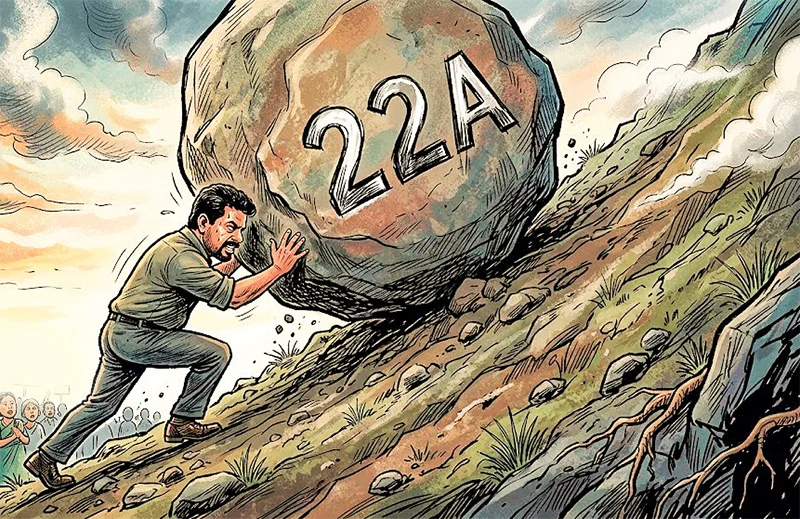
Beyond noise and acrimony:
 by Sasanka Perera
(The writer is on X as @sasmester)
Background
The Sri Lankan government has proposed to introduce the 22nd Amendment to the Constitution focused on increasing the retirement age for Supreme Court and Court of Appeal judges. Coupled with parallel legislative adjustments to the Judicature Act of 1978 governing the functioning of lower-tier courts, the initiative has drawn sharp criticism from domestic legal bodies, opposition political parties, human rights activists and scrutiny from international organisations, most notably the United Nations Special Rapporteur on the Independence of Judges and Lawyers.
Locally however, much of the debate is lost in the noise of acrimony, name-calling and what can only be called ‘social media violence’ rather than becoming a sensible discourse of rational and courteous debate. A week ago, a simple tweet from me on my wariness over getting the UN involved in this matter and the UN’s general bias towards countries like ours literally went viral, castigating me as a supporter of the government. My public writing in support and often in opposition to government positions — as demanded by different cases and situations — had no impact whatsoever. This virulent noise has no place in democratic practice, which all these noisemakers nevertheless claim to protect. This essay, however, finds its genesis in that noise as a means of making sense of the politics of the 22nd Amendment for myself and for any sensible people who might want to ponder over its implications.
As far as my understanding goes as a citizen without a legal background, the present controversy touches on the core tension amongst practical administrative necessity as seen by the government, constitutional integrity as argued by many in the legal profession, human rights advocates and opposition politicians and the geopolitics of international human rights oversight exercised by entities such as the UN.
Under Article 107 of Sri Lanka’s 1978 Constitution, the mandatory retirement age for Supreme Court judges is 65 years, while Court of Appeal judges must retire at 63 years. The proposed 22nd constitutional amendment seeks to raise these limits by two years. That is, extending Supreme Court tenure to 67 years and Court of Appeal tenure to 65 years. It also proposes that the number of judges in the Court of Appeal be increased from 19 to 24. Further, in the case of the Chief Justice, it is specified that the retirement date would be 67 years or after completing six years in office, subject to whichever comes first. In parallel, the government has also proposed to amend the Judicature Act of 1978 with the aim of raising the retirement age of High Court judges to 63 years and for District Court judges and Magistrates to 62 years. In other words, the overall proposal is to increase the retirement age of judges throughout the judicial hierarchy by two years.
Government’s Rationale
The government’s justifications for the proposed amendment rests on two general parameters. One is efficiency in judicial administration. The other is the retention of experienced judges for an additional period of two years. In this context, the government and its supporters in civil society do not perceive the proposal as a political maneouvre, but rather as an urgent administrative intervention that is essential to clear the backlog of cases throughout the judicial system. There is no doubt that the system is clearly overworked, understaffed and inefficient, and as a result, burdened with a serious backlog of cases.
Sri Lankan courts face an acute backlog exceeding 1.1 million pending cases according to some estimates. In this context, the government’s argument is that retaining seasoned judges is vital to maintain case disposal rates and prevent systemic paralysis. Extending judicial service is presented as a pragmatic mechanism to preserve institutional memory and combat capacity shortages.
Objections and Opposition
Despite official justifications, most of which seem legitimate based on actual experience and existing data, some legal analysts, opposition figures, and civil society groups suspect unstated political objectives behind the timing and structure of the reform. For them, a primary concern is that the amendment is structured to apply retroactively or immediately to sitting judges rather than prospective future appointees. Critics suggest this directly benefits specific high-ranking figures ranging from the incumbent Chief Justice to senior appellate judges, who are nearing the mandatory retirement age while overseeing politically sensitive cases. On the other hand, one can argue it is precisely because some of them are presiding over politically sensitive cases, that they need to complete the relevant cases for which experience, familiarity as well as institutional memory are essential.
However, there is no doubt that extending the tenure during an active term creates the impression of a government benefit granted to sitting judges. Whether this is the intention or whether it becomes reality, appearances do matter. The main point opponents bring out is, this specific intervention risks compromising the perception of judicial neutrality in a situation where sitting judges might be perceived as indebted to political authority for extending their service. While this is indeed a possibility, it is nevertheless not a necessary outcome.
Formal and vocal opposition at the moment is led by the Bar Association of Sri Lanka, local political parties, and some constitutional experts. But this has not become a bread-and-butter issue yet in the country. That is, there is no way this issue will capture the public imagination in the manner more pressing bread and butter issues did in the aragalaya of 2022. Also, Sri Lanka’s fractured and delegitimised opposition sharing the same argumentative plain with an entity like the Bar Association of Sri Lanka does not help the latter when it comes to generating public sympathy for its cause however legitimate it might be.
To my understanding and reading between the lines amidst the deafening noise in the vocal opposition, the above concerns are based on several core arguments.
One has to do with the perceived erosion of the separation of powers. That is, changing the retirement age of sitting judges mid-tenure can compromise constitutional predictability and impartiality. Theoretically, fixed retirement ages exist in judicial systems globally to specifically protect judges from executive interference or influence. The second concern I can see but not clearly articulated by sceptics has to do with the possibilities of career stagnation. In other words, delaying emergent vacancies at the Supreme Court and Court of Appeal will create a bottleneck across the entire judicial hierarchy for some time, potentially demoralising junior judges in the High Courts and District Courts awaiting elevation. Finally, there is a concern over the long-term government failure to effectively utilise cadre expansion that has already been made possible which precedes the present government’s access to office. Prior constitutional changes (such as the 20th Amendment) already had expanded the numerical capacity of the superior courts. In this context, the argument is that the government should focus on filling existing vacancies with new appointees rather than altering the tenure of current judges. Purely as matters of principle, theory and potential impact on democratic governance, none of these concerns are spurious.
The UN Special Rapporteur’s Intervention
The 22nd Amendment is no longer merely a local political issue. On 7 August 2026, Margaret Satterthwaite, the UN Special Rapporteur on the Independence of Judges and Lawyers, addressed a five-page official communication to the Sri Lankan government based on ‘information’ her office had received and issued 7 requests for further information. Internationalisation of the politics surrounding the 22nd Amendment is also an integral part of Sri Lanka’s oppositional politics. While acknowledging that raising retirement ages can preserve expertise, her mandate emphasised that alterations to judicial tenure must adhere strictly to international standards. The Special Rapporteur highlights a number of primary concerns, which include the following: 1) She is concerned with the application of the proposed changes to sitting judges. That is, extending terms for sitting judges without clear, objective, and transparent transitional safeguards creates the risk or perception of political favor. 2) Second, she has raised concerns over the lack of broad consultations in introducing the proposal. In other words, the rapid introduction of the amendment without inclusive public and professional stakeholder consultation can threaten public trust in the rule of law. 3) Finally, she has also referred to a potential conflict of interest. That is sitting judges benefiting from the extension could face a structural conflict of interest if called upon to adjudicate constitutional challenges against the very amendment that extended their careers.
In a sense, these concerns are very similar to the concerns raised by the local opposition. But in real terms, is the 22nd Amendment unusual or inherently anti-democratic that it warrants a UN body to be this concerned when in general it is often not concerned beyond rhetoric in far worse situations? Increasing judicial retirement ages is a common trend globally, driven by demographic shifts and longer life expectancy. However, the mechanisms and contexts of various cases differ considerably. Through the Public Service Pensions and Judicial Offices Act 2022, the United Kingdom raised the mandatory retirement age for judicial office holders from 70 to 75. This included judges, magistrates, and coroners. The rationale for this provided by the UK government at the time cited improvements in life expectancy, the need to address post-pandemic court backlogs, and recruitment gaps across courts. Crucially, the change followed a comprehensive public consultation involving over 1,000 responses from legal professionals, the magistracy, and civic bodies.
An Australian state and a self-governing territory, namely, New South Wales and Northern Territory offer other recent examples. Australia does not have a single uniform retirement age for all state and federal judges. Under Section 72 of the Australian Constitution, federal judges have a fixed retirement age of 70. However, individual states have raised state-level judicial retirement ages at different times. In 2018, New South Wales enacted the Justice Legislation Amendment Act (No. 2) 2018, raising the mandatory retirement age for state judges and magistrates from 72 to 75. Similarly, in 2019, the Northern Territory also raised the retirement age for Supreme Court judges from 70 to 72 years under the Justice Legislation Amendment Act 2019.
But the UN Special Rapporteur did not issue formal communications or allegations to either the United Kingdom or the Australian state and territory regarding these specific tenure increases — with reason. For one thing, both the UK and Australian state and territorial governments conducted long-term, transparent public consultations with legal professional bodies prior to enacting legislation. That is, there was an appearance of reasonability. On the other hand, in these cases, the reforms were introduced as broad, systemic statutory updates rather than ad-hoc constitutional amendments enacted amid heightened domestic political tension or ongoing sensitive litigation involving sitting judges as is the case in Sri Lanka. Finally, in these cases, the policy changes were implemented via general legislative consensus rather than executive-driven constitutional maneuvers that directly benefited individual judges in real-time in the short term.
Further, in these cases, as far as I can see, there were no formal complaints to the UN from any entity in these countries given that there were adequate consultations. On the other hand, unlike the UK or Australia, bodies like the UN generally assume countries like Sri Lanka are inherently anti-democratic and therefore need oversight. It is in such a context that the UN Special Rapporteurs have routinely issued communications to other countries that have altered judicial terms. For example, Poland, Hungary, and Bolivia have received such communications when changes to judicial retirement ages or tenure were perceived as attempts by the governments concerned to alter the composition of courts or erode judicial independence. The Sri Lankan case too must be understood in such a situation. The government, on its part, has submitted a six-page response accompanied by two annexures to the Special Rapporteur’s communication on 21 August 2026. It responds fully to the queries raised by the Special Rapporteur rationally. However, if it closes the matter remains to be seen.
The problem in this context is that Sri Lanka has the added complication of having a resolution on its human rights situation in the United Nations Human Rights Council since 2012. The next formal update on this resolution is scheduled for the 63rd session of the UN Human Rights Council taking place from 7 September to 9 October 2026. My concern in internationalising a domestic issue such as the opposition to the 22nd Amendment is that it could feed into the longstanding resolution giving further ammunition to Sri Lanka sceptics and detractors both in and outside the country. This is an unnecessary burden for a country like Sri Lanka lacking the power wielded by mass human rights violators such as Israel and its sponsor the United States. It is also a needless distraction for a country that is trying to reinvent itself. In such a situation, dealing with the sins of the predecessors does not help, more so, when UN impartiality is known to be selective.
The Future of the 22nd
Amendment
The controversy surrounding Sri Lanka’s proposed 22nd Amendment illustrates the delicate equilibrium required in constitutional governance and democratic practice. On a practical level, the government’s argument addresses an undeniable operational crisis. That is, as a means to deal with an overburdened legal system requiring the retention of experienced judicial personnel to deliver timely justice. Yet, on a principled level, constitutional safeguards exist precisely to ensure that procedural mechanisms are insulated from perceived political manipulation. In my mind, the government’s cardinal mistake was not to have wide-ranging consultations and information sharing programmes before the proposal became a contentious issue. This is simply good PR and common sense. Consultations and information sharing do not mean wholesale adherence to opposition positions. It simply means transparency, accepting what is reasonable, not accepting what makes no sense and offering at least a semblance of fair play. This would have also ensured that the government did not need to be overly defensive as it is now. In any case, given its overwhelming majority in parliament, the government does not need any support from the opposition to pass legislation. But it can certainly afford to be politically intelligent, sophisticated and mature in its public demeanor.
When a government alters the terms of service for sitting judges, the primary challenge is rarely the increased age limit. Rather, it is the need to preserve public trust in judicial neutrality. As comparative examples demonstrate, nations can adjust judicial tenure legally and successfully when changes are accompanied by broad professional consensus, prospective application, and transparent legislative processes.
Sri Lanka’s challenge lies in balancing the immediate demands of judicial efficiency against the enduring requirement that constitutional reforms must satisfy both domestic legitimacy and established international standards of judicial independence, particularly in a situation the latter is inherently oppositional to nations who do not have a veto or global political wherewithal to withstand pressure.
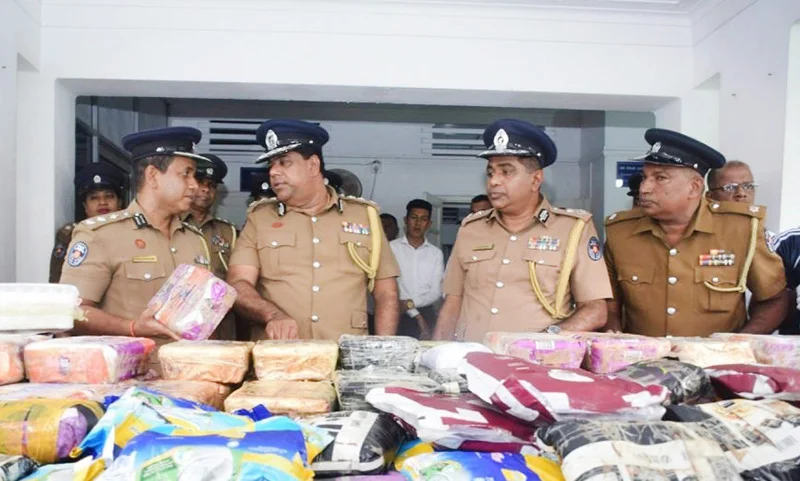
By Lynn Ockersz
‘Sunshine Isle’ saw it coming right along,
Yet did not heed well the warning rumbles,
Of this ‘Ice’ avalanche that’s flattening lives,
Particularly those of the land’s young,
That are verily the nation’s life blood,
But there’s more at issue in this grave crime,
Than seizing kingpins and locking them up;
It’s rather a question of making the young see,
That their lives ahead are full of possibilities.

Showers in the Uva, Central and Eastern provinces and in Polonnaruwa district

22A: Exclusion of 8 petitions questioned, action filed against SC Registrar, others

Thailand shuts door on undesirables from Sri Lanka

Expertise France and the EU launch media project to strengthen environmental journalism in Sri Lanka

CLA questions non-inclusion of senior judges on five-member SC bench hearing 22A petitions

Whatever on earth happened to meritocracy, pragmatism, and honesty in Sri Lanka?

‘Dates have the highest sugar content to fight Coronavirus’

Sunday Island 27 December – Headlines

#SundayIsland 17th December – Headlines

Sunday Island – 28th March

Sunday Island Headlines – 21 March

Sunday Island – 21st February – Headlines
-

 News5 days ago
Denied of promotion to SC despite vacancies, justice Gurusinghe retires
-
 Latest News6 days ago
Grade 5 scholarship exam results released
-

 News5 days ago
22A: SC urged to suspend hearing, appoint full bench
-

 Midweek Review6 days ago
The local and global dynamics of Sri Lanka’s 22nd Amendment
-

 Latest News2 days ago
Tharanga creates history with Diamond League crown in Brussels
-
 News3 days ago
Namal remanded until Sept. 18 over Airbus deal investigation
-
 News5 days ago
Govt. seeks NATO assistance
-

 News6 days ago
40 professional organisations and TU oppose proposed 22A