
Business
EU calls for ‘time horizon’ on Sri Lanka import ban

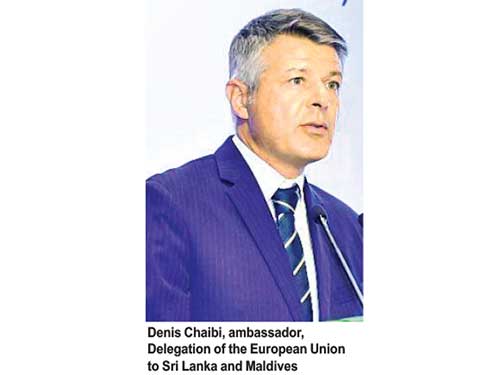
by Sanath Nanayakkare
Sri Lanka should give a ‘horizon’ to its businesses and potential investors as to until when the import ban will be in place, Denis Chaibi, ambassador/ Delegation of the European Union to Sri Lanka and Maldives said at the official launch of the Sri Lanka Trade Information Portal (SLTIP), held at Shangri La Colombo recently.
The 4-year EU funded project worth EUR 8 million supports local SMEs’ export competitiveness in regional and EU markets as well as value addition in sectors with high potential for economic growth and development.
Excerpts from ambassador Chaibi’s speech:
“This project is a good indication of our overall relationship which is characterised by engagement, respect and results. This project sends three powerful messages. The first one is about the importance of the EU market to Sri Lanka and vice versa. The EU is the second export market for Sri Lanka just after the US”.
“If you take the EU’s trade figures with Sri Lanka in 2019 and if you add services and the EU tourists who came to the island – hopefully who will return soon – you can see the importance of the EU”.
“Further the return of GSP in 2017 was a significant development that led to more than a quarter’s increase of exports from Sri Lanka to the EU. It’s not only the biggest market in terms of quantity. But it’s also an important market in terms of quality”.
“I have been in Sri Lanka a bit more than a year and the thing that strikes me every day is the quality of Sri Lankan products. If you compare the cinnamon, it’s the best in the world. Sri Lankan coconut is the best in the world. Jack fruit is the best in the world. Tea is the best in the world. Who appreciates the best in the world products more than Europeans? Who has the refinement that Sri Lanka has which is only found in civilizations. The Europeans are ready to pay a premium for all these products. Perhaps the South Americans will pay a bit more for Sri Lankan cinnamon, but at the end of the day those who buy the most refined Sri Lankan products are mostly Europeans. We are not only a quantitative market but a qualitative market with a huge potential for the future. The best way for Sri Lanka is to increase its product-quality, and quality is where Europe will be there as a very happy customer.”
“But we are a very demanding market. We have a lot of barriers and those have to do with qualitative standards. In the future, I can imagine that Sri Lankans will want to sell directly to Europeans through online websites. When Sri Lanka exports to Europe, it is ready to export to anywhere else in the world because the European standards are high. We are a demanding market but we are happy to be a good market for Sri Lanka because Sri Lankan products are the best.”
“My second message is that markets and trade is not a one-way street. We have full consideration for the public finances situation in Sri Lanka We fully understand the measures that have been introduced to safeguard public finances and especially the foreign exchange reserves of Sri Lanka.”
“But we need three things. We need recognition notification in the horizon. We need recognition that there is an import ban. And sometimes we are told that there is no import ban but just impediment for the banks to pay in foreign currencies, but these payments are linked to products, so we have to recognize that they are trade restrictions. And then on that recognition, we can quantify that to the WTO and work together in the international organisation that is precisely set up to deal with this kind of issues.”
“I think Sri Lanka would benefit tremendously from giving a horizon to its businesses and potential investors as to until when the measures will be in place so that people can prepare and also can invest in Sri Lanka.”
“That is important if we want to attract foreign direct investments to Sri Lanka. We need to have certainty and we need to be able to export [raw materials].Who would invest in Sri Lanka not knowing if he or she will be able to export because they know that the trade restrictions may attract some reaction. So, in order to attract foreign direct investments, we have to give a horizon on the trade restrictions. We say this in full respect of whatever the Sri Lankan government decides.”
“My third point is; if you look at this project of EU-Sri Lanka Trade Related Assistance, it is in full respect of the government’s priorities. We don’t have an agenda. We are not a military super power. We are a standards super power, and a lifestyle superpower. We live very well in Europe and we live very well for many reasons. But when it comes to aid and support what we do is follow the priorities of the government. Before we take policy decisions and priorities we always look at the manifesto. I was at the Sri Lanka National Day events and its manifesto specifically dealt with agriculture. Agriculture is the sector that we have favoured in our last budget cycle. So from 2014 to 2020, we have invested more than half of the EU aid in the development of rural Sri Lanka. We have spent almost EUR 100 million in that sector. This shows that we are following priorities of the government and that’s why we are supporting this project so that we in Europe can enjoy more of the best Sri Lankan products and Sri Lankan exporters can create more added value by collaborating with Europeans.”

Business
‘Green Chilies’ returns after seven years to reignite Sri Lanka’s advertising industry spirit

After a seven-year hiatus, one of Sri Lanka’s most loved advertising industry gatherings is making a much-anticipated return. Green Chilies 2026, the iconic festival that once defined the fun, camaraderie and creative spirit of Sri Lanka’s advertising fraternity, returns on 4th June 2026 at Rise Up, Colombo 03, bringing together professionals from across agencies, media, digital, production and marketing for an evening of celebration, entertainment, and industry camaraderie.
Originally launched in 2011, Green Chilies was conceived as a platform to celebrate Sri Lanka’s Young Lions winners as they embarked on their journey to represent the country at the prestigious Cannes Lions International Festival of Creativity, while also creating a unique opportunity for the industry to come together outside boardrooms and deadlines.
This year’s revival comes at an especially meaningful time, as an entire new generation of industry professionals have entered the business without ever experiencing the culture and energy that made Green Chilies such a defining event. Some key highlights will be the recognition of the winners of the young Lions competition and the much-loved return of The Agency Idol, the wildly entertaining competition where agencies battle it out on stage in a spirited showcase of talent, humour, and creativity, bringing back one of the event’s most iconic traditions.
Speaking about the return of the festival, Ranil de Silva, Founder of Green Chilies and of Metal Factor, said: “When we first launched Green Chilies, the idea was simple. It was to celebrate our Young Lions and create something that brought the industry together as one community. Over the years it became far more than an event, it became part of our industry culture. Seeing it return after seven years is very special, particularly because so many young professionals will now get to experience the spirit that made this industry such a fun and inspiring place to be.”
Green Chilies 2026 is organized by Metal Factor and supported by the 4A’s Sri Lanka.
Event Details:
Venue: Rise Up, Alwis Place, Colombo 03
Date: Thursday, 4th June 2026
Time: From 6.30 PM onwards
Contact : Shelley +94 77 342 3123
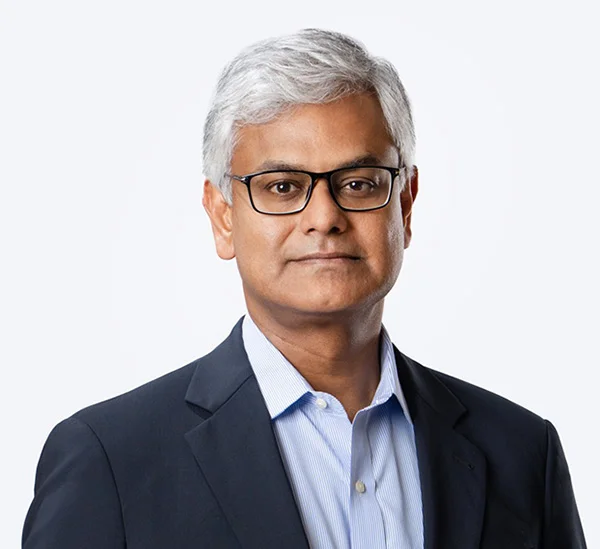
John Keells Holdings PLC (JKH) reported a strong financial performance for FY2025/26, with Group EBITDA increasing 75% to Rs.80.01 billion, reflecting the contribution of investments made over the past several years and the continued performance of the Group’s established businesses.
Group recurring EBITDA increased 71% to Rs.78.05 billion, compared to Rs.45.69 billion in the previous year, driven primarily by Retail, Transportation and Leisure. Recurring profit before tax rose 143% to Rs.35.72 billion, while recurring profit attributable to equity holders of the parent increased 155% to Rs.13.24 billion.
The year also marked the culmination of the largest investment phase in the Group’s history, with the operationalisation of key investments signalling a shift in the capital cycle from development to contribution. Overall funding requirements reduced materially in line with expectations, while net debt to EBITDA stood at approximately 2 times and net debt to equity at approximately 31%.
City of Dreams Sri Lanka recorded positive EBITDA for the full year, following the completion and launch of the remaining components of the integrated resort. Cinnamon Life’s conference and event spaces attracted interest from local and international organisers, while casino operations showed an encouraging pick-up from the fourth quarter onwards.
Colombo West International Terminal, the project company of WCT-1, recorded strong throughput growth during the year, supported by an improving volume mix. The business delivered a positive profit after tax ahead of expectations, despite recognising depreciation relating to phase 1, and has reached full utilisation of phase 1 capacity based on its latest monthly run-rate.
John Keells CG Auto recorded an exceptional year, supported in part by pent-up demand and the brand positioning and vehicle range of BYD.
The Supermarket business recorded approximately 14% growth in same store sales, driven primarily by a 14.3% increase in footfall. The Beverages and Confectionery businesses recorded strong volume growth, with Beverages benefiting from higher margins, while Confectionery margins were impacted by higher raw material costs and expenses linked to new product introductions.
Business
RCSS receives Chatham House Senior Research Fellow for discussion on South Asian Regionalism
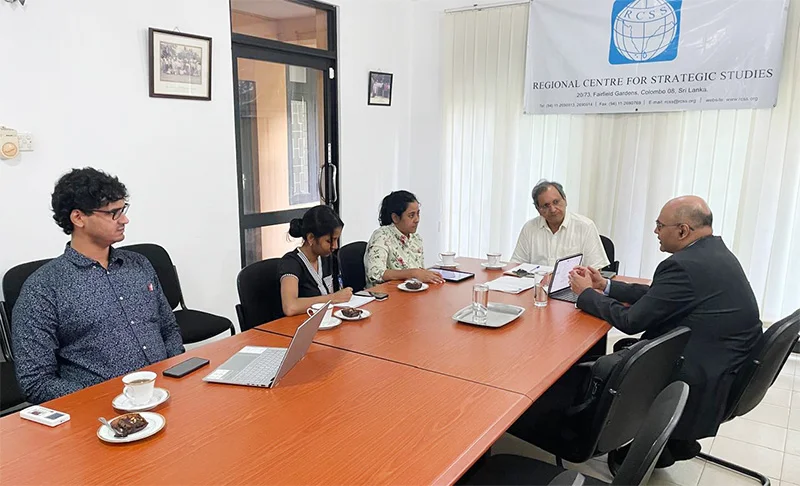
Dr. Chietigj Bajpaee, Senior Research Fellow for South Asia, Asia-Pacific Programme at Chatham House, visited the Regional Centre for Strategic Studies on 26 May 2026 and met with the ED/RCSS, Ambassador (Retd.) Ravinatha Aryasinha, and researchers at the Centre. The discussion focused on Regionalism in South Asia and evolving geopolitical developments in the region.
Ambassador Aryasinha detailed the recent and ongoing initiatives undertaken by the RCSS and its wide Alumni Network spread throughout the region in strengthening South Asian solidarity. Dr. Bajpaee impressed on the need to consider alternative forms of regional cooperation in South Asia given the absence of India–Pakistan normalization, resulting in the stagnation of SAARC and the growing pull towards external regional frameworks such as the Regional Comprehensive Economic Partnership (RCEP). The two parties explored possibilities beyond state-led regionalism, including stronger networks among civil society, think tanks, diaspora groups, and business communities, as well as thematic “mini-lateral” cooperation on issues such as climate adaptation and maritime governance.
Ms. Chamika Wijesuriya, Ms. Thedini Herath, and Shayan Peris, Research/Programme Officers at RCSS, were associated with the discussion.

Advisory for strong winds and rough seas for the sea areas extending from Kankasanthurai to Chilaw via Mannar and from Galle to Pottuvil via Hambantota

West Indies to host Sri Lanka, New Zealand and Pakistan in 2026 home season

Hacking claims, mismatched answer-sheets: Controversies rock school exam in India

Iran says it targeted American base after fresh US strikes

Farmers Affected by the Nilwala Salinity Barrier paid Rs. 1.2 Billion in Compensation

State Vesak Festival held with the participation of the President

‘Dates have the highest sugar content to fight Coronavirus’

Sunday Island 27 December – Headlines

#SundayIsland 17th December – Headlines

Sunday Island – 28th March

Sunday Island Headlines – 21 March

Sunday Island – 21st February – Headlines
-

 Business7 days ago
Historic launch of CCWE Fashion Week & International Summit 2026
-

 News5 days ago
All-New GRAVITE launches at LKR 6.99 Mn
-

 Features5 days ago
The NPP’s pivot to the past
-

 News4 days ago
Police probe underway to ascertain links between criminals deported from UAE and local politicians
-

 News3 days ago
Easter Sunday carnage: Court told Maulana’s statement cannot be accepted without cross-examination
-

 Opinion7 days ago
The need to reform Buddhist ecclesiastical order
-

 Features5 days ago
End of Peacekeeping
-

 Opinion3 days ago
Undermining the democratic political framework