
Business
Jinasena Infotech implements Microsoft Dynamics 365 Business Central at Sri Lanka Red Cross


The Sri Lanka Red Cross Society has selected Jinasena Infotech (Pvt) Ltd as its implementation partner for Microsoft Dynamics 365 Business Central ERP Solution in order to streamline their business processes. Jinasena Infotech has been recognized by Microsoft as a Gold Partner and Partner of the Year in two consecutive years and has experience in servicing the needs of many sectors including Manufacturing, FMCG, Banking & Finance, Retail, Apparel, Education, Insurance and many others.
Incorporated in 2010, Jinasena Infotech is a subsidiary of Jinasena (Pvt) Ltd., which has a trading and manufacturing history of over one hundred years. As one of Microsoft’s most recommended partners, Jinasena Infotech has a client-base of over 70 with 12 years of experience across different domains, both in Sri Lanka and overseas.



SLT-MOBITEL PEOTV, Sri Lanka’s pioneering Internet Protocol Television (IPTV) service provider and leading digital entertainment platform, announced a landmark partnership with Fédération Internationale de Football Association (FIFA), securing the exclusive media broadcasting rights for the FIFA World Cup 2026™ in Sri Lanka.
The strategic partnership marks one of the most significant sports media acquisitions in the country’s broadcasting landscape, granting SLT-MOBITEL PEOTV exclusive rights to deliver every match of the FIFA World Cup 2026™ to audiences across Sri Lanka. Through PEOTV, PEO MOBILE, and digital platforms, football fans nationwide will have unparalleled access to the world’s most prestigious sporting event, ensuring they experience every moment of the tournament live, from the opening match to the final championship.
The acquisition of FIFA World Cup 2026™ rights represents another significant milestone in SLT-MOBITEL PEOTV’s continued investment in premium sports broadcasting. Over the years, PEOTV has built a strong reputation for delivering major international sporting events, offering customers reliable, high-quality coverage and enhanced viewing experiences through advanced IPTV technology. Viewers will enjoy the tournament in true High Definition (HD), delivering exceptional picture quality and an immersive viewing experience. Whether watching from home through PEOTV, on the move via PEO MOBILE, or through digital access points, fans can follow every defining goal and unforgettable celebration throughout the competition.
The FIFA World Cup 2026™ is set to make history as the largest edition of the tournament ever staged, with 104 matches featuring 48 nations competing across Canada, Mexico, and the United States. Expected to captivate billions of viewers worldwide, the tournament represents the pinnacle of international football and stands among the most celebrated sporting events on the global calendar.
Business
Ceylon Chamber expresses concern over new US labour-related tariffs and calls for urgent engagement


The Ceylon Chamber of Commerce is concerned by the announcement of new labour-related tariffs by the United States on several countries, including a proposed 12.5% tariff on exports from Sri Lanka. This development comes at a time when Sri Lanka was continuing discussions with the US following the suspension of the previously announced reciprocal tariffs and was seeking to secure a more favourable trading arrangement.
The imposition of an additional tariff on Sri Lankan exports risks undermining the competitiveness of key export sectors compared to other countries, which are at a lower rate of 10%. At a time when Sri Lanka is working to accelerate export growth, attract investment, and create employment opportunities, any increase in trade barriers presents a significant challenge. At present, key goods exports such as Apparel and Tea are down by 7% and 6% respectively in the first four months of 2026.
Sri Lanka has built a strong reputation as a responsible sourcing destination, with many industries adhering to high labour, environmental, and governance standards. The country has also made substantial progress in strengthening regulatory frameworks and promoting ethical business practices.
The Ceylon Chamber therefore requests the relevant authorities to engage proactively and at the highest levels with the United States to better understand the basis for the tariff and to present Sri Lanka’s case. Every effort should be made to secure a reduction in the proposed tariff and, ultimately, to seek its removal altogether. It is important that Sri Lanka seeks to return to the lower tariff band while continuing discussions towards achieving a more competitive and predictable trading environment.
Given the importance of the US market to Sri Lankan exports, timely engagement and clear communication on the way forward will be critical in providing confidence to exporters and investors. The Ceylon Chamber stands ready to support these efforts and work collaboratively with all stakeholders to safeguard Sri Lanka’s export competitiveness and long-term economic interests.

The Sri Lankan rupee came under renewed pressure recently, depreciating significantly against the US dollar across several commercial banks, with the greenback’s selling rate reaching as high as Rs. 340 in some instances, triggering concerns among businesses, industrialists and consumers over the potential impact on inflation, electricity tariffs and the broader economy.
The latest depreciation marks one of the sharpest daily movements in recent months and comes at a time when Sri Lanka is striving to consolidate economic gains achieved through painful fiscal and monetary reforms.
Banking and financial sector sources said increased demand for foreign exchange, coupled with market uncertainty and rising import requirements, had contributed to the weakening of the local currency.
The development is expected to increase the cost of imports across a range of sectors, including fuel, pharmaceuticals, food items, industrial raw materials and machinery.
Economists note that while exporters may benefit from higher rupee returns on foreign currency earnings, the wider economy is likely to face increased cost pressures.
“The exchange rate affects virtually every sector of the economy. Any sustained depreciation inevitably filters through to consumer prices and business operating costs, a senior financial analyst said.
Particular concern is being expressed within the energy sector, where electricity generation costs remain closely linked to movements in the exchange rate.
Sri Lanka continues to rely heavily on imported fuel and energy-related inputs, all of which are purchased in foreign currency. A weaker rupee therefore translates directly into higher generation costs for the power sector.
Energy economists warn that if the depreciation trend continues, the financial burden on the electricity sector could increase substantially, potentially paving the way for future tariff revisions.
The issue has gained added significance amid ongoing discussions on Sri Lanka’s long-term energy transition and commitments to reduce dependence on coal-fired power generation.
Several energy experts argue that the country is entering a delicate phase where policymakers must carefully balance environmental objectives with affordability and energy security.
According to industry observers, the gradual move away from coal-based electricity generation—supported by international climate financing frameworks and policy reforms associated with multilateral lending programmes—could increase the country’s exposure to imported fuel costs unless sufficient low-cost alternatives are developed in time.
They point out that coal has historically provided relatively inexpensive baseload power to the national grid. While renewable energy sources such as solar and wind are essential components of Sri Lanka’s future energy strategy, experts note that large-scale storage systems and backup generation capacity remain costly and technologically demanding.
As a result, any future reduction in coal-based generation without corresponding investments in affordable alternatives could place additional pressure on electricity prices.
The latest weakening of the rupee further compounds these concerns.
“Every depreciation of the rupee increases the local currency cost of imported fuel, spare parts, equipment and energy-sector obligations. Ultimately, those costs have to be absorbed either by the utility provider, the Treasury or consumers, an energy sector specialist observed.
Industrialists have meanwhile warned that rising electricity costs could affect competitiveness, particularly among export-oriented manufacturers that are already operating under challenging global market conditions.
By Ifham Nizam

PEOTV secures media rights for FIFA World Cup

Anthropic urges AI labs to pause, warns humans risk losing control

Iran footballers issued US visas for World Cup, says White House

Showers will occur at times in the Western, Sabaragamuwa and North-western provinces and in Galle, Matara, Kandy and Nuwara-Eliya districts

China, Lanka intensify cooperation to fight cross-border crimes spreading across Asia and beyond

Asst. Manager, security officer arrested over Rs 30 mn snatch at Horana PB branch

‘Dates have the highest sugar content to fight Coronavirus’

Sunday Island 27 December – Headlines

#SundayIsland 17th December – Headlines

Sunday Island – 28th March

Sunday Island Headlines – 21 March

Sunday Island – 21st February – Headlines
-

 News4 days ago
Lankan duo emerge winners in Latin dance championship held in Blackpool, UK
-

 Business5 days ago
IMF’s unstated rate:Sri Lanka’s $695m loan costs about 5.33% per annum
-

 Latest News2 days ago
Kusal Mendis, Pathum Nissanka, bowlers put Sri Lanka 1-0 up
-
 News2 days ago
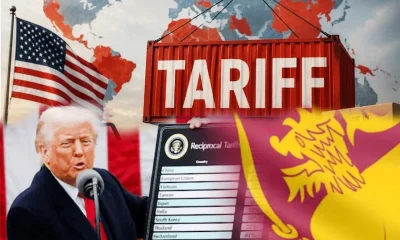
New US tariffs proposed on 60 countries, including Sri Lanka
-

 Business5 days ago
Sri Lankan scientist-innovator Milinda Edirisinghe introduces AI-integrated gem testing system to gemological world
-

 Features6 days ago
Are threats to Buddha Sasana external or from within?
-

 News5 days ago
UNP challenges NPP move to amend Vihara – Devalagam Act
-

 News4 days ago
Sri Lankan teen killed in Chennai clash; three arrested