Connect with us

News

NPP wins most LG bodies but sees drop in vote share: Hung councils raise concern

Published

on

President Anura Kumara Dissanayake

SJB trying to take control of CMC

Govt. suffers set back in N&E

SLPP records significant increase in votes but fails to win single body

The ruling National People’s Power (NPP) secured 266 out of 339 local government bodies at the May 6 election but suffered a setback in the northern and eastern regions as the Illankai Thamil Arasu Kadchi (ITAK) and the Sri Lanka Muslim Congress (SLMC) won 42 local authorities.

The ITAK and SLMC secured 37 and 05 local government bodies, respectively, although President Anura Kumara Dissanayake personally led the NPP’s campaign in the former war zone. The National Congress won the Akkaraipattu MC. In the last parliamentary election held in Nov. 2014, the NPP won all electoral districts, except Batticaloa.

The NPP obtained 4,503,930 votes countrywide whereas in the last parliamentary election it received 6,863,186 votes; there has been a drop of 2,359,256 votes.

The Samagi Jana Balawegaya (SJB) won 13 local government bodies, but the United National Party (UNP) and the Sri Lanka Podujana Peramuna (SLPP) failed to secure any.

The SLPP obtained 954,517 votes and 742 seats, accounting for 9.17% of the national vote. In a post on X, SLPP’s National Organiser Namal Rajapaksa said: “Over the past six months, the SLPP has regrouped and gained momentum by staying true to our principles. While some rely on false promises, we remain committed to honest, principled politics that put the people first. Thank you to everyone who stood by us. This is just the beginning. We will keep working, village by village, to rebuild and restore trust in real leadership.” The SLPP polled only 350,429 votes in last year’s general election.

In the 2018 LG polls, the SLPP won 231 councils. That was the first time the government of the day failed to win mini polls. Yahapalana partners, UNP and SLFP, having contested separately, suffered a debilitating setback.

In spite of the massive campaign carried out by the NPP, targeting the Colombo Municipal Council (CMC), the ruling party failed to secure an overall majority there. The NPP polled 81,000 votes to obtain 48 seats whereas the SJB and UNP polled 58,375 (29 seats) and 26,297 (13 seats) votes, respectively. The SLPP (05), SLMC (04), United Republican Front (01), United Peace Alliance (02), Sarvajana Balaya (02), and National People’s Party, National Freedom Front, People’s

Alliance and Democratic National Alliance one each.

In addition to political parties, five Independent Groups shared the remaining 09 seats of the CMC.

With no party holding a clear majority, the next Colombo Mayor will need to be elected through a Council vote.

SJB General Secretary Ranjith Madduma Bandara told a hastily arranged media conference that the SJB intended to elect an SJBer as Colombo Mayor with the help of the other Opposition parties. The former Minister said that the SJB would cooperate with the other parties in the Opposition regarding the appointment of Mayors and Chairmen of the hung local councils.

Meanwhile, the Leader of the House, Bimal Ratnayake, has said those who won local government bodies in the Northern Province but without absolute majorities have sought NPP support to form administrations.

Addressing a separate media briefing, JVP General Secretary, Tilvin Silva, declared that the ruling party wouldn’t, under any circumstances, form coalitions with those who had been rejected by the people.




News

Government briefs Diplomatic Community on recovery progress

Published

on

By

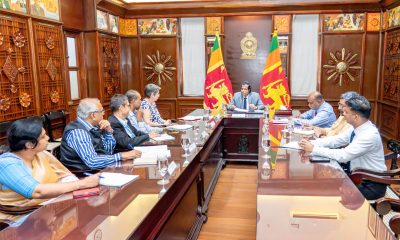
A special briefing for the diplomatic community in Sri Lanka was held on 4 December at the Ministry of Foreign Affairs, Foreign Employment and Tourism, chaired by Prime Minister Dr. Harini Amarasuriya together with the Minister of Foreign Affairs, Foreign Employment and Tourism,  Vijitha Herath. Senior government officials, including representatives of the Disaster Management Centre (DMC) and the Sri Lanka Tourism Development Authority (SLTDA), also participated.

Opening the session, Prime Minister Dr. Harini Amarasuriya expressed her gratitude  to the diplomatic community for their immediate support and solidarity following the recent floods and landslides. She noted that Sri Lanka had endured one of the most severe disasters in recent years, but the resilience of the people and the coordinated efforts of government agencies had enabled a rapid response and significant progress in relief operations. She confirmed that not a single tourist has been reported harmed during the disaster and noted that the previously inaccessible areas are now reachable. Massive cleanup and decontamination operations are underway to ensure that lands and public spaces are safe for return, and communications have been restored in the affected areas.

The Prime Minister emphasized that relief, evacuation, and emergency assistance were carried out with the collective effort of the tri-forces, police, public officers, health workers, volunteers, and local authorities. She acknowledged the continuing challenges, including the restoration of infrastructure, resettlement needs, and long-term disaster-mitigation work, and welcomed the technical, humanitarian, and financial support offered by partner countries.

Maj. Gen. Sampath Kotuwegoda (Retd), Director General of the Disaster Management Centre, delivered a detailed presentation on the current status of the disaster, including the number of affected families, evacuation centres, damage assessments, and the ongoing coordination with international agencies for recovery planning. The cyclone affected almost the entire country, with 22 districts severely impacted. Some locations recorded up to 540 mm of rainfall and winds of up to 70 km/h, causing widespread infrastructure damage. Early assessments indicate that 2.3 million people were exposed to flooding, with 1.8 million people directly affected on the ground and 1.1 million hectares of land impacted. The assessment also identified 40,152 pregnant women among those affected, who have been prioritized for support. He also highlighted areas where further technical cooperation, such as early-warning systems, mapping capabilities, and climate-response technologies would be valuable.

Buddhika Hewawasam, Chairman of the Sri Lanka Tourism Development Authority, briefed the diplomatic community on the impact of the disaster on the tourism sector. He reassured attendees that major tourism zones remain operational, safety assessments are underway, and contingency measures have been activated to support visitors and protect the industry during the upcoming peak season. The Chairman of the Hotel Association of Sri Lanka Ashoka Hettigoda confirmed that the Coastal and resort hotels from Maravila to Passikudah are operating, with many reporting 60–65 percent occupancy; the hotels in Nuwara Eliya are partially operational. He made an appeal that the best assistance that the international community can give to Sri Lanka is the continued support provided through tourism.

Several diplomats conveyed their condolences to affected communities and reaffirmed their governments’ readiness to assist Sri Lanka in both immediate relief efforts and long-term rebuilding. They expressed appreciation for the government’s transparent engagement and the coordinated approach to managing the crisis.

Prime Minister thanked the diplomats for their continued cooperation and underscored the government’s commitment to ensuring an effective and inclusive recovery. She stressed that strengthening disaster preparedness, climate resilience, and institutional capacity will be central to Sri Lanka’s national development agenda moving forward. Deputy Minister of Foreign Affairs, Foreign Employment and Tourism,  Arun Hemachandra, Secretary to the Prime Minister, Pradeep Saputhanthri, and Secretary to the Ministry of Foreign Affairs, Ms. Aruni Ranaraja, also attended the meeting.

[Prime Minister’s Media Division]

Continue Reading

News

All parties have agreed to recruit Development Officers into the teaching service through a competitive examination – PM

Published

on

By

Addressing Parliament on Friday  (05), the Prime Minister stated that, in accordance with the Supreme Court decision, the recommendations issued by the Public Service Commission, and the Sri Lanka Teachers’ Service Minute, all parties have agreed to recruit teachers through a competitive examination. The Prime Minister further noted that during the second phase of the recruitment process, the Development Officers currently serving in schools will be given preference during the interviews.

Addressing further, the Prime Minister stated,

“In compliance with the final order of the Supreme Court and the provisions of the Sri Lanka Teachers’ Service Minute, the Development Officers will be given the opportunity to join the Sri Lanka Teachers’ Service.

It has been decided to revise the maximum age limit of 40 years, as specified in the examination notification for applicants, to 45 years for this instance only”.

The Prime Minister further stated that, in accordance with the Supreme Court decision, arrangements have been taken to revise the age limits for graduates employed in the public service and graduates not employed in the public service, and to conduct separate examinations accordingly, in order to recruit teachers to Grade 3. i (a) of the Teachers’ Service to fill the available vacancies.

[Prime Minister’s Media Division]

Continue Reading

News

“Our people have shown extraordinary resilience.” – PM

Published

on

By

Prime Minister Dr. Harini Amarasuriya said that despite the recent devastation caused by severe flooding and landslides, Sri Lanka continues to recover rapidly due to the exceptional strength and solidarity demonstrated by the people. “We have taken a blow, but we are far from fallen. Our people have shown remarkable resilience, and that spirit has carried us through every crisis we have faced,” she stated while addressing the visiting NASSCOM Executive Committee and SLASSCOM leadership during their interaction held on 4th December at ICT Rathnadeepa Hotel, Colombo.

The meeting brought together NASSCOM—the apex body of India’s technology industry representing over 3,000 companies—and SLASSCOM, Sri Lanka’s national chamber for the IT and BPM sector with more than 350 member companies, to discuss digital-economy collaboration, investment opportunities, and the path forward for Sri Lanka’s ICT landscape.

The Prime Minister thanked the NASSCOM delegation for proceeding with their annual visit to Sri Lanka despite the country’s recent challenges, noting that their presence sends a strong message of confidence in Sri Lanka’s stability and recovery. She explained that the government, together with the World Bank and the United Nations, is conducting short- and long-term assessments to guide reconstruction efforts, which will include resettlement, improved disaster preparedness, flood control, and major infrastructure restoration.

During the discussion, the Prime Minister highlighted that Sri Lanka’s economic recovery plan remains firmly on course. She noted that the government has set a medium- to long-term target of 7% economic growth and emphasized two key priorities relevant to the visiting technology leaders: export diversification and accelerating the digital economy. “We are committed to developing a strong digital economy. This is an area where we look forward to India’s continued collaboration and partnership,” she said.

Responding to questions on how digital transformation is progressing within government institutions, Prime Minister stated that the Ministry of Education has already begun implementing a National Education Management System, which is expected to be launched in January. She also noted that other ministries have commenced their own digitalisation work and will be ready to introduce their systems in the coming months.

The Prime Minister also welcomed an offer of support from an Indian technology company specialising in drones for disaster response, mapping, and geospatial data. The representative proposed extending technical assistance to improve Sri Lanka’s disaster-management capabilities, including documentation and real-time monitoring. In response, Prime Minister acknowledged that Sri Lanka must strengthen early-warning systems and invest in modern technologies to better manage future disasters, noting that inadequate systems had limited the ability to predict this year’s extreme rainfall.

Detailing the government’s broader reform agenda, the Prime Minister explained that regulatory frameworks, governance reforms, and digital transformation initiatives are underway to make Sri Lanka an attractive destination for major IT and BPM investments. She stressed that Sri Lanka aims to reach USD 5 billion in export value in the IT and BPM sector by 2030, supported by improved human-resource development, education reforms, and a national plan to expand skilled employment. She further highlighted that the government is working closely with India on digitising the public sector, implementing a universal digital ID system, and introducing integrated platforms such as the National Education Management System.

The NASSCOM delegation’s visit forms part of a long-standing collaboration between NASSCOM and SLASSCOM, aimed at strengthening Sri Lanka’s ICT sector and positioning the country as a strategic extension market for leading Indian and global technology industries. Their visit also coincides with SLASSCOM’s preparations for the 2026 NASSCOM Technology & Leadership Forum.

Deputy Minister of Digital Economy Eranga Weeraratne, Chief Advisor to the President on Digital Economy Dr. Hans Wijesuriya, Indian High Commissioner  Santosh Jha, and representatives from SLASSCOM and NASSCOM attended the event.

[Prime Minister’s Media Division]

Continue Reading

Trending