
News
New Pope by Sunday?


The College of Cardinals will gather beneath Michelangelo’s frescoed ceiling at the Sistine Chapel on Wednesday, tasked with the solemn duty of choosing a successor to Pope Francis, who passed away a fortnight ago. While papal conclaves can stretch over days, recent history suggests the white smoke may rise swiftly – possibly before the bells ring across Colombo for the Sunday mass.
The last two conclaves – in 2005 and 2013 – which elected Pope Benedict XVI and Pope Francis, respectively, wrapped up within 48 hours. In fact, none of the past 10 conclaves have lasted more than five days, a telling precedent that hints at a brisk decision this time as well.
Speculation, as always, is running wild. Names of prominent Cardinals have been floated, their odds debated in hushed corners of seminaries and newsrooms alike. Yet, papal history teaches us caution: As the popular saying goes. ‘he who enters the conclave as Pope, exits a Cardinal’.
Consider Cardinal Giuseppe Siri, the Archbishop of Genoa. In 1958, at just 52, he was the leading contender to succeed Pius XII. Yet, the College of Cardinals swayed toward the elderly Angelo Roncalli, who emerged as Pope John XXIII. Siri’s papal hopes would flicker again in 1963 and in both 1978 conclaves – only to be extinguished each time.
Before the voting begins, the Cardinals will reflect on the Church’s present needs. And when the white smoke spirals into the sky and the words ‘Habemus Papam’ echo around St. Peter’s square, it may be a familiar figure or a complete outsider who steps onto that balcony. Such was the case in October 1978, when a little known Polish cardinal Karol Wojtyła, became John Paul II. Or in 2013, when the retired Jesuit Archbishop from Buenos Aires was called back into service as Pope Francis.
Francis was a reformer. He shunned opulence for humility, promoted mercy over judgment and stirred theological waters by welcoming divorcees to communion and expanding roles for women in the Vatican. When a reporter asked him for a comment on women’s wider role at Vatican, the Pope said tongue in cheek, ‘they are certainly managing the finances better than men.’
Of the 135 Cardinals eligible to vote this week, 108 were appointed by Francis himself, hailing from 71 nations – a testament to his global vision. Many are first-time voters, but not Sri Lanka’s Malcolm Cardinal Ranjith, who took part in the 2013 conclave that elected Francis with an overwhelming majority.
Given the Francis-heavy composition of the electors, it’s tempting to predict a like-minded successor – someone who’ll carry the torch of reform. But should the College of Cardinals feel the need for a bridge-builder between traditionalists and progressives, a seasoned elder could be chosen for a short, stabilising papacy. And we may well know his name before Sunday.
by Rex Clementine

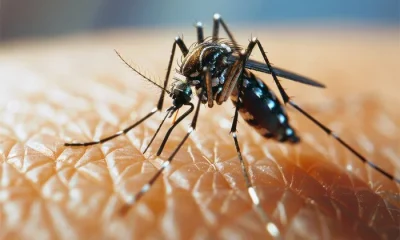



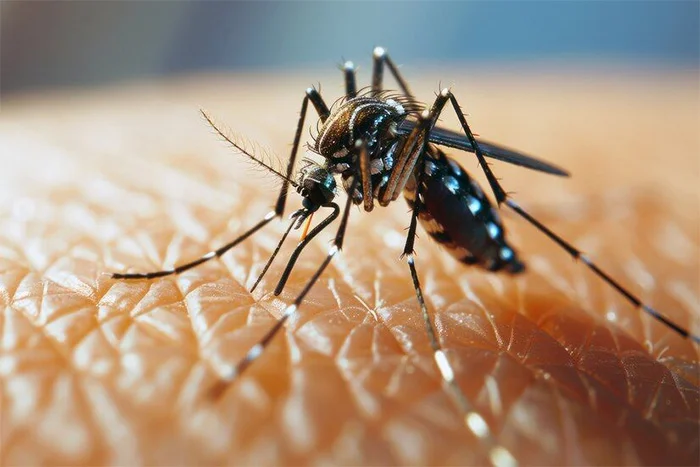
Sri Lanka has recorded 1,069 dengue cases, within a 24-hour period, marking the first time daily infections have exceeded 1,000, according to Acting Director of the National Dengue Control Unit Dr. Kapila Kannangara.
The latest figures, recorded from 6 a.m. on Sunday to 6 a.m. yesterday (22), have pushed the total number of dengue cases, reported in the country this year, to 47,179, with 28 deaths.
Dr. Kannangara said that during periods when dengue was not at epidemic levels, Sri Lanka typically recorded between 150 and 200 cases a day.
However, with the country currently facing a high-risk situation, daily infections had recently increased to between 600 and 650 cases before reaching the latest record level.
Health authorities have expressed concern over the rapid rise in dengue infections and urged the public to take necessary precautions to prevent the spread of the disease, particularly by eliminating mosquito breeding sites.
Health authorities have warned that if the number of dengue patients continue to increase at the current rate, hospitals will be overwhelmed.
by Chaminda Silva
News
Climate forum warns of threats to Lanka’s marine and amphibian biodiversity from El Niño, La Niña

The Parliamentary Climate Forum has drawn attention to the growing challenges faced in protecting Sri Lanka’s marine biodiversity and amphibian ecosystems from the impacts of El Niño and La Niña climate phenomena.
The issue was discussed at a recent meeting of the forum held at Parliament, under the chairmanship of its co-chairpersons, Opposition Leader Sajith Premadasa and MP Prof. L.M. Abeywickrama.
Officials and experts attending the meeting highlighted the adverse effects of climate change, particularly El Niño conditions, on Sri Lanka’s marine ecosystems, coastal areas, biodiversity, and the livelihoods of coastal communities.
They pointed out that rising sea temperatures could lead to coral bleaching, changes in fish migration patterns, harmful algal blooms, the emergence of oxygen-depleted “dead zones”, and increased instability in aquatic ecosystems.
The forum was also informed of the threats posed by prolonged drought conditions, including falling river water levels and seawater intrusion into freshwater systems, which could affect drinking water supplies. The possible economic impact on the fisheries and tourism sectors due to these environmental changes was also discussed.
The meeting reviewed the role of key institutions, including the National Aquatic Resources Research and Development Agency (NARA), the Department of Wildlife Conservation, and the Marine Environment Protection Authority (MEPA), in safeguarding Sri Lanka’s marine resources.
The forum emphasised the need for stronger coordination among relevant agencies and called for measures to strengthen ocean monitoring systems, introduce ecosystem restoration programmes, promote science-based policy decisions, and develop an integrated national ocean management plan to address future climate challenges.
Attention was also focused on the vulnerability of amphibian species to climate change. Officials warned that changes in rainfall patterns, prolonged droughts, and rising temperatures could threaten the habitats, breeding cycles, and survival of amphibians, including frogs, thereby affecting the ecological balance of natural ecosystems.
The meeting was attended by Members of Parliament, officials from environmental agencies, researchers, and representatives of civil society organisations.

(Constructiononline) The Embassy of Sri Lanka in the United Arab Emirates and the Consulate General of Sri Lanka in Dubai and the Northern Emirates, in collaboration with Colombo Port City Economic Commission and CHEC Port City Colombo Pvt. Ltd., hosted Globalisation and the Sri Lankan Opportunity – From Recovery to Relevance: Sri Lanka’s Moment in the Evolving Global and Regional Economy, an invitation-only diplomatic and investment engagement at The Ritz-Carlton, Dubai International Financial Centre.
The forum brought together approximately 200 senior leaders from across UAE corporates and business chambers alongside Sri Lanka’s most senior diplomatic and investment representatives – among them senior executives from Sobha Realty, Binghatti, Oracle, Emirates Airlines, First Abu Dhabi Bank, JLL, Cushman & Wakefield, CBRE, IFS, Danube and Samana Developers – reflecting the depth of interest from the UAE’s leading industries in Sri Lanka’s evolving economic proposition.
Opening the forum, Prof. Arusha Cooray, Ambassador of Sri Lanka to the United Arab Emirates, set the tone for a morning of substantive dialogue, speaking to the depth and durability of the UAE–Sri Lanka partnership, one built on decades of trade, people, and shared economic ambition, and affirming Sri Lanka’s commitment to taking that relationship into a new chapter defined by what Sri Lanka can offer UAE businesses seeking to grow their presence across South Asia.
The keynote address was delivered by Ghanim Al Falasi, CEO of Falak Tayyeb Platinum and Senior Vice President/Director General’s Office for of Dubai Silicon Oasis (DSO), who drew on over a decade of senior leadership experience in the UAE’s innovation and technology ecosystem to frame the question of what South Asia’s emerging platforms offer to forward-looking UAE businesses. He noted that while Dubai provides global access to capital and logistics, Colombo offers strategic access to South Asia, and that together the two cities can function as complementary platforms serving different but mutually reinforcing roles in the regional economy.
Hanif Yusoof, Presidential Special Envoy for Foreign Investment of Sri Lanka, delivered strategic perspectives on Sri Lanka’s investment vision, underscoring the President and Government’s commitment to Port City Colombo as the flagship vehicle for the country’s long-term economic transformation. Yusoof positioned Sri Lanka firmly as a transformation story rather than a recovery story, emphasising that Sri Lanka today offers UAE businesses something rare in South Asia – a jurisdiction that combines regional proximity with genuine institutional credibility, anchored in a platform that is operational, investable, and ready. He invited UAE businesses to see Port City Colombo and Sri Lanka as a gateway to South Asia in the same way that Dubai serves as a gateway to the Middle East and North Africa, enabling businesses already established in the Gulf to expand their regional footprint without starting from scratch.
Harsha Amarasekera PC, Chairman of the Colombo Port City Economic Commission, provided a detailed overview of Port City Colombo’s current commercial momentum, the strong investment interest that has crystallised in the last 12-18 months resulting in significant visible progress. The Chairman emphasised that the project is designed as a complementary, supportive, and collaborative platform – one that offers UAE companies a footprint from which to expand into South Asia, rather than a competing proposition to the Gulf’s established business ecosystem.
Revan Wickramasuriya, Director General of the Commission, elaborated on the governance architecture underpinning Port City Colombo, highlighting the investor protection mechanisms, long-term tax incentives, and rules-based regulatory environment that distinguish the SEZ, noting that the framework was designed from inception to meet the expectations of internationally mobile capital.
The centrepiece of the forum was a moderated panel discussion that drew all these threads together, exploring the global reconfiguration of business operating models, the deepening relationship between the Gulf and South Asia, and Sri Lanka’s specific role within that emerging picture. Moderated by Kris Wadia, the panel featured experts in their respective industries – Aaron Russell-Davison, Skandan ‘Ramesh’ Mahalingam, Bapsy Dastur and Thulci Aluwihare – whose combined perspectives across international capital markets, legal and governance advisory, UAE business development, and real estate produced a substantive and wide-ranging conversation that resonated strongly with the audience.
With the aim of deepening investment ties in the Gulf region, the forum also marked the ceremonial onboarding of Mujtaba Shaikhani, Founder and Principal of MH Investments and Managing Director of Gulf O Flex, as a Strategic Partner and Director for GCC and Pakistan of CHEC Port City Colombo (Pvt) Ltd. With operations spanning the UAE, Saudi Arabia, and Sri Lanka, and recognised on the HVAC Power 30 list and as CEO of the Year by CBN Middle East.
The formal programme concluded with a vote of thanks delivered by Hon. Alexi Gunasekera, Consul General of Sri Lanka in Dubai and the Northern Emirates, who spoke to the significant potential he sees in UAE–Sri Lanka trade and his efforts to broaden interest across the Middle East and UAE in what Sri Lanka has to offer. He underscored that Sri Lanka had not come to Dubai to tell a story of the past, but to extend an invitation to be part of the story being written now – one in which UAE businesses and investors have a defining role to play.
Xiong Hongfeng, Managing Director of CHEC Port City Colombo (Pvt) Ltd, reflected on the significance of the forum for Port City Colombo’s regional outreach. “The interest we have seen at this forum from some of the UAE’s most significant businesses and investors is a reflection of what Port City Colombo represents: not just a development in Sri Lanka, but a platform for South Asia; one that offers the regulatory clarity, physical quality, and regional connectivity that globally mobile businesses and capital have been looking for.”
The forum marks a significant step in Sri Lanka’s structured engagement with the Gulf investment community, and reinforces Port City Colombo’s positioning as the institutional platform through which South Asia’s next chapter of growth becomes accessible to UAE businesses and investors. The event was the culmination of close coordination between the Consulate General of Sri Lanka to Dubai and the Northern Emirates and Port City Colombo, with the Consulate General’s office playing an instrumental role in ensuring the successful delivery of an engagement that reflected the depth and ambition of the bilateral relationship.

More than 1,000 dengue cases reported in a day; 28 deaths so far

Climate forum warns of threats to Lanka’s marine and amphibian biodiversity from El Niño, La Niña

Lanka engages UAE business leaders to promote Port City as South Asian gateway

Jumbo brought for temple procession kills mahout and assistant

Forest cover loss threatens rare freshwater fish in Sinharaja streams

Sri Lanka rue missed golden opportunity

‘Dates have the highest sugar content to fight Coronavirus’

Sunday Island 27 December – Headlines

#SundayIsland 17th December – Headlines

Sunday Island – 28th March

Sunday Island Headlines – 21 March

Sunday Island – 21st February – Headlines
-
 Features6 days ago
Killing of Colombo’s ancient trees — a warning on UN’s World Desertification Day – 17 June
-

 News4 days ago
Creditor receives USD 2.5 mn as Lankan public bears loss from theft of Treasury funds
-

 News3 days ago
Creditor not yet paid
-
 News3 days ago
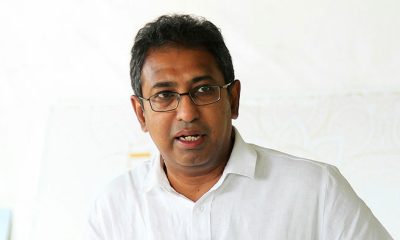
Consumers bearing 22% tax burden despite 18% VAT claim: Dr. Harsha de Silva
-

 Opinion5 days ago
Beyond diagnosis: A strategic design for 7% growth by 2029 (Part I)
-
 News6 days ago
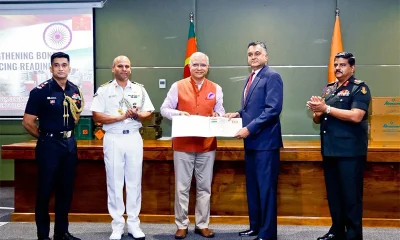
India provides military stores worth USD 5.5 mn to SL
-

 Opinion4 days ago
SriLankan Airbus struck by lightning
-

 Editorial2 days ago
Fuel crisis: Beyond price debate