
News
Blue whale population in Lankan waters shows rapid decline


The blue whale population that has lived for many years in the coastal waters of Sri Lanka, has shown a rapid decline in their sightings in recent years, said a report published by the Mongabay yesterday.
“With multiple pressures on these massive creatures — from ship traffic on one of the world’s busiest shipping lanes, to disturbance from whale tourism, pollution and surface sea temperature rise and climate change — there are several possible factors for the disappearance of the whales,” it said.
For decades, the North Indian Ocean has been known to have its own distinct population of blue whales (Balaenoptera musculus). They have their own vocalisation or dialect, distinct from other blue whale populations. They also spend all year in warm waters, unlike most other blue whales, who migrate to feed in cold waters and breed in warmer seas, says Asha de Vos, a marine biologist and founder of Oceanswell, a marine conservation research and education center in Sri Lanka.
De Vos told Mongabay that the North Indian Ocean blue whales are “grazers not gorgers,” feeding throughout the year. The coasts of Sri Lanka, and particularly the southwest coast between Galle and Dondra, has long been a hotspot for this resident population.
Ranil Nanayakkara is a conservation biologist specialising in terrestrial and marine mammals and founder of Biodiversity Education and Research (BEAR). Both de Vos and Nanayakkara have studied these whales the year around — feeding, mothers nursing calves, and courtship behaviour — the whole life cycle playing out within 20 kilometers (12 miles) of the Sri Lankan coast.
Deep waters close to the coast and upwelling currents from sea canyons have created conditions supporting phytoplankton, and in turn, zooplankton and shrimp, the ocean’s tiniest creatures that sustain its biggest. “In terms of weight it could eat a fully grown African elephant every day,” author and biologist Mark Carwardine wrote of Sri Lanka’s blue whales in his On the Trail of the Whale.
However, it’s not easy to estimate blue whale numbers around Sri Lanka with certainty. A 2023 study by Upul Liyanage from the Sri Lankan National Aquatic Resources and Research Development Agency (NARA) and others noted 729 blue whale sightings, with many of the same whales likely observed multiple times. Nanayakkara’s research has identified 81 different blue whales from their distinctive tail fluke patterns. Meanwhile, Oceanswell is carrying out a database analysis.
The population and consistency of blue whales has given birth to a thriving whale-watching industry in the eastern city of Trincomalee, Kalpitiya in the northwest, and, most prominently, in Mirissa, in the south. One published study estimated nearly 80,000 visitors to Sri Lanka take whale-watching trips each year. Blue whales used to be abundant enough that some operators guaranteed a sighting or offered a free additional trip if there wasn’t one.
Oceanswell and BEAR have both conducted surveys on sightings at sea and spoken with whale-watching operators and fishermen, who agree that whale numbers are in decline.
“The reduction in numbers has been going on for a while,” de Vos told Mongabay. “We have seen dwindling numbers of blue whales in the last few years, not just 2024.”
Nanayakkara added that since 2018, “we observe a decline in blue whale sightings. In 2024, we saw one in the northwest, zero in the eastern coast and three off Mirissa, a total of four sightings this season. Even hydrophones haven’t been picking up the sounds from blue whales.” Compared to the reported 729 blue whale observations from 2015, this marks a dramatic decline.
Liyanage said NARA, the government’s marine research agency, is paying close attention to the trend. In 2024, it carried out a transect study that indicated a decline of more than 90%. More research is planned, he told Mongabay, adding that this year, “the scientific research vessel Fridtjof Nansen” — operated by the Norwegian government — “will undertake a comprehensive coastal study of marine mammal abundance and water quality parameters including plankton, chlorophyll and sea temperatures and there will also be short term surveys focusing on the hotspot between Dondra Head to Galle.”


The US Supreme Court has rejected President Donald Trump’s bid to allow the US Postal Service to enforce a rule targeting mail-in ballots.
On Monday, the conservative-majority court refused to lift an order by US District Judge Indira Talwani that blocked the measure, dealing a blow to Trump’s efforts to restrict voting by mail before the November midterm elections.
The postal agency adopted the rule after Trump signed an executive order in March seeking to tighten rules around mail-in voting. Under this measure, states were required to send the Postal Service a list of recipients and use ballot mail envelopes previously approved by the agency.
The Postal Service was allowed to deny ballots if they failed to comply with the new standards or were not associated with registered voters on the lists.
Talwani imposed an injunction blocking the rule, saying that it likely violated the US Constitution and would be impossible to apply given the nearing midterms.
Shortly after, the Trump administration issued an emergency request to the Supreme Court urging it to allow an “important federal policy to protect the mails from being used to commit voter fraud”.
In late August, the Supreme Court had temporarily allowed Trump to move ahead with his executive order on procedural grounds, but did not rule on the legality of the plan.
In the latest decision, the court said in an unsigned order that the administration was “unlikely to succeed on the merits” of its challenge. Justice Samuel Alito and Justice Clarence Thomas dissented, with Alito writing that some plaintiffs lacked standing while the rest were pursuing a claim the court had recently called a “Hail Mary pass”.
[Aljaeera]
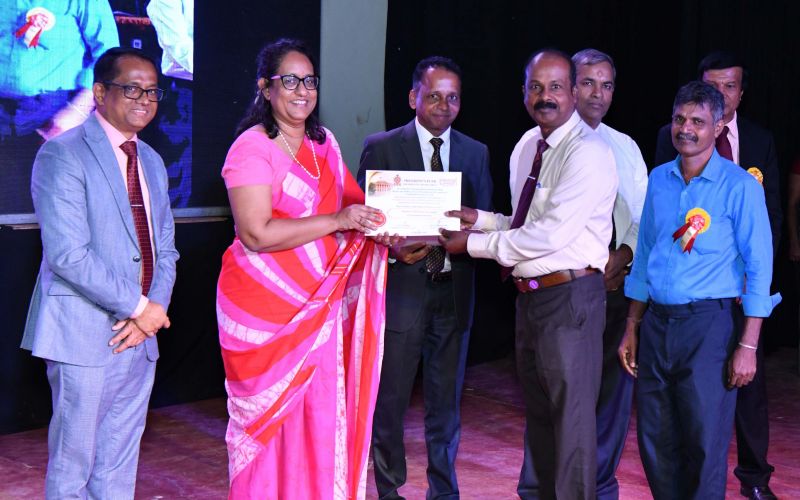
The “Mehewara Pasasum” programme to recognise Divisional Secretariats in the Eastern Province that demonstrated the highest level of performance in 2025 was held recently at the Swami Vipulananda Institute of Aesthetic Studies of the Eastern University, under the patronage of Prime Minister Dr Harini Amarasuriya. The programme was held as part of the initiative to decentralise President’s Fund services to the Divisional Secretariat level, with the aim of providing the public with a more efficient and prompt service.
Of the Divisional Secretariats in the three districts of Ampara, Batticaloa and Trincomalee, nine Divisional Secretariats, three from each district, were selected for recognition based on their efficiency in receiving President’s Fund applications and responding to them promptly.
Accordingly, the Sammanthurai Divisional Secretariat secured first place in the Ampara District, while the Addalachchenai Divisional Secretariat secured second place and the Kalmunai Divisional Secretariat third place.
In the Batticaloa District, first place was secured by the Kattankudy Divisional Secretariat, second place by the Manmunai North Divisional Secretariat and third place by the Koralaipattu Central Divisional Secretariat.
In the Trincomalee District, first place was secured by the Trincomalee Town and Gravets Divisional Secretariat, second place by the Kinniya Divisional Secretariat and third place by the Muttur Divisional Secretariat.
The first “Mehewara Pasasum” programme was held in Colombo, the second in Batticaloa, and this was the third programme.
Speaker Dr Jagath Wickramaratne, Minister of Industry and Entrepreneurship Development Sunil Handunnetti, Senior Additional Secretary to the President and Secretary to the President’s Fund Roshan Gamage, and a number of government officials and others were present at the occasion.
(PMD)
News
Students of Rahmaniya Maha Vidyalaya Eravur visit Presidential Secretariat and President’s House

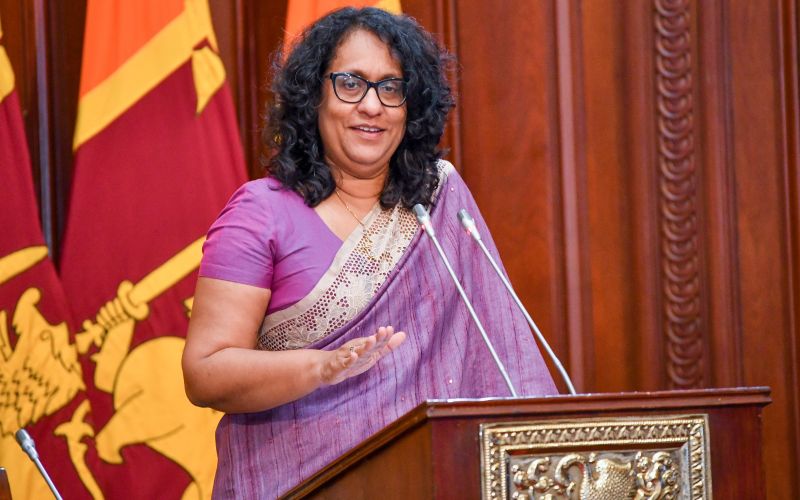
A group of students from Rahmaniya Maha Vidyalaya, Eravur, Batticaloa visited the Presidential Secretariat and President’s House on Monday (14) afternoon .
The students were given this opportunity as part of the “Vision” programme series, jointly implemented by the Presidential Secretariat, the Ministry of Education and the Communication Division of the Parliament of Sri Lanka for schoolchildren.
Prime Minister Dr Harini Amarasuriya stated that nurturing a future generation capable of providing leadership to society and committed to bringing about positive change in the world was an urgent need of the present day. She further stated that the Government’s objective in introducing the new education reforms was to prepare children to acquire knowledge from around the world while nurturing a confident and empowered generation capable of making a meaningful contribution to the country.
Following a visit to the former Parliament building at the Presidential Secretariat, the students were briefed on the history of Parliament.
Senior Additional Secretary to the President Roshan Gamage briefed the students on the role of the President’s Fund and the benefits available to schoolchildren through the Fund.
As part of the programme, valuable plants were also presented to the school as a symbolic gesture highlighting the importance of environmental conservation.
The Director and Assistant Director of the Tri-Forces Security Coordination Unit, the Principal and teachers of Rahmaniya Maha Vidyalaya Eravur and several others were present on the occasion.
(PMD)

Nairobi and Munich to host 2029 and 2031 World Athletics Championships

Pakistan fined, docked 11 points in Edgbaston Test for slow over rate

England look to continue domineering T20 form

US Supreme Court rejects Trump mail ballot restrictions ahead of midterms

Eastern Province Divisional Secretariats recognized for outstanding performance

Students of Rahmaniya Maha Vidyalaya Eravur visit Presidential Secretariat and President’s House

‘Dates have the highest sugar content to fight Coronavirus’

Sunday Island 27 December – Headlines

#SundayIsland 17th December – Headlines

Sunday Island – 28th March

Sunday Island Headlines – 21 March

Sunday Island – 21st February – Headlines
-

 Sports5 days ago
DDS set to lose Test captaincy
-

 News5 days ago
Sri Lanka faces new grid challenge as rooftop solar surges: former CEB GM
-

 Latest News4 days ago
Shafali, Deepti power India into sixth T20 Asia Cup final
-
 Opinion7 days ago
Navigating Sri Lanka’s Israeli Dilemma
-

 Latest News4 days ago
Sri Lanka thwart Fatima Sana challenge to secure Asia Cup final spot
-
 Features6 days ago
Lost for 90 years: Rare Goby resurfaces in Jaffna
-

 News3 days ago
Gnanasara Thero absconding after SC ruling
-

 News4 days ago
Ammunition cache found in old Kandy bungalow