
News
Blue whale population in Lankan waters shows rapid decline


The blue whale population that has lived for many years in the coastal waters of Sri Lanka, has shown a rapid decline in their sightings in recent years, said a report published by the Mongabay yesterday.
“With multiple pressures on these massive creatures — from ship traffic on one of the world’s busiest shipping lanes, to disturbance from whale tourism, pollution and surface sea temperature rise and climate change — there are several possible factors for the disappearance of the whales,” it said.
For decades, the North Indian Ocean has been known to have its own distinct population of blue whales (Balaenoptera musculus). They have their own vocalisation or dialect, distinct from other blue whale populations. They also spend all year in warm waters, unlike most other blue whales, who migrate to feed in cold waters and breed in warmer seas, says Asha de Vos, a marine biologist and founder of Oceanswell, a marine conservation research and education center in Sri Lanka.
De Vos told Mongabay that the North Indian Ocean blue whales are “grazers not gorgers,” feeding throughout the year. The coasts of Sri Lanka, and particularly the southwest coast between Galle and Dondra, has long been a hotspot for this resident population.
Ranil Nanayakkara is a conservation biologist specialising in terrestrial and marine mammals and founder of Biodiversity Education and Research (BEAR). Both de Vos and Nanayakkara have studied these whales the year around — feeding, mothers nursing calves, and courtship behaviour — the whole life cycle playing out within 20 kilometers (12 miles) of the Sri Lankan coast.
Deep waters close to the coast and upwelling currents from sea canyons have created conditions supporting phytoplankton, and in turn, zooplankton and shrimp, the ocean’s tiniest creatures that sustain its biggest. “In terms of weight it could eat a fully grown African elephant every day,” author and biologist Mark Carwardine wrote of Sri Lanka’s blue whales in his On the Trail of the Whale.
However, it’s not easy to estimate blue whale numbers around Sri Lanka with certainty. A 2023 study by Upul Liyanage from the Sri Lankan National Aquatic Resources and Research Development Agency (NARA) and others noted 729 blue whale sightings, with many of the same whales likely observed multiple times. Nanayakkara’s research has identified 81 different blue whales from their distinctive tail fluke patterns. Meanwhile, Oceanswell is carrying out a database analysis.
The population and consistency of blue whales has given birth to a thriving whale-watching industry in the eastern city of Trincomalee, Kalpitiya in the northwest, and, most prominently, in Mirissa, in the south. One published study estimated nearly 80,000 visitors to Sri Lanka take whale-watching trips each year. Blue whales used to be abundant enough that some operators guaranteed a sighting or offered a free additional trip if there wasn’t one.
Oceanswell and BEAR have both conducted surveys on sightings at sea and spoken with whale-watching operators and fishermen, who agree that whale numbers are in decline.
“The reduction in numbers has been going on for a while,” de Vos told Mongabay. “We have seen dwindling numbers of blue whales in the last few years, not just 2024.”
Nanayakkara added that since 2018, “we observe a decline in blue whale sightings. In 2024, we saw one in the northwest, zero in the eastern coast and three off Mirissa, a total of four sightings this season. Even hydrophones haven’t been picking up the sounds from blue whales.” Compared to the reported 729 blue whale observations from 2015, this marks a dramatic decline.
Liyanage said NARA, the government’s marine research agency, is paying close attention to the trend. In 2024, it carried out a transect study that indicated a decline of more than 90%. More research is planned, he told Mongabay, adding that this year, “the scientific research vessel Fridtjof Nansen” — operated by the Norwegian government — “will undertake a comprehensive coastal study of marine mammal abundance and water quality parameters including plankton, chlorophyll and sea temperatures and there will also be short term surveys focusing on the hotspot between Dondra Head to Galle.”



Former first lady Shiranthi Rajapaksa, wife of former President Mahinda Rajapaksa was produced before the Hulftsdorp court, after being arrested by officers of the Commission to Investigate Allegations of Bribery or Corruption (CIABOC) and produce
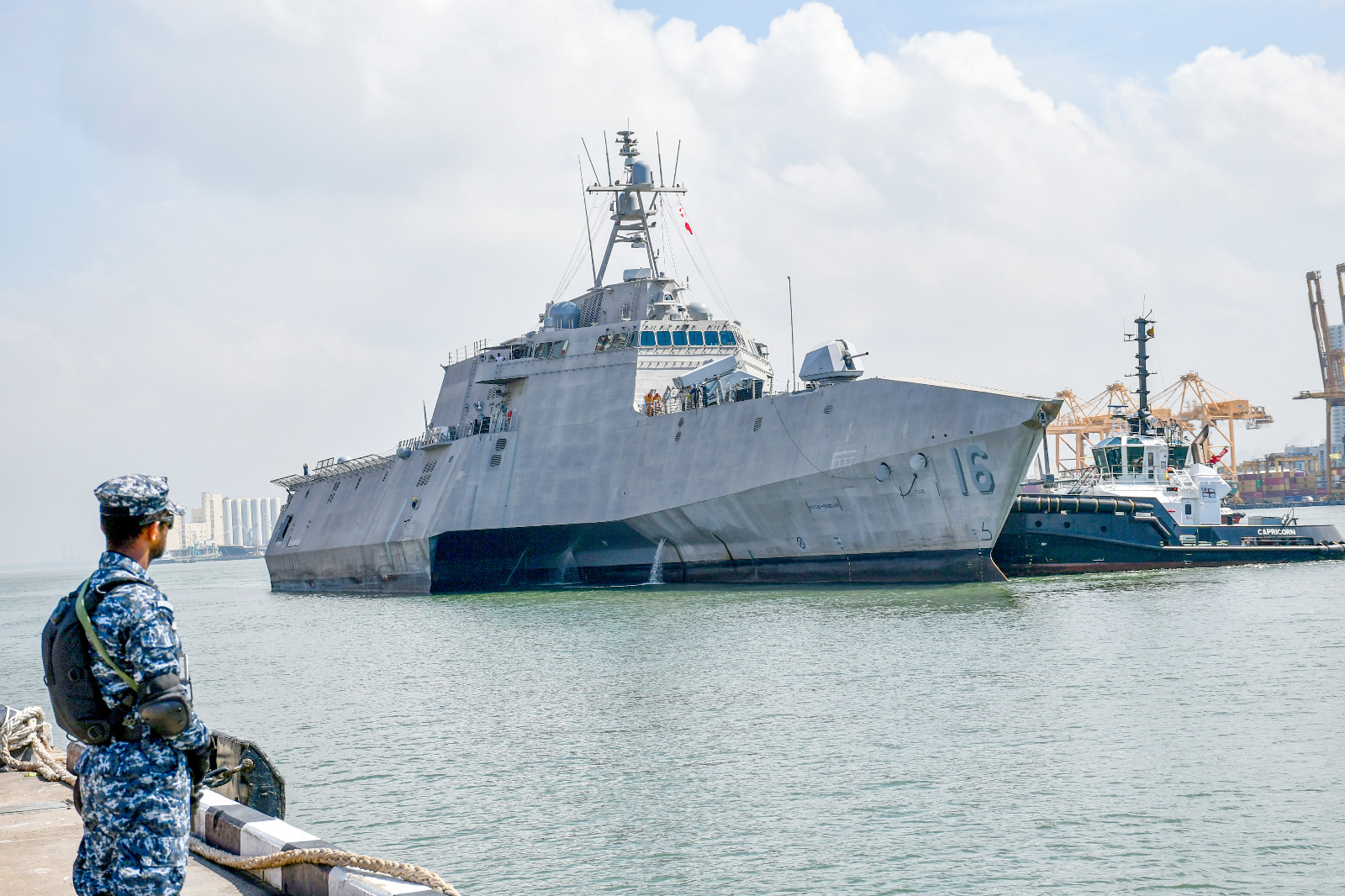
The U.S. Navy ship USS Tulsa (LCS 16) arrived at the Port of Colombo this morning, 7 October 2026 for replenishment purposes.
The visiting ship was welcomed by the Sri Lanka Navy in accordance with naval traditions.
The 127.7-metre-long platform is a Littoral Combat Ship commanded by Commander BM Wanier. Commissioned on 16 February 2019, USS Tulsa has since been in service with the US Navy.
The ship previously made a port call in Sri Lanka on 27 August 2025.

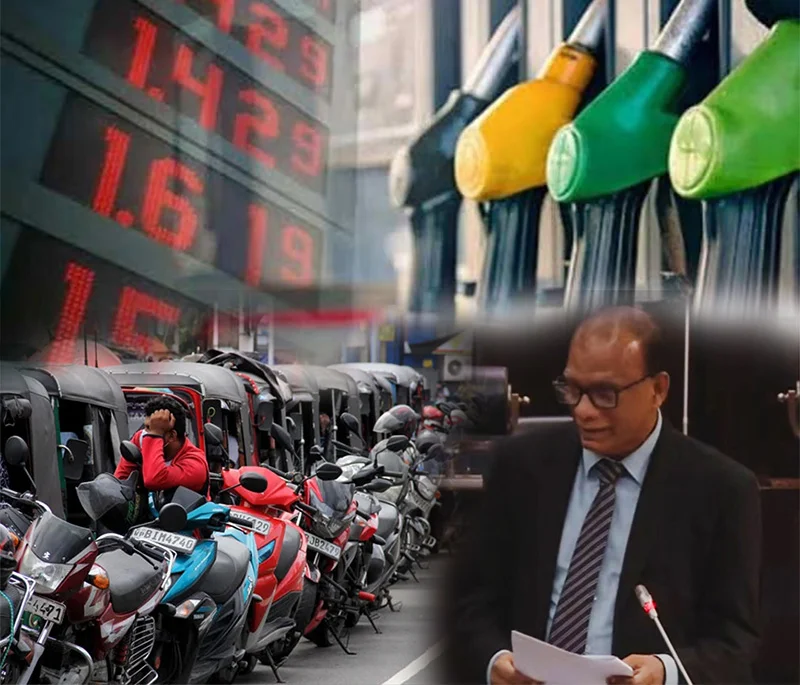
Govt. tells fuel distributors to maintain stocks to ensure uninterrupted supplies
by Saman Indrajith and Norman Palihawadane
The government had instructed private fuel distributors to maintain minimum stocks and ensure uninterrupted supplies to the market, Energy Minister Anura Karunathilaka told Parliament yesterday (06).
Karunathilaka said the Ministry of Energy Secretary had notified the relevant companies of the requirement, following a reduction in supplies by some private distributors, amid higher international fuel prices.
The Minister said private companies had informed the government that they were facing losses because international prices had risen while fuel was being sold, locally, at prevailing prices. As a result, some companies had reduced the volumes released to the market.
The reduced supplies had increased the burden on the Ceylon Petroleum Corporation (CPC), whose share of the diesel market had risen from about 54% to 82%, the Minister said.
“The CPC currently holds an 82% share of the market,” he said, adding that it had increased its supplies, compared with February, to compensate for the reduction by private distributors.
Karunathilaka said the government could not, under the existing agreements with private companies, specify the quantities they should supply to individual filling stations. However, it could require them to maintain minimum stocks in the country.
The Minister said the Energy Ministry had already instructed companies that had failed to maintain the required stocks to take steps to prevent supply disruptions.
The Minister attributed the queues reported at some filling stations to reduced supplies from private distributors, as well as normal variations in fuel distribution. He also said demand for CPC fuel had increased because private companies generally did not provide fuel to dealers on credit, while the CPC offered a three-day credit facility.
“We expect that, as the Ceylon Petroleum Corporation takes on this additional burden, the problem will ease to some extent by Wednesday or Thursday,” Karunathilaka said.
He said instructions had also been issued to increase supplies to CPC filling stations. A special discussion on the issue is scheduled for today (07), with officials of the Energy Ministry and CPC expected to participate,
along with President Anura Kumara Dissanayake.
Meanwhile, Petroleum Dealers’ Association officials have called for an early solution to the supply issue. Association Chairman D.V. Shantha Silva said queues had been reported at many filling stations, mainly those operated by private distributors.
He said the situation was not due to an overall shortage of fuel, but was linked to reduced orders by Lanka IOC, Sinopec and R.M. Parks amid concerns over losses incurred on fuel sales.
The Ceylon Petroleum Private Tanker Owners Association has urged motorists to refrain from panic buying, saying there was no nationwide disruption to fuel supplies.
The government earlier increased fuel prices and introduced a per-litre diesel subsidy following concerns raised by distributors over rising international prices.

Former first lady Shiranthi Rajapaksa arrested by CIABOC

U.S. Navy ship USS Tulsa arrives in Colombo for replenishment visit

Smriti Mandhana appointed India captain across formats

Ronaldo apologizes for Portugal walkout; says Jesus broke promise

Showers in the Western, Sabaragamuwa, Central, Uva, North-western and Southern provinces and in Anuradhapura and Mannar districts

Fuel crunch looms

‘Dates have the highest sugar content to fight Coronavirus’

Sunday Island 27 December – Headlines

#SundayIsland 17th December – Headlines

Sunday Island – 28th March

Sunday Island Headlines – 21 March

Sunday Island – 21st February – Headlines
-

 News7 days ago
US-assisted ‘Ice’ detection: NPC to examine IGP’s move to transfer drug-busting team
-

 Editorial6 days ago
Colombo Port drug bust: The plot thickens
-

 Editorial7 days ago
Drug busting, transfers and trust deficit
-

 Features4 days ago
The first woman in the foreign service or Ceylon Overseas Service it was then called
-
 News7 days ago
Sri Lankan facing death penalty in Saudi Arabia: Mano G appeals to Crown Prince
-

 Editorial5 days ago
Fuelling discontent and protest
-

 News3 days ago
Geneva takes up Sallay’s case and govt. ignores opportunity to answer accusations
-

 Latest News4 days ago
Tharindu Rathnayake, bowlers secure Asian Games Bronze for Sri Lanka