
Latest News
Brits ton in vain as Rana five-for scripts India’s thrilling win


India defended 276 – their third highest-score against South Africa – in dramatic fashion to record successive wins in the Sri Lanka tri-series. South Africa were fairly comfortable on 170 for 2 after 33 overs chasing 277 and Tazmin Britts had scored her third ODI hundred and was anchoring their effort. With the required run-rate a touch above six an over, Brits retired hurt with cramp and that sent South Africa into freefall. They lost eight wickets for 80 runs, including three in an over to Sneh Rana, who finished with career-best figures of 5 for 43, and fell short by 15 runs.
Brits’ need to leave the field to seek medical assessment was one reason South Africa lost their tri-series opener but there were several others. Pratika Rawal’s 78 – her fifth successive fifty-plus score in the format which also made her the fastest to 500 runs in ODIs – set India up well and twin 41s from Harman preet Kaur and Jemimah Rodrigues and a 14-ball 24 from Richa Ghosh helped India score 82 runs in the last ten overs. Their total was helped to balloon beyond South Africa’s reach thanks to 13 wides they sent down. India, for comparison, only bowled two wides and a no-ball.
Overall, India’s ground fielding was sharper, though they put down three catches which included Brits’ twice, and their spinners controlled the middle period well. Rana and Deepti Sharma conceded 83 runs between them in their 20 overs while Shree Charani bowled ten overs with figures of 1 for 51.
After India cruised past Sri Lanka in the series opener, they were challenged by a South African side who have not played together for more than four months and looked rusty, especially against Smriti Mandhana and Rawal. The pair put on 83 for the opening stand, with Mandhana initially taking most of the strike and playing the aggressor role while Rawal eased herself in. South Africa started to rein them in and gave away no boundaries between the tenth and 18th over – by which point they had used five different bowlers – and then brought Annerie Dercksen on to try and get a breakthrough.
She benefited from the pressure her colleagues had created. After delivering two wides in her first four balls, Dercksen went short, down leg, Mandhana followed and gloved the chance to Karabo Meso, who took her first ODI catch. Dercksen’s over was still poor as she conceded 19 runs, including five wides and the six over deep mid-wicket that got Rawal to fifty.
Rawal was given a life when she was on 71 and flicked Masabata Klaas to deep square leg, where Chloe Tryon ran to her right to get to the ball but could not hold on. South Africa then thought they had run Harleen Deol out off the next ball when Meso flicked the bail off and Deol seemed short of her ground but the third umpire disagreed. Just as South Africa may have wondered where another wicket would come from, Mlaba ended their frustration with a double strike. In the 31st over, she bowled Rawal with a beauty that dipped and turned past the outside edge to hit offstump and in the 33rd, drew Deol forward to bowl her with a full ball.
Harmanpreet, batting for the first time in ODIs this year, should have been caught at deep cover when she sliced Nadine de Klerk to Lara Goodall but was put down on 4. Despite the miss, South Africa squeezed hard and India were unable to find the boundary for ten overs, until Dercksen returned. She continued to struggle with her lengths and conceded 17 off her second over as India entered the final ten on 195 for 3.
Rodrigues and Harmanpreet’s stand grew to fifty and Rodrigues was playing her shots but when she tried to scoop Klaas over fine leg, only managed to find Ayabonga Khaka at 45. Ghosh played an aggressive cameo and scored 24 runs off the 14 balls she faced and India plundered 82 runs in the last ten overs, including nine fours and a six.
By the time South Africa got to the last ten overs of their innings, they needed 81 runs and had seven wickets in hand. Brits had retired by then in what has been called extreme heat even by Colombo standards but would have felt she’d set her team-mates up well. She dominated the 140-run opening stand with Laura Wolvaardt – South Africa’s second highest for the first wicket – and scored 90 runs off 93 balls to Wolvaardt’s 43 off 75. Brits was also put down twice, on 51 by Deepti off her own bowling and 67 by Harmanpreet at mid-off. Deepti was eventually rewarded when Wolvaardt was hit on the pads as she tried to work her into the legside and given out lbw which allowed India to start to claw their way back.
Goodall, playing in place of the injured Anneke Bosch, played all around a Rana arm ball and was bowled but with Brits still there, South Africa seemed in control. She reached her hundred off the 103rd ball she faced and then blasted two fours in the same over but after the second, could not continue. Her partner at the time was 17-year old Meso, who suddenly found herself with a big job.
Meso was on 7 off 17 balls when she tried to hit Arundhati Reddy through the off-side but played on which brought the experienced pair of Sune Luus and Tryon together. The required run-rate had climbed over seven. Luus was dropped in the 41st over when she gave Reddy a knee-height chance in her follow through but then holed out to deep mid-wicket in the next over. South Africa needed 70 off 50 balls. Tryon and Dercksen got that down to 41 off 30 before Tryon chipped Rana to midwicket in her penultimate over. Rana’s last over was the one South Africa had to survive.
Instead, de Klerk was bowled trying to sweep off the second ball, Dercksen mistimed a slog sweep to deep square leg and Brits came out again only to hand Rana a return catch and end South Africa’s hopes. They went from 249 for 5 to 252 for 8 and had no recognised batters left. Their last two batters were run-out as India sealed the win with four balls to spare and cemented themselves at the top of the points table.
Brief scores:
India Women 276 for 6 in 50 overs (Pratika Rawal 78, Smriti Mandhana 36, Harleen Deol 29, Jemimah Rodrigues 41, Harmanpreet Kaur 41*, Richa Ghosh 24; Nomkululeko Mlaba 2-55) beat South Africa Women 261 in 49.2 overs (Laura Wolvaardt 43, Tazmin Brits 109, Sunee Luus28, Aneerie Dercksen 30; Sneh Rana 5-43) by 15 runs
[Cricinfo]

Latest News
Showers above 100 mm are likely at some places in the Western, Sabaragamuwa, Central, Uva and Southern provinces and in Anuradhapura district

WEATHER FORECAST FOR 08 OCTOBER 2026
Issued at 05.30 a.m. on 08 October 2026 by the Department of Meteorology
Misty conditions can be expected at some places in the Western, Sabaragamuwa, Central and Uva provinces and in Galle and Matara districts during the early hours of the morning.
Showers or thundershowers will occur in the most part of the island after 1.00 p.m. Heavy showers above 100 mm are likely at some places in Western, Sabaragamuwa, Central, Uva and Southern provinces and in Anuradhapura district.
The general public is kindly requested to take adequate precautions to minimize damage caused by temporary localized strong winds and lightning during thundershowers.

Former first lady Shiranthi Rajapaksa, wife of former President Mahinda Rajapaksa was produced before the Hulftsdorp court, after being arrested by officers of the Commission to Investigate Allegations of Bribery or Corruption (CIABOC) and produce
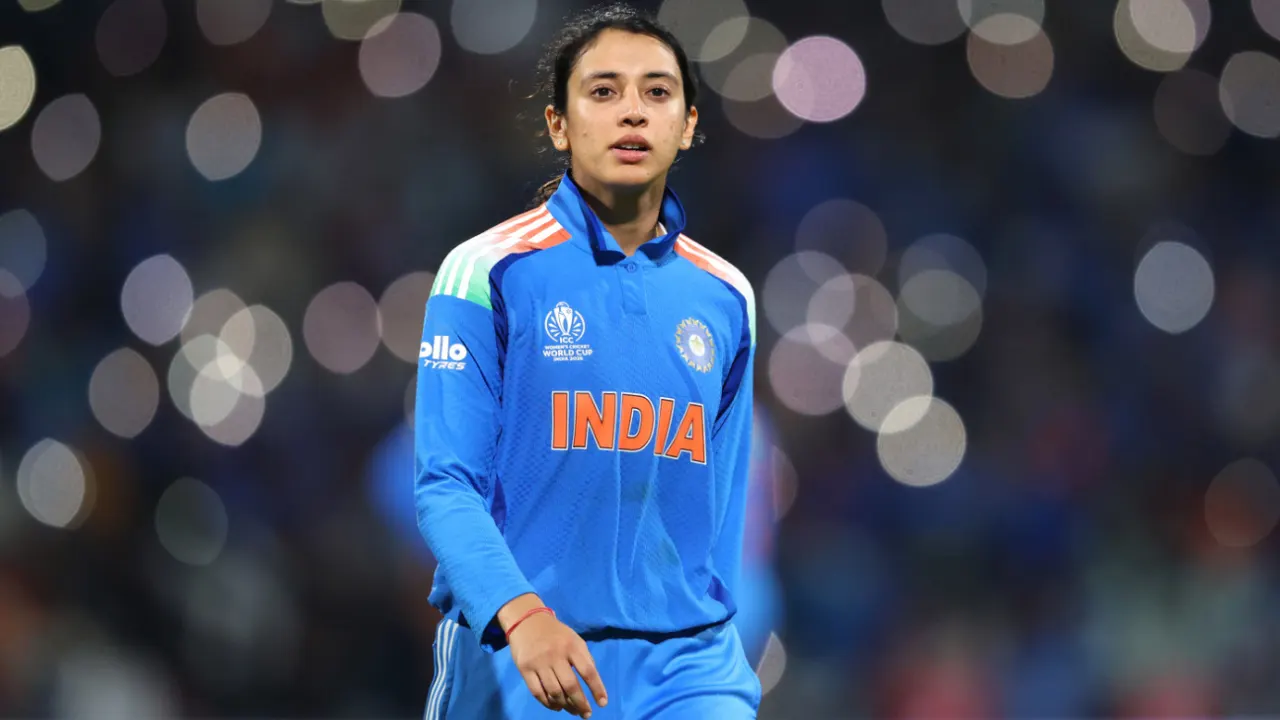
Smriti Mandhana has been named India’s all-format women’s captain on the same day Harmanpreet Kaur stepped down from the role after nearly a decade since she first took over.
Mandhana – vice-captain to Harmanpreet for much of this period – has previously led India in four ODIs and 18 T20Is, apart from captaining Maharashtra in domestic cricket and Royal Challengers Bengaluru in the Women’s Premier League.
Mandhana’s first assignment will be the limited-overs series against Zimbabwe beginning with the three T20Is in Raipur from October 16. On Tuesday, Mandhana was part of the selection meeting chaired by Amita Sharma to pick the squad for the tour.
Terming the appointment a “special honour”, Mandhana also acknowledged the contributions of her predecessor in her welcome note.
“I would also like to acknowledge Harmanpreet and the contribution she has made as captain over the years,” she was quoted as saying by the BCCI. “She has led the team with great commitment and has been an important part of our journey.
“I understand the responsibility that comes with this role and look forward to working with the team, learning along the way and giving my best to take Indian cricket forward.”
Mandhana’s appointment comes on the back of a review meeting held on Monday in Guwahati. Chaired by secretary Devajit Saikia, the meeting was also attended by Mandhana, Harmanpreet and head coach Amol Muzumdar to chart a roadmap forward, with an eye on next year’s inaugural Women’s Champions Trophy in February as well as the T20 World Cup and Los Angeles Olympics in 2028.
Mandhana, India’s best all-format batter, has been knocking on the doors for a while. Earlier this year, she led RCB to their second WPL title, in which she also top-scored in the final.
In September, she overtook Mithali Raj to become the leading run-scorer in women’s international across formats. Her 18 international hundreds are also the most in women’s cricket. She is also the first Indian woman to score centuries in all formats.
[Cricinfo]

Showers above 100 mm are likely at some places in the Western, Sabaragamuwa, Central, Uva and Southern provinces and in Anuradhapura district

PSTA worse than PTA: FSP

Shiranthi R remanded until 13 Oct.

Former NSB Chairman Kariyawasam granted bail

Katchatheevu row: India SC urges fishermen to avoid Sri Lankan waters

Remembering Juvenal, Coke, Acton and Machiavelli

‘Dates have the highest sugar content to fight Coronavirus’

Sunday Island 27 December – Headlines

#SundayIsland 17th December – Headlines

Sunday Island – 28th March

Sunday Island Headlines – 21 March

Sunday Island – 21st February – Headlines
-

 Editorial7 days ago
Colombo Port drug bust: The plot thickens
-

 Features5 days ago
The first woman in the foreign service or Ceylon Overseas Service it was then called
-

 Editorial6 days ago
Fuelling discontent and protest
-

 News4 days ago
Geneva takes up Sallay’s case and govt. ignores opportunity to answer accusations
-

 Foreign News5 days ago
Ten injured after car crashes into rugby supporters in Australia
-

 Latest News5 days ago
Tharindu Rathnayake, bowlers secure Asian Games Bronze for Sri Lanka
-

 News5 days ago
Nearly 20 Iranian tankers stranded off Lanka amid US sanctions
-

 Features4 days ago
Sri Lanka Cricket Bill: Governance reform is not yet a cricket strategy