
Latest News
Two powerful earthquakes kill several, trap dozens in Myanmar, Thailand

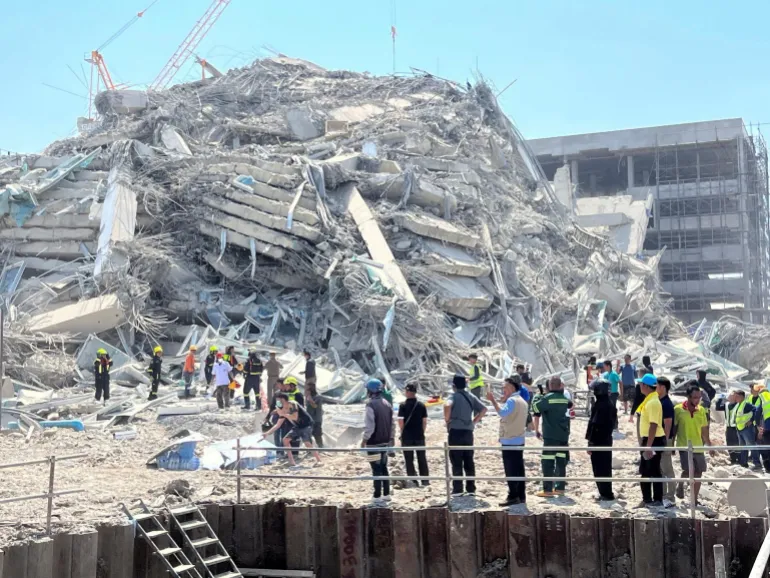
Magnitude 7.7 and 6.4 earthquakes have struck Myanmar, killing at least three in Thailand’s capital Bangkok and trapping dozens others after an under construction building collapsed.
The first tremor hit 16km (10 miles) northwest of the city of Sagaing at a depth of 10km (6 miles) at about 12:50pm (06:20 GMT) on Friday, the United States Geological Survey (USGS) said.
Myanmar’s ruling military declared a state of emergency in six regions and states. “The state will make inquiries on the situation quickly and conduct rescue operations along with providing humanitarian aid,” it said on the Telegram messaging app.
A major hospital in Naypyidaw was declared a “mass casualty area”, an official at the facility told AFP news agency. Rows of wounded were treated outside the emergency department of the 1,000-bed general hospital, some writhing in pain, others lying still as relatives sought to comfort them.

According to two witnesses from the town of Taungnoo in Bago region who spoke to Reuters news agency, at least three people died after a mosque partially collapsed. “We were saying prayers when the shaking started … Three died on the spot,” one of them said.
Al Jazeera’s Tony Cheng reporting from Naypyidaw said he was outside Myanmar’s Defence Services Museum when the earthquake hit, right after interviewing a government spokesman. “We’d just stepped outside to say goodbye when things started shaking,” Cheng said, adding he and others sought shelter under a doorway as large roofing and side panels crashed down.
The tremors began gently but quickly intensified, causing concrete panels to break off the building, Cheng noted. “I’ve been in earthquakes in this region before, and I’ve never felt anything as strong as that,” he said. “We have felt a considerable number of aftershocks. It put everybody here on edge.”
Social media posts from Mandalay, Myanmar’s ancient royal capital that is at the centre of its Buddhist heartland, showed collapsed buildings and debris strewn across streets of the city.
A witness in the city Htet Naing Oo told Reuters that a tea shop had collapsed with several people trapped inside. “We couldn’t go in,” she said. “The situation is very bad.”
Marie Manrique, programme coordinator for the International Federation of the Red Cross said to reporters in Geneva, via video link from Yangon that the organisation anticipates the impact to be “quite large”.
“Public infrastructure has been damaged including roads, bridges and public buildings. We currently have concerns for large scale dams that people are watching to see the conditions of them”, she said.
Skyscraper collapses in Bangkok
In neighbouring Thailand’s capital Bangkok, at least three people were killed when a 30-storey under-construction tower collapsed, Thailand’s Deputy Prime Minister Phumtham Wechayachai announced. He added that 81 people were trapped under the rubble of the building.
Al Jazeera’s Imran Khan who was in the city when the earthquakes struck, said the entire public transport system has been shuttered for safety reasons.
“People are out on the streets here. None of the trains are moving,” he reported. “Traffic is absolutely gridlocked. The buildings have been shuttered in the centre of the city.”

Thai Prime Minister Paetongtarn Shinawatra announced a state of emergency in her country. Meanwhile, Bangkok has been declared a disaster area, the capital’s city hall said on Friday.
Urban rail systems in Bangkok were temporarily closed but expected to resume services on Saturday.
The earthquakes were also felt in the Yunnan and Sichuan provinces in China, causing injuries and damage to houses in the city of Ruili on the border with northern Myanmar, according to Chinese media reports.
Videos that one outlet said it had received from a person in Ruili showed building debris littering a street and a person being wheeled on a stretcher towards an ambulance.
Cambodia, Bangladesh and India also reported tremors.
Previous quakes in Myanmar
Earthquakes are relatively common in Myanmar, where six strong quakes of 7.0 magnitude or higher struck between 1930 and 1956 near the Sagaing Fault, which runs north to south through the centre of the country, according to the USGS.
A powerful 6.8-magnitude earthquake in the ancient capital Bagan in central Myanmar killed three people in 2016, also toppling spires and crumbling temple walls at the tourist destination.
The impoverished Southeast Asian nation has a strained medical system, especially in its rural states.
Moreover, Al Jazeera’s Cheng said it was important to remember that Myanmar was a country currently in the grips of a bitter civil war.
“A lot of the people have moved from the countryside into the cities to try and escape,” he noted. “That has meant it is densely overcrowded and the building standards are not particularly strong.”
[Aljazeera]

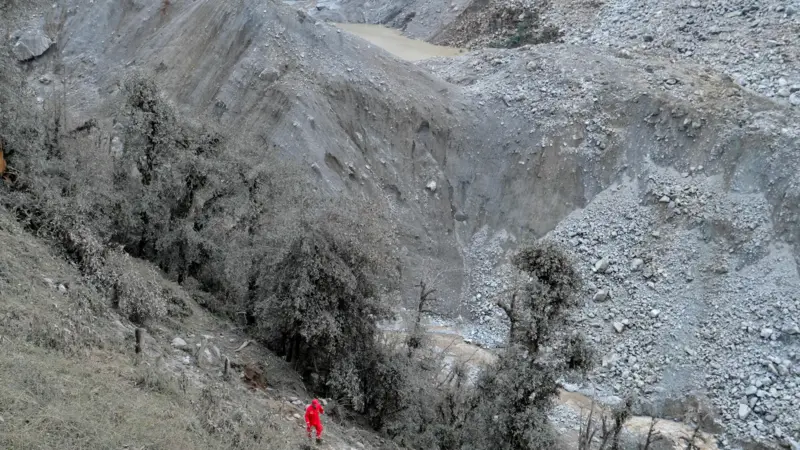
Water levels in the lake which formed amid the debris of the landslide in Tibet are rising once again, according to Chinese state media.
There is a continued risk of secondary mudslides or landslides, the report adds.
The command team in charge of rescue efforts around Gyirong port, the main land border between Nepal and Tibet, have launched drones and set up observations posts to monitor the slopes and provide an early warning system to rescuers working nearby.
Search teams are making the most of a short weather window to try to find survivors.
Work is also underway to try to re-open the road.
(Aljazeera)
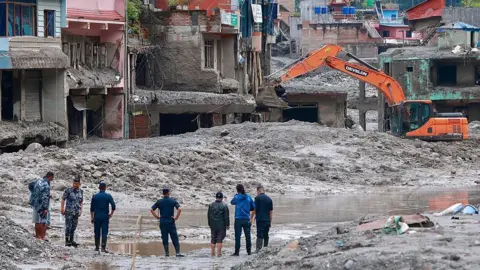
More than 600 people have died following Wednesday’s devastating flash flood in Nepal.
An update from Nepal’s National Disaster Risk Reduction & Management Authority (NDRRMA) confirms the figure as 626 and the number of people missing as 2,426, as rescue operations continue for the fourth day
Emergency teams are warning that rain is making it difficult to reach some of the worst affected areas, our correspondent in Trishuli writes
Families of the missing – including at least 517 foreign nationals – are waiting for news on the whereabouts of their loved ones
(Aljazeera)
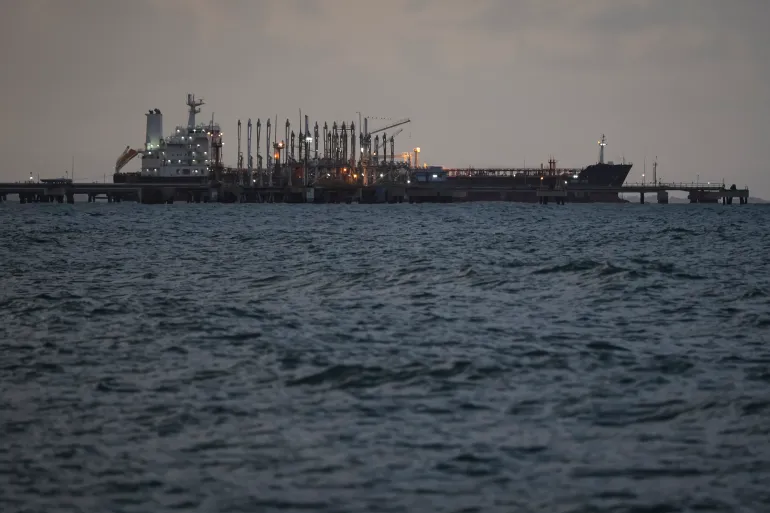
The United States has struck a deal with Caracas that would give them control of some 65 billion barrels of Venezuela’s proven oil reserves, President Donald Trump has announced, while reviving the OPEC nation’s battered energy industry.
In a post on Truth Social, Trump said the “historic transaction more than doubles American oil reserves” and “will substantially lower gas prices for all Americans”.
“At my direction, Secretary of State Marco Rubio, and Secretary of War Pete Hegseth, working closely with Highly Respected Interim President of Venezuela, Delcy Rodriguez, and, through a partnership with private business, have secured majority US control of more than 65 BILLION BARRELS of proven Oil Reserves in Venezuela, at no cost to the American Taxpayer,” Trump wrote.
![Venezuela's interim President Delcy Rodriguez, Caracas, Venezuela, January 30, 2026 [Efrain Gonzalez/AFP]](https://www.aljazeera.com/wp-content/uploads/2026/01/AFP__20260131__94MV49Z__v1__HighRes__VenezuelaUsConflictCrisis-1-1769837471.jpg?w=770&resize=770%2C513&quality=80)
Venezuela’s interim President Delcy Rodriguez welcomed the deal, which is expected to bring about $209bn to the state’s treasury.
The announcement followed weeks of negotiations over an agreement that would give American companies long-term access to a group of Venezuelan oilfields and guarantee the resulting crude supply to the US.
Venezuelan officials are preparing to sign agreements next week granting new oil exploration and production rights to a number of companies, particularly US firms.
Sources previously told Reuters news agency that a lease model was under consideration, with fields potentially auctioned to US producers, but the arrangement could face legal and constitutional challenges in Venezuela, where the state retains control over core oil industry activities.
(Aljazeera)

Ex-White House teleprompter operator ordered to pay $172,000 for Trump speech bets

Rescuers on high alert for signs of secondary landslides

More than 600 killed in Nepal flood as search for survivors enters fourth day

Norway mourns King Harald as Haakon VIII ascends throne

Trump announces ‘biggest oil deal in world history’ with Venezuela

Sun directly overhead Pallawarayankaddu, Akkarayankulam, Ariviyal Nagar, Puthukkudiyiruppu, Ananthapuram at about 12.11 noon today (29)

‘Dates have the highest sugar content to fight Coronavirus’

Sunday Island 27 December – Headlines

#SundayIsland 17th December – Headlines

Sunday Island – 28th March

Sunday Island Headlines – 21 March

Sunday Island – 21st February – Headlines
-

 Features6 days ago
My secondary schooling after Royal Primary
-

 Features6 days ago
From the First to the 22nd: A short history of Amendment Politics and Reform Frustrations
-

 News4 days ago
Missing doctor’s body found in Mahiyanganaya
-

 Features6 days ago
How Shelton Kodikara became first Professor of International Relations
-
 Features6 days ago
How St. John’s College Shaped Panadura for 150 Years
-

 News4 days ago
Australia declines to release Finance Secy Suriyapperuma’s citizenship details
-
 News6 days ago
Ex- Atamasthanadhipathi uses Magistrate’s gate to enter court
-
 News4 days ago
22A: BASL suggests CJ recuse himself from hearing petitions