
Latest News
Putin sets out conditions for Ukraine ceasefire


Russian President Vladimir Putin said he agreed with the idea of a ceasefire in Ukraine, but that “questions” remained about the nature of a truce as he set out a number of tough conditions.
The Russian president was responding to a plan for a 30 day ceasefire, which Ukraine agreed to earlier this week after talks with the US.
Ukrainian President Volodymyr Zelensky described Putin’s response to the plan as “manipulative” and called for more sanctions on Russia.
Meanwhile, the US placed further sanctions on Russian oil, gas and banking sectors.
Speaking at a news conference in Moscow on Thursday, Putin said of the ceasefire proposal: “The idea is right – and we support it – but there are questions that we need to discuss.”
A ceasefire should lead to “an enduring peace and remove the root causes of this crisis”, Putin said. “We need to negotiate with our American colleagues and partners,” he said. “Maybe I’ll have a call with Donald Trump.”
Putin added: “It will be good for the Ukrainian side to achieve a 30-day ceasefire. “We are in favour of it, but there are nuances.”
One of the areas of contention is Russia’s Kursk region, Putin said, where Ukraine launched a military incursion last year and captured some territory.
He claimed Russia was fully back in control of Kursk, and said Ukrainian troops there “have been isolated”.
“They are trying to leave, but we are in control. Their equipment has been abandoned.”
“There are two options for Ukrainians in Kursk – surrender or die.”
Outlining some of his questions over how a ceasefire would work, Putin asked: “How will those 30 days be used? For Ukraine to mobilise? Rearm? Train people? Or none of that? Then a question – how will that be controlled?”
“Who will give the order to end the fighting? At what cost? Who decides who has broken any possible ceasefire, over 2,000km? All those questions need meticulous work from both sides. Who polices it?”
Putin “doesn’t say no directly”, Zelensky said in his nightly video address, but “in practice, he’s preparing a rejection”.
“Putin, of course, is afraid to tell President Trump directly that he wants to continue this war, wants to kill Ukrainians.”
The Russian leader had set so many pre-conditions “that nothing will work out at all”, Zelensky said.
After Putin’s remarks and Zelensky’s response, there is now a clear divide between both sides’ positions.
Ukraine wants a two-stage process: a quick ceasefire and then talks about a longer-term settlement.
Russia believes you cannot separate the two processes and all the issues should be decided in a single deal. Both sides seem content to argue their differences.
Ukraine believes it can put pressure on Russia, painting it as a reluctant peacemaker, playing for time. Russia, equally, believes it has a chance now to raise its fundamental concerns, about Nato expansion and Ukraine’s sovereignty.
But this presents a problem for Donald Trump. He has made it clear he wants a quick result, ending the fighting in days.
And right now, Putin does not appear to want to play ball.
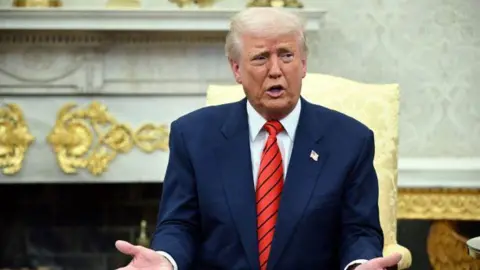
Speaking at the White House following Putin’s remarks, Trump said he would “love” to meet the Russian leader and that he hoped Russia would “do the right thing” and agree to the proposed 30-day truce.
“We’d like to see a ceasefire from Russia,” he said.
Speaking earlier at a meeting in the Oval Office with Nato Secretary General Mark Rutte, Trump told reporters he had already discussed specifics with Ukraine.
“We’ve been discussing with Ukraine land and pieces of land that would be kept and lost, and all of the other elements of a final agreement,” Trump said. “A lot of the details of a final agreement have actually been discussed.”
On the subject of Ukraine joining the Nato military alliance, Trump said “everybody knows what the answer to that is”.
The fresh sanctions on Russian oil and gas came as the Trump administration further restricted access to US payment systems, making it harder for other countries to buy Russian oil.
Meanwhile, Putin met US special envoy Steve Witkoff behind closed doors in Moscow.
Earlier in the day, Kremlin aide Yuri Ushakov rejected the ceasefire proposal put forward by the US.
On Wednesday, Putin visited Russia’s Kursk region, symbolically dressed in military fatigues. Russia later said it recaptured the key town of Sudzha.
More than 95,000 people fighting for Russia’a military have died in the war.
Ukraine last updated its casualty figures in December 2024, when President Volodymyr Zelensky acknowledged 43,000 Ukrainian deaths among soldiers and officers. Western analysts believe this figure to be underestimated.
[BBC]

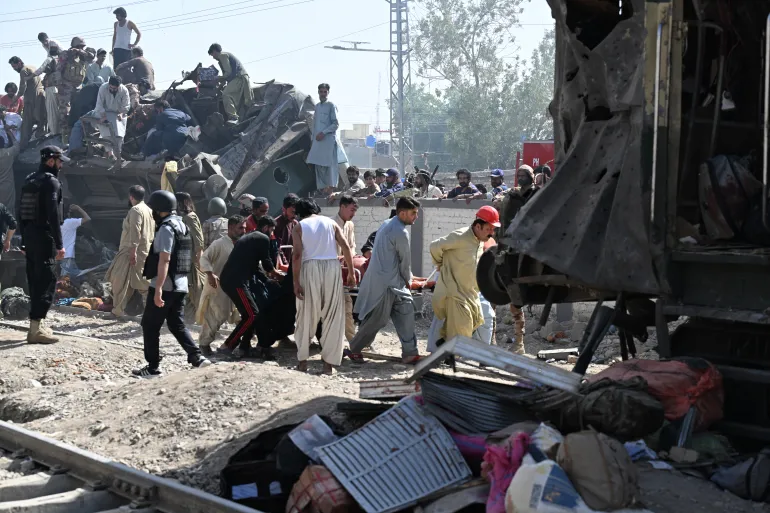
A suicide car bomb attack on a train carrying soldiers in Quetta, the capital of the southwestern Pakistani province of Balochistan, has killed at least 24 people and wounded more than 50 others.
The Balochistan Liberation Army, a separatist group, has claimed responsibility for Sunday’s attack.
Reporting from the scene, Al Jazeera’s Kamal Hyder said several houses and buildings adjacent to the railway line were severely damaged. The blast caused some train carriages to overturn and catch fire.
According to local media reports, a state of emergency was declared at public hospitals in Quetta, with doctors and other medical staff ordered to remain on duty.
Footage shared online showed charred vehicles and train carriages lying on their sides, sending thick plumes of black smoke into the sky.
Hyder said Pakistan has experienced several attacks by separatist groups in recent months. The attacks have increased in ferocity and have also targeted Chinese workers due to opposition to Beijing’s infrastructure projects in Balochistan, he added. Under the China-Pakistan Economic Corridor, China’s Xinjiang region has been connected to Pakistan’s Gwadar port.
Pakistani Prime Minister Shehbaz Sharif has condemned the attack in a post on X.
“Such cowardly acts of terrorism cannot weaken the resolve of the people of Pakistan. We remain steadfast in our determination to eliminate terrorism in all its forms and manifestations,” he said.
[Aljazeera]
Latest News
Landslide Early Warnings issued to the Districts of Colombo,Gampaha, Kalutara, Kegalle, Nuwara Eliya and Ratnapura

The National Building Research Organisation [NBRO] has issued landslide early warnings to the Districts of Colombo, Gampaha, Kalutara, Kegalle, Nuwara Eliya and Ratnapura effective from 1700 hrs today [24th May 2026] to 1700 hrs on Monday [25th May 2026].
Accordingly,
LEVEL II [AMBER] landslide early warnings have been issued to the Divisional Secretaries Divisions and surrounding areas of Dehiowita, Deraniyagala, Ruwanwella and Yatiyanthota in the Kegalle district and Kuruwita, Ratnapura, Ayagama and Eheliyagoda in the Ratnapura district.
LEVEL I [YELLOW] landslide early warnings have been issued to the Divisional Secretaries Divisions and surrounding areas of Seethawaka and Padukka in the Colombo district, Attanagalla in the Gampaha district, Palindanuwara, Mathugama, Bulathsinhala, Agalawatta, Ingiriya and Horana in the Kalutara district, Bulathkohupitiya in the Kegalle district, Ambagamuwa in the Nuwara Eliya district and Kiriella, Pelmadulla, Nivithigala, Elapatha and Kalawana in the Ratnapura district.
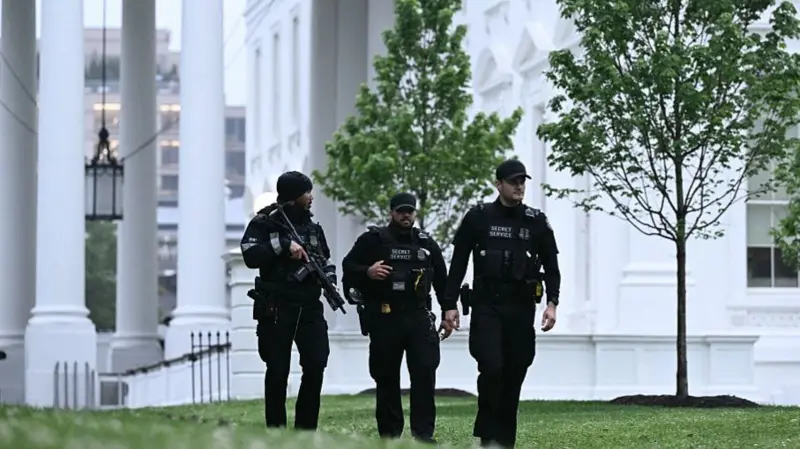
A person has been shot and killed after they opened fire outside the White House, the US Secret Service has confirmed.
Here is their statement in full:
Shortly after 6 p.m Saturday an individual in the area on 17th street and Pennsylvania Avenue pulled a weapon from his bag and began firing.
Secret Service police returned fire striking the suspect who was transported to an area hospital where he was pronounced deceased. During the shooting one bystander was also struck by gunfire.
No injuries were sustained by officers. The President was in the White House during the incident, however no protectees or operations were impacted.
This incident remains under investigation and additional information will be released as it becomes available.
Suspect identified, had previous ‘run-in’ with Secret Service – CBSpublished at 07:45
The deceased suspect in the shooting outside the White House has been identified as 21-year-old Nasire Best, a person familiar with the investigation has told BBC’s US media partner CBS.
The source said that the suspect had already been arrested by the US Secret Service in July 2025 after he tried to gain entry to the White House, and he was sent to a psychiatric ward for mental health issues in the aftermath.
(BBC)

Suicide car bomb attack on train in Pakistan kills at least 24

Landslide Early Warnings issued to the Districts of Colombo,Gampaha, Kalutara, Kegalle, Nuwara Eliya and Ratnapura

PM concludes official visit to UK

Suspect killed after shooting at Secret Service agents, officials confirm

Trump says Iran deal ‘largely negotiated’ including reopening Strait of Hormuz

Showers expected in the Western, Sabaragamuwa and North-western provinces and in Galle, Matara, Kandy and Nuwara-Eliya districts

‘Dates have the highest sugar content to fight Coronavirus’

Sunday Island 27 December – Headlines

#SundayIsland 17th December – Headlines

Sunday Island – 28th March

Sunday Island Headlines – 21 March

Sunday Island – 21st February – Headlines
-

 Features5 days ago
Octopus, Leech, and Snake: How Sri Lanka’s banks feast while the nation starves
-

 News4 days ago
Steps underway to safeguard Sri Lanka’s maritime heritage
-
 Opinion4 days ago
Murder of Ehelepola family, Bogambara Wewa and Sightings of Wangediya
-

 Sports5 days ago
Sri Lanka women’s volleyball team ready for Central Asian challenge
-

 Editorial4 days ago
A play without its protagonist
-
 Midweek Review5 days ago
Overall SLPP failures stressed in new Aragalaya narrative
-

 Opinion3 days ago
The need to reform Buddhist ecclesiastical order
-
 Latest News5 days ago
At least 100 dead in Ebola outbreak in DR Congo, official says