
News
Cabinet decision on ECT irreversible, SLPA can take over SAGT-Wimal

By Shamindra Ferdinando
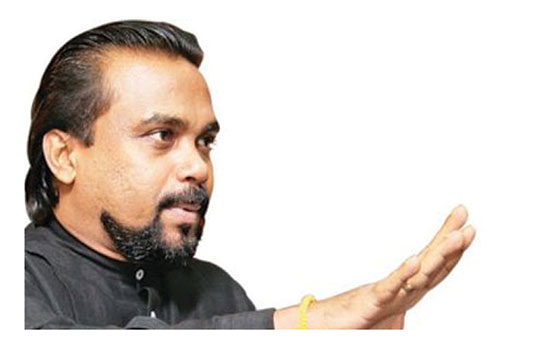
National Freedom Front (NFF) leader Wimal Weerawansa, MP, yesterday (2) said that the party that controlled the East Container Terminal (ECT) would be in a position to take over the neighbouring South Asia Gateway Terminal (SAGT) in a couple of years in terms of an agreement between the government and Sri Lanka’s first public-private container terminal.
The SAGT operation was launched in 1999 during President Kumaratunga’s tenure at the height of the war.
The Board of Investment flagship SAGT consists of approximately 60% Sri Lankan shareholding, and is backed by John Keells Holdings, APM Terminals, Peony Investments (subsidiary of Evergreen Marine Corporation) and the SLPA.
The SLPA owns 15 % shares of the SAGT. In the China- managed Colombo International Container Terminal (CICT), too, the SLPA owned 15% shares whereas the Chinese held 85%.
Minister Weerawansa told a hastily arranged press conference at his party office at Pitakotte Sri Lanka shouldn’t under any circumstances allowed external investment in the ECT. The minister explained that the deep water ECT was the strategically most important terminal in the Colombo harbour. Therefore, it should be in Sri Lanka’s hands.
At the onset of the briefing Weerawansa explained how Sri Lanka could immensely benefit when the SAGT was brought under SLPA control. There couldn’t be any issue at all in the wake of the cabinet unanimously deciding on Monday (1) to retain the ECT, MP Weerawansa said, pointing out that the country would receive a mega boost when the SLPA commenced managing both terminals.
Weerawansa and State Minister Jayantha Samaraweera profusely thanked those in the SLPP, in parliament and outside who helped thwart the move to go ahead with an agreement finalised in late May 2019 involving Sri Lanka, India and Japan. The minister appreciated the role played by the Maha Sangha in the campaign against the move.
The agreement based on an understanding the then President Maithripala Sirisena reached with Indian Prime Minister Narendra Modi and Japanese Prime Minister Shinzo Abe in New Delhi and Tokyo in March, 2018.
The NFF emphasised that the Cabinet decision was line with Gotabaya Rajapaksa’s manifesto for the presidential election.
The NFF leader said that they always opposed the move to bring in external investment at the ECT. However, in terms of the presidential election manifesto, external investments could be utilized in the setting up of West Container Terminal (WCT) which is something only on paper at the moment.
Among those lawmakers who had publicly opposed Indian investment at the ECT in addition to Weerawansa and Samaraweera are Vasudeva Nanayakkara, Dayasiri Jayasekera, Gevindu Cumaratunga, Prof. Tissa Vitharana, Asanka Navaratne, Weerasumana Weerasinha, Udaya Gammanpila and Ven. Atureliye Rathana.
Minister Weerawansa said that unlike those who had backed the UNP remained silent when the administration took decisions inimical to the country. The minister targeted the civil society and the JVP for being silent when the UNP handed over Hambantota harbour on a 99-year lease to China in 2017.
Asked to comment on India’s declaration that New Delhi expected Sri Lanka to implement tripartite 2019 agreement endorsed by the cabinet three months ago, Minister Weerawansa strongly defended the government decision. The minister said that the cabinet decision on ECT wouldn’t be reversed. According to him, President Gotabaya Rajapaksa had to be mindful of Sri Lanka’s concerns than Indian statements.
Minister Weerawansa said that the NFF didn’t oppose Indian or other foreign investment in the WCT. The NFF leader said that India and Japan could take advantage of Sri Lanka’s offer based on what the Minister called CICT model. Responding to another query, MP Weerawansa said that India could take 85% of the proposed WCT.

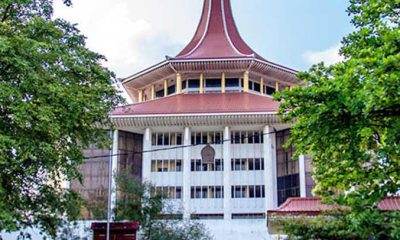


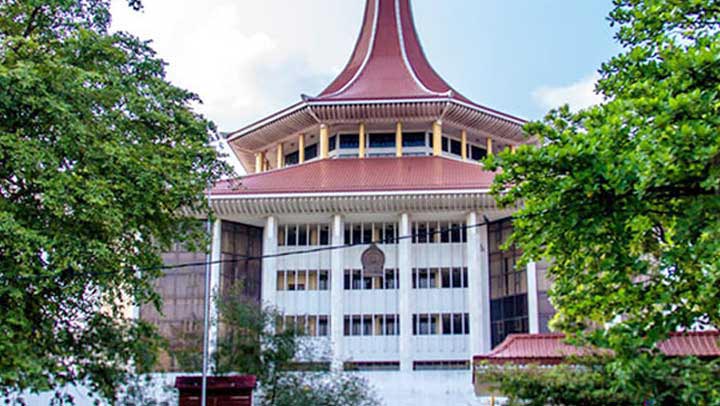
The Supreme Court yesterday rejected a request that the petitions challenging the 22nd Amendment to the Constitution be heard by a full bench of the Supreme Court.
Rejecting the request, Chief Justice Preethi Padman Surasena said the consideration of the petitions would proceed before the five-judge bench.
Appearing on behalf of one of the petitioners, President’s Counsel M. A. Sumanthiran made the request when the petitions were called for hearing yesterday before a five-judge bench of the Supreme Court, headed by Chief Justice Surasena.
President’s Counsel Saliya Pieris, Ali Sabry, Geoffrey Alagaratnam, Eraj de Silva, Srinath Perera, Anura Meddegoda, and Maithri Gunaratne, along with other counsel appearing for several other petitioners, also made the same request.
Solicitor General Viraj Dayaratne, appearing on behalf of the Attorney General, pointed out that the authority to determine the composition of a judicial bench rested with the Chief Justice. Refering to Article 132(3) of the Constitution, the Solicitor General argued that the discretion to determine the number of judges on a bench lay with the Chief Justice and that no other party had the authority to interfere in the matter.
Counsel including President’s Counsel Nigel Hatch, appearing for an intervening petitioner, also made submissions pointing out that the discretion to determine the composition of a bench rested with the Chief Justice.

The Colombo High Court yesterday sentenced former Civil Aviation Minister Piyankara Jayaratne to seven years’ rigorous imprisonment after finding him guilty of a corruption charge involving a Rs. 320,000 payment made by state-owned SriLankan Catering Ltd.
Colombo High Court Judge Mohamed Mihail delivered the verdict following a lengthy trial into the transaction, which dates back to the 2014 May Day rally of the United People’s Freedom Alliance (UPFA).
The Commission to Investigate Allegations of Bribery or Corruption (CIABOC) had indicted Jayaratne, alleging that he abused his position as Civil Aviation Minister by influencing an executive officer of SriLankan Catering to release the funds.
According to the indictment, the money was paid from SriLankan Catering’s accounts to a private catering service in Marawila to provide lunch for Jayaratne’s political supporters who attended the May Day rally.
CIABOC has alleged that the payment caused a loss to the state and constituted an offence of corruption.
Jayaratne was serving as Civil Aviation Minister at the time.
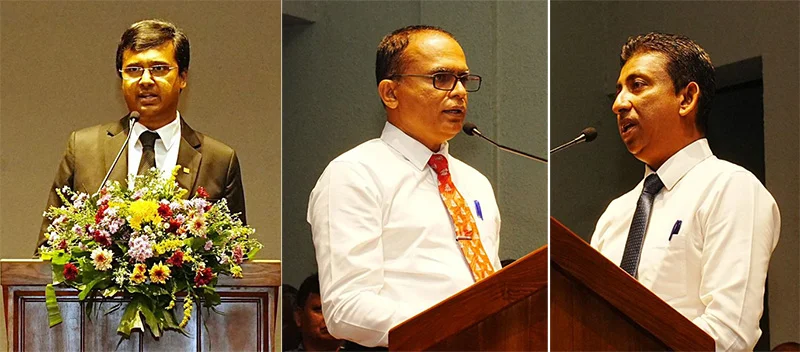
Representatives of 40 professional organisations and trade unions have jointly opposed the proposed 22ned Amendment to Sri Lanka’s Constitution, saying provisions extending the retirement age of judges could threaten judicial independence and the rule of law.
The organisations, representing various professional and trade union bodies, met at the Bar Association of Sri Lanka (BASL) on Monday (31) and adopted a joint statement endorsing the BASL’s opposition to the proposed amendment, BASL said in a statement.
Full text of BASL statement: Representatives of 40 professional organisations and trade unions from across Sri Lanka gathered at the Bar Association of Sri Lanka (BASL) on Monday (31) and adopted a Joint Statement in support of the position of the Bar Association of Sri Lanka unequivocally opposing the proposed Twenty-Second Amendment to the Constitution.
These organisations included the Federation of University Teachers’ Associations (FUTA), The Government Medical Officers’ Association (GMOA), The Railway Station Masters’ Union, The Graded Principals’ Association, The Academy of Health Professionals Sri Lanka, The College of Medical Laboratory Science Sri Lanka, The Sri Lanka Association of Medical Laboratory Scientists, The Locomotive Officers’ Association, The Sri Lanka Association of Government Medical Laboratory Technologists, The Government Printer’s Union, The Postal Trade Union, The Government Nursing Association, All Ceylon Management Service Association and further together with twenty-four other professional organisations and trade unions.
By adopting the Joint Statement, the participating organisations and trade unions endorsed and extended their support to the BASL’s principled position that the proposed extension of the retirement age of Judges, including Judges of the Supreme Court and the Court of Appeal, poses a direct threat to the independence of the Judiciary and, consequently, to the Rule of Law, Democracy and the Sovereignty of the People.
The Joint Statement emphasises that judicial power forms an integral part of the sovereignty of the People and that the constitutional provisions governing the retirement age of Judges of the Superior Courts are contained within the Part of the Constitution dealing with the “Independence of the Judiciary”.
It also refers to the Special Determination of the Supreme Court in respect of the Inland Revenue (Amendment) Bill, SC/SD/64–71/2022, in which the Court held that any constitutional amendment to the retirement age or period of office that directly or indirectly impacts incumbent Judges would impinge upon the independence of the Judiciary and violate Article 3 of the Constitution, thereby requiring approval by the People at a referendum.
The signatories further noted the significant opposition already expressed by religious institutions, judicial and professional bodies, and national and international legal organisations, including the Maha Sangha, the Catholic Bishops’ Conference in Sri Lanka, the Church of Ceylon, the BASL, the Judicial Service Association, the Commonwealth Lawyers Association, LAWASIA, the International Association of Judges, the United Nations Special Rapporteur on the Independence of Judges and Lawyers, and the French National Bar Council.
The participating professional organisations and trade unions unanimously resolved:
1. To unequivocally oppose the proposed Twenty-Second Amendment to the Constitution Bill;
2. To call upon the Government to withdraw the proposed Constitutional Amendment immediately;
3. To urge the Government to prioritise, without further delay, the filling of all existing vacancies in the Superior Courts; and
4. If the Government nevertheless intends to proceed with the proposed Amendment, to call upon it to refer the matter directly to the People for determination at a referendum.
The adoption of this Joint Statement demonstrates the united opposition to any measure that may undermine judicial independence. The signatories reaffirmed their collective commitment to safeguarding the independence of the Judiciary, the Rule of Law, Democracy and the Sovereignty of the People of Sri Lanka.

SC rejects petitioners’ request for full bench

Seven years RI for former Civil Aviation Minister Piyankara Jayaratne

40 professional organisations and TU oppose proposed 22A

Ai-CHA expands Lankan footprint with new Negombo outlet

TISL challenges Anti-Corruption Bill

Financing Sri Lanka’s post-IMF development

‘Dates have the highest sugar content to fight Coronavirus’

Sunday Island 27 December – Headlines

#SundayIsland 17th December – Headlines

Sunday Island – 28th March

Sunday Island Headlines – 21 March

Sunday Island – 21st February – Headlines
-

 News5 days ago
Eight politicians in drug kingpin probe
-

 Features3 days ago
“Wrap Me Up in My Blazer”— A Gentlemanly Bradby Reminiscence
-

 Business5 days ago
Sri Lanka opens up: A new season of direct connectivity
-

 Features5 days ago
Redefining ageing in Sri Lanka
-

 Latest News6 days ago
Nepal-Tibet floods: What happened, what caused them and who is missing?
-

 Editorial6 days ago
Unfolding El Niño and burning issues
-

 Foreign News7 days ago
At least eight killed, hundreds missing after Nepal flash flood
-
 Latest News7 days ago
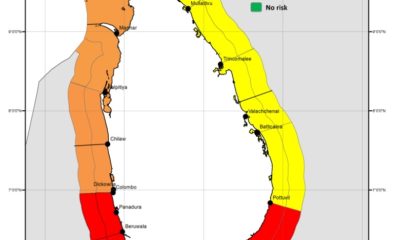
Advisory for High Waves for the sea areas extending from Colombo to Pottuvil via Galle, Matara and Hambantota