
Foreign News
Trump’s assault on USAID leaves China soft power opening in Southeast Asia

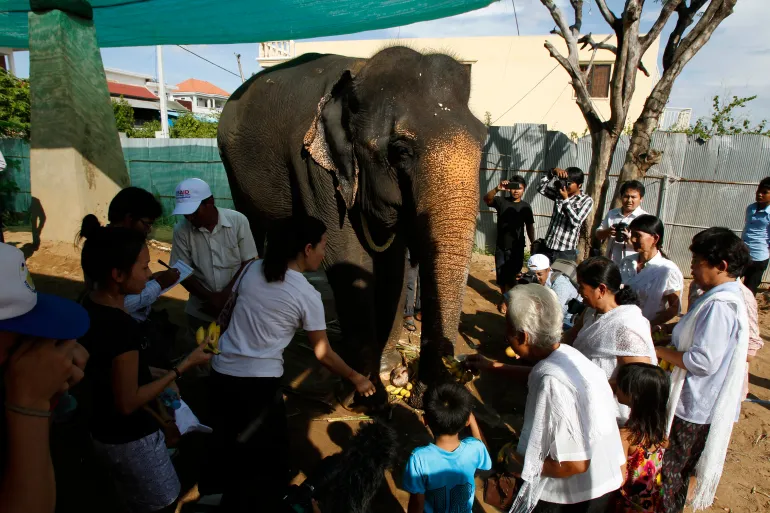
As the United States winds back humanitarian assistance in Southeast Asia, its rival China may see an opportunity to expand its influence in a region where it has directed billions of dollars in investment and aid, analysts say.
In a little over three weeks since US President Donald Trump’s inauguration, Washington has frozen nearly all foreign aid and moved to effectively abolish the US Agency for International Development (USAID), a longstanding source of soft power in the region.
USAID, the biggest disburser of US foreign aid, spent $860m in Southeast Asia alone last year, funding projects on everything from treating HIV to preserving biodiversity and strengthening local governance.
Many projects, which run primarily through grants to local NGOs, face an uncertain future as the Trump administration pulls the US back from the world stage as part of his “America first” agenda.
For Beijing, the circumstances provide an ideal opportunity for it to step in, said Yanzhong Huang, a senior fellow for global health at the Council on Foreign Relations.
“The suspension of health, education, and humanitarian programmes – key pillars of US soft power – may create vacuums that China can fill,” Huang told Al Jazeera.
“This strategic retreat could strengthen Beijing’s influence across the region, particularly in current US aid recipients like Indonesia, the Philippines, Myanmar, and Cambodia.”
As the Trump administration generated headlines with its moves to gut USAID last week, Beijing made news by stepping in with $4.4m to fund a de-mining project in Cambodia that had been left in the lurch by Washington.
Heng Ratana, head of the Cambodian Mine Action Centre, told the Khmer Times newspaper the Chinese aid would help his organisation clear more than 3,400 hectares (8,400 acres) of land filled with landmines and unexploded ordnance.
China’s embassies in the US, Cambodia and Thailand did not respond to Al Jazeera’s requests for comment.
Joshua Kurlantzick, a senior fellow for Southeast Asia and South Asia at the Council on Foreign Relations, said USAID’s demise comes as US influence in the region is waning more generally and as China scales up its public diplomacy.
Southeast Asian leaders are concerned about “chaotic policymaking” in the US, Kurlantzick told Al Jazeera, particularly in countries such as Vietnam, Indonesia and Thailand, where the US devotes significant aid and security assistance.
“Beijing is indeed already portraying the US as uncaring and unable to lead regionally or globally and I expect Beijing to increase its aid and investment now in many parts of the developing world,” Kurlantzick told Al Jazeera.
While the future of many USAID programmes in the region is unclear, some analysts believe that China is likely to leave projects with a more political or ideological focus to other partners to the region, such as the European Union, Australia, Japan or the Asian Development Project, a Manila-based regional development bank.
“China’s existing international aid or international development programme is quite sizeable. But it happens to be quite different from what USAID does in that the latter seems to be devoting a lot of resources to ideology-based initiatives, for democracy, for LGBTQ, for diversity, for inclusiveness, for climate change,” John Gong, a professor of economics at the University of International Business and Economics in Beijing, told Al Jazeera.
“Whether China is going to step into the void vacated by the United States, I am very sceptical. We are talking about different things here. And besides, I don’t think the Chinese government is keen on competing with Washington on this front,” Gong said.
China’s foreign assistance has been heavily geared towards infrastructure, as laid out in the Belt and Road Initiative (BRI), Beijing’s flagship infrastructure investment project estimated to be worth more than $1 trillion.
Other projects, such as its hospital ship Peace Ark, have provided medical assistance.
Almost all of China’s foreign aid to Southeast Asia – some 85 percent – has taken the form of non-concessional loans with a focus on energy and transport, according to Grace Stanhope, a research associate at the Lowy Institute’s Indo-Pacific Development Centre.

Beijing’s infrastructure-heavy approach has made it a visible presence in the region, albeit not always a popular one, Stanhope told Al Jazeera, due to delays and “blow-out” budgets for projects such as the East Coast Rail Link in Malaysia and Jakarta-Bandung high-speed rail line in Indonesia.
Some critics have referred to these and other projects as a form of “debt-trap” diplomacy intended to breed dependency on China, a charge Beijing has denied.
In a survey carried out by the Singapore-based Iseas Yusof-Ishak Institute last year, 59.5 percent of respondents across 10 Southeast Asian countries chose China as the most influential economic power in the region.
Just over half, however, expressed distrust of China, with 45.5 percent fearing that China could threaten their country economically or militarily. Japan was seen as the “most trusted” major power, followed by the US and the EU.
Though heavily focused on infrastructure, China has been slowly trying to shift its model of assistance towards more “soft” aid such as public health, agriculture and digitisation, said Joanne Lin, a senior fellow at the Iseas Yusof-Ishak Institute’s ASEAN studies centre in Singapore.
“The extent of China’s aid will of course depend on China’s economic ability as it is facing constraints such as its slowing growth and trade tensions with Washington which may limit its ability to replace US aid in full,” Lin told Al Jazeera.
Lin said Southeast Asian countries prefer a “diversified approach” to foreign aid and development assistance that is not dependent on a single donor – whether the US or China.
Despite its high-profile presence in Southeast Asia, China has been scaling back its development assistance in the region in recent years.
While China was the region’s top donor from 2015 to 2019, it has since slid to fourth place, according to the Lowy Institute.
Funding has similarly dried up, falling from $10bn in 2017 to $3bn in 2022, according to the think tank.
China faces its own problems at home, including slowing economic growth and high youth unemployment, that could limit its focus on affairs overseas, said Steve Balla, an associate professor of political science and international affairs at George Washington University.
“The domestic issues may serve to limit [Chinese President Xi Jinping’s] attention to international affairs. The issues with Belt and Road may limit the regime’s options for how to step into spaces left by the US,” Balla told Al Jazeera.
Bethany Allen, head of programme for China Investigations and Analysis at the Australian Strategic Policy Institute, expressed a similar sentiment.
“China is already capitalising on US disengagement in the first Trump era by deepening its economic, diplomatic and cultural influence in Southeast Asia. Initiatives like the Belt and Road Initiative, Confucius, and the Lancang-Mekong Cooperation Mechanism are tools for expanding soft power,” Allen told Al Jazeera, referring to a global programme to promote the study of Chinese language and culture, and a forum to promote cooperation between China and the Mekong subregion.
“However, China’s lowering economic growth means slowing BRI, resulting in the country’s soft power project might be less aggressive than in the past decade. High-profile debt concerns and pushback against Chinese influence [in Malaysia and Indonesia] also limit its appeal,” she said.
[Aljazeera]

Foreign News
‘Time for Ukraine to get new president,’ says Trump after Zelensky condemns diesel deal

US President Donald Trump has said he thinks “it’s time for Ukraine to get a new president” as he responded to Volodymyr Zelensky’s criticism of the US diesel deal with Russia.
The Ukrainian president warned a new deal to release millions of tonnes of Russian diesel into the US would provide Moscow with money to continue its war against his nation, calling it a gift to Russian President Vladimir Putin.
Trump told reporters outside the White House on Saturday that Zelensky “wants to make problems for the world” by continuing to authorise attacks on Russian refineries.
“He’d better damn well stop,” Trump said, before suggesting Ukraine should “get a new leader who can make a deal”.
Global fuel supplies, including diesel, have been severely limited by the war against Iran launched by the US and Israel, which led to the effective closure of the Strait of Hormuz, through which roughly a fifth of the world’s oil products usually flows.
Russia – a major producer – and Ukraine have recently intensified their strikes on each other’s energy infrastructure and transport facilities, further straining energy markets.
“We said, ‘you can do whatever you want to Russia, don’t hit the refineries’, because that’s a world problem that’s caused,” Trump continued.
“He could have made many deals and for some reason, he never does.”
Putin’s envoy Kirill Dmitriev described Trump’s intervention as “iconic and historic”, saying that Ukraine “needs leadership actually focused on peace”.
The US president confirmed on Friday that an agreement had been reached with Moscow to suspend sanctions on Russian diesel exports until 7 April.
Zelensky reacted by saying it would allow Moscow to raise new funds to source new military equipment to continue the war.
He also accused Moscow of taking the deal “to mean they can keep fighting, to mean they keep dropping bombs on cities” following deadly new strikes on Zaporizhzhia.
The Ukrainian president spoke to several allies on Saturday to discuss the latest developments, calling for “real decisions to protect lives in Ukraine” and to protect European security.
A Downing Street spokesperson said UK Prime Minister Andy Burnham had spoken to Zelensky and offered his “complete solidarity”.
The pair had agreed Russia should acquiesce to “an immediate energy ceasefire” and end its attacks on shipping in the Black Sea, the spokesperson said, as “this would immediately release more energy and food supplies into the global market”.
News of the US-Russia diesel deal was also met with criticism by EU’s foreign affairs chief Kaja Kallas, who echoed Zelensky in saying that suspending sanctions “provides Moscow with more revenues to wage war”, adding: “This is not the time to ease pressure on Russia, and Europe won’t.”
She said European foreign ministers intended to approve the biggest set of sanctions on Russia since the start of its full-scale invasion on Monday.
The deal with Russia is the latest effort from Trump to lower fuel prices in the US ahead of the midterm elections, after months spent grappling with the political consequences of the Iran war.
That conflict, which began in February, has sent the cost of petrol and in particular diesel skyrocketing, which has soured his standing with the American public who have been stung by the higher pump prices and knock-on effects that led to across-the-board inflation.
The average price of diesel is currently $6.28 (£4.74) a gallon, according to the AAA – up from last month’s $5.94 average, and $3.68 last year.
Under the deal, Russia would release an initial 300,000 tonnes of diesel “to the American and global marketplace” followed by an additional 500,000 tonnes in November.
A further million would follow, Trump wrote on Truth Social, and then another 3m tonnes “within a short period of time” – but he noted that this delivery will be “based on the condition of their diesel refineries”.
In the past 10 months, Russia experienced two waves of severe fuel shortages across the country due to Ukrainian drones strikes on its oil refineries.
Diesel production in Russia dropped by an estimated 30%, according to the International Energy Agency.
Trump had already called for new elections in Ukraine last December, saying Ukrainian voters should have the choice to replace Zelensky.
Since the war broke out in 2022 Ukraine has been under martial law, meaning elections are suspended.
[BBC]
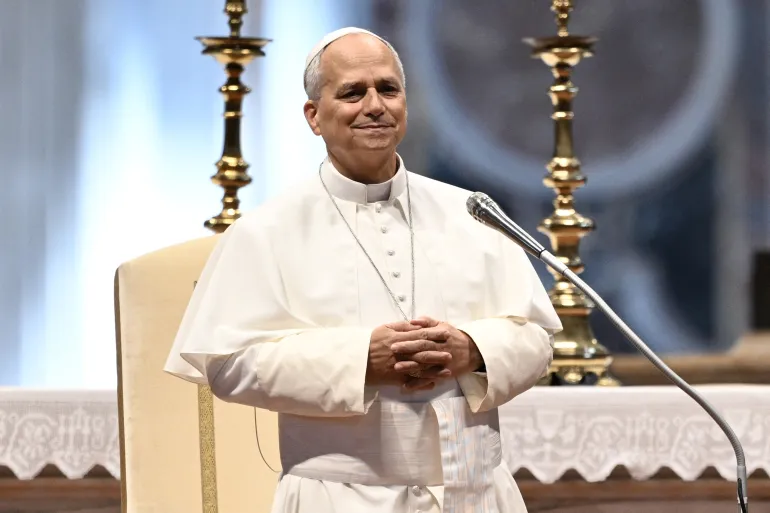
Pope Leo XIV has declared that the death penalty is “inadmissible” while his home country, the United States, announces plans to livestream an execution by firing squad.
Marking World Day Against the Death Penalty on Saturday, the pope reiterated the Catholic Church’s teaching on capital punishment, writing on X that it was “inadmissible because it is an attack on the inviolability and dignity of the person”.
“The common good can be safeguarded and the requirements of justice can be met without recourse to capital punishment,” his post said.
“Effective systems of detention have been developed that protect citizens while at the same time do not completely deprive those who are guilty of the possibility of redemption,” added the leader of the Catholic Church.
The American Pope’s comments come days after US Secretary of Defense Pete Hegseth said on Thursday that the firing squad execution of Nidal Malik Hasan on December 3 will be livestreamed.
Hasan was convicted of killing 13 people and wounding 32 others in a shooting at the Fort Hood military base in 2009.
Pope Leo did not specifically refer to the planned execution, or last month’s botched execution attempt on Christa Pike, who survived two doses of the lethal injection in Tennessee.
But his post came hours after his top deputy, Cardinal Pietro Parolin, the Vatican secretary of state, told Vatican News that the plan to livestream Hasan’s execution was “unacceptable”.
It was Leo’s predecessor, Pope Francis, in 2018 who first amended official Catholic teaching to declare capital punishment “inadmissible” in all circumstances.
[Aljazeera]
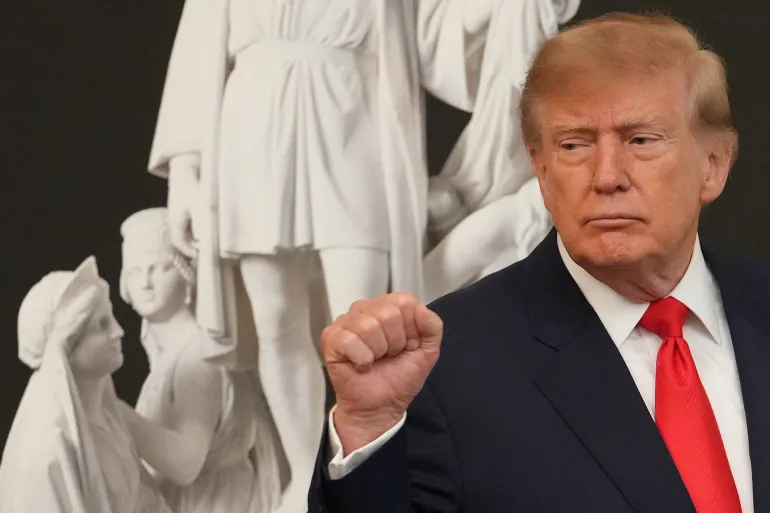
United States President Donald Trump said that Russia has agreed to supply 300,000 tonnes of diesel fuel to global markets amid discussions with Russian President Vladimir Putin.
“I have just concluded a highly successful discussion with President Vladimir Putin, of Russia, wherein it was agreed that Russia will immediately supply over 300,000 Tons of Diesel Fuel to the American and Global Marketplace, another 500,000 Tons during the month of November, and 1,000,000 Tons immediately thereafter,” Trump said in a post on his Truth Social platform.
The president added that Russia would deliver an additional 3 million tonnes of fuel “within a short period of time”. He said that the country would supply 500,000 tonnes in November.
An envoy for Russian President Vladimir Putin, Kirill Dmitriev, praised cooperation between Russia and the United States on diesel and energy in a post on X shortly after.
“Russia-US cooperation on diesel and energy will benefit the world,” Dmitriev wrote on X.
Petrol price pressures
The deal comes despite Ukrainian air strikes, which have taken more than half of the country’s oil refining capacity offline, according to claims made by Ukraine’s Ministry of Defence on Sunday.
The latest announcement comes a week after the G7 countries agreed to release 100 million barrels amid pressure from the White House.
Diesel prices have been elevated in recent months but have started to decline. The average price for a gallon is $6.27 ($1.66 per litre), according to the American Automobile Association (AAA), which tracks daily petrol prices. That’s down $0.10 from this time last week, but up $5.94 from this time one month ago.
[Aljazeera]

Showers above 75 mm are likely at some places in the Western, Sabaragamuwa, Central, Uva and North-Western provinces and in Galle, Matara, Anuradhapura and Mannar districts.

Iranian ships stranded, Lanka fears US sanctions

Sri Lanka CERT warns of overseas university admission scams

Navi Pillay’s Lankan affairs in focus as she wins 2026 Nobel Peace Prize

Lanka welcomes Indian SC remarks on Katchatheevu dispute

UN at Crossroads, Trump nearing End of the Road

‘Dates have the highest sugar content to fight Coronavirus’

Sunday Island 27 December – Headlines

#SundayIsland 17th December – Headlines

Sunday Island – 28th March

Sunday Island Headlines – 21 March

Sunday Island – 21st February – Headlines
-

 News6 days ago
Geneva takes up Sallay’s case and govt. ignores opportunity to answer accusations
-

 Features5 days ago
Preventing grievances from becoming communal
-

 Features3 days ago
The Sri Lankan who made Scottish history
-

 Sports3 days ago
Nissanka absence opens door for Sri Lanka’s young guns
-

 News4 days ago
Gnansara Thera to be assigned to prison printing section: Officials
-

 Features6 days ago
Sri Lanka Cricket Bill: Governance reform is not yet a cricket strategy
-

 News2 days ago
NDB fraud Rs 60mn more than reported
-

 Features3 days ago
Future of Sri Lanka’s state university system: Should it be shut down and reopened?