
Latest News
Gill, Shreyas and Axar provide the firepower as India go 1-0 up

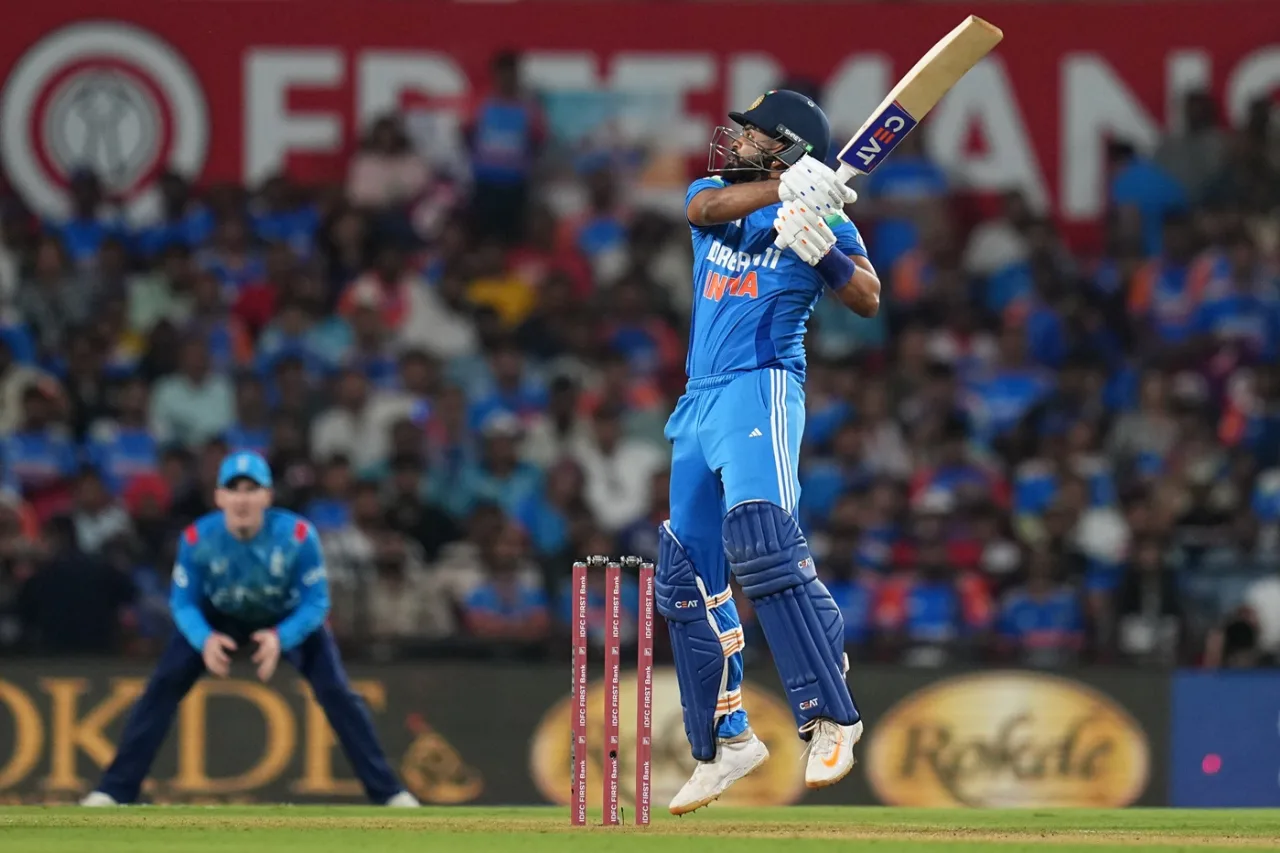
It was both untidy and emphatic. India made light work of their 249 target, passing it with 68 deliveries to spare in Nagpur. That they only won this first ODI by four wickets was down to an unnecessarily messy finish. One that spoke more to their disorder at how simple this was than any rallying from England’s part.
It was a mix of old and new that combined to give those in light blue a 1-0 lead in this three-match series. Ravindra Jadeja’s 3 for 26 was supplemented by Harshit Rana’s 3 for 53 on his maiden ODI appearance to roll England for 248 with 14 deliveries to spare. Jos Buttler’s 52 and Jacob Bethell’s 51 were the only scores of note after Phil Salt’s emphatic start of 43 from 26 had been wasted.
With Virat Kohli ruled out with a right knee injury sustained on Wednesday evening, Shubman Gill stepped up to ice the chase with 87, helped initially by Shreyas Iyer’s 59 and Axar Patel’s outstanding 52, in stands of 94 and 108, respectively.
The former came at a vital juncture, as Jofra Archer nicked off Yashasvi Jaiswal on ODI debut and Saqib Mahmood – in for the rested Mark Wood – had skipper Rohit Sharma caught at mid-on in the space of six deliveries. From 19 for 2, India did not look back.
Iyer’s fifty off 30 deliveries set an emphatic tone, dealing with anything and everything short, pulling and then ramping Archer for consecutive sixes at the end of the seventh over. Four of his nine fours were carved off Brydon Carse, who opted for length deliveries more on the off side once it became apparent Iyer was relishing the chance to heave to leg.
Axar’s introduction up the order proved a masterstroke, the left-hander playing with the kind of freedom that allowed Gill to calmly go about his business. Gill’s one alarm came when given out lbw on 38 to Liam Livingstone, but even that was corrected immediately as DRS showed a clear inside edge. The vice-captain’s 14th fifty was his first against England.
The pair combined expertly in the 29th over against Carse, taking 17 from it with two boundaries each – the best of them a ramp from Axar over the keeper. It was then that this chase officially became a canter, with just 48 needed from the last 21 overs. Axar raised his bat for fifty for the first time on home soil, driving his 46th ball, from Carse, on the up and through the fielder at mid-off.
That he was not able to see things through – bowled by a slow leg spinner by Adil Rashid – was a disappointment to Gill at the non-striker’s end. On 81 at the time, with 28 remaining, thoughts then turned to the 25-year-old’s century, which seemed to bring about indecision, first with KL Rahul’s dismissal – a tame caught and bowled to Rashid – and then his own, as he failed to strike Mahmood over Buttler at mid on.
Jadeja’s edge off Mahmood through wicketkeeper Salt for the winning runs characterised the anxiety brought on by that unnecessary cascade of three wickets for just four runs. But it also highlighted England’s shortcomings with the bat, brought about by their own three-wicket collapse at the top of the order in the space of eight deliveries.
Salt had driven an opening stand of 75 with Ben Duckett, leaving India flapping in the field. The brutality of Salt’s acceleration after a watchful start was contained in Rana’s third over for 26 courtesy of three sixes – a top-edge, a slog sweep off a slower ball and a heave over midwicket to finish the over.
But a miscommunication on a third run brought about his demise, the first domino to fall as 75 for 0 became 77 for 3. A cut to deep point was chased down by Iyer, who threw to the striker’s end to find Salt comfortably short of his ground, having been sent back by Duckett.
Back came Rana with a bang, with two wickets in the following over. Duckett mistimed a pull shot that required a spectacular catch from Jaiswal, running back from midwicket before a well-judged dive. Harry Brook was then taken well down the leg side by Rahul, who had beaten Rishabh Pant to wicketkeeping duties, after a rising length delivery caught the bottom glove.
Joe Root came to the middle for his first ODI innings since the 2023 World Cup, the ideal man for such a rebuild even given his absence from 50-over cricket. What optimism there was with Buttler at the other end did not last long, with Root falling lbw to Jadeja after 51 deliveries at the crease. It was the fourth time the left-arm spinner has dismissed him in the format.
At that stage, England were 111 for 4 in the 20th over. Not too dissimilar to India’s 111 for 3 at the end of the 16th, when Bethell trapped Iyer plumb in front.
Bethell’s stand with Buttler for the fifth wicket looked to be trending towards an emphatic rebuild akin to what Gill and Axar achieved. But the English duo’s partnership was capped at 59 when Buttler, nine deliveries after bringing up his 38th fifty-plus ODI score from 58 balls, clipped an Axar long-hop around the corner to Hardik Pandya at short fine leg.
Unlike India’s middle order, England’s fell apart, even as Bethell held his nerve through to a second ODI fifty from 62 balls. His maturity and reading of the situation was a lesson to more experienced heads around him. Those lower down owed it to him to stick around, but the return of pace ended up seeing off Liam Livingstone (caught behind for Rana’s third) and Carse (bowled for Mohammed Shami’s first).
Once Bethell was given out on review after Jadeja had struck his back pad on the sweep, only a few lusty strikes from Archer (21 not out) gave England what looked a respectable total at the halfway stage. India, though, showed it no respect whatsoever.
Brief scores:
India 251 for 6 in 3.4 overs (Shubman Gill 87, Shreyas Iyer 59, Axar Patel 52, Adil Rashid 2-49,Saqib Mahmood 2-47) beat England 248 in 47.4 overs (Joss Buttler 52, Phil Salt 43, Ben Duckett 32, Jacob Bethell 51; Harshit Rana 3-53, Ravindra Jadeja 3-26) by four wickets
[Cricinfo]


Sri Lanka Cricket has announced today (29) that the President of Sri Lanka Cricket and members of the Executive Committee have tendered their resignations.
The decision has been formaly communicated to President Anura Kumara Dissanayake and the Minister of Youth Affairs and Sports.
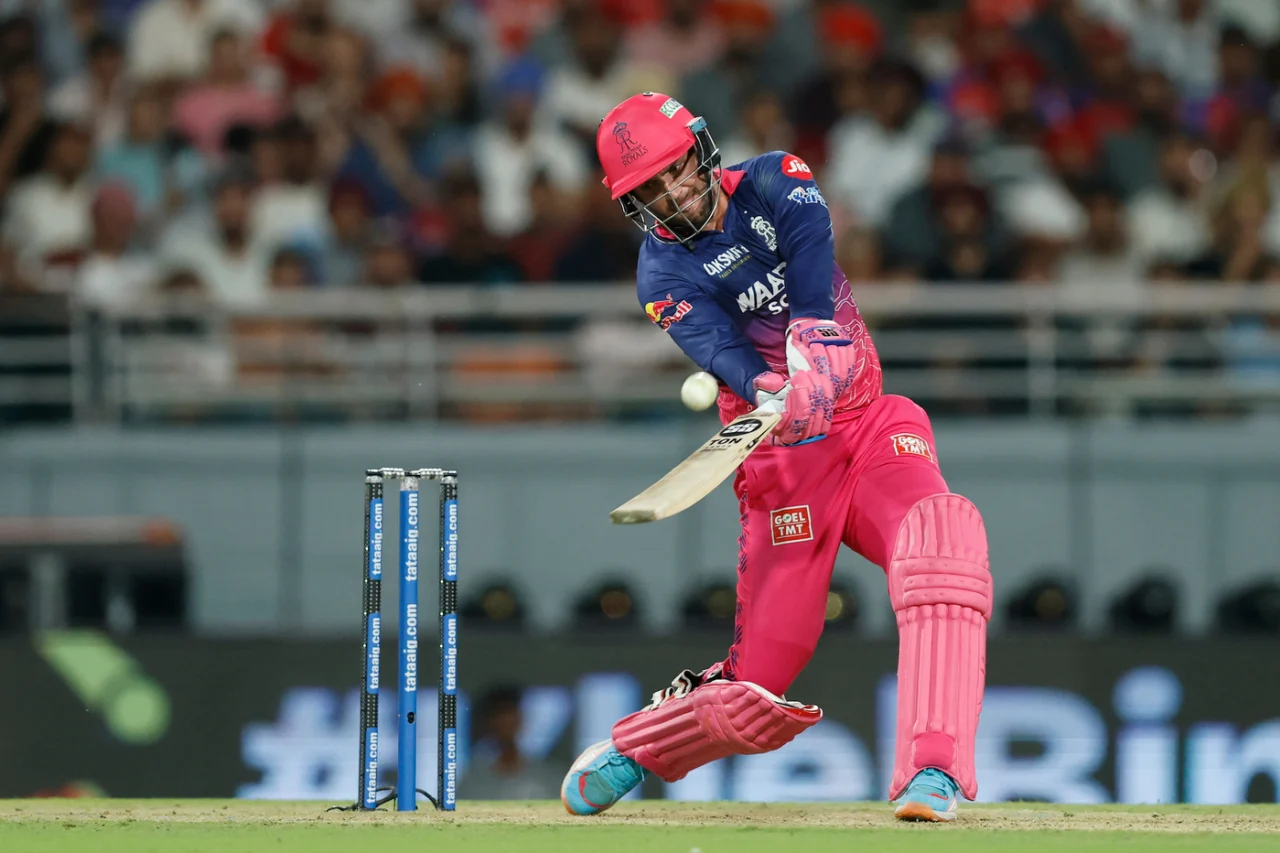
Shubham Dubey underlined the importance of an Impact Player, Donovan Ferreira proved why Rajasthan Royals were keen to have him traded in, while Yashasvi Jaiswal and Vaibhav Sooriyavanshi continued their stellar run as RR handed Punjab kings their first defeat of IPL 2026. In another run-fest in New Chandigarh, where 222 played 228, Ferreira and Dubey added 77 runs off 32 balls for the fifth wicket to turn what looked like a tricky chase at one point into a cakewalk and secured victory with four balls to spare.
Yuzvendra Chahal picked up 3 for 36, while Marcus Stoinis bludgeoned an unbeaten 62 off 22 balls but their returns weren’t enough as RR moved to third place on the points table.
Priyansh Arya was coming into the game with a powerplay strike rate of 260.27. Within his first five balls, he showed why he is one of the most fearless batters going around. He started with a spliced pull off Nandre Burger, before flat-batting him through midwicket and then following up with two of the most audacious strokes. Burger bowled a back-of-a-length ball outside off stump and Arya stood tall and played a nonchalant on-the-up aerial back-foot punch over covers for a clean six. The next ball was carved over backward point, before some luck got him another four. RR had raced to 29 for 0 after two.
At the other end was Jofra Archer. He started the third over with a hard length outswinger, which Arya edged to the vacant slip area. Archer nearly yelled at his captain for not having a slip, but soon got his reward as Arya sliced a 150kph thunderbolt for mid-on. Prabhsimran Singh took on Burger but wasn’t his fluent self. Despite that, PBKS raced to 65 in the powerplay.
Cooper Connolly was off quickly, scoring 30 off 14 balls but he misread a Yash Raj Punja googly and shanked him straight up. Prabhsimran, meanwhile, reached his fifty off 35 balls, but the RR bowlers controlled the middle overs, majorly through their two spinners, Punja and Ravindra Jadeja. Through overs seven to 16, PBKS scored 95 runs, while losing Connolly and Prabhsimran.
Coming into this game, Stoinis had faced 26 balls this IPL. But he showed off once he got his chance. He smashed Archer for two sixes in the 19th over, but reserved his best for the last. Fast bowler Brijesh Sharma had gone for just 18 runs off his first three overs, his slower balls were gripping and hard to hit. But Stoinis smashed the bowler for 24 to power PBKS past 220 as they scored 62 in the last four overs.
Sooryavanshi was quick off the blocks (again), smashing 43 off just 16 balls. After jamming two yorkers, he went 6, 4, 4 against Arshdeep Singh to close the opening over in style. Lockie Ferguson, playing his first match of the season, took time to find his rhythm. Sooryavanshi wasn’t giving him the time. He got a thick outside edge over slip before whipping a 145.1kph scorcher over deep midwicket and then going straight down the ground for six more. RR crossed 50 in just 19 balls but Arshdeep’s around-the-wicket worked as Sooryavanshi sliced him straight up and Shreyas Iyer ran back from mid-off to take a comfortable catch.
Yashasvi Jaiswal was all this while the silent spectator. As soon as Sooryavanshi departed, he went on the offensive against Arshdeep as RR raced to 66 for 1 after four overs. Harpreet Brar, the Impact Player, bowled a two-run fifth over, but Ferguson was taken for runs again with RR racing to 84 for 1 after six.
With the early punches in, PBKS fought back with the help of their spinners. Brar’s four overs cost just 25 runs, which included just one four and one six. Chahal removed Dhruv Jurel with a juicy full toss that was mistimed only as far as wide long-on. Jaiswal reached his fifty off 26 balls but soon sliced Chahal straight to long-off. Riyan Parag also started well but also holed out off Chahal for 29 off 16.
The required rate was exactly 12 when Parag holed out, with RR needing 72 off 36. But the PBKS spinners were done after conceding just 61 off 48 balls, and Dubey and Ferreira cashed in. After Arshdeep’s opening two overs went for 37, his final two went for 31. Dubey crashed Jansen for a four and six in the 16th, Ferguson was smoked for 16 in the 19th and the game had turned in five overs. Ferreira hit the winning runs with a six over long-on to bring up his second IPL fifty and help RR secure two important points. The PBKS fast bowlers leaked 166 off 68 balls, an issue that has been plaguing them for a while.
Brief scores:
Rajasthan Royals 228 for 4 in 19.2 overs (Yashasvi Jaiswal 51, Vaibhav Sooriyawanshi 43, Dhruv Jurel 16, Riyan Parag 29, Donovan Ferreira 52*, Shubham Dubey 31*; Arshdeep Singh 1-68, Yuzvendra Chahal 3-36) beat Punjab Kings 222 for 4 in 20 overs (Prabhsimran Singh 59, Priyansh Arya 29, Cooper Conolly 30, Shreyas Iyer 30, Marcus Stoinis 62*; Jofra Archer 1-40, Mandre Burger 1-59, Yash Raj Punja 2-41) by six wickets
[Cricinfo]

Half-centuries from Harshitha Samarawickrama and Imesha Dulani propelled Sri Lanka to a 25-run win in the first T20I against Bangladesh. The home side’s batting woes continued as they failed to chase down 162 against an efficient bowling effort by the visitors in Sylhet.
Malki Madara, Mithali Ayodhya and captain Chamari Athapaththu picked up two wickets each as Sri Lanka restricted Bangladesh to 136 for 7 in the chase. Athapaththu was outstanding with her accuracy, conceding just 19 runs in her four overs for the two wickets. Bangladesh had been put in early trouble when they slipped to 44 for 4 in the sixth over, despite starting off rapidly with 39 for no loss in the first 3.3 overs.
Shorna Akter then struck 60 off 45 balls, with six boundaries including two sixes, but her knock was for a losing cause. There was no help from batters at the other end. Shorna stuck around even as Bangladesh kept losing wickets and was the last batter dismissed off the final ball of the innings.
Earlier, Sri Lanka were powered by Athapaththu, who cracked five boundaries and a six in her 32. After her dismissal in the tenth over, Dulani and Samarawickrama added 80 runs for the third wicket. Samarawickrama struck five fours and two sixes in her 61 off 35 balls, while Dulani slammed seven fours in her 55 off 40 balls.
Their approach derailed Bangladesh’s bowlers, with only offspinner Sultana Khatun putting in an impressive bowling display: she took 2 for 29. The remaining two T20Is in the series will also be held in Sylhet.
Brief scores:
Sri Lanka Women 161 for 4 in 20 overs (Chamari Athapaththu 32, Imesha Dulani 55, Harshitha Samarawickrama 61; Marufa Akter 1-37, Sultana Khatun 2-29, Nahida Akter 1-26) beat Bangladesh Women 136 for 7 in 20 overs (Dilara Akter 23, Juairiya Ferdous 16, Shobhana Mostary 16, Shorna Akter 60; Malki Madara 2-31, Mithali Ayodhya 2-34, Chamari Athapaththu 2-19) by 25 runs
[Cricinfo]

President and Exco of Sri Lanka Cricket step down

Ferreira, Shubham, Rajasthan Royals openers hand Punjab Kings their first defeat

Dulani and Samarawickrama set up Sri Lanka’s victory in T20I series opener

Heat Index at Caution Level in the Northern, North-central and North-western provinces and in Kegalle, Trincomalee and Batticaloa districts during the day time

Showers or thundershowers will occur in most parts of the island after 1.00 pm

Treasury chief’s citizenship details sought from Australia

‘Dates have the highest sugar content to fight Coronavirus’

Sunday Island 27 December – Headlines

#SundayIsland 17th December – Headlines

Sunday Island – 28th March

Sunday Island Headlines – 21 March

Sunday Island – 21st February – Headlines
-

 News7 days ago
Lanka faces crisis of conscience over fate of animals: Call for compassion, law reform, and ethical responsibility
-

 News6 days ago
Whistleblowers ask Treasury Chief to resign over theft of USD 2.5 mn
-

 News6 days ago
No cyber hack: Fintech expert exposes shocking legacy flaws that led to $2.5 million theft
-

 News3 days ago
BIA drug bust: 25 monks including three masterminds arrested
-

 Business4 days ago
Nestlé Lanka Announces Change in Leadership
-

 News3 days ago
Banks alert customers to phishing attacks
-

 News4 days ago
Hackers steal $3.2 Mn from Finance Ministry
-

 News7 days ago
USD 2 mn bribe: CID ordered to arrest Shasheendra R, warrant issued against ex-SriLankan CEO’s wife