
Latest News
Gill, Shreyas and Axar provide the firepower as India go 1-0 up

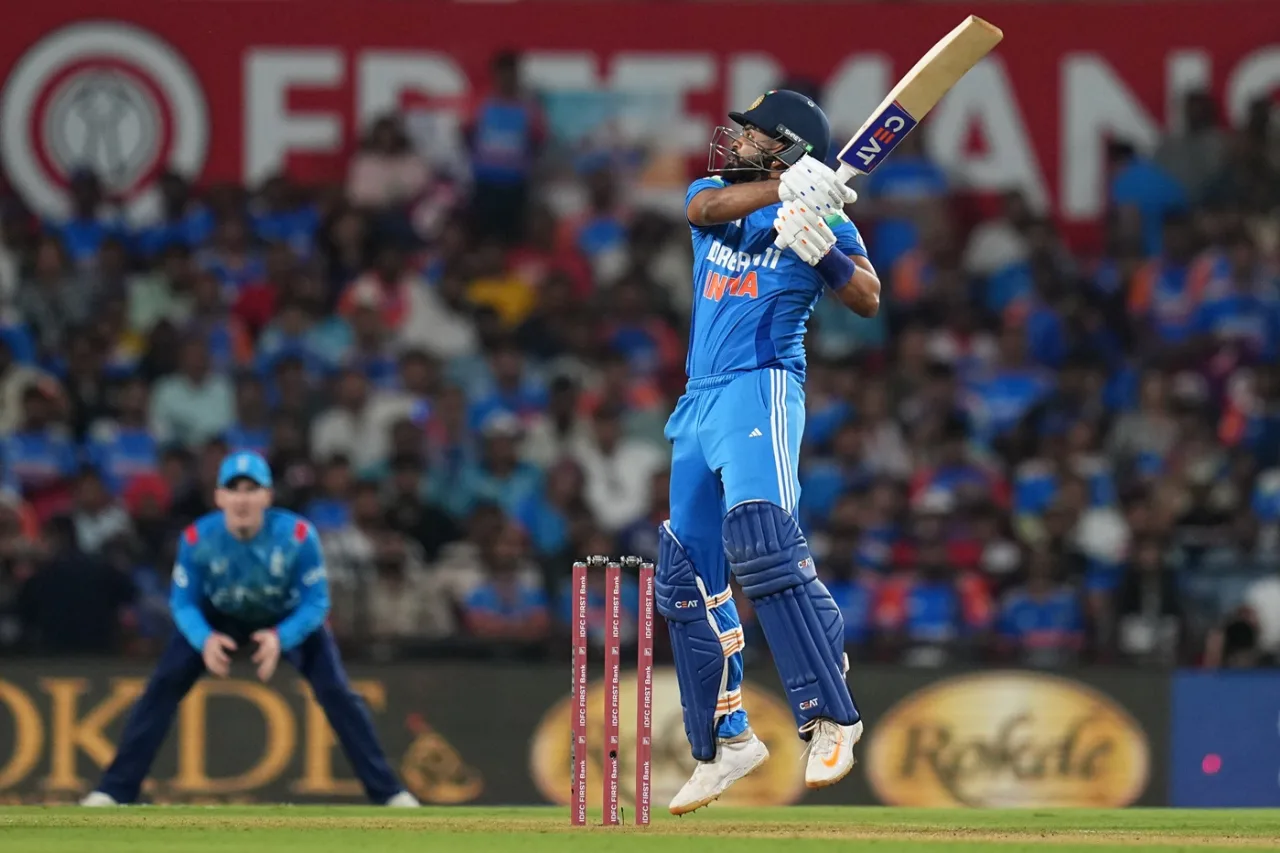
It was both untidy and emphatic. India made light work of their 249 target, passing it with 68 deliveries to spare in Nagpur. That they only won this first ODI by four wickets was down to an unnecessarily messy finish. One that spoke more to their disorder at how simple this was than any rallying from England’s part.
It was a mix of old and new that combined to give those in light blue a 1-0 lead in this three-match series. Ravindra Jadeja’s 3 for 26 was supplemented by Harshit Rana’s 3 for 53 on his maiden ODI appearance to roll England for 248 with 14 deliveries to spare. Jos Buttler’s 52 and Jacob Bethell’s 51 were the only scores of note after Phil Salt’s emphatic start of 43 from 26 had been wasted.
With Virat Kohli ruled out with a right knee injury sustained on Wednesday evening, Shubman Gill stepped up to ice the chase with 87, helped initially by Shreyas Iyer’s 59 and Axar Patel’s outstanding 52, in stands of 94 and 108, respectively.
The former came at a vital juncture, as Jofra Archer nicked off Yashasvi Jaiswal on ODI debut and Saqib Mahmood – in for the rested Mark Wood – had skipper Rohit Sharma caught at mid-on in the space of six deliveries. From 19 for 2, India did not look back.
Iyer’s fifty off 30 deliveries set an emphatic tone, dealing with anything and everything short, pulling and then ramping Archer for consecutive sixes at the end of the seventh over. Four of his nine fours were carved off Brydon Carse, who opted for length deliveries more on the off side once it became apparent Iyer was relishing the chance to heave to leg.
Axar’s introduction up the order proved a masterstroke, the left-hander playing with the kind of freedom that allowed Gill to calmly go about his business. Gill’s one alarm came when given out lbw on 38 to Liam Livingstone, but even that was corrected immediately as DRS showed a clear inside edge. The vice-captain’s 14th fifty was his first against England.
The pair combined expertly in the 29th over against Carse, taking 17 from it with two boundaries each – the best of them a ramp from Axar over the keeper. It was then that this chase officially became a canter, with just 48 needed from the last 21 overs. Axar raised his bat for fifty for the first time on home soil, driving his 46th ball, from Carse, on the up and through the fielder at mid-off.
That he was not able to see things through – bowled by a slow leg spinner by Adil Rashid – was a disappointment to Gill at the non-striker’s end. On 81 at the time, with 28 remaining, thoughts then turned to the 25-year-old’s century, which seemed to bring about indecision, first with KL Rahul’s dismissal – a tame caught and bowled to Rashid – and then his own, as he failed to strike Mahmood over Buttler at mid on.
Jadeja’s edge off Mahmood through wicketkeeper Salt for the winning runs characterised the anxiety brought on by that unnecessary cascade of three wickets for just four runs. But it also highlighted England’s shortcomings with the bat, brought about by their own three-wicket collapse at the top of the order in the space of eight deliveries.
Salt had driven an opening stand of 75 with Ben Duckett, leaving India flapping in the field. The brutality of Salt’s acceleration after a watchful start was contained in Rana’s third over for 26 courtesy of three sixes – a top-edge, a slog sweep off a slower ball and a heave over midwicket to finish the over.
But a miscommunication on a third run brought about his demise, the first domino to fall as 75 for 0 became 77 for 3. A cut to deep point was chased down by Iyer, who threw to the striker’s end to find Salt comfortably short of his ground, having been sent back by Duckett.
Back came Rana with a bang, with two wickets in the following over. Duckett mistimed a pull shot that required a spectacular catch from Jaiswal, running back from midwicket before a well-judged dive. Harry Brook was then taken well down the leg side by Rahul, who had beaten Rishabh Pant to wicketkeeping duties, after a rising length delivery caught the bottom glove.
Joe Root came to the middle for his first ODI innings since the 2023 World Cup, the ideal man for such a rebuild even given his absence from 50-over cricket. What optimism there was with Buttler at the other end did not last long, with Root falling lbw to Jadeja after 51 deliveries at the crease. It was the fourth time the left-arm spinner has dismissed him in the format.
At that stage, England were 111 for 4 in the 20th over. Not too dissimilar to India’s 111 for 3 at the end of the 16th, when Bethell trapped Iyer plumb in front.
Bethell’s stand with Buttler for the fifth wicket looked to be trending towards an emphatic rebuild akin to what Gill and Axar achieved. But the English duo’s partnership was capped at 59 when Buttler, nine deliveries after bringing up his 38th fifty-plus ODI score from 58 balls, clipped an Axar long-hop around the corner to Hardik Pandya at short fine leg.
Unlike India’s middle order, England’s fell apart, even as Bethell held his nerve through to a second ODI fifty from 62 balls. His maturity and reading of the situation was a lesson to more experienced heads around him. Those lower down owed it to him to stick around, but the return of pace ended up seeing off Liam Livingstone (caught behind for Rana’s third) and Carse (bowled for Mohammed Shami’s first).
Once Bethell was given out on review after Jadeja had struck his back pad on the sweep, only a few lusty strikes from Archer (21 not out) gave England what looked a respectable total at the halfway stage. India, though, showed it no respect whatsoever.
Brief scores:
India 251 for 6 in 3.4 overs (Shubman Gill 87, Shreyas Iyer 59, Axar Patel 52, Adil Rashid 2-49,Saqib Mahmood 2-47) beat England 248 in 47.4 overs (Joss Buttler 52, Phil Salt 43, Ben Duckett 32, Jacob Bethell 51; Harshit Rana 3-53, Ravindra Jadeja 3-26) by four wickets
[Cricinfo]

Latest News
Trump says deal to end war with Iran already signed and details to be released ‘pretty soon’

US President Donald Trump has said a preliminary deal to end the war with Iran has already been signed and suggested that details of the agreement are set to be published “pretty soon”.
“I am very happy to say it’s signed, the deal is all signed,” he said during talks with French President Emmanuel Macron at the G7 summit on Monday.
Senior US officials also began giving some details about the contents of the deal, briefing that the Strait of Hormuz would re-open on Friday – the same day the deal is formally inked in Geneva.
Technical talks on Iran’s nuclear programme are expected to begin this week, they said, while any sanctions relief or release of assets will depend on Iran meeting commitments under the deal.
Vice-President JD Vance told CNN’s Jake Tapper on Monday that the memorandum of understanding (MOU) between the US and Iran was “about a page and a half” and was a very general document.
Vance added that a lot of the details would be worked out during future negotiations.
“On a number of issues, we are going to have to figure this stuff out during the technical negotiation phase, but what the MOU does is set up a framework whereby the Iranians get the benefits of the bargain by meeting their obligations under the bargain,” he said.
In “paragraph one” of the document it is outlined that Iran will commit itself to “regional peace and stability”, Vance said, which he added included stopping the funding of “terrorist organisations”.
“Most importantly, they’re going to have a verifiable commitment to not building a nuclear weapon,” Vance said.
The US officials said the agreement had been signed electronically by Trump, Vance and Iranian Parliament Speaker Mohammad Bagher Ghalibaf.
They also suggested more details of the pact could be released by Wednesday – although Trump said the full text of the agreement would be released “pretty soon” after Friday’s ceremony.
“It’s a very powerful document, and I want it to be released. So probably pretty soon,” the president said.
The deal will extend a ceasefire for another 60 days, during which the sides will negotiate details of a final agreement.
Announcing the breakthrough on Sunday, Pakistan’s Prime Minister Shehbaz Sharif, whose nation had been mediating, said it included “the immediate and permanent termination of military operations on all fronts, including in Lebanon”.
The US officials said that while Lebanon was covered by the ceasefire framework, the withdrawal of Israeli forces from Lebanese territory was not a condition of the deal. Israel would retain the right to self defence, they added.
Speaking on Monday evening, Israeli Prime Minister Benjamin Netanyahu said Israeli forces would remain in security zones in Lebanon, Syria and Gaza “as long as necessary”, and retain the freedom to act against attacks.
He also told a news conference Iran would not be allowed to obtain nuclear weapons, with or without a deal.
Netanyahu was speaking after Lebanese media reported a deadly Israeli strike on a car in the south – the first since the peace deal was announced. Hezbollah said it had fired missiles and drones at Israeli forces in return.
Trump on Sunday said he had ordered the immediate removal of a US naval blockade of Iranian ports and added that the Strait of Hormuz would be opened when the initial agreement was signed.
Taking to social media on Monday, he claimed that “ships are starting to move, many loaded up with Oil, out of the Strait of Hormuz”.
Iran’s deputy foreign minister Kazem Gharibabadi confirmed the end of military operations in a phone call on Iranian state TV, which portrayed the framework deal as a victory for Iran.
Gharibabadi said that Qatari mediators held “nearly 14 to 15 hours of lengthy talks” in Tehran to reach the initial agreement.
Iran’s top military command, Khatam al-Anbiya Central Headquarters, said that Iranians, together with the country’s armed forces and Tehran’s proxies and allies in the region, had shown the US and Israel that they had “no option but to accept defeat and surrender”.
But Iran’s foreign ministry said Tehran still held “deep mistrust” of the US and the agreement was “merely a step towards reducing tensions”.
Lebanese President Joseph Aoun welcomed the announcement, saying in a statement that he looked forward to the understandings translating into “practical steps that will put a definitive end to the cycle of violence”.
Key past sticking points have included Iran’s nuclear enrichment and Western insistence that the country not possess a nuclear weapon, and Iran’s desire for comprehensive sanctions relief and access to tens of billions of dollars in frozen oil revenues.
In a congratulatory joint statement, the leaders of the UK, France, Germany and Italy said Iran “must never acquire a nuclear weapon” and that they were “prepared to lift relevant sanctions in response to clear, verifiable steps by Iran on its nuclear programme”.
UK Prime Minister Sir Keir Starmer called the announcement “a hugely important step forward in ending the war, ensuring regional stability and re-opening the Strait of Hormuz”.
[BBC]
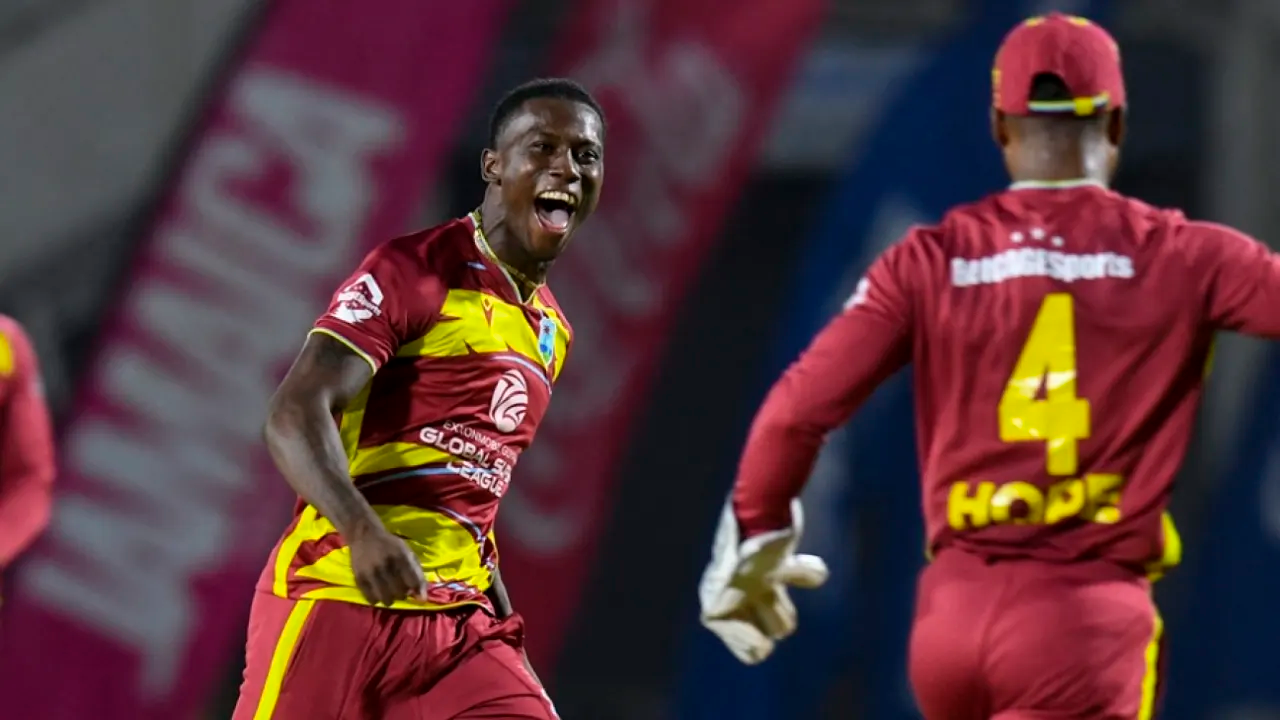
There are heists, and then there are heists, and the one at Sabina Park on Sunday will live long in the memory of those who watched it. For 16 overs of the chase, Sri Lanka had looked in total control of their defence of 169. But in a frenzied finish, West Indies ransacked 60 runs off just 22 deliveries to complete the chase with two balls to spare.
Sherfane Rutherford was dropped twice on the way to an unbeaten 54 off 40, and he was part of the defining stand of the match – 81 off 53 with Rovman Powell. But despite their intervention, West Indies still needed more and it was the returning Jason Holder that delivered, smashing 21 off five balls to seal the win and the series.
The result stretched Sri Lanka’s wait for a T20I series win in the Caribbean, but more immediately, left them scratching their heads. In terms of planning, they could not have done much more, while the pitch was tailored to their strengths – namely the spin trio of Maheesh Theekshana, Wanidu Hasaranga and Dunith Wellalage.
The latter had even picked up skipper Shai Hope off just the second delivery of the innings, while Hasaranga snagged two through the middle. Theekshana, meanwhile overcame a tough 15-run opening over – courtesy Shimron Hetmyer. – to give away just 11 off his next three.
With the bat too, Sri Lanka had done seemingly enough, with Pathum Nissanka’s fast start supplemented by some helpful middle-order cameos and bookended by a coming-of-age 43 off 28 from Wellalage.
But at the key moments, it was West Indies, who held their nerve. Player-of-the-Match Shamar Joseph ended with career-best figures of 5 for 33, and did so bowling in the game’s most difficult periods – the last over of the powerplay and the final over of the innings.
And then when the game seemed over, West Indies’ fabled firepower belatedly came to the fore, as they came in clutch once more.
In the first game, West Indies struck 29 in the death overs. And in the second game, 27. With 60 needed in that same period in the decider, the odds weren’t exactly in their favour.
But across two Dushmantha Chameera overs, where the usually reliable quick struggled – searching fruitlessly for yorkers – West Indies pilfered 47 runs, and staged a comeback for the ages.
How they got there was modern West Indies cricket in a nutshell. Sri Lanka strangled the middle overs, with their trio of spinners all proving tough to get away. The powerplay had fetched a respectable 51 – much of it owing to Hetmyer’s 32 off 19 – but the middle overs turned as sluggish as the surface, with West Indies trudging to 110 for 4.
But having struggled to get Sri Lanka’s death bowling away for much of the series, they capitalised on the off-colour Chameera to secure an all-time smash and grab. The pacer’s third over went for 24, and then his last for 23. They were the 17th and 19th of the innings. From being on the verge of defeat at the end of the 16th, the game was over before the 20th had begun.
Sri Lanka, though, might wonder what might have been had they not grassed two straightforward chances from Rutherford when he was on 24 and 25.
Sri Lanka had started well in the powerplay in the earlier games, and that looked to be the case on Sunday night as well.
While Kusal Mendis was for once dismissed cheaply – a chipped leading edge plucked out of the air by Matthew Forde followed by a spicy send-off and heated words – Pathum Nissanka, who has had a quiet tour by his standards, belatedly took up the attacking mantle.
On a surface that was gripping from the very first delivery, Nissanka started patiently before gradually flexing his striking chops. His 26 off 17 including two fours and two sixes.
But just as he might have been settling in for a game-defining stint, Joseph induced a top-edge and followed it up with one that straightened down the line to completely bamboozle new batter Pavan Ratnayake. Two in two – echoing Holder’s powerplay heroics in the first game – and Sri Lanka were kept to 51 for 3, their lowest powerplay of the series.
Joseph would somehow better this outcome later on with a sublime triple-wicket final over to give the hosts some much-needed momentum into their chase.
Following Joseph’s double-strike, Sri Lanka were rightfully wary of losing any further wickets, which saw Kamindu Mendis join Kamil Mishara – who had got his eye in during the powerplay – out in the middle. The pair strung a stand of 21 off 22 to keep things ticking, and this trend continued with each successive partnership over the period.
Dasun Shanaka’s arrival brought some power to the proceedings, as he wasted little time in tearing into Roston Chase with a six over long-on. His stand with Kamindu was brief but effective as the pair managed 16 off seven, followed by one worth 23 off 21 with Wellalage.
On another day, Shanaka’s dismissal – cleverly bowled by Holder – might have signalled a drop in the scoring rate, but Wellalage – brought into the XI in the previous game to strengthen the lower-order batting – produced a knock that was a statement.
A slog sweep over deep square-leg off Chase signalled his early intent, but it was over the extra cover region that the left-hand batter truly prospered. Time and again, he was able to manufacture drives and scythes into that vacant – but generally tough to access – region in front of square on the off side.
And he was ably supported by Hasaranga, as the pair managed an innings-best stand of 49 off 28. By the time Wellalage fell in the final over – miscuing one off the impressive Joseph – he could walk off safe in the knowledge that he might have struck a potentially series clinching 43 off 28.
Sri Lanka’s target, having come to terms with the pitch midway through their innings, might have been in the region of 160-170. But while they managed 169 in their 20 overs, it’s likely they will feel like they left runs behind – particularly as they had 156 for 6 at the start of the penultimate over.
The West Indies fightback was triggered by a piece of magic from Rutherford at deep point, as he picked up and sent in an arrowed direct hit to find Hasaranga well short in trying to steal a second.
Then returned Joseph at the last, and he responded to a first-ball boundary by removing Wellalage next delivery and Chameera one ball later, capturing his second double of the evening. Joseph capped off proceedings with a searing final-ball yorker to dismiss Theekshana as the last man.
It meant West Indies had restricted Sri Lanka to just 15 off the last 12 deliveries, and kept themselves in the game – something that eventually proved even more crucial in the game’s frenetic closing moments.
Scores:
West Indies 170 for 5 in 19.4 overs (Brandon King 16, Shimron Hetmyer 32, Rovman Powell 33, Sherfane Rutherford 54*, Jason Holder 21*;Dunith Wellalage 1-23, Dushmantha Chameera 1-64, Maheesha Theekshan 1-36, Wanidu Hasaranga 2-17) beat Sri Lanka 169 in 20 overs (Pathum Nissanka 26, Kamil Mishara 28, Kamindu Mendis 20 Dasun Shanaka 16, Dunith Wellalage 43, Wanidu Hasaranga 21; Akeal Hosein 1-31, Matthew Forde 1-39, Jason Holder 1-33, Sharmar Joseph 5-33, Roston Chase 1-32) by five wickets
[Cricinfo]
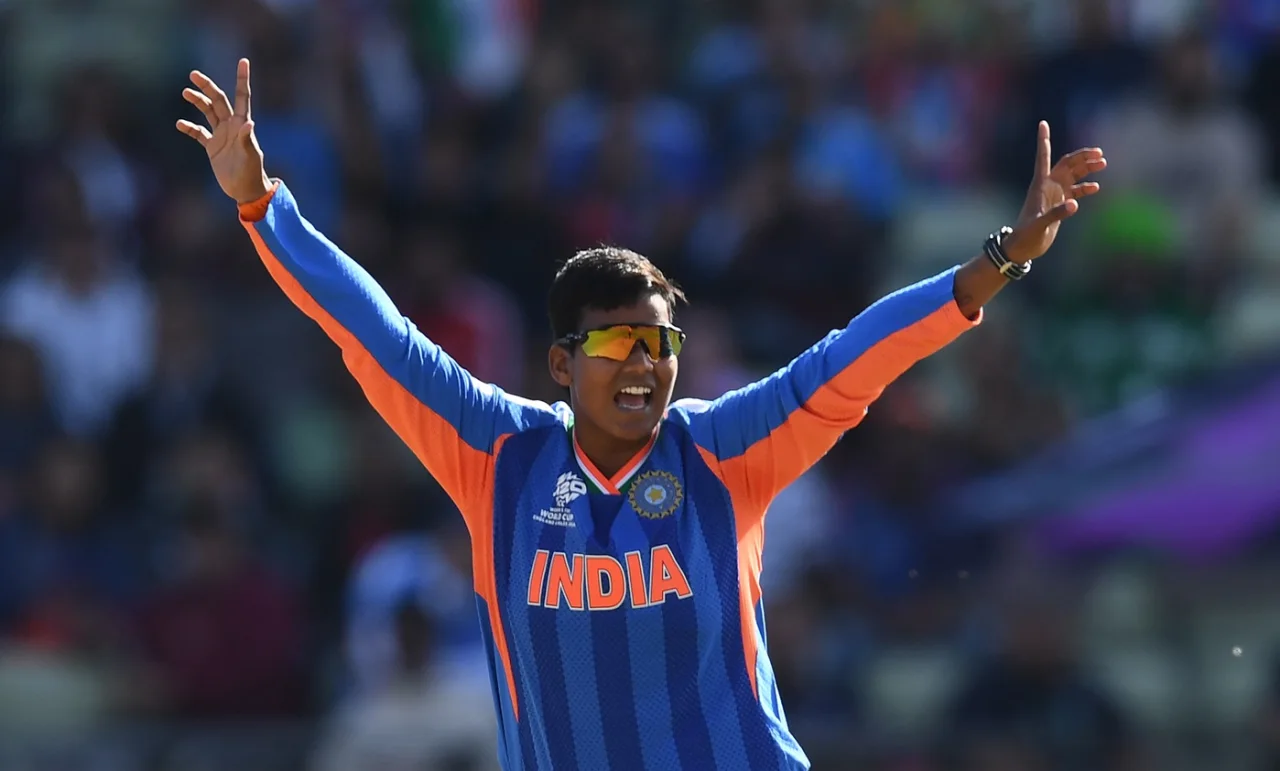
Smriti Mandhana and Deepti Sharma bailed India out with bat and ball respectively to fire them to an emphatic opening win over Pakistan in front of a sellout crowd in Birmingham on Sunday.
Mandhana top-scored with 68 to lift India from 18 for 2 to 170, their highest in a T20 World Cup against Pakistan. Then, Deepti struck twice in two overs after Pakistan’s openers rattled 38 in quick time.
Deepti’s blockbuster act, though, was a direct hit from short third to run out the dangerous Muneeba Ali for 41, triggering a collapse Pakistan didn’t quite recover from. They lost 5 for 26 through the middle phase as India’s spinners tightened their grip. They were eventually bowled out for 106, with Deepti finishing with 5 for 10 to become the highest wicket-taker in women’s T20Is.
In a match where both teams missed a number of opportunities on the field, the eventual difference was India’s death-overs lift. Richa Ghosh, who allayed fears of a form slump during the warm-ups last week, smashed 34 off 17. This included a sequence of four fours and a six off her last eight legal deliveries to help India muscle 60 off the last six overs when it seemed like they’d finish around 150.
That not only helped India finish on a high, but also gave them a massive net run rate cushion in what is being dubbed the group of death.
India looked to go hard early. Shafali Verma launched her first ball for six, but was caught behind four balls later off left-arm spinner Sadia Iqbal in trying to manufacture a boundary opportunity. Jemimah Rodrigues then played an uncharacteristic swipe to be taken at cover in the fourth over, giving left-arm seamer Tasmia Rubab a wicket off her second ball on World Cup debut. At 18 for 2, India needed to stem early damage.
Mandhana offset some of that early pressure by hitting two boundaries off spinner Rameem Shamim in the fifth over. Mandhana was on 27 when Aliya Riyaz dropped her running back from mid-off to deny Rubab a second wicket. At that stage, India were struggling for momentum at 44 for 2 in the 8th over.
Fatima Sana rustled through the middle overs with spin as Harmanpreet Kaur also took her time to settle in, scoring 5 off 10 at one stage. But the introduction of left-arm spinner Nashra Sandhu forced a slight change in approach as Harmanpreet hit her for two boundaries in her first over, and India scored 24 between overs 7-10.
Mandhana was particularly superb in stepping out and hitting inside-out over cover, one such boundary helped her raise a 34-ball half-century. Soon after, Saira Jabeen reprieved her for a second time at deep midwicket off Iqbal. You got the sense the floodgates had truly opened.
Mandhana holed out to long-on for 68 to give Pakistan a reprieve. That turned into double-delight three balls later when Bharti Fulmali was stumped, giving Iqbal the charge. When Harmanpreet flicked Fatima Sana to deep square, India had lost 3 for 14. India then went through a 21-ball period without a boundary before the runs came in a torrent in the last two overs.
Rubab, who came into her final overs with figures of 3-0-17-1, was then taken to the cleaners with Ghosh hitting her for a sequence of 4, 6, 4, 4 in a 23-run over. After displaying her brute force in the leg-side arc between mid-on and deep midwicket in the penultimate over, Ghosh’s deft touches helped pocket 15 off the final over to help India sign off with momentum on their side.
Muneeba should’ve been out in the second over when she jabbed at a sharp-turner from offie Shreyanka Patil, only for Ghosh to fluff an opportunity. Then in the fourth over, Shreyanka deceived her in flight to slice a drive to point where Arundhati Reddy put down a straightforward chance. In between that, Muneeba threw Kranti Gaud off her lengths by walking across to scoop. She was also quick to pick length and cut well as Pakistan raced to 37 for 0 in four overs.
Across the next six overs, Pakistan lost the cream of their middle order as India’s spinners tightened their grip, picking up 4 for 21. Deepti aside, Shree Charani, on T20 World Cup debut, gave an excellent account of herself, picking up 3 for 21 in the middle overs. Deepti then picked up three wickets in her fourth over to wrap up the game in the 17th, giving India a massive win and walking away with the Player of the Match award.
SCORES:
India Women 170 for 6 in 20 overs (Smriti Mandhana 68, Harmanpreet Kaur 36, Richa Ghosh 34, Deepti Sharma 12*; Sadia Iqbal 2-41, Fatima Sana 2-33, Tasmia Rubab 1-41, Rameem Shamim 1-30) beat Pakistan Women 106 in 17 overs (Muneeba Ali 41, Gull Feroza 12, Ayesha Zafar 12, Aliya Riyaz 18; Deepti Sharma 5-10, Shree Charani 3-21, Shafali Verma 1-22) by 64 runs
[Cricinfo]

‘Spider-Man of Yemen’ dies falling into volcanic crater

Norwegian crown princess’s son found guilty of two counts of rape

Trump says deal to end war with Iran already signed and details to be released ‘pretty soon’

Showers will occur in the Western, Sabaragamuwa and North-western provinces and in Galle, Matara, Kandy and Nuwara-Eliya districts

Easter Sunday carnage: WR asks AG to question Dappula on ‘grand conspiracy’ claim

Beijing Capital Airlines to resume flights to Colombo signalling boost to tourism

‘Dates have the highest sugar content to fight Coronavirus’

Sunday Island 27 December – Headlines

#SundayIsland 17th December – Headlines

Sunday Island – 28th March

Sunday Island Headlines – 21 March

Sunday Island – 21st February – Headlines
-

 News4 days ago
CIABOC summons Yoshitha over his participation in British Navy training programme
-

 News6 days ago
Local firms move millions of dollars overseas for phantom imports: Govt.
-

 Midweek Review6 days ago
July 09: An inexcusable overall security failure and exceptional contingency plan
-

 News6 days ago
AI raises concerns over arrest of Sallay and rapper under PTA
-

 News3 days ago
Commonwealth lawyers urge Lanka to uphold rule of law
-

 Features2 days ago
Politics of protected species
-

 Sports1 day ago
Tharanga set for high-profile javelin clash in Ostrava
-

 News4 days ago
Justice Minister responds to social media claims he represented Easter Sunday ringleader