
Latest News
White House defends freezing funds as ‘reasonable’ while Democrats express ‘extreme alarm’

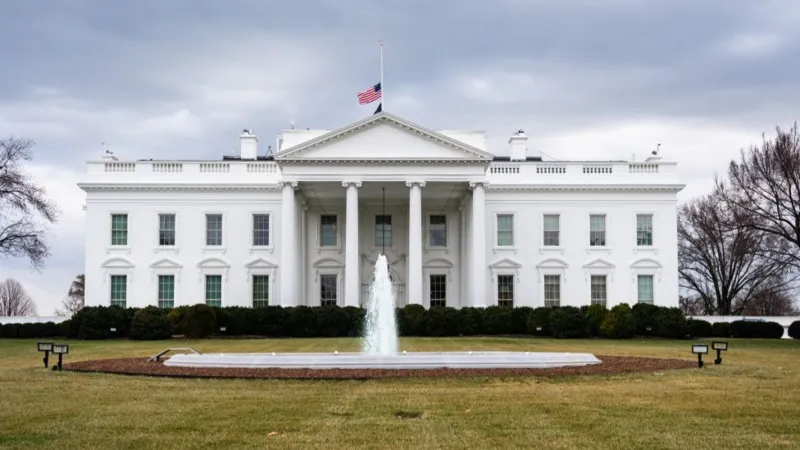
The two-page memo, from the acting head of the White House budget office, instructs agencies to “temporarily pause all activities related to obligations or disbursement of all Federal financial assistance”.
Much about the order, which went into effect on Tuesday afternoon, and its scope remain unclear, sowing widespread confusion.
The directive could paralyse billions of dollars meant for federal programmes, from disaster relief to cancer research.
Democrats have warned it may have brutal and far-reaching consequences.
In her first news conference as White House press secretary, Karoline Leavitt defended the directive, saying the motivation for the freeze is being “good stewards for tax dollars”.
“I think this is a very reasonable measure,” she said on Tuesday, adding that the pause would allow the government to weed out spending for “woke” gender issues and diversity programmes that conflict with Trump’s executive orders.
Medicare and Social Security benefits will not be affected, nor will any programme “that provides direct benefits to individuals”, including Supplemental Nutrition Assistance Program, known as SNAP or food stamps, the White House said.
But Leavitt did not clarify how aid to individuals would be protected in practice, as much of it goes first to state governments and other organisations, which then pass the assistance on to individuals. Leavitt also did not rule out Medicaid, a jointly run federal and state program which provides health insurance to low-income Americans, being cut off.
On Tuesday, hours after the late-night order was issued, the White House issued a second memo, with further information.
The pause is not “across the board”, the second memo said, but applies only to projects implicated by Trump’s various executive orders, including those that aimed at scraping diversity programmes in the federal government.
Democrats have assailed the freeze, saying it will bring chaos and harm to millions of Americans and warning it violates federal law.
In a letter to the White House, top Democrats expressed “extreme alarm”.
“The scope of what you are ordering is breathtaking, unprecedented, and will have devastating consequences across the country,” wrote Washington Senator Patty Murray and Connecticut Congresswoman Rosa DeLauro.
“We write today to urge you in the strongest possible terms to uphold the law and the Constitution and ensure all federal resources are delivered in accordance with the law.”
A coalition of Democratic states attorneys general said they will file suit to block the order, calling it unconstitutional.
“My office will be taking imminent legal action against this administration’s unconstitutional pause on federal funding,” New York Attorney General Letitia James wrote on social media. “We won’t sit idly by while this administration harms our families.”
In the Monday evening memo, which comes days after the US halted nearly all foreign aid, the acting head of the Office of Management and Budget (OMB) Matthew Vaeth called on government agencies to ensure spending is consistent with Trump’s priorities.
Federal agencies must “temporarily pause all activities related to obligation or disbursement of all federal financial assistance,” and any other programs that included “DEI, woke gender ideology and the Green New Deal,” Vaeth wrote.
DEI (Diversity, Equity and Inclusion) programmes aim to promote participation in workplaces by people from a range of backgrounds.
Their backers say they address historical or ongoing discrimination and underrepresentation of certain groups, including racial minorities, but critics argue such programmes can themselves be discriminatory.
The Green New Deal, a proposal to prevent climate change through public policy, was never signed into law.
Vaeth suggested that the pause would last until at least mid-February, asking agencies to provide a detailed report on the programmes that have been affected by 10 February.
It remains uncertain how much money is involved. The memo suggests that the federal government spent $10tn (£8tn) in fiscal year 2024, more than $3tn of which went to federal financial assistance. But the source of those numbers is unclear. The nonpartisan Congressional Budget Office reported that the government spent $6.7tn that year.
Nonprofit groups have responded in distress.
“This order is a potential five-alarm fire for nonprofit organizations and the people and communities they serve,” Diane Yentel, the chief executive of the National Council of Nonprofits, said in a statement.
“From pausing research on cures for childhood cancer to halting food assistance, safety from domestic violence and closing suicide hotlines, the impact of even a short pause in funding could be devastating and cost lives,” she added.
The move follows last week’s news that the Department of State had issued a halt to nearly all existing foreign assistance and paused new aid, according to an internal memo sent to officials and US embassies abroad.
It appeared to affect everything from development assistance to military aid, making exceptions only for emergency food aid and for military funding for Israel and Egypt.
Trump earlier issued an executive order for a 90-day pause in foreign development assistance pending a review of efficiencies and consistency with his foreign policy.
The US is the world’s biggest international aid donor, having spent $68bn (£66bn) in 2023 according to government figures.
(BBC)

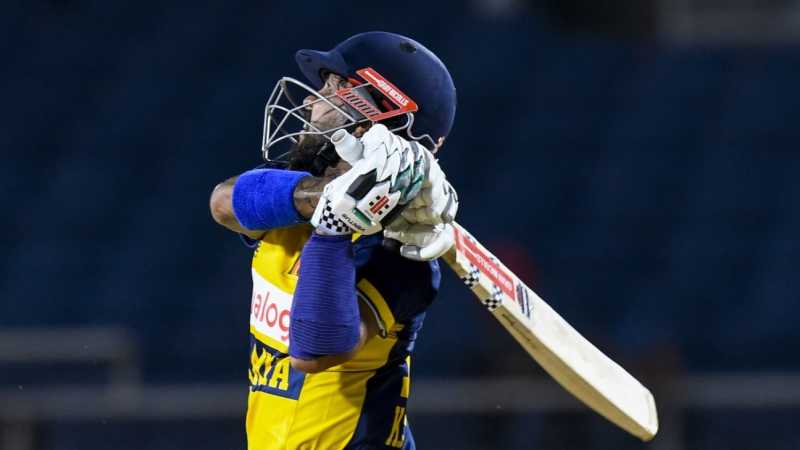
Kusal Mendis and Binura Fernando have been ruled out of Sri Lanka’s upcoming T20I series against England, with the SLC saying that the two were “still undergoing rehabilitation” after injuries picked up at the 2026 Lanka Premier League.
The update came just over a day after the two were named in the 16-member squad, with Kusal retained as captain of both the T20I and the ODI sides.Charith Asalanka, who had returned to the vice-captain’s position for the series, will now lead the side in the T20Is. Though Kusal hasn’t been ruled out of the ODIs just yet, were he to miss out, Asalanka, as the designated vice-captain, might step in there too.
Kusal has been out of action since July 19 with a right hamstring injury, while Binura hasn’t played since August 5, SLC putting his absence down to a back injury.
Pavan Rathnayake, the 24-year-old top-order batter, has replaced Kusal in the T20I touring party, while Dilshan Madushanka, the fast bowler who was in the squad for the Tests against India recently but didn’t get to play, has come in for Binura.
(Cricinfo)
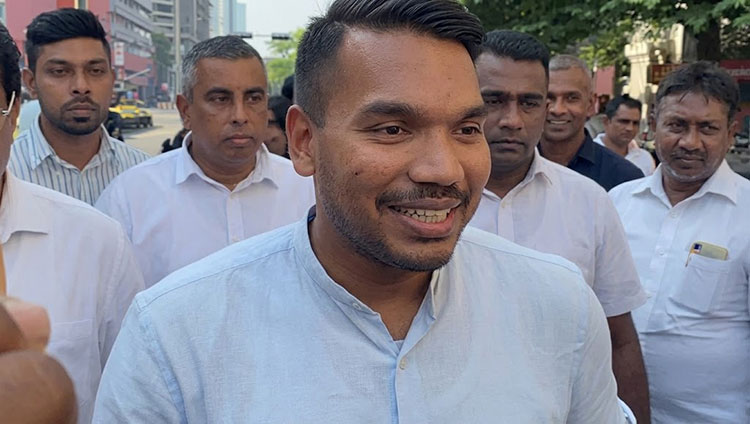
Sri Lanka Podujana Peramuna (SLPP) Member of Parliament Namal Rajapaksa has been arrested by the Commission to Investigate Allegations of Bribery or Corruption (CIABOC).
Namal Rajapaksa had been summoned by CIABOC to provide a statement in connection with investigations into the controversial Airbus deal. He was subsequently arrested by CIABOC after recording his statement for over 5 hours.

Smriti Mandhana filled her batting coffers with her second T20I century, along the way surpassing Mithali Raj for the record for most runs in women’s internationals, to help India secure a second straight win on Thursday night in Dubai.
Hong Kong’s nerves showed on the field when they fell flat at the first sign of attack from India’s batters, and their timid approach in the chase further exposed the gulf in quality and experience. In the end, they lost by 137 runs – 13 more than what Mandhana managed on her own.
A second straight loss meant Hong Kong will only have some pride to play for, as a berth in the next round is now out of the equation.
India’s cautious start
At the end of five overs, India were 38 without loss – not concerning, but not dominating enough either. They took a while to suss up the lack of pace from the bowlers. Mandhana hogged much of the strike; Shafali Verma faced just six balls in the first five overs. Hong Kong couldn’t have been happier at having kept a lid on the scoring.
Shafali steps up
After a tight first over that went for just seven, offspinner Maria Lamplough was clobbered by Shafali for two fours and two sixes in a 22-run over that helped India take off.
Lamplough struggled for consistency and kept looping the ball up, with Shafali needing no second invitation. The first of the two sixes was a shovel over deep midwicket; the next even better – lofted inside-out over deep extra cover.
Shafali’s brief surge ended on 28 in the eighth over, when Marina took an excellent catch running in and diving full stretch from long-on off Ruchita Venkatesh’s bowling. By then, the openers had put on 74.
Mandhana prances towards record century
As new No. 3 Pratika Rawal took a while to gauge the pace of the surface, Mandhana reached her half-century – her 36th in T20Is – off 40 deliveries with a flat six over deep square. Mandhana’s default setting for much of this period was moving over to the off-side to set herself up for several variations of the slog in the arc between wide long-on and deep square.
Her next fifty came off just 18 deliveries. The century could’ve been nipped in the bud had she been taken at deep square leg in the 16th over off Siu Wai, but she accelerated even more soon after bringing up her century that helped her climb atop the list for most international hundreds in women’s cricket.
In the 18th over, she clobbered Venkatesh for three consecutive sixes, and in the same over also went past Mithali’s record for most international runs. This helped India finish strongly, the second half of their innings brought them 107 despite losing a clutch of wickets.
Nandani’s dream run continues
Coming off a three-for against Thailand, Nandani Sharma’s seam presentation and control was immaculate with the new ball as Hong Kong crawled to 4 for 1 in four overs. The wicket, off Mariko Hill, one of their most experienced batters, came off a superb in-ducker on the back of three successive away-swingers. Nandani added one more wicket to her kitty to finish with 2 for 6 off her three overs.
The collapse
The highest partnership of the innings was the 27 between Yasmin Daswani and Natasha Miles for the second wicket; a period where they hardly threw any caution to the wind, choosing instead to bat overs and gain some match time against an opponent they were playing for the first time in 14 years.
The partnership ended when Daswani’s attempt to heave into the leg side was intercepted by a leaping Bharti Fulmali at midwicket to give Deepti Sharma a wicket. Six balls later, Miles was out attempting to cut Prema Rawat’s sharp leg break, nicking behind to Richa Ghosh.
That was the start of the collapse, as India’s spinners closed in, each one getting onto the scorecard with a bagful. There were eight single-digit scores, with 15 the highest. They lost their last five wickets in 11 deliveries, collapsing from 54 for 5 to 56 all out.
India couldn’t have asked for an easier route into the semi-finals.
Scores:
India Women 193 for 5 in 20 overs (Smriti Mandhana 124, Shafali Verma 28, Pratika Rawal 10, Richa Gosh 11, Harmanpreet Kaur 10; Marina Lamplough 2-46, Ruchitha Venkatesh 1-30, Joyleen Kaur 1-12) beat Hong Kong Women 56 in 16.2 overs (Natasha Miles 15, Yasmin Daswani 11, Marina Lamplough 14; Nandani Sharma 2-06, Shree Charani 2-16, Deepti Sharma 3-09, Prema Rawat 2-12) by 137 runs
[Cricinfo]

Prime Minister of Sri Lanka holds a bilateral meeting with Minister for Education and Skills Development of Bhutan

Prime Minister Meets His Majesty the King of Bhutan

Kusal Mendis, Binura Fernando ruled out of T20I series in England

SLPP MP Namal Rajapaksa arrested by CIABOC

Devapathiraja clinch U15 Division I title with 33-run win over Royal

Mandhana’s record ton powers India into semi-finals

‘Dates have the highest sugar content to fight Coronavirus’

Sunday Island 27 December – Headlines

#SundayIsland 17th December – Headlines

Sunday Island – 28th March

Sunday Island Headlines – 21 March

Sunday Island – 21st February – Headlines
-

 Features6 days ago
“Wrap Me Up in My Blazer”— A Gentlemanly Bradby Reminiscence
-

 Features5 days ago
When Sri Lankan stories find their own voice
-
 Features6 days ago
JVP/NPP government as seen from outside by Lionel Bopage now domiciled in Australia
-

 News5 days ago
BASL takes exception to Justice Ganepola being denied a place in SC
-

 Editorial7 days ago
Govt. trying to dupe UN Rapporteur?
-
 Features6 days ago
Prof. Savitri Goonesekere: What has she done?
-

 News2 days ago
Denied of promotion to SC despite vacancies, justice Gurusinghe retires
-

 Latest News2 days ago
Grade 5 scholarship exam results released