
Business
Synergies between ‘Clean Sri Lanka’ programme and Sustainable Development Goals

As part of its continuing efforts towards mainstreaming SDGs into the Government’s planning, budgeting and performance monitoring cycles, the Sustainable Development Council recently conducted a knowledge session for SDG focal point officers appointed by all 24 line ministries on best practices and approaches relating to integrated planning and budgeting towards SDG acceleration. The session focused on supporting ministerial officers in development planning, progress monitoring and SDG coordination.
Delivering the Opening Remarks, the Director General of Sustainable Development Council (SDC), Chamindry Saparamadu, emphasized that Sri Lanka has made mixed progress towards the 2030 SDG targets with only 06 years remaining. While certain goals have seen commendable progress, others remain far from their targets, underscoring the need for sustained and coordinated efforts at all levels. She highlighted the importance of policy coherence for SDG acceleration as well as collaborative approaches and multi-stakeholder engagement in the country’s development process. She further underscored the need to understand the synergies between the government’s flagship programme ‘Clean Sri Lanka’ and the SDGs, as many of the components of the Clean Sri Lanka programme correspond to SDG targets. A clear example of this is in sectors such as waste management (SDG 12.5 – Reduction in waste generation), road safety (SDG 3.6 – Road traffic accidents), and anti-corruption (SDG 16.5 – Corruption and bribery) which are priorities that have both environmental and human benefits under the SDGs.
The Session also included a detailed presentation of the objectives, scope and the key activities of the Clean Sri Lanka Programme by the Additional Secretary to the President – Clean Sri Lanka Programme, Eng S.P.C Sugeeshwara. He highlighted that the Clean Sri Lanka programme aims to achieve a beautiful island with smiling people through positive behavioral changes in Sri Lankan society, enhanced quality of life of the people, integrated efforts towards social, environmental and ethical reawakening and enhanced values and ethics for human relationships. He further emphasized that the Clean Sri Lanka Programme is expected to be implemented through an institutional structure connecting the highest levels down to the lowest tier of Government, the Grama Niladhari divisions through inclusive and participatory approaches.
Delivering a presentation on global/ regional best practices relating to integrated planning, Policy and Programme Specialist / Team Leader of Sustainable Growth Team of UNDP Sri Lanka, Ms. Dulani Sirisena, highlighted that long-term planning horizons, policy coherence and consistency of Plans, strong institutional arrangements, accountability and evaluation, and societal inclusion are good practices established by countries such as Bangladesh and Malaysia to advance the implementation of the SDGs.
The event also featured presentations from line ministries, such as the Ministry of Health and Ministry of Women and Child Affairs, on their current institutional arrangements for SDG-based planning, budgeting and monitoring. The presentations were also complemented by technical guidance from SDC staff Prasadika Basnayake and Nadeeka Amerasnghe, who discussed the technical details of preparing Annual Action Plans, Budget Proposals and Performance Reports aligned with the SDGs.

Business
Indian export delegation engages with Sri Lankan businesses and SMEs at Ceylon Chamber B2B session
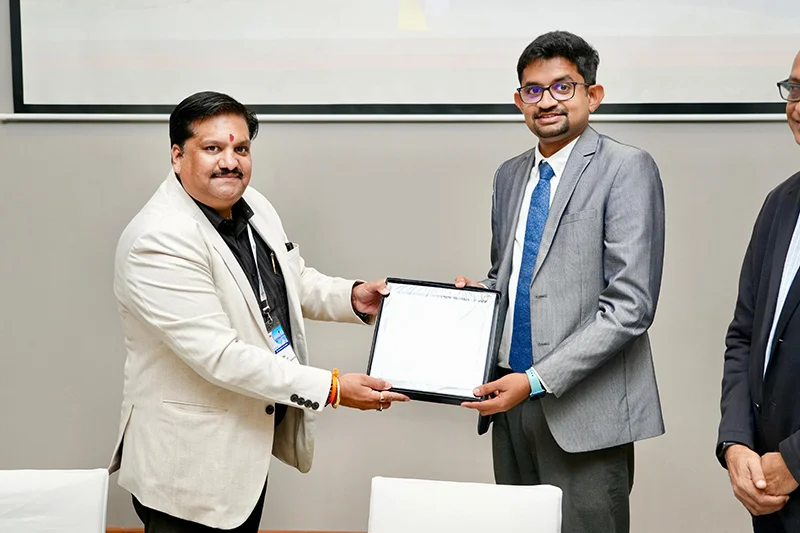
The Ceylon Chamber of Commerce hosted a Business-to-Business (B2B) and networking session for a 31-member business delegation from the Federation of Indian Export Organisations (FIEO), India’s apex export promotion organisation, during its visit to Sri Lanka from 8–10 July 2026.
The delegation comprised small and medium enterprises from sectors including pharmaceuticals, engineering goods, apparel and textiles, food and agricultural products, and infrastructure. The session was organised by the Ceylon Chamber in collaboration with the Indo Lanka Chamber of Commerce and Industry (ILCCI), established under the Ceylon Chamber’s network to promote business engagement between Sri Lanka and India.
The engagement provided a platform for participating Indian and Sri Lankan companies to connect directly, exchange market insights, and explore potential opportunities for trade, partnerships, and business collaboration across multiple sectors. Discussions focused on identifying areas of mutual interest, including sourcing opportunities, market expansion, and potential commercial linkages.
The participation of Indian SMEs from diverse industries highlighted the growing interest among exporters to explore Sri Lanka as a market and regional business partner. For Sri Lankan companies, including SMEs, the engagement provided an opportunity to connect directly with Indian businesses and identify potential avenues for expanding trade relationships.
The Ceylon Chamber, through its network and market access initiatives, continues to support businesses by creating opportunities for direct engagement with international counterparts, helping companies identify new markets, partners, and commercial possibilities.
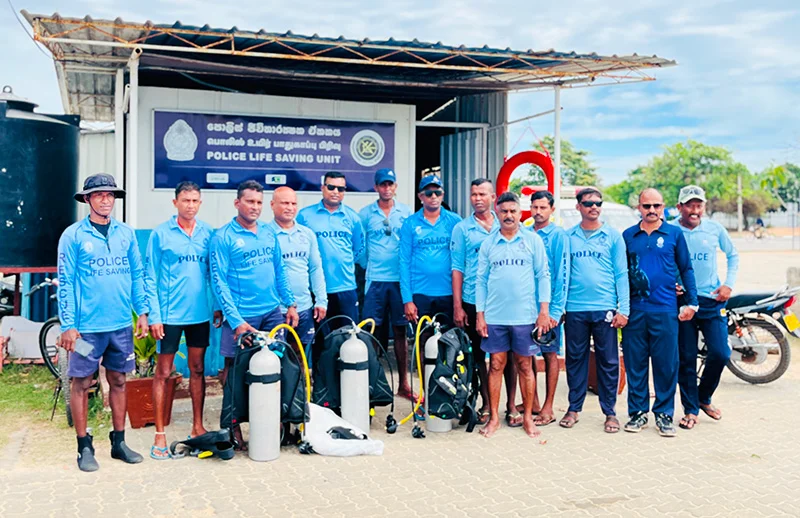
A massive underwater cleanup operation to mark World Ocean Day has removed nearly 2.4 tonnes of marine debris from the seabed of Trincomalee’s Dutch Bay, highlighting both the growing threat of marine pollution and the power of collective action in safeguarding Sri Lanka’s rich coastal ecosystems.
The National Underwater Cleanup Initiative, organised by Clean Ocean Force in partnership with the Marine Environment Protection Authority (MEPA), NDB Bank, and the Earthlanka Youth Network, brought together six professional dive centres, the Sri Lanka Police Life Saving Unit – Trincomalee Dive Team, and scores of volunteer divers in one of the country’s largest coordinated underwater conservation efforts.
The cleanup, held recently, saw teams carrying out multiple dives throughout the day to retrieve a wide range of waste that had accumulated beneath the surface. Divers recovered plastic waste, rubber gloves, discarded clothing, fishing-related debris and other mixed refuse scattered across the seabed.
Organisers said the underwater environment had suffered considerable damage following Cyclone Ditwa, with large volumes of debris deposited across Dutch Bay, posing serious threats to marine life, coral habitats and the wider coastal ecosystem.
The initiative mobilised divers from Scuba Diving Sri Lanka, Kalpitiya Diving Centre, the Sri Lanka Police Life Saving Unit – Trincomalee Dive Team, Pigeon Island Diving Centre, Sri Lanka Diving Tours, Weligama Bay Dive Centre, Blue Deep Diving Centre, and Blue Water Diving Centre.
Working shoulder to shoulder with volunteer divers and marine conservationists, the Sri Lanka Police Life Saving Unit – Trincomalee Dive Team played a pivotal role in ensuring the success of the operation. Their professionalism, underwater rescue expertise and commitment to environmental stewardship significantly strengthened the large-scale cleanup effort, enabling teams to safely recover nearly 2.4 tonnes of marine debris from the seabed.
Chairman and Co-founder of Clean Ocean Force, Jerome Fernando, said the real condition of the oceans often remained hidden beneath the surface.
“The true health of our oceans lies beneath the surface. Every kilogram of waste removed from the seabed helps protect marine biodiversity and preserve our oceans for future generations. This initiative highlights the power of collaboration, and we thank all partners and volunteers who contributed to this effort. Together, we can create a cleaner and healthier ocean for Sri Lanka, he said.
Sudarsha De Silva, a long-standing participant in the programme, said the Trincomalee cleanup had now become a significant annual conservation event.
“This unique initiative is taking place for the third consecutive year in Trincomalee. Under the leadership of Clean Ocean Force, we have proudly participated over the past three years to celebrate World Ocean Day. We sincerely thank Clean Ocean Force for initiating this annual programme, he said.
By Ifham Nizam
Business
LOLC Al-Falaah launches Sri Lanka’s first structured Tawarruq-based personal finance solution

Further strengthening its position as Sri Lanka’s leading alternate financial services provider, LOLC Al-Falaah has introduced “Al-Falaah Tawarruq for Personal Finance,” the country’s first structured Tawarruq-based Islamic liquidity solution. The launch marks a significant milestone in the evolution of Sri Lanka’s Islamic finance landscape, offering customers a practical and ethically grounded avenue to access liquidity.
Developed in response to the growing demand for alternate financial solutions, Al-Falaah’s Tawarruq for personal finance provides a structured, transparent, and accessible mechanism for customers to obtain liquidity while remaining aligned with Islamic economic principles. The solution is designed to support a wide range of financial needs, including education, healthcare, business expansion, personal commitments, and other essential expenditures.
Tawarruq is a globally recognised concept that enables customers to access liquidity through a series of asset-based transactions. Under this arrangement, a commodity is purchased on deferred payment through a Murabaha (cost-plus-profit sale) agreement and subsequently sold to a third party on a spot cash basis, generating liquidity in a manner compliant with Murabaha principles.
LOLC Al-Falaah acts as the appointed agent throughout the transaction process, facilitating the purchase, sale, and resale of commodities on behalf of the customer. This ensures a seamless, transparent, and efficient experience while maintaining strict adherence to underlying product principles.
The introduction of this pioneering solution comes at a time when customers are increasingly seeking financial products that combine flexibility, transparency, and ethical responsibility. By formalising and institutionalising the Tawarruq structure within Sri Lanka’s financial sector, LOLC Al-Falaah is expanding access to faith-based financial solutions while elevating industry standards.
Commenting on the launch, Shiraz Refai, Head of Alternate Financial Services at LOLC Al-Falaah, stated, “At LOLC Al-Falaah, our commitment is to provide customer-centric and future-ready solutions that empower individuals and businesses to achieve their aspirations with confidence. The introduction of Sri Lanka’s first structured Tawarruq liquidity solution represents an important step in expanding access to ethical finance while reinforcing trust in alternate financial services. Designed with transparency, convenience, and compliance at its core, this solution offers customers a practical pathway to meet their evolving financial needs.”
Sharing his views, Ash Shaikh Shafique A. Jakhura, representing the Scholar Supervisory Board, stated, “Al-Falaah Tawarruq for Personal Finance solution reflects the ability of Islamic finance to address contemporary financial requirements while remaining firmly rooted in its foundational principles. Developed with a strong emphasis on transparency, fairness, and authenticity, the solution provides a contractual framework that responds effectively to real-world liquidity needs. It also demonstrates the adaptability of Islamic finance in delivering relevant and impactful solutions within today’s dynamic financial environment.”

A few showers may occur in the Western, Sabaragamuwa and North-western provinces and in Kandy, Nuwara-Eliya, Galle and Matara districts

Negombo Prison riot: No convicts among 21 inmates killed

2026: 128 elephants killed in first four-and-a-half months

Sigiriya Jungles marks 10 years with community medical camp

Protests continue in Valikamam North demanding military-held land

Dirty Money

‘Dates have the highest sugar content to fight Coronavirus’

Sunday Island 27 December – Headlines

#SundayIsland 17th December – Headlines

Sunday Island – 28th March

Sunday Island Headlines – 21 March

Sunday Island – 21st February – Headlines
-
 News5 days ago
Herath warns prospective migrant workers not to get fleeced by racketeers
-
 Features3 days ago
Prison riots and politics: NPP’s biggest challenge and Sri Lanka’s biggest opportunity
-

 Editorial4 days ago
What’s the world coming to?
-
 Foreign News5 days ago
Tensions erupt in Indian state after 11-year-old raped and murdered
-

 Features5 days ago
Devanesan Annan – in Memoriam
-

 News6 days ago
Negombo Prison riot: Ensuring protection of prisoners fundamental responsibility of the state – UN
-
Editorial5 days ago
Punishment in hellholes
-
 News6 days ago
Representatives of the Organization of Professional Associations (OPA) of Sri Lanka meet the Prime Minister