
News
Sri Lanka on alarming path towards recurrence of grave human rights violations – UN report

GENEVA (27 January 2021) – A new UN report published on Wednesday warns that the failure of Sri Lanka to address past violations has significantly heightened the risk of human rights violations being repeated. It highlights what it calls worrying trends over the past year such as deepening impunity, increasing militarization of governmental functions, ethno-nationalist rhetoric, and intimidation of civil society.
Nearly 12 years after the armed conflict in Sri Lanka ended, impunity for grave human rights violations and abuses by all sides is more entrenched than ever, with the current Government proactively obstructing investigations and trials, and reversing the limited progress that had been previously made, states the report, mandated by UN Human Rights Council resolution 40/1.
The report urges enhanced monitoring and strong preventive action by the international community, warning that “Sri Lanka’s current trajectory sets the scene for the recurrence of the policies and practices that gave rise to grave human rights violations.”
Among the early warning signals the report highlights are: the accelerating militarization of civilian governmental functions, reversal of important constitutional safeguards, political obstruction of accountability, exclusionary rhetoric, intimidation of civil society, and the use of anti-terrorism laws.
Since 2020, the President has appointed at least 28 serving or former military and intelligence personnel to key administrative posts, the report states. Particularly troubling are appointments of senior military officials who were implicated in United Nations reports in alleged war crimes and crimes against humanity during the final years of the conflict. These include Shavendra Silva as Army Chief in August 2019 and Kamal Gunaratne as Secretary to the Ministry of Defence in November 2019.
The government has created parallel military task forces and commissions that encroach on civilian functions, and reversed important institutional checks and balances, threatening democratic gains, the independence of the judiciary and other key institutions, the report says.
The report also documents a pattern of intensified surveillance and harassment of civil society organisations, human rights defenders and victims, and a shrinking space for independent media. More than 40 civil society organizations have reported such harassment from a range of security services – including the Criminal Investigation Department, Terrorist Investigation Division and State Intelligence officials.
“The High Commissioner urges the authorities to immediately end all forms of surveillance, including intimidating visits by State agents and harassment against human rights defenders, lawyers, journalists, social actors and victims of human rights violations and their families, and to refrain from imposing further restrictive legal measures on legitimate civil society activity,” the report states.
It warns that despite the Government’s stated commitment to the 2030 Agenda, Tamil and Muslim minorities are being increasingly marginalized and excluded in statements about the national vision and Government policy. Divisive and discriminatory rhetoric from the highest State officials risks generating further polarization and violence. Sri Lanka’s Muslim community is increasingly scapegoated, both in the context of COVID-19 and in the wake of the Easter Sunday attacks of April 2019.
The report notes that Sri Lanka’s armed conflict emerged against the backdrop of progressively deepening discrimination and marginalization of the country’s minorities, particularly the Tamils. Grave human rights violations and abuses committed by all parties have been documented in successive UN reports, including extrajudicial killings, enforced disappearances, arbitrary detention, torture and sexual violence affecting Sri Lankans from all communities.
Numerous commissions of inquiry appointed by successive governments have failed to credibly establish truth and ensure accountability for the violations, the report notes. The Government has now appointed a new commission of inquiry to review the findings of previous commissions, but its membership lacks diversity and independence, and its terms of reference do not inspire confidence it will produce any meaningful result.
A Presidential Commission of Inquiry to investigate alleged “political victimisation” of public officials, security forces and others has undermined police investigations and court proceedings related to several high profile human rights and corruption cases.
One former chief of the Criminal Investigation Division, who led investigations into several emblematic human rights cases, has been arrested while another inspector from the Division left Sri Lanka, fearing reprisals for his lead investigative role in several emblematic cases, and now faces criminal charges.
“While the criminal justice system in Sri Lanka has long been the subject of interference, the current Government has proactively obstructed or sought to stop ongoing investigations and criminal trials to prevent accountability for past crimes,” the report states.
UN High Commissioner for Human Rights Michelle Bachelet stressed that the failure to deal with the past continues to have devastating effects on tens of thousands of family members from all communities who persist in seeking justice, reparations – and the truth about the fate of their loved ones.
“I urge the international community to listen to the determined, courageous, persistent calls of victims and their families for justice, and heed the early warning signs of more violations to come,” Bachelet said, calling for resolute measures by UN Member States.
“Given the demonstrated inability and unwillingness of Government to advance accountability at the national level, it is time for international action to ensure justice for international crimes. States should also pursue investigations and prosecution in their national courts – under accepted principles of extraterritorial or universal jurisdiction – of international crimes committed by all parties in Sri Lanka,” Bachelet said.
“States can consider targeted sanctions, such as asset freezes and travel bans against credibly alleged perpetrators of grave human rights violations and abuses.” Sri Lanka’s contributions to UN peacekeeping operations must be kept under review, the High Commissioner added. Bachelet also urged the Council to support a dedicated capacity to collect and preserve evidence for future accountability processes.
The High Commissioner stressed that Sri Lanka will only achieve sustainable development and peace if it effectively addresses systemic impunity and ensures civic space.
“The failure to do so carries with it the seeds of repeated patterns of human rights violations and potential conflict in the future,” she said.
In preparing the report, the UN Human Rights Office sent detailed questions to the Government and received written responses, followed by a substantive virtual meeting with Government representatives on 7 January 2021. The Government also commented on the report.
The report will be formally presented to the Human Rights Council on 24 February, followed by an interactive dialogue.



Amidst ongoing accusations that the theft of USD 2.5 mn (nearly 1 bn Rupees) from the Treasury hadn’t been properly investigated, The Island learns that the relevant payments had been made to the actual creditor on the instructions of the Finance Ministry.
Confirming the inquiries made by us, authoritative sources said that payments had been made to several accounts through the US banks. Earlier, Sri Lanka released funds to fake foreign accounts in spite of warnings regarding the suspicions about the process.
The funds were part of a bilateral debt repayment to Australia with a settlement due in September 2025. The payment was part of a $ 22.9 million debt settlement.
The lapses occurred in the wake of far reaching changes regarding the debt management functions. In terms of a particular condition of the International Monetary Fund (IMF), Sri Lanka’s debt management functions that had been previously handled by the Central Bank were transferred to a new institution established under the General Treasury—the Public Debt Management Office (PDMO).
Sources said that regardless of the loss of USD 2.5 mn, Sri Lanka couldn’t have defaulted and therefore payments had been made.
Sources who closely followed the issue said that the government owed an explanation and public apology regarding the loss of USD 2.5 mn and how fresh payments were made.
Sources said that the USD 2.5 mn paid to fake accounts had been lost and could never be traced. CoPF Chairman Dr. Harsha de Silva has said that the NPP government has told the IMF that stolen USD 2.5 mn would be recovered from the public by introducing an amendment to the budget.
By Shamindra Ferdinando
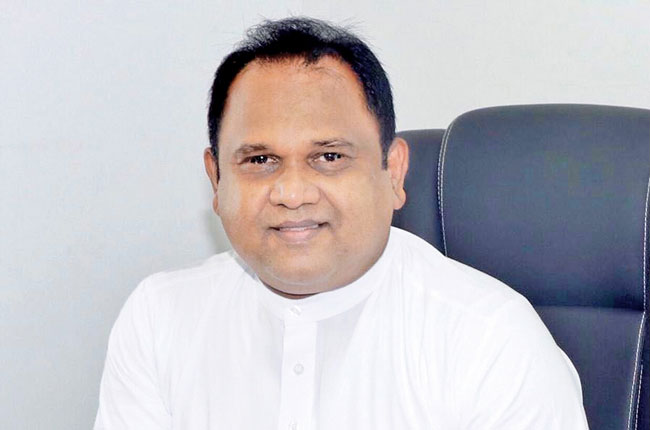
The Court of Appeal yesterday (18) postponed until June 25 the hearing of a petition filed by former Minister Nalin Fernando seeking the dismissal of an indictment brought against him by the Attorney General in connection with the controversial ‘Carrom Boards’ case.
The petition was taken up before a bench comprising Justices P. Kumararatnam and Pradeep Hettiarachchi.
Appearing for the petitioner, President’s Counsel Ali Sabry, instructed by Attorney-at-Law Ramzi Bacha, informed court that Fernando had already been convicted and sentenced to 30 years rigorous imprisonment in a case instituted by the Commission to Investigate Allegations of Bribery or Corruption (CIABOC) arising from the same incident.
Counsel argued that the Attorney General had subsequently filed a separate case based on the same set of charges and maintained that subjecting an accused person to a second prosecution for the same offence was contrary to law.
He submitted that preliminary objections on the issue had been raised before the Colombo High Court but were dismissed by the trial judge.
The petitioner has therefore sought a declaration from the Court of Appeal that the indictment filed by the Attorney General is unlawful and requested that the charges be set aside.
The court directed that the matter be called again on June 25, when the Attorney General is expected to present submissions on the petition.
The case stems from allegations that during the 2015 presidential election campaign, 14,000 carrom boards and 11,000 checkers boards were imported and distributed through Lanka Sathosa outlets for allocation to political offices of former President Mahinda Rajapaksa, resulting in an estimated loss of Rs. 39 million to the State.
Based on those allegations, the Attorney General has instituted proceedings against Fernando before the Colombo High Court under the Public Property Act.
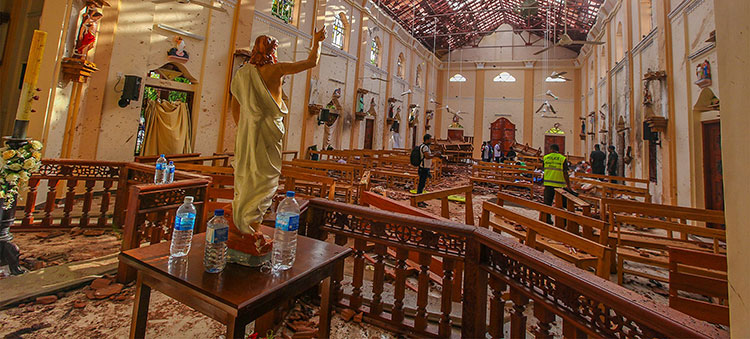
The UNP yesterday called on the government to clarify whether it had sought access to evidence and documents gathered during a United States investigation into the 2019 Easter Sunday terrorist attacks.
In a statement, the UNP has recalled that then Prime Minister Ranil Wickremesinghe requested the U.S. government to conduct a comprehensive investigation into the attacks immediately after they occurred, citing limitations in local investigative capacity. A similar request was also made during a telephone conversation with then U.S. President Donald Trump on April 22, 2019, the statement said.
According to the UNP, the Federal Bureau of Investigation (FBI) subsequently carried out an extensive investigation in collaboration with Sri Lankan agencies, including the Criminal Investigation Department (CID), Military Intelligence and the State Intelligence Service. The findings were later submitted to the Sri Lankan authorities and accepted by the relevant institutions.
The party noted that FBI Special Agent Merrilee R. Godwin had filed a 71-page affidavit before the U.S. District Court for the Central District of California in November 2020 following a two-year investigation. A criminal case was later instituted in Los Angeles naming suspects who had already been taken into custody in Sri Lanka.
Pointing out that material collected during the U.S. investigation remains in the possession of the FBI and the U.S. Department of Justice, the UNP has asked the government whether it formally requested access to those records after reopening investigations into the attacks.
The UNP has stressed the importance of making the documents available to Sri Lankan judicial authorities, arguing that they could assist efforts to establish the full circumstances surrounding the Easter Sunday attacks.

BCCI secretary hints at early start to IPL 2027

Cricket journalist and broadcast legend Qamar Ahmed dies aged 88

Stafanie Taylor, spinners help West Indies overcome Scotland threat

Showers will occur at times in the Western, Sabaragamuwa and North-western provinces and in Galle, Matara, Kandy and Nuwara-Eliya districts

Thirty-five killed as gunmen attack Niger’s biggest airport

Creditor receives USD 2.5 mn as Lankan public bears loss from theft of Treasury funds

‘Dates have the highest sugar content to fight Coronavirus’

Sunday Island 27 December – Headlines

#SundayIsland 17th December – Headlines

Sunday Island – 28th March

Sunday Island Headlines – 21 March

Sunday Island – 21st February – Headlines
-

 News5 days ago
Release of 2025 O/L results likely to be delayed
-

 Sports5 days ago
Tharanga set for high-profile javelin clash in Ostrava
-

 Features6 days ago
Politics of protected species
-

 News4 days ago
Beijing Capital Airlines to resume flights to Colombo signalling boost to tourism
-

 News5 days ago
Theft of USD 2.5 mn from Treasury: CoPF accused of complicity in NPP cover-up
-

 News7 days ago
Commonwealth lawyers urge Lanka to uphold rule of law
-

 Opinion5 days ago
Decoding Trump’s 12.5% “Forced Labor Tariff” on Sri Lanka
-
 Features3 days ago
Killing of Colombo’s ancient trees — a warning on UN’s World Desertification Day – 17 June