
Latest News
Healy and in-form Gardner give Australia opening points of Ashes battle

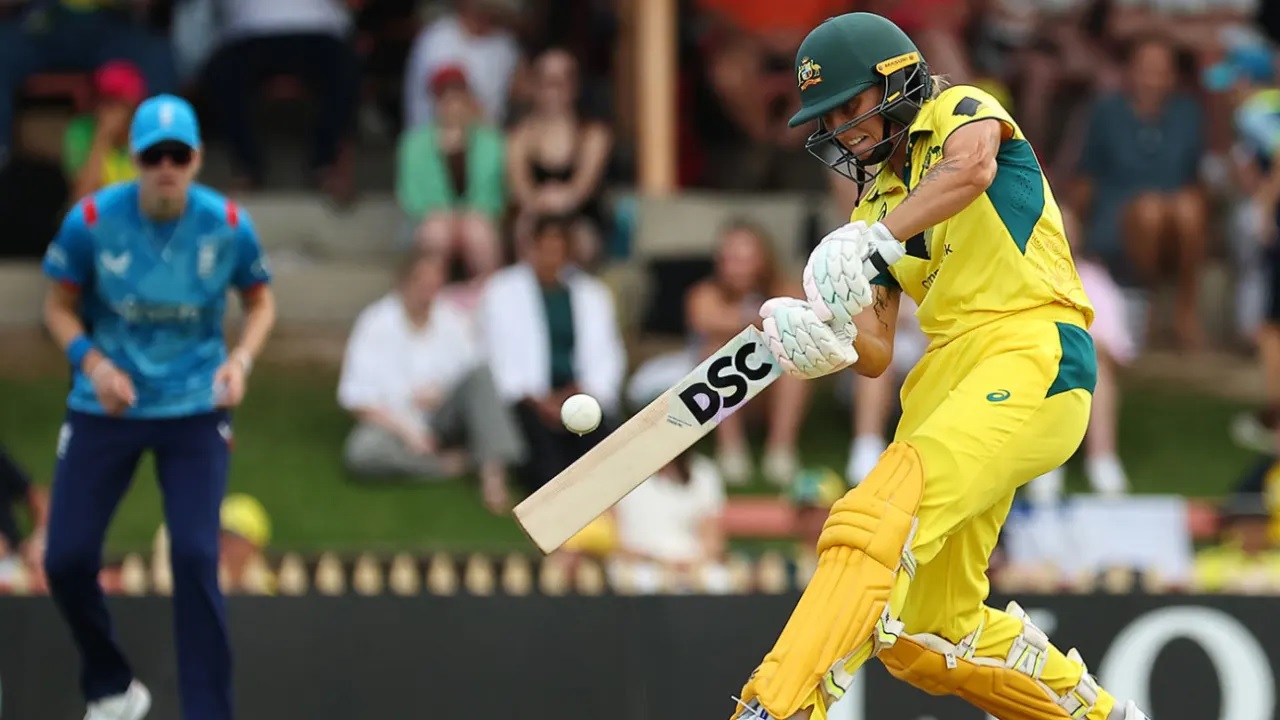
Ash Gardner shone with bat, ball and in the field as Australia chased down a modest target to seize the first points of their Ashes battle with England.
Alyssa Healey,Australia’s captain, sealed her full comeback from injury with an important 70 runs off 78 balls after Australia had bundled their opponents out for 204 inside 44 overs at North Sydney Oval.
Gardner, whose three wickets were pivotal in the downfall of an England batting line-up which was also culpable amid a rash of soft dismissals, saw Australia home by four wickets with her unbeaten 42, having also taken two catches.
Healy had been battling a knee injury since mid-November which ruled her out of her home series against India and forced her to play as a batter only in New Zealand last month while her return to wicketkeeping duties could only be confirmed on the eve of this match.
On Sunday, she picked the gaps to perfection as she racked up 11 fours while taking her team within 41 runs of victory.
Lauren Bell should have had Garder out for 31 in what would have been an interesting twist with Australia still needing 22 runs but Sophie Ecclestone failed to control her catch as she tumbled at mid-off.
Gardner and fellow spinner Alana King then combined to good effect, as they had done with the ball, to see their side over the line before 6236 fans, a record attendance for a women’s international at North Sydney Oval.
Lauren Filler overcame her slippery introduction to this ground Thursday’s washed-out warm-up against the Governor General’s XI where she repeatedly lost her footing in delivery to claim two wickets.
She set off England’s defence with promise when she removed Phoebe Litchfield with her fifth delivery – the 11th of the innings – an excellent wobble-seam ball that nipped across the left-hander, brushing the outside edge as Amy Jones gathered behind the stumps.
Healy overturned an lbw decision off Bell on height and England torched a review for caught behind off Ellyse Perry with replays showing the Filer’s delivery struck the thigh pad with no bat or glove anywhere near. Filer would have had her second had Alice Capsey not dropped a sitter at fine leg off Perry.
The Australian duo amped things up in a 19-run over from Filer, Perry’s flick evading Capsey to find the rope at fine leg followed by three fours to Healy, an inside edge just missing leg stump before two more convincing shots through point and cover. But England successfully reviewed to remove Perry, plumb lbw to Bell, and Australia were 43 for 2.
Ecclestone entered the attack in the 15th over and she broke a 61-run stand between Healy and Beth Mooney in her next. Having launched Ecclestone for six over deep midwicket, Mooney tried the same next ball but didn’t connect so well as the spinner dragged her length back and found the safe hands of Danni Wyatt Hodge at stationed just inside the boundary.
Wyatt-Hodge executed another calm catch in the deep from Annabel Sutherland’s top-edged pull off Filer but that brought Garder to the crease and she asserted herself with a big six down the ground off Ecclestone.
Gardner and Healy put on 40 runs for the fifth wicket before Healy advanced on a fuller ball from offspinner Charlie Dean and was bowled.
Maia Bouchier took an excellent diving catch at point to remove Tahlia McGrath before Gardner made the most of her reprieve and King hit the wining runs with a four down the ground.
Earlier, Gardner and King shared five wickets between them in the face of a below-par batting performance by England, backed up by two wickets apiece for Sutherland and Kim Garth.
Heather Knight top-scored for England with 39, followed by Wyatt-Hodge with a laboured 38 from 52 balls after their side had made a nervy start.
Bouchier chopped the third ball of the match onto her stumps only to be saved when it was discovered that Megan Schutt had overstepped by the barest of margins while Tammy Beaumont wafted dangerously at one outside off stump in the third over.
Bouchier broke a run of 16 dot balls between the opening pair when she lofted Garth over midwicket for four but Garth responded by pushing one through from back of a length to draw an outside edge which Healy collected behind the stumps.
Knight scored her fourth boundary in 20 balls faced driving Sutherland’s yorker outside off deftly through point and Beaumont broke the shackles of a slow start when she had eight off 22 balls, her lofted drive off Garth finding the boundary. The England pair brought up a 50-run partnership for the second wicket but, two balls later Beaumont chipped Sutherland straight to Garth at mid-on to fall for 13 from 31 balls.
That brought Nat Sciver-Brunt to the crease and she slog-swept King for six off the seventh ball she faced. But Gardner claimed the crucial wickets of Knight and Sciver-Brunt in consecutive overs – both holing out to Perry at deep midwicket.
Perry couldn’t hold on when she had to come rocketing in from the deep square leg boundary and dive forward just to get hands to Amy Jones’s pull with just one run to her name.
Jones launched Sutherland for six over deep midwicket and looked in good touch with back-to-back fours off Garth, who conceded 18 runs all up in the 28th over. But no sooner had Jones raised the fifty stand with Wyatt-Hodge by driving King through mid on and she spooned the very next delivery back to the bowler to fall for a 30-ball 31.
Capsey never got going and while Australia had no recourse when King struck Dean, on nought, convincingly on the pad with the DRS down, the system was back up and running and couldn’t save Dean when King hit her directly in front for 1.
When Wyatt-Hodge picked out Brown at long leg off Sutherland, it fell to the tailenders to salvage a defendable total. Ecclestone made the most of being put down by Healy when she was yet to score, with two boundaries in her 17-ball 16 and Filer opened her tally with consecutive boundaries off Sutherland.
But Ecclestone followed England’s blueprint for easy wickets when she sent a leading edge off Darcie Brown straight to Gardner, who then claimed her 100th ODI wicket when she bowled Bell to end England’s innings.
Brief scores:
Australia Women 206 for 6 in 38.5 overs (Alyssa Healy 70, Ashley Gardner 42*; Lauren Filler 2-58, Siophie Ecclestone 2-38) beat England Women 204 in 43.1 overs (Heather Knight 39, Danni Wyatt-Hodge 38, Amy Jones 31; Ash Gardner 3-19, Kim Garth 2-46, Annabel Sutherland 2-42, Alana King 2-45) by four wickets
[Cricinfo]

Latest News
Cabinet approves aditional Rs. 2,500 million to the Paddy Marketing Board to purchase 2026 Yala harvest

The Cabinet of Ministers has approved the resolution furnished by the Minister of Agriculture, Livestock, Land and Irrigation to provide an additional Rs. 2,500 million to the Paddy Marketing Board on a reimbursable basis from the Rs. 7,500 million additional allocations granted to the Ministry to implement
the expedited paddy purchasing program for the 2026 Yala harvest.
Latest News
Cabinet nod to host the 8th Asian Regional Conference of the Commonwealth Parliamentary Association and the 3rd Joint Asian and South-East Asian Regional Conference of the Commonwealth Parliamentary Association
The 8th Asian Regional Conference of the Commonwealth Parliamentary Association (CPA) and the 3rd Joint Asian and South-East Asian Regional Conference of the CPA are planned to be held over three days in Colombo during April/May 2027.
Approximately 90 delegates including speakers, Deputy Speakers, Member of Parliamentarians, and Parliamentary officers representing member countries of the Commonwealth Parliamentary Association, in the Asian and South-East Asian regions, are expected to participate in these conferences.
The Cabinet of Ministers has approved the resolution furnished by the Prime Minister of the Parliament of Sri Lanka to host the said conferences considering the opportunities to strengthen parliamentary diplomacy and regional cooperation, as well as to enhance international recognition of the Parliament of Sri Lanka within the Commonwealth Parliamentary Association.
Latest News
SAARC Training Workshop on Financial Modeling for Renewable Energy Projects from 5th to 7th October in Colombo

The Energy Centre of the South Asian Association for Regional Cooperation (SAARC) has planned to conduct a training workshop under the theme ‘Financial Modelling for Renewable Energy Projects’ in Colombo from 2026-10-05 to 2026-10-07.
It is expected that two persons from each member country,
including Sri Lanka, will participate in this workshop. The Energy Centre of the South Asian Association for Regional Cooperation (SAARC) will provide all local hospitality facilities and transport, excluding airfare.
Taking into consideration the resolution furnished by the Minister of Energy regarding this workshop, which is vitally important for the capacity building of public officers and other related parties regarding project evaluation and financial modeling in the renewable energy sector, the Cabinet of
Ministers has decided to grant its consent to hold this workshop and extend Sri Lanka’s hospitality for this event.

Where is Gnanasara Thera?Police pass buck to court

Russian citizens in Lanka to vote in State Duma elections

Euro 110,000 research drive to tackle plastic waste in food sector

New SAU-RCSS pact to boost South Asian dialogue

A ‘partnership’ like no other!

SLEIS 2026 to examine how Sri Lanka can strengthen its place in Asia’s growth networks

‘Dates have the highest sugar content to fight Coronavirus’

Sunday Island 27 December – Headlines

#SundayIsland 17th December – Headlines

Sunday Island – 28th March

Sunday Island Headlines – 21 March

Sunday Island – 21st February – Headlines
-

 Sports5 days ago
DDS set to lose Test captaincy
-

 News5 days ago
Sri Lanka faces new grid challenge as rooftop solar surges: former CEB GM
-

 Latest News5 days ago
Shafali, Deepti power India into sixth T20 Asia Cup final
-

 Latest News4 days ago
Sri Lanka thwart Fatima Sana challenge to secure Asia Cup final spot
-

 News3 days ago
Gnanasara Thero absconding after SC ruling
-

 Features6 days ago
Lost for 90 years: Rare Goby resurfaces in Jaffna
-

 News4 days ago
Ammunition cache found in old Kandy bungalow
-

 Latest News6 days ago
Italian Naval Vessel ‘ITS Giuseppe Garibaldi’ arrives in Colombo