
Sports
Proteas crush Sri Lankan hopes to sweep series 2-0

Rex Clementine
in Port Elizabeth
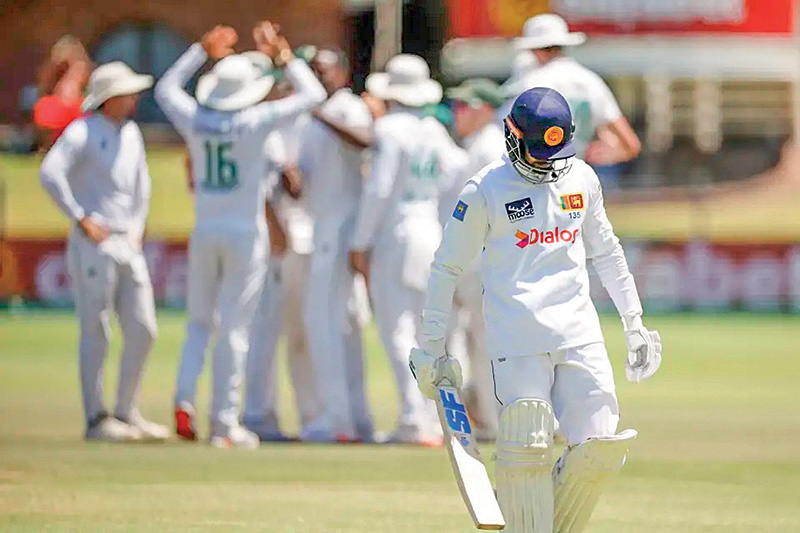
Sri Lanka arrived in South Africa riding high, their confidence swelling like a peacock in full display. As front-runners for a coveted spot in the World Test Championship final at Lord’s next year, hopes were sky-high. But by the end of it, the Proteas plucked their feathers clean, handing them a 2-0 series defeat. The second Test, lost by 109 runs, was a bitter pill to swallow. Credit where it’s due, the Sri Lankans battled hard to drag the game into the final day, but they lacked the firepower to truly rattle South Africa’s formidable arsenal.
This wasn’t a white-flag surrender, though. The batters showed grit on a pitch as friendly as a prickly porcupine, but grit alone wasn’t going to cut it. Whispers suggest that at least one senior player may have taken his final bow in Test cricket. Harsh? Perhaps. But modern sport is a cutthroat business, and if you don’t deliver runs, you’re shown the door faster than a party crasher at a wedding.
Sri Lanka began the final day needing 143 runs with five wickets in hand—a daunting task, but not entirely impossible. Kusal Mendis and Dhananjaya de Silva gave the visitors a glimmer of hope, building a stubborn sixth-wicket partnership of 97 runs. For a moment, the light at the end of the tunnel didn’t seem like an oncoming train.
But South Africa, ever the seasoned hunters, knew they were just one breakthrough away. Kusal’s resistance ended when he edged a low catch to first slip, and the writing was on the wall.
Dhananjaya, in what can only be described as a bizarre moment of distraction, fussed over his bat like a chef unhappy with his knives. After summoning a parade of replacements from the dugout, none seemed to satisfy him. Perhaps he hoped a magical bat would materialize, one capable of turning the tide. Unfortunately, all it did was mess with his focus.
 Soon after, Dhananjaya fell too, chasing a wide delivery he should’ve left well alone. It was a frustrating end for two batters who had batted with such finesse the previous day. But day five was an entirely different beast, and within 10 minutes of play, it became glaringly obvious that scoring runs here would be as tough as finding water in a desert. Port Elizabeth has a peculiar quirk – mornings belong to the bowlers, while the pitch seems to mellow out as the day progresses.
In truth, the blame doesn’t rest squarely on Kusal or Dhananjaya. They were fighting a battle already lost. The real culprit was the first-innings collapse. Sri Lanka had momentum on their side and should have aimed for a lead of at least 100 runs. Instead, they let South Africa back into the game, and the rest, as they say, is history.
The tail, sadly, offered no resistance, folding like a deck of cards yet again. Sri Lanka’s tail-end batting has been a chronic issue, and the statistics are downright embarrassing. Batters at positions eight, nine, ten, and Jack all sport single-digit averages – a glaring Achilles’ heel. While efforts are being made in the nets to sharpen their skills, improvement won’t happen overnight.
Playing in South Africa is always a trial by fire. The conditions are alien, unforgiving, and relentless. That’s why Sri Lanka’s historic series win here in 2019 still stands out like a diamond in a coal mine – no other Asian team has managed such a feat.



Power World Gyms, Sri Lanka’s leading fitness brand with over 30 years of promoting healthier lifestyles, has partnered with Kings Hospital Colombo as its Official Wellness Partner. This collaboration brings together expertise in fitness and healthcare to introduce a dedicated wellness programme for the hospital’s staff, supporting their physical and mental well-being. Through this partnership, Power World reinforces its commitment to making fitness and preventive wellness accessible, impactful and sustainable for those who care for our communities every day.
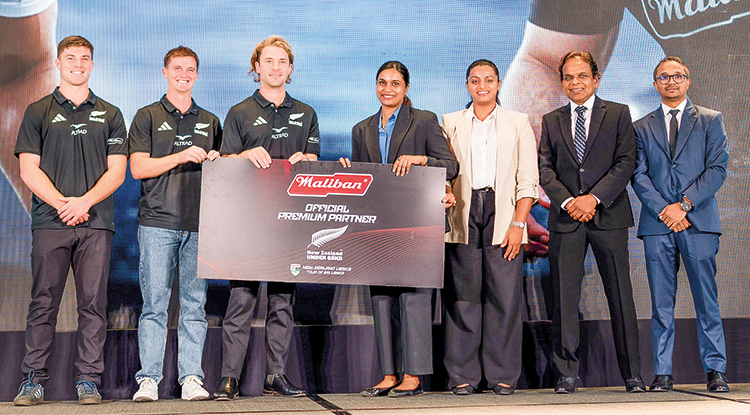
With international rugby taking center stage in Sri Lanka, Maliban Biscuits continues to play a pivotal role in advancing the sport, coming on board as the title sponsor of the New Zealand U85kg Rugby Tour 2026, the Official Premium Partner of the New Zealand U85kg team and the Main Sponsor of Sri Lanka Rugby.
This multi-tier partnership reflects the brand’s deep and ongoing commitment to growing rugby in Sri Lanka while supporting meaningful international sporting exchange.
As one of Sri Lanka’s most trusted household brands with a legacy spanning over 70 years, Maliban’s continued involvement with the touring side-marking the second consecutive partnership that highlights its sustained investment in sporting platforms that inspire young athletes and elevate the standard of the game locally.
The tour will feature key matches at the Colombo Racecourse Grounds on 25 April and at Nittawela Grounds on 3 May, promising high-quality rugby action for fans across the island. Beyond the competition itself, the New Zealand side will also engage in community outreach initiatives, contributing to the development of the game and encouraging greater youth participation in sport.

When Gary Kirsten fronted the media for the first time as Sri Lanka’s head coach, he didn’t pad up with clichés. He went straight on the front foot, making it clear that the 2027 World Cup in his own backyard is the big ticket item.
This was no airy-fairy lip service. Kirsten, as methodical during his playing days, mapped out the kind of personnel required for South African conditions, quicks who can make the ball talk and climb awkwardly off a length, batters who won’t flinch when the ball spits at chest height. In short, horses for courses, not square pegs in round holes.
That’s vintage Kirsten. Whether with India or his native South Africa, he has built success brick by brick, not by rolling the dice. His coaching mantra could well be: well prepared is half the battle won.
Sri Lanka have 17 months and roughly 25 ODIs to get their house in order. That’s enough time to build a core, provided they don’t keep shuffling the team like a pack of cards. More importantly, the bowling template needs a rethink. For far too long, Sri Lanka have leaned on spin. But South Africa is no place for gentle tweakers, it’s a quicks’ paradise where seamers earn their bread.
Even at home, where the slow tracks of RPS traditionally favour spin-heavy combinations, there’s a case to start backing seam-bowling all-rounders. It may seem like swimming against the tide, but World Cups aren’t won by playing safe in familiar waters.
The last time South Africa hosted the World Cup was back in 2003, a different era altogether. Nelson Mandela was still a towering presence, while across the border, dictator Robert Mugabe ruled Zimbabwe with an iron fist. Kenya, then more than just makeweights, punched above their weight to reach the semi-finals, a fairy tale that now feels like ancient folklore.
Fast forward to today and Kenyan cricket has fallen off a cliff, replaced in the hosting roster by Namibia.
Sri Lanka have a template from that 2003 campaign, one worth dusting off. They made the semi-finals then, and not by accident. It was a well-oiled machine, driven by sharp minds and strong leadership.
At the helm was Hemaka Amarasuriya, a corporate heavyweight who handled off-field storms like a seasoned captain riding out a bouncer barrage. When the ICC’s ambush marketing clause triggered a global player revolt, with Indian stars leading the charge, Sri Lanka’s dressing room too got restless, nudged by Charlie Austin. But Amarasuriya, unfazed, played it late and under the eyes, guiding matters through choppy waters until contracts were signed.
Selection, meanwhile, was in the safe hands of Guy de Alwis, a man who didn’t blink, even when the heat was turned up. When then Sports Minister Johnston Fernando tried to poke his nose into team affairs, Guy de Alwis stood his ground like a batter refusing to be sledged into submission. No excuses, no conspiracy theories that we see these days from selectors, just accountability. A trait that seems to have gone missing these days.
On the coaching front, Dav Whatmore and Duleep Mendis plotted their moves with chess-like precision, while team manager Ajit Jayasekara ensured discipline didn’t slip through the cracks. A senior Air Force officer, Jayasekara was a god fearing man and a gentle soul off the field, but one who could lay down the law when egos within the dressing room threatened to run riot.
Then there was Sanath Jayasuriya, the captain who led from the front, scoring runs for fun and brooking no nonsense. Legend has it he gave his deputy Marvan Atapattu the cold shoulder for a fortnight after a dropped catch off Brian Lara.
Add to that the wizardry of Aravinda de Silva and the raw pace of Dilhara Fernando, whose bouncer famously floored Ramnaresh Sarwan. It was a side that could dish it out as well as take it, a rarity in those days.
Sri Lanka’s semi-final exit in 2003 still stings. They had Australia on the ropes at Port Elizabeth, restricting them to 212, but fluffed the chase despite batting deep. A missed opportunity, no doubt, but the campaign proved one thing beyond doubt: Sri Lanka could hold their own on seaming, bouncy tracks.
Kirsten would do well to note that Whatmore had a strong support cast, men who knew their roles and didn’t drop the ball. The current set-up, by contrast, doesn’t inspire the same confidence.
Still, hope springs eternal. The South African dream isn’t a pie in the sky just yet. After all, Sri Lanka remain the only Asian side to have conquered South Africa in a Test series, proof that when they get their act together, they can punch above their weight.
by Rex Clementine

Showers expected in the Western, Sabaragamuwa and North-western provinces and in Galle, Matara, Kandy and Nuwara-Eliya districts after 2.00 pm.

Heat Index at Caution Level in the Northern, North-central, North-western, Western, Sabaragamuwa, Southern, and Eastern provinces and in Monaragala district during the day time

Sagarika derailment disrupts coastal rail line; services to resume in two days

PHIs launch Vesak ‘Dansal’ safety registration drive

Measles resurfaces, health officials sound alarm

Hackers steal $3.2 Mn from Finance Ministry

‘Dates have the highest sugar content to fight Coronavirus’

Sunday Island 27 December – Headlines

#SundayIsland 17th December – Headlines

Sunday Island – 28th March

Sunday Island Headlines – 21 March

Sunday Island – 21st February – Headlines
-

 News5 days ago
Rs 13 bn NDB fraud: Int’l forensic audit ordered
-

 Opinion6 days ago
Shutting roof top solar panels – a crime
-

 News3 days ago
Lanka faces crisis of conscience over fate of animals: Call for compassion, law reform, and ethical responsibility
-

 News2 days ago
No cyber hack: Fintech expert exposes shocking legacy flaws that led to $2.5 million theft
-
 News2 days ago
Whistleblowers ask Treasury Chief to resign over theft of USD 2.5 mn
-

 News6 days ago
Church calls for Deputy Defence Minister’s removal, establishment of Independent Prosecutor’s Office
-

 News3 days ago
USD 2 mn bribe: CID ordered to arrest Shasheendra R, warrant issued against ex-SriLankan CEO’s wife
-

 Features6 days ago
The Digital Pulse: How AI is redefining health care in Sri Lanka?