
News
Sri Lanka prepares for heavy rains as inter-monsoon season intensifies

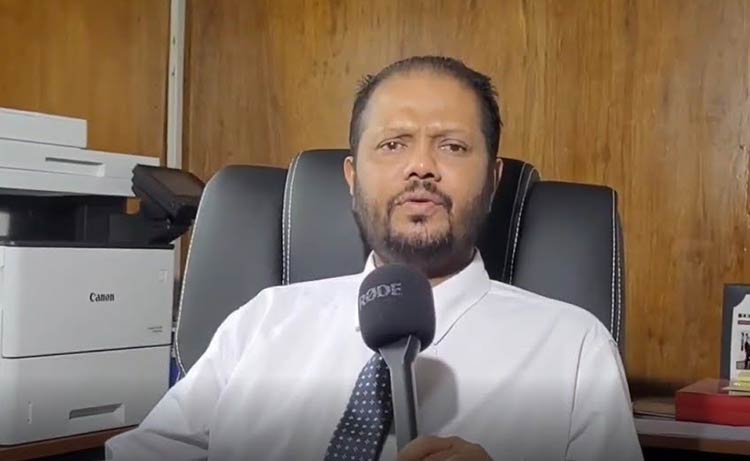
Doppler radar machine to be established in Puttalam in early December
By Rathindra Kuruwita
Sri Lanka receives nearly 30 percent of its annual rainfall during October and November, according to Director General of Meteorology, Athula Kumara Karunanayake, in an interview with The Island.
This period, known as the inter-monsoon season, is characterised by mostly clear mornings, with rainfall typically beginning in the evenings or at night. “Usually, rains start in central Sri Lanka and spread to coastal areas as the night progresses,” he said.
Karunanayake said a La Niña climate pattern—associated with cooler ocean surface temperatures in the central and eastern equatorial Pacific—is expected to become more active in November, bringing intensified rainfall. “Although La Niña was less active than expected in October, we anticipate it will strengthen this month, with heavy rains likely to exceed 100 millimetres,” he said. The northern, north-western, eastern, and Uva provinces are expected to be most affected, while the western province will likely see less rain.
This period also brings increased risk from depressions and cyclones forming in the Bay of Bengal, contributing to morning mist across Sri Lanka due to dust brought by winds from the Indian mainland. These conditions are expected to clear soon, giving way to more frequent rainfall. “Rains typically last between 45 to 90 minutes but are intense, often accompanied by strong winds, thunder, and lightning,” he added.
He urged caution during storms, advising people to unplug electronic devices and avoid open spaces. Special warnings were issued to farmers working near metal equipment and to fishermen at sea. “When there is thunder and lightning, unplug all electrical and electronic devices. Avoid open areas. This is also a period when farmers are actively engaged in agriculture and often work near metallic objects, which can make them vulnerable to lightning strikes. Therefore, we strongly urge farmers to remain sheltered during the rain. We have also advised fishermen at sea to avoid standing up on their boats during storms,” he said.
Karunanayake said that rain during the morning, instead of the evening, is often a result of turbulence in the Bay of Bengal. He also linked the increase in extreme weather events to climate change, highlighting the urgent need for Sri Lanka to invest in advanced technology for faster disaster prediction. “Providing landslide warnings 90 to 120 minutes ahead could drastically reduce loss of life and property,” he said.
Sri Lanka has long aimed to implement the Doppler radar technology, which significantly improves weather forecasting accuracy. Japan has agreed to provide one Doppler radar machine as a grant, with installation scheduled to begin in Puttalam in early December. However, the radar is expected to become operational only by July 2027 due to extensive setup requirements. Japan is investing nearly three billion yen in this project.
Karunanayake has also initiated discussions to secure a second Doppler radar to achieve nationwide coverage. He recently submitted a request to the Japan International Cooperation Agency (JICA) office in Colombo, which will forward it to their Tokyo headquarters. If successful, this could lead to a government-to-government agreement providing Sri Lanka with an additional radar.
Doppler radar technology offers comprehensive meteorological capabilities, enabling detection of various types of precipitation, thunderstorm rotation, airborne debris, and wind dynamics. Once operational, it will allow Sri Lankan authorities to predict rainfall volumes up to two hours in advance, enhancing early warning capabilities for the National Building Research Organisation (NBRO). “The radar in Puttalam will cover half the country, but a second one in Pottuvil is essential for full island-wide coverage,” Karunanayake said.

Latest News
Landslide early warnings issued to the Districts of Badulla, Kandy, Kurunegala, Matale and Nuwara Eliya extended


The landslide early warning center of the National Building Research Organisation [NBRO] has extended the landslide early warnings issued to the Districts of Badulla, Kandy, Kurunegala, Matale and Nuwara Eliya until 08:00 AM on Saturday [20th].
LEVEL III RED landslide early warnings have been issued to the Divisional Secretaries Divisions and surrounding areas of Minipe, Ududumbara, Doluwa and Medadumbara in the Kandy district, and Mathurata, Walapane, Hanguranketha and Nildandahinna in the Nuwara Eliya district.
LEVEL II AMBER landslide early warnings have been issued to the Divisional Secretaries Divisions and surrounding areas of Badulla, Lunugala, Passara and Hali_Ela in the Badulla district, Akurana, Pathadumbara, Udunuwara, Gangawata Korale, Pasbage Korale, Harispattuwa, Thumpane, Panvila, Ganga Ihala Korale, Udapalatha, Yatinuwara, Poojapitiya, Kundasale, Deltota, Pathahewaheta and Hatharaliyadda in the Kandy district, Rideegama in the Kurunegala district, Laggala Pallegama, Wilgamuwa, Yatawatta, Ambanganga Korale, Naula, Rattota, Pallepola, Ukuwela and Matale in the Matale district, and Nuwara Eliya in the Nuwara Eliya district.
LEVEL I YELLOW landslide early warnings have been issued to the Divisional Secretaries Divisions and surrounding areas of Bandarawela, Uva Paranagama, Haldummulla, Kandeketiya, Soranathota, Ella, Welimada, Haputhale and Meegahakivula in the Badulla district, Alawwa, Polgahawela, Mallawapitiya and Mawathagama in the Kurunegala district, and Thalawakele, Norwood, Ambagamuwa Korale, Kothmale West and Kothmale East in the Nuwara Eliya district.
Latest News
Financial contribution from Gift Sri Lanka Foundation and the Georgia Buddhist Vihara, USA, for disaster relief

In support of relief efforts for communities affected by the Ditwah cyclone, Gift Sri Lanka Foundation and the Georgia Buddhist Vihara (GBV), USA, have made a financial contribution of USD 16,000 to the Government’s ‘Rebuilding Sri Lanka’ Fund.
The relevant cheque was formally handed over on Thursday (18) afternoon at the Presidential Secretariat by the Chief Incumbent of the Georgia Buddhist Vihara, Most Venerable Panamwela Vajirabuddha Nayaka Thero, to the Secretary to the President, Dr. Nandika Sanath Kumanayake.

The European Union has allocated a total of Euro 2.35 million of financial assistance to Sri Lanka. This includes Euro 500,000 through IFRC and Euro 1.85 million through DG-European Civil Protection and Humanitarian Aid Operations (ECHO) partners, WFP and UNICEF as humanitarian assistance to Sri Lanka, in response to the impact of Tropical Cyclone Ditwah,
In addition to the above allocation, the Union Civil Protection Mechanism (UCPM), which brings together 37 participating States, all 27 EU member States, as well as Albania, Bosnia and Herzegovina, Iceland, Moldova, Montenegro, North Macedonia, Norway, Serbia, Türkiye and Ukraine, is providing in-kind assistance to Sri Lanka.
As a part of the UCPM in kind assistance being provided, on Wednesday, 17th December, Sri Lanka received an aid shipment, with two air cargo flights arriving in Colombo from Germany, France and Luxembourg. This aid shipment included 83 tonnes of relief items such as family tents, mattresses, hygiene and kitchen kits, beds and water filters. The supplies are intended for distribution among communities most affected by the cyclone.
The arrival of the assistance was welcomed by the EU Ambassador to Sri Lanka, Carmen Moreno, French Ambassador, Rémi Lambert, and the Deputy Head of Mission at the German Embassy, Sarah Hasselbarth. On behalf of the Government of Sri Lanka, the donations were received by Sugeeshwara Gunaratna, Director General / Europe & North America, Ministry of Foreign Affairs, Foreign Employment & Tourism and Chathura Liyanarachchi, Director, Disaster Management Center (DMC).
Italy has also provided a team of structural engineers to support Sri Lanka’s disaster assessment and recovery process.
Furthermore, the EU has activated its Copernicus Emergency Management Service (EMS) in rapid mapping mode, with around 30 maps produced so far.
The European Union has committed continued cooperation and support to Sri Lanka’s disaster recovery and rebuilding process, reaffirming the enduring friendship and strong partnership between Sri Lanka and the European Union.

King and Campbell give West Indies century opening stand after New Zealand declare on 575

Head’s hometown century floors England after brief hopes of fightback

A Historic Hat-Trick: Home Lands Crowned Best Developer Sri Lanka for Third Consecutive Year, Also Wins Best Lifestyle Developer Asia

Landslide early warnings issued to the Districts of Badulla, Kandy, Kurunegala, Matale and Nuwara Eliya extended

Ex-Nascar driver and his family among seven killed in US plane crash

TikTok owner signs agreements to avoid US ban

‘Dates have the highest sugar content to fight Coronavirus’

Sunday Island 27 December – Headlines

#SundayIsland 17th December – Headlines

Sunday Island – 28th March

Sunday Island Headlines – 21 March

Sunday Island – 21st February – Headlines
-

 Features5 days ago
Why Sri Lanka Still Has No Doppler Radar – and Who Should Be Held Accountable
-

 Midweek Review2 days ago
How massive Akuregoda defence complex was built with proceeds from sale of Galle Face land to Shangri-La
-

 News1 day ago
Pakistan hands over 200 tonnes of humanitarian aid to Lanka
-

 News1 day ago
Pope fires broadside: ‘The Holy See won’t be a silent bystander to the grave disparities, injustices, and fundamental human rights violations’
-
 Latest News5 days ago
Landslide early warnings in force in the Districts of Badulla, Kandy, Kegalle, Kurunegala, Matale, Nuwara Eliya and Ratnapura
-

 News6 days ago
Govt. okays postgraduate medical training for Maldivian medical officers and dental surgeons
-
 News2 days ago
Burnt elephant dies after delayed rescue; activists demand arrests
-

 Features5 days ago
Srima Dissanayake runs for president and I get sidelined in the UNP