
Business
Forward plans to transform Sri Lanka into a global aviation and logistics hub


Harischandra Gunaratna of The Island Financial Review speaks to Andre Fernando, Managing Director of MAC Holdings (PRIVATE) LTD
Sri Lanka’s strategic location in the Indian Ocean among major air routes connecting Asia, Europe, Africa and the Middle East, offers a unique opportunity to transform the island into a thriving aviation hub. With the right investments and policy changes, Sri Lanka can leverage its geographical advantage to bolster tourism, facilitate international cargo & passenger transportation, and serve as a key transit point for passengers and goods. This vision not only promises to boost the nation’s economy but also has the potential to redefine its position on the global aviation map. Perfect example is the growth of 4 prominent airlines; Emirates, Fly Dubai, Air Arabia and Etihad and their importance to the economy of UAE, which was a desert in the mid-1990s.
Why Sri Lanka is well-suited to be an aviation hub
Strategic Location: Sri Lanka’s proximity to major global markets—India, China, Southeast Asia, Africa the Middle East and Europe—makes it a perfect transit point for airlines and cargo carriers. This natural geographic advantage means shorter flight routes and lower fuel costs for airlines choosing to hub in Sri Lanka. Sri Lanka could also be the best hub to connect passengers and cargo to Africa and minimize the long deviation one has to take by travelling via Middle- East hubs of Dubai, Abu Dhabi, Doha or Bahrain.
Tourism Potential: The country has long been a magnet for tourists due to its rich culture, pristine beaches, wildlife, and heritage sites. A strong aviation sector will help open new tourism markets, providing better connectivity to key destinations.
Cargo Hub Opportunity: Sri Lanka is positioned at the crossroads of key maritime and air trade routes, making it an ideal center for logistics and cargo services. With growing demand for air freight in e-commerce and perishable goods, Sri Lanka could serve as a bridge for goods moving between East and West. PPP investment at BIA must be done to invest in a courier and e-commerce hub terminal which is a dire necessity.
What are the steps to establish Sri Lanka as an aviation and cargo hub?
1. Upgrade Infrastructure
Expand Airport Facilities: The Bandaranaike International Airport (BIA) in Colombo is Sri Lanka’s primary international gateway, but it faces capacity constraints. Expanding BIA’s terminals and runways to accommodate more flights and passengers is essential. Mattala Rajapaksa International Airport, located in the South, can also be developed as a complementary MRO facility and also a secondary airport for leisure charter flights to be moved to tourism hot spots like Passe kudah, Yala and Arugam bay.
Enhance Ground Handling and Technology: To attract airlines and cargo carriers, Sri Lankan airports need world-class ground handling services, including efficient passenger & cargo handling, including that of passenger baggage, faster immigration & customs clearance and seamless technology integration for booking and scheduling. In order to be competitive one could also moot a 2nd ground handling service which can be a PPP and compete with Sri Lankan airlines.
2. Attract More Airlines and Routes
Open Skies Policy: Adopting more liberal air service agreements with key markets could encourage international airlines to increase their services to Sri Lanka. An open skies policy, or at least partial liberalization, could make Sri Lanka more accessible to global carriers and stimulate both passenger and cargo traffic.
Partnerships and Code Shares: Encouraging SriLankan Airlines to forge stronger code-sharing partnerships with major international carriers would facilitate seamless connectivity, making the island a more attractive stopover for passengers.
3. Develop Cargo and Logistics Capabilities
Establish Free Trade Zones (FTZs): Strategically located Free Trade Zones (FTZs) near the airport, with efficient customs and logistical services, would help attract multinational logistics firms to use Sri Lanka as a warehousing and distribution hub.
Cold Storage and Perishables Handling: Investing in cold storage facilities at airports would allow the nation to become a key player in handling perishable goods, such as food and pharmaceuticals, which require specific conditions during transport.
Leverage Port-Aviation Synergy: The close proximity of Colombo’s port to the airport offers unique opportunities for an integrated sea-air logistics system. Creating multimodal logistics corridors between the Port of Colombo and BIA would enable seamless movement of goods, particularly for time-sensitive shipments.
4. Boost Human Capital and Expertise
Training and Development: Investing in training programs for aviation personnel, including pilots, ground crew, air traffic controllers, and cargo handlers, will ensure a skilled workforce capable of meeting global standards. Minimizing the loss arising from our experienced and trained staff migrating to Middle East countries is a must. This will naturally stop if we can make Sri Lanka a key aviation hub as our salaries will improve to match regional markets in the Middle East and Asia.
Aviation Management Schools: Developing educational institutions focused on aviation management, engineering, and logistics will cultivate local talent, reducing dependence on foreign expertise while fostering innovation within the sector.
5. Enhance Tourism Infrastructure
Create More Tourist Attractions: Developing world-class infrastructure, including hotels, theme parks, and luxury resorts around key airports, will make Sri Lanka more appealing as a tourism destination.
Improve Connectivity: Strengthening the domestic aviation network will allow international tourists to easily explore all corners of the island. Investments in regional airports, like those in Jaffna, Hambantota, and Trincomalee, can play a critical role in this.
6. Sustainability and Eco-Friendly Practices
Green Airports: Building eco-friendly airport infrastructure and encouraging the use of renewable energy can enhance Sri Lanka’s image as a sustainable tourism destination.
Carbon Offsetting Programs: Implementing carbon offsetting schemes for airlines operating in Sri Lanka will help mitigate the environmental impact of increased air traffic and appeal to environmentally conscious travelers.
What are the benefits of a Sri Lankan aviation hub?
Economic Growth: A well-functioning aviation hub will drive investment, create jobs, and increase the island’s GDP. From tourism to freight forwarding, the aviation sector can have a multiplier effect across industries.
Boost to Tourism: As Sri Lanka becomes a transit point, it will increase exposure to new tourists who can be enticed to stay and explore the country. Targeting niche tourism, such as medical tourism, eco-tourism and adventure travel, will diversify the industry.
Enhanced Trade and Connectivity: The establishment of a logistics hub will facilitate regional and global trade. Sri Lanka will become the go-to center for re-exports and regional distribution, attracting multinational companies to use its airspace and logistics capabilities.
What are the challenges to overcome?
While the potential for an aviation hub is promising, Sri Lanka must overcome several challenges to achieve this goal:
Political Stability: For long-term investments in aviation infrastructure, political stability and consistent policies are necessary.
Regulatory Framework: A transparent and investor-friendly regulatory environment will be essential to attracting foreign airlines and logistic operators.
Financial Investment: Developing airports, logistics centers, and tourism infrastructure will require significant financial resources and strategic public-private partnerships.
(Andre Fernando is a self- made entrepreneur and the grandson of a billionaire businessman from Wattala,Boniface Fernando hailing from an era when billionaires were far and few in the country. Fernando is the chairman of the Transport and Logistics committee of the National Chamber of Commerce of Sri Lanka)


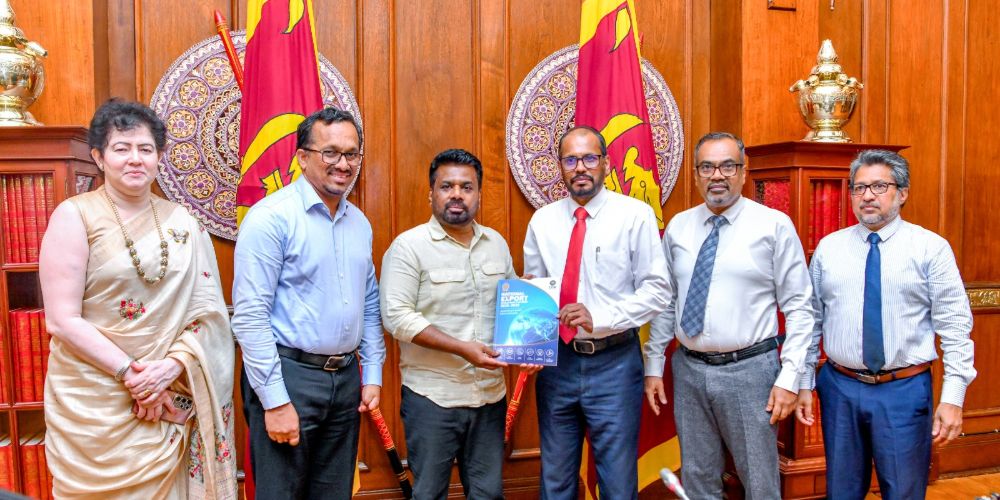
Marking an important milestone in Sri Lanka’s economic development, the National Export Development Plan (NEDP) for the period 2026–2030 was presented to President Anura Kumara Dissanayake on Tuesday morning (16) at the Presidential Secretariat.
The 2026–2030 National Export Development Plan (NEDP) is a key national programme formulated in line with the Government’s policy direction under the 2025 Budget. It aims to strengthen the country’s export sector and achieve export-led sustainable economic growth.
The strategic plan has been developed under the guidance of the Ministry of Industry and Entrepreneurship Development and the leadership of the Sri Lanka Export Development Board (EDB), with technical assistance provided through the Asian Development Bank’s (ADB) Policy-Based Lending (PBL) programme. It is the result of an extensive consultative process carried out in close collaboration with key government institutions, private sector stakeholders, and development partners.
The proposal submitted by the Minister of Industry and Entrepreneurship Development to recognise the “Sri Lanka National Export Development Plan 2026–2030” as the official strategic framework for export development and promotion in Sri Lanka was approved by the Cabinet of Ministers on 4 May 2026. The Plan reflects a broad consensus among government institutions, private sector experts, and international development partners.
In line with the national vision of “A Thriving Nation – A Beautiful Life”, the Plan has been formulated to enhance Sri Lanka’s export competitiveness and achieve an export revenue target of USD 36 billion by 2030.
The core vision of the Plan is to transform Sri Lanka into a competitive logistics and knowledge-based export hub serving regional and global markets. The strategy is based on two key interconnected pillars: “horizontals” and “verticals”, which together provide the foundation for strengthening export competitiveness, diversification, and sustainable growth.
The horizontal enablers, which support the growth and expansion of all priority sectors, include logistics and integrated hub operations, trade facilitation, trade finance and reforms in the business and investment environment, trade promotion and market linkages, quality management, standards, environmental, social and governance (ESG) capacity development, as well as entrepreneurship and innovation.
The Plan also identifies eight priority export sectors to enhance export diversification and value addition, and to position Sri Lanka more competitively in global markets. These include automotive components, mineral-based industries, rubber-based industries, maritime industries (including boat and shipbuilding), spices and concentrates, digital products and services, electrical and electronic equipment, and processed food and beverages.
The preparation of the Plan involved contributions from over 300 stakeholders, including government institutions, the private sector, civil society organisations and international development partners. Broad consensus was achieved through consultations held from October to December 2025 and workshops conducted in January 2026.
The Government expects that, with implementation supported by strong governance and monitoring framework, the Plan will elevate local products to international standards and ensure long-term economic stability and growth. It is further anticipated that the National Export Development Plan will serve as a key driver of Sri Lanka’s economic progress in the years ahead.
Minister of Labour and Deputy Minister of Finance and Planning Dr. Anil Jayantha Fernando, Minister of Industry and Entrepreneurship Development Sunil Handunnetti, Senior Additional Secretary to the President and Secretary to the Ministry of Energy Russell Aponso, Secretary to the Ministry of Industry and Entrepreneurship Development Thilaka Jayasundara, and Chairman of the Sri Lanka Export Development Board Mangala Wijesinghe were also present at the event.
[PMD]

The United Nations Development Programme (UNDP) and the Central Bank of Sri Lanka (CBSL) have strengthened their partnership to advance financial literacy across the country, with a renewed focus on empowering vulnerable communities, strengthening economic resilience and promoting sustainable development.
The two institutions formally launched the second phase of their collaboration recently, reaffirming their commitment to implementing Sri Lanka’s National Financial Literacy Roadmap (2024–2028), a cornerstone of the National Financial Inclusion Strategy (NFIS).
The partnership was marked by a meeting between Central Bank Governor Dr. P. Nandalal Weerasinghe and UNDP Resident Representative in Sri Lanka Ms. Azusa Kubota, together with officials from both organisations.
Building on technical support provided by UNDP during 2024 and 2025, the latest phase seeks to equip individuals, households and businesses with the knowledge required to make sound financial decisions, improve livelihoods and enhance resilience in an increasingly uncertain economic and climatic environment.
The initiative comes at a crucial juncture as Sri Lanka continues its economic recovery while grappling with climate-related challenges that disproportionately affect rural communities and small enterprises.
A key component of the programme will be strengthening the capacity of government outreach officers across all districts to deliver financial literacy training to rural populations and micro, small and medium enterprises (MSMEs).
The training will be based on the Financial Literacy Curriculum developed by the Central Bank, with UNDP supporting the enhancement of modules through the integration of climate-resilient financial management concepts.
The programme aligns closely with Sri Lanka’s Financial Literacy Roadmap and is expected to contribute significantly to improving financial knowledge and access across the country. It is supported by several development and private-sector partners, including the government of Japan, Chrysalis, VISA and Hirdaramani-Lacoste.
Speaking on the importance of the initiative, Central Bank Governor Dr. Weerasinghe said the partnership would help broaden the reach of financial literacy efforts while addressing emerging challenges such as climate-related financial risks.
“We particularly welcome the focus on strengthening financial resilience, climate-related financial preparedness, public awareness campaigns and capacity-building through Training-of-Trainers programmes, he said.
He noted that the initiatives would ensure that different segments of society gain access to practical financial knowledge and develop the skills necessary to foster responsible financial behaviour and improve their overall financial well-being.
UNDP Resident Representative Ms. Kubota underscored the critical role financial literacy plays in creating inclusive and resilient economies.
“Financial literacy is a critical foundation for inclusive and resilient economies. Through our partnership with the Central Bank of Sri Lanka, we have been working to empower individuals, particularly those most vulnerable, with the knowledge and tools needed to make informed financial decisions and build secure livelihoods, she said.
By Ifham Nizam

The government’s decision to ban the export of mineral resources in raw form and place all future mineral exploration under state control has triggered fresh debate over how Sri Lanka should develop its untapped mineral wealth and attract foreign investment.
Announcing the new National Mineral Policy, Industry and Entrepreneurship Development Minister Sunil Handunnetti said the country had long failed to capture the full value of its mineral resources by exporting them with minimal processing.
“We will no longer allow mineral resources to leave the country in raw form,” the minister said, arguing that Sri Lanka must move towards value-added industries that generate greater economic returns.
A key feature of the new policy is the transfer of all mineral exploration activities to the state-run Geological Survey and Mines Bureau (GSMB). Under the new system, the GSMB will carry out exploration, publish geological data and subsequently invite investors to participate in commercially viable projects.
Handunnetti defended the move by citing what he described as the failure of the previous licensing regime. According to government figures, 471 exploration licences had been issued since 1993, but only 28 advanced to mining operations, with just 12 remaining active today. The minister alleged that some companies had used exploration licences to boost corporate valuations rather than develop actual mining projects.
He also stressed that mineral deposits located beneath privately owned land belong to the state and should be developed in the national interest.
However, the reforms are likely to attract close scrutiny from foreign investors seeking opportunities in Sri Lanka’s mineral sector.
An independent industry analyst said the policy’s emphasis on value addition is consistent with global trends, as countries increasingly seek to process critical minerals domestically rather than export raw materials.
“The more difficult question is whether a state-controlled exploration model can generate the confidence required by international investors,” the analyst said. “Investors will want access to reliable geological data, transparent licensing procedures and predictable regulations before committing significant capital.”
The analyst noted that the government’s plan to publish exploration data before inviting investment proposals could help improve transparency, but its success would depend on how scientifically the process is implemented.
Sri Lanka possesses commercially valuable deposits of graphite, mineral sands, ilmenite, rutile, garnet, silica and phosphate. As global demand for industrial and strategic minerals continues to grow, the new policy represents a significant test of whether stronger state involvement can translate geological potential into investment, industrial development and export earnings.
“The success of the strategy may ultimately depend on whether the government can balance tighter control over mineral resources with the policy certainty and commercial incentives that international investors typically seek,” the analyst said.
By Sanath Nanayakkare

Spinners make it two in two for England

Messi hat-trick fires holders Argentina to win over Algeria at World Cup

‘Dancing girl’s’ bare torso restored in Indian textbook after backlash

Tehran selling deal with US as victory – but for Iranians it was necessity

Plans to open underutilised state land for new investment opportunities

National Export Development Plan (2026–2030) presented to the President

‘Dates have the highest sugar content to fight Coronavirus’

Sunday Island 27 December – Headlines

#SundayIsland 17th December – Headlines

Sunday Island – 28th March

Sunday Island Headlines – 21 March

Sunday Island – 21st February – Headlines
-

 News5 days ago
CIABOC summons Yoshitha over his participation in British Navy training programme
-

 Sports2 days ago
Tharanga set for high-profile javelin clash in Ostrava
-

 News5 days ago
Justice Minister responds to social media claims he represented Easter Sunday ringleader
-

 Features3 days ago
Politics of protected species
-

 News4 days ago
Commonwealth lawyers urge Lanka to uphold rule of law
-

 News2 days ago
Theft of USD 2.5 mn from Treasury: CoPF accused of complicity in NPP cover-up
-

 News2 days ago
Release of 2025 O/L results likely to be delayed
-

 News1 day ago
Beijing Capital Airlines to resume flights to Colombo signalling boost to tourism