
News
Debt restructure a pivotal achievement but more ground to cover says experts


PMD circulates views of Murtaza Jafferjee and Prof. Sirimal Abeyratne
Sri Lanka’s announcement of reaching agreements in principle to restructure approximately USD 17.5 billion of external commercial debt is a pivotal step towards achieving debt sustainability, according to Murtaza Jafferjee, Chairman of the Advocata Institute and CEO of JB Securities.
A release issued from the President’s Media Division (PMD) said: Speaking on the significance of this development, Jafferjee highlighted the long journey toward this moment and its potential to shift the country’s economic trajectory.
Reflecting on Sri Lanka’s financial situation, Jafferjee explained that as early as 2020, it was evident to him that the nation was facing a solvency crisis, rather than a liquidity issue, as many policymakers suggested at the time. Despite his warnings and public analysis advocating for debt renegotiation, it wasn’t until April 2022 that Sri Lanka initiated the process of debt restructuring.
“This is the culmination of a long process,” Jafferjee remarked, emphasizing the importance of the agreement with commercial creditors. However, he pointed out that the announcement is not the end of the road. “We are still in a selective default rating, and it will take months to finalize the process. Only then can we hope to see a rating upgrade, ideally to around triple C,” he said, underlining the significance of achieving an investable credit rating for the nation’s future economic prospects.
Jafferjee also explained the intricacies of debt sustainability analysis (DSA), a methodology used to assess the ability of a country to manage its debt. He detailed the variables that influence the analysis, such as debt-to-GDP ratios and gross financing needs. According to him, the International Monetary Fund’s (IMF) analysis forms the basis for determining whether Sri Lanka’s debt is sustainable, and if it is not, restructuring is necessary.
Jafferjee warned against delaying the restructuring process, noting that further delays would result in continued high-interest rates on Sri Lanka’s international sovereign bonds, which are currently around 6.5% to 7%. “The new interest rate is closer to 3%, so any delays in finalizing this deal are costly,” he added.
Looking forward, Jafferjee highlighted that while this agreement is crucial, Sri Lanka must focus on enhancing its debt-carrying capacity by 2028, when a significant portion of the restructured debt will begin to mature. He emphasized the importance of increasing economic growth and attracting productivity-enhancing investments to prevent future defaults.
In conclusion, Jafferjee stressed the need for Sri Lanka to improve its international standing and rebuild confidence among investors. “What has been achieved yesterday is a huge game changer in the path to debt sustainability. It is crucial to move forward, grow the economy, and restore Sri Lanka’s credibility on the global stage. If we succeed, we can emerge from this crisis stronger,” he stated.
This breakthrough marks a significant moment for Sri Lanka as it navigates its way out of a severe economic crisis, with hopes that these efforts will spark the much-needed recovery in both investment and business sentiment.
Meanwhile, Senior Professor of Economics at the University of Colombo, Sirimal Abeyratne, stated that the debt restructuring agreement reached on September 18 marks a significant milestone for Sri Lanka’s economy.
Professor Abeyratne highlighted that this agreement will remove the long-standing restrictions on Sri Lanka’s access to international capital markets, stabilize the country’s exchange rates, and strengthen the Central Bank’s foreign reserves. Additionally, the deal will lay the foundation for improving the nation’s downgraded international credit ratings.
He further commented: “Over the past two years, we have been striving to achieve economic stability and debt sustainability. The news we received on September 19th is a significant milestone toward concluding our country’s debt restructuring, particularly with the agreement reached with commercial creditors.
This marks an important turning point in Sri Lanka’s economic history. Through this agreement, we are taking a major step forward in ending the country’s bankruptcy. Restrictions on Sri Lanka’s access to capital markets will now be lifted, giving us the necessary strength to stabilize both our exchange rates and the foreign reserves of the Central Bank. Moreover, the groundwork is being laid to restore the international rankings that had declined. Given these developments, it is clear how critical it is to finalize the debt restructuring process.
However, this is only the beginning. We face several more challenges ahead. It is essential to maintain the economic stability and debt sustainability we have begun to establish. According to the debt sustainability framework we have agreed upon with the International Monetary Fund, by 2030, we aim to significantly reduce our debt burden, lower the amount of new debt, and enhance our capacity to repay foreign loans.
We have until 2032 to achieve these targets, but the work must extend beyond that. Sustainable debt management and the prevention of future economic crises can only be secured through continuous economic growth.
The people of our country have made tremendous sacrifices to support these efforts, and as Sri Lanka’s economic growth gains momentum, the pressure on them will begin to ease. To ensure lasting prosperity, we need to maintain an annual growth rate of 7% to 8% for at least 10 to 20 years. Without this sustained growth, we risk facing another period of economic instability.”


Several ex-Cabinet ministers questioned; Ranil, Sajith, too likely to be summoned
The Commission to Investigate Allegations of Bribery or Corruption (CIABOC) has initiated an inquiry into the shifting of the Agriculture Ministry situated at Rajamalwatte, to a building belonging to the D. P. Jayasinghe Group of Companies, at Rajagiriya, during the Yahapalana government.
The building was rented for a five-year period at a cost of over Rs 1 bn by the yahapalana government within months after the then President Maithripala Sirisena declared opened the 10-storey building complex.
The CIABOC yesterday morning recorded former yahapalana minister Gayantha Karunatilleke’s statement in connection with the investigation. Later in the day, CIABOC recorded the statement of SJB General Secretary Ranjith Maddumabanadara. Earlier CIABOC summoned former ministers Thalatha Atukorale, Wajira Abeywardena and Lakshman Kiriella. At the time of the finalisation of the deal, KIriella was in the UNP.
Sources said that former PM and President Ranil Wickremesinghe, too, was likely to be questioned in this regard. Responding to The Island queries, sources pointed out even SJB leader Sajith Premadasa was expected to be questioned.
The then Speaker Karu Jayasuriya is on record as having said that the building was rented in keeping with a decision taken by the government and not Parliament.
The UNP-SLFP coalition shifted the Agriculture Ministry to accommodate 16 Sectoral Oversight Committees therein.
Although the government paid as much as Rs. 21.5 mn monthly rent to D.P.A. Jayasinghe Company, the Agriculture Ministry failed to move in for over a year. The then Agriculture Minister Duminda Dissanayake sought Cabinet approval on Dec 1, 2015 to rent the building.
According to inquiries conducted earlier by the Presidential Commission appointed to probe state sector corruption, the Agriculture Ministry sought Cabinet approval for a new building after the then Prime Minister Wickremesinghe submitted a cabinet proposal on 21 September, 2015, to use the Agriculture Ministry building for Parliament’s sectoral oversight committees.
PM Wickremesinghe’s Secretary Saman Ekanayake has told the Commission that public funds could have been saved if the several vacant floors of Suhurupaya belonging to the Defence Ministry had been made available to the Agriculture Ministry.
By Shamindra Ferdinando ✍️
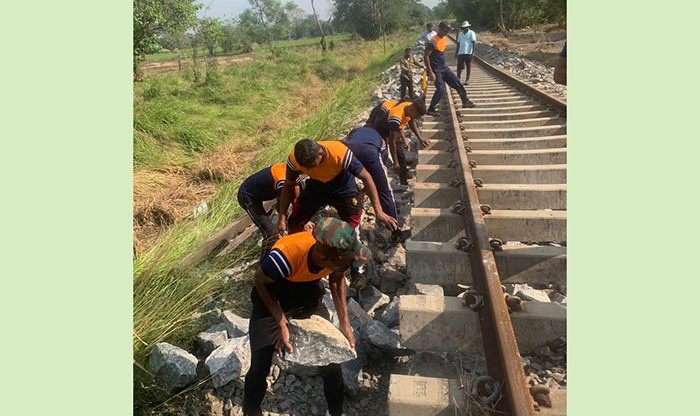
Railway sources said that the damages caused to railway tracks could be more than USD 300 mn.
According to UNDP Rapid Crisis Assessment Sri Lanka’s railroad system, over 278 km of railways were exposed to cyclone-related flooding, including 35 railroad bridges nationwide. This figure reflects flooding only, but other hazards (such as localised debris, landslides, or damage to a single bridge) can also disrupt operations, meaning that even relatively small obstructions can render long stretches of railway non-operational. Like road exposure, railway exposure limits mobility and the capacity of affected populations to access key services and infrastructure.
At the level of divisional secretariats, Colombo and Thimbirigasyaya in Colombo District, Ja Ela in Gampaha District, as well as Mannar Town and Nanaddan in Mannar District all registered over 10 km of exposed railways each.
Commissioner-General of Essential Services B.K. Prabath Chandrakeerthi is on record as having said that only 478 kilometers of Sri Lanka’s 1,593-km railway network were currently usable following extensive damage caused by the recent cyclone.

Under Secretary of State for Political Affairs Allison Hooker arrived in Colombo yesterday (11) to underscore US interest in defence, trade and maritime security in line with their Indo-Pacific strategy.
The US embassy here issued the following statement: “Under Secretary Hooker will meet with Sri Lankan counterparts to discuss a wide range of bilateral issues, focused on deepening economic and commercial ties, strengthening defence cooperation, and supporting Sri Lanka’s economic and maritime sovereignty.
The United States and Sri Lanka share a strong and enduring partnership rooted in our mutual commitment to regional security, economic growth, and prosperity for our peoples. Through close cooperation on defence, trade, and maritime security, we are working together to advance a free, open, and resilient Indo-Pacific region.
As we continue to build on our strategic partnership, the United States also stands with the people of Sri Lanka as they respond to the devastating impacts of Cyclone Ditwah. We remain committed to working together to address both immediate challenges and long-term opportunities for our two nations, reflecting our ongoing commitment to the U.S.-Sri Lanka partnership.”

Vaibhav Suryavanshi slams 95-ball 171 in Under-19 Asia Cup opener

Quinton de Kock’s 90 powers South Africa to massive win

Duffy five-for triggers West Indies slide to give New Zealand first win of WTC cycle

Showers or thundershowers will occur at times in the Northern, North-Central, Eastern and Uva provinces and in Puttalam, Matale and Kurunegala districts

Rs 1. 3 bn yahapalana building deal under investigation

SL Railways suffers staggering losses; more than 2/3 of rail tracks out of service

‘Dates have the highest sugar content to fight Coronavirus’

Sunday Island 27 December – Headlines

#SundayIsland 17th December – Headlines

Sunday Island – 28th March

Sunday Island Headlines – 21 March

Sunday Island – 21st February – Headlines
-

 Features3 days ago
Finally, Mahinda Yapa sets the record straight
-

 News5 days ago
Over 35,000 drug offenders nabbed in 36 days
-

 News4 days ago
Cyclone Ditwah leaves Sri Lanka’s biodiversity in ruins: Top scientist warns of unseen ecological disaster
-

 Business7 days ago
LOLC Finance Factoring powers business growth
-

 News7 days ago
CPC delegation meets JVP for talks on disaster response
-

 News7 days ago
A 6th Year Accolade: The Eternal Opulence of My Fair Lady
-

 News5 days ago
Rising water level in Malwathu Oya triggers alert in Thanthirimale
-
 Features6 days ago
The Catastrophic Impact of Tropical Cyclone Ditwah on Sri Lanka: