
News
Debt restructure a pivotal achievement but more ground to cover says experts

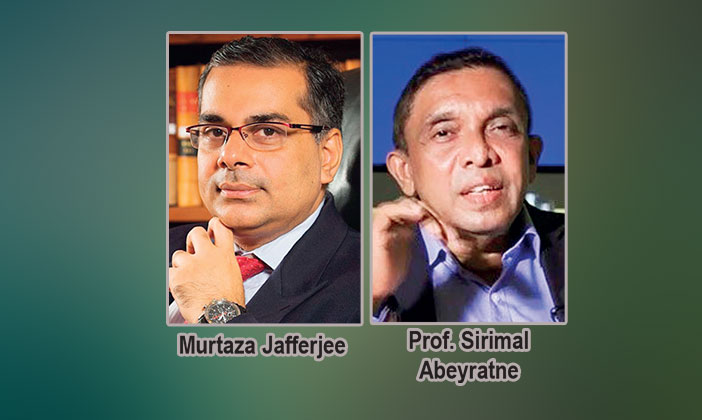
PMD circulates views of Murtaza Jafferjee and Prof. Sirimal Abeyratne
Sri Lanka’s announcement of reaching agreements in principle to restructure approximately USD 17.5 billion of external commercial debt is a pivotal step towards achieving debt sustainability, according to Murtaza Jafferjee, Chairman of the Advocata Institute and CEO of JB Securities.
A release issued from the President’s Media Division (PMD) said: Speaking on the significance of this development, Jafferjee highlighted the long journey toward this moment and its potential to shift the country’s economic trajectory.
Reflecting on Sri Lanka’s financial situation, Jafferjee explained that as early as 2020, it was evident to him that the nation was facing a solvency crisis, rather than a liquidity issue, as many policymakers suggested at the time. Despite his warnings and public analysis advocating for debt renegotiation, it wasn’t until April 2022 that Sri Lanka initiated the process of debt restructuring.
“This is the culmination of a long process,” Jafferjee remarked, emphasizing the importance of the agreement with commercial creditors. However, he pointed out that the announcement is not the end of the road. “We are still in a selective default rating, and it will take months to finalize the process. Only then can we hope to see a rating upgrade, ideally to around triple C,” he said, underlining the significance of achieving an investable credit rating for the nation’s future economic prospects.
Jafferjee also explained the intricacies of debt sustainability analysis (DSA), a methodology used to assess the ability of a country to manage its debt. He detailed the variables that influence the analysis, such as debt-to-GDP ratios and gross financing needs. According to him, the International Monetary Fund’s (IMF) analysis forms the basis for determining whether Sri Lanka’s debt is sustainable, and if it is not, restructuring is necessary.
Jafferjee warned against delaying the restructuring process, noting that further delays would result in continued high-interest rates on Sri Lanka’s international sovereign bonds, which are currently around 6.5% to 7%. “The new interest rate is closer to 3%, so any delays in finalizing this deal are costly,” he added.
Looking forward, Jafferjee highlighted that while this agreement is crucial, Sri Lanka must focus on enhancing its debt-carrying capacity by 2028, when a significant portion of the restructured debt will begin to mature. He emphasized the importance of increasing economic growth and attracting productivity-enhancing investments to prevent future defaults.
In conclusion, Jafferjee stressed the need for Sri Lanka to improve its international standing and rebuild confidence among investors. “What has been achieved yesterday is a huge game changer in the path to debt sustainability. It is crucial to move forward, grow the economy, and restore Sri Lanka’s credibility on the global stage. If we succeed, we can emerge from this crisis stronger,” he stated.
This breakthrough marks a significant moment for Sri Lanka as it navigates its way out of a severe economic crisis, with hopes that these efforts will spark the much-needed recovery in both investment and business sentiment.
Meanwhile, Senior Professor of Economics at the University of Colombo, Sirimal Abeyratne, stated that the debt restructuring agreement reached on September 18 marks a significant milestone for Sri Lanka’s economy.
Professor Abeyratne highlighted that this agreement will remove the long-standing restrictions on Sri Lanka’s access to international capital markets, stabilize the country’s exchange rates, and strengthen the Central Bank’s foreign reserves. Additionally, the deal will lay the foundation for improving the nation’s downgraded international credit ratings.
He further commented: “Over the past two years, we have been striving to achieve economic stability and debt sustainability. The news we received on September 19th is a significant milestone toward concluding our country’s debt restructuring, particularly with the agreement reached with commercial creditors.
This marks an important turning point in Sri Lanka’s economic history. Through this agreement, we are taking a major step forward in ending the country’s bankruptcy. Restrictions on Sri Lanka’s access to capital markets will now be lifted, giving us the necessary strength to stabilize both our exchange rates and the foreign reserves of the Central Bank. Moreover, the groundwork is being laid to restore the international rankings that had declined. Given these developments, it is clear how critical it is to finalize the debt restructuring process.
However, this is only the beginning. We face several more challenges ahead. It is essential to maintain the economic stability and debt sustainability we have begun to establish. According to the debt sustainability framework we have agreed upon with the International Monetary Fund, by 2030, we aim to significantly reduce our debt burden, lower the amount of new debt, and enhance our capacity to repay foreign loans.
We have until 2032 to achieve these targets, but the work must extend beyond that. Sustainable debt management and the prevention of future economic crises can only be secured through continuous economic growth.
The people of our country have made tremendous sacrifices to support these efforts, and as Sri Lanka’s economic growth gains momentum, the pressure on them will begin to ease. To ensure lasting prosperity, we need to maintain an annual growth rate of 7% to 8% for at least 10 to 20 years. Without this sustained growth, we risk facing another period of economic instability.”


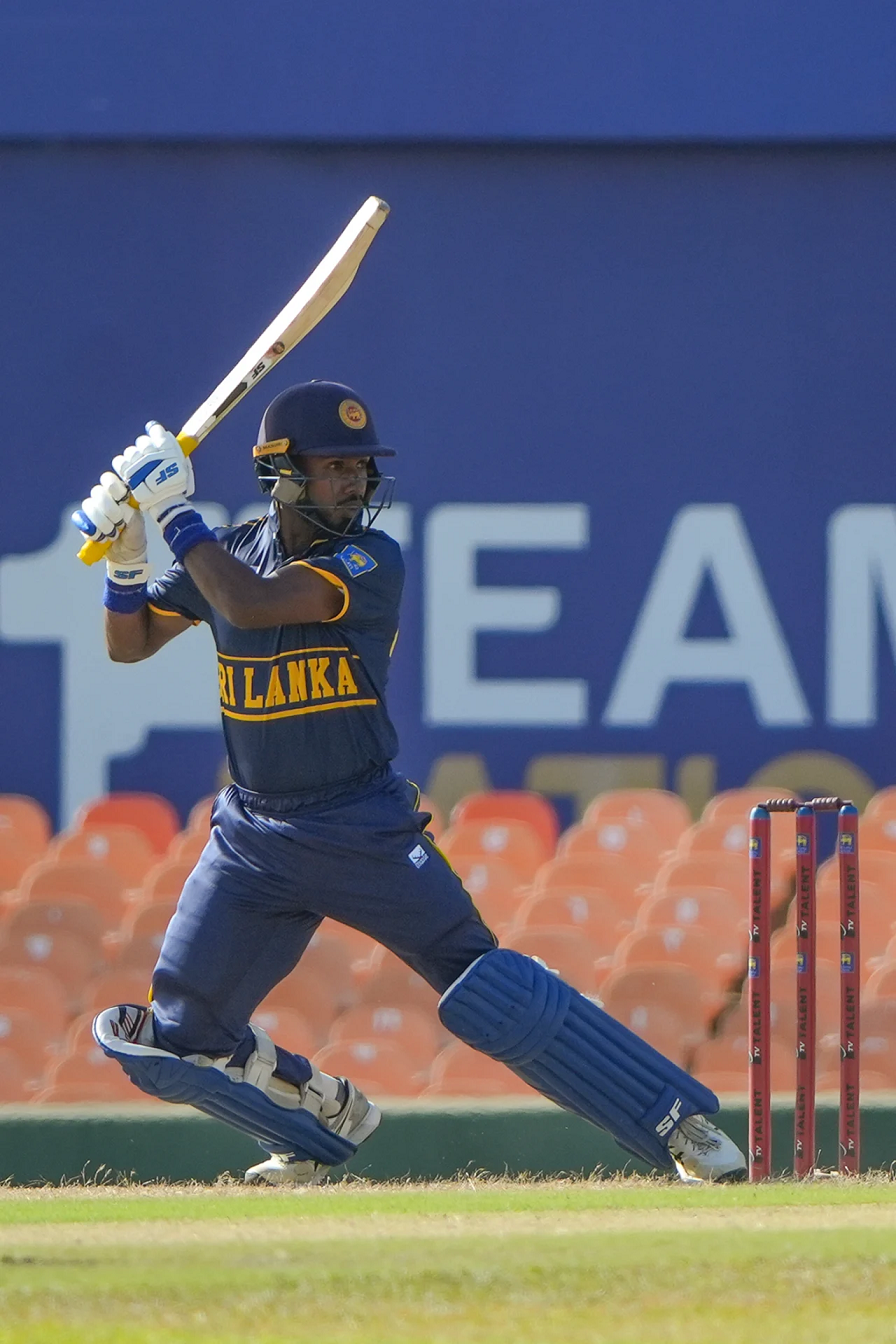
India A beat Sri Lanka A by eight runs in the first match of the tri series being played at Dambulla.
Batting first India A powered by almost a run a ball century by Rutraj Gaikwad [101 off 114 balls] and a half ton from Tilak Varma [60] posted 277/6. Mohammed Shiraz captured 2 wickets including the wicket of India’s 15 year old batting sensation Vaibhav Sooriyawanshi who was caught by Sahan Arachchige for 14.
In the chase Sri Lanka were in the hunt with 40 plus scores from Niroshan Dikwella, Avishka Fernando and Saddera Samarawickrema and a 72 ball 74 from Shan Arachchige but lost the momentum after Arachchige fell with the score on 262. Sri Lanka A fall short by 8 runs losing their last three wickets for the addition of seven runs !
SCORES:
INDIA A 277/6 in 50 overs [Priyansh Arya 32, Rutraj Gaikwad 101, Tilak Varma 60; Mohamed Shiraz 2-67] beat SRI LANKA A 269 in 48.5 overs [Niroshan Dickwella 47, Avishka Fernando 45, Sadeera Samarawickrama 46, Sahan Arachchige 74; Arshad Khan 2-24, Anukul Roy 2-49, Ayush Badoni 2-46, Vipraj Nigam 2-46] by 8 runs
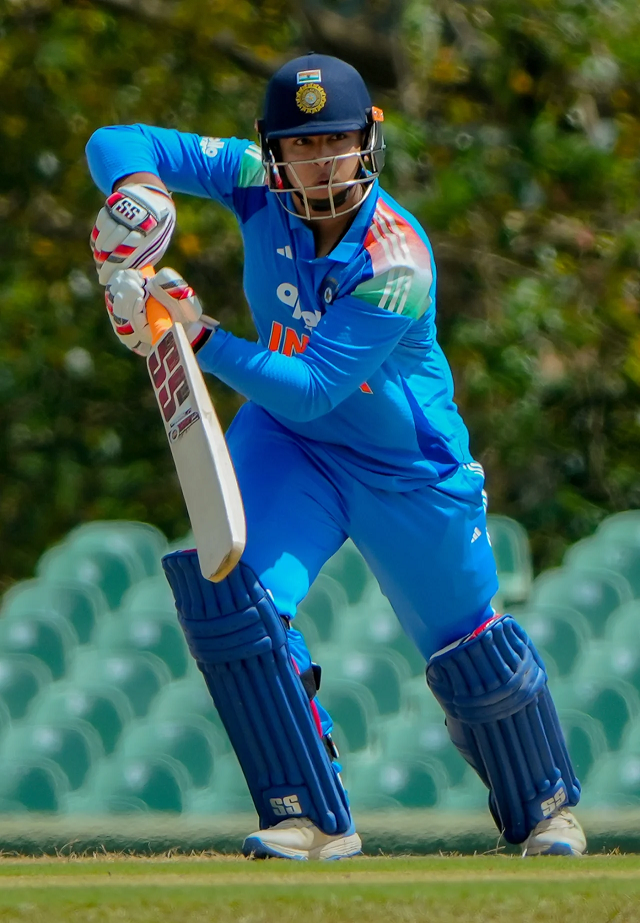
Vaibhav Sooryavanshi in action on India A debut• [SLC]
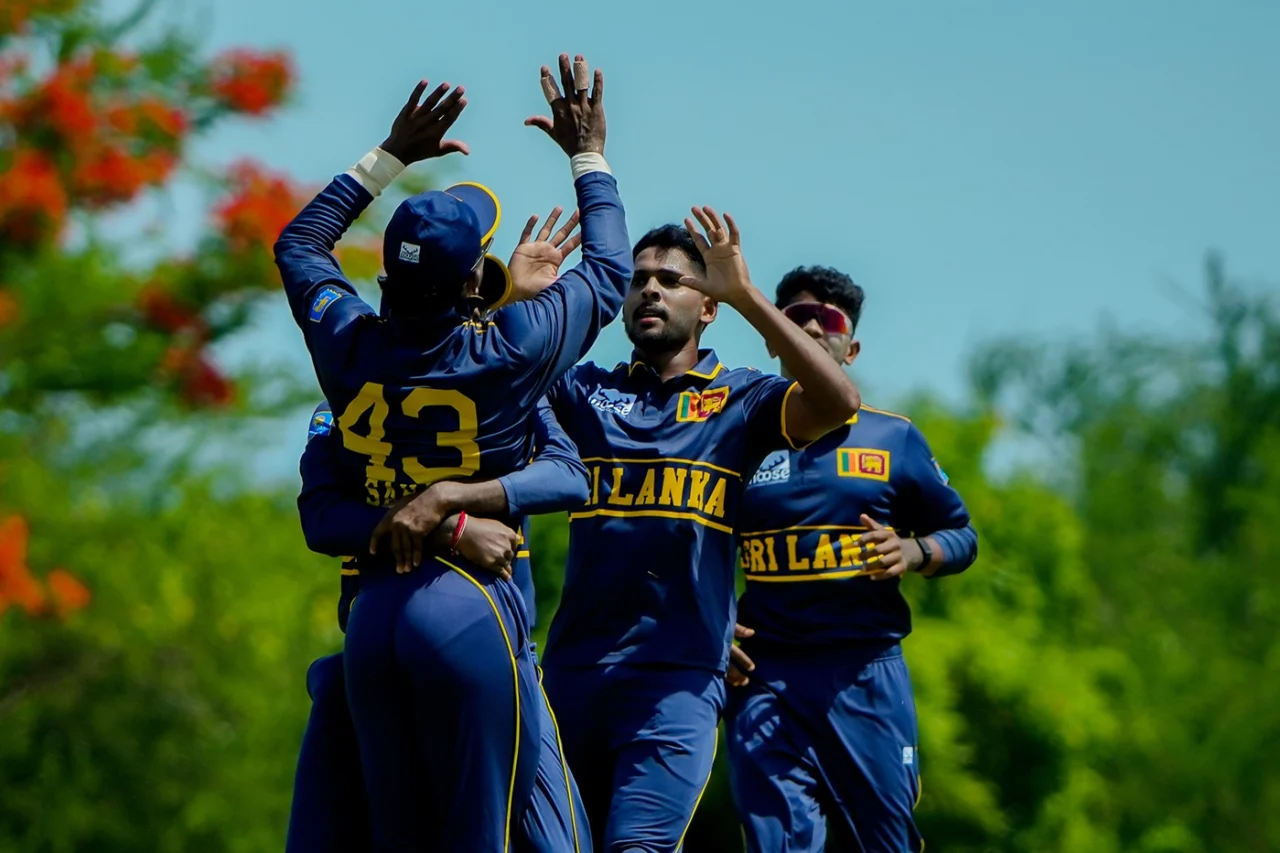
Mohamed Shiraz celebrates the wicket of Vaibhav Sooryavanshi [SLC]
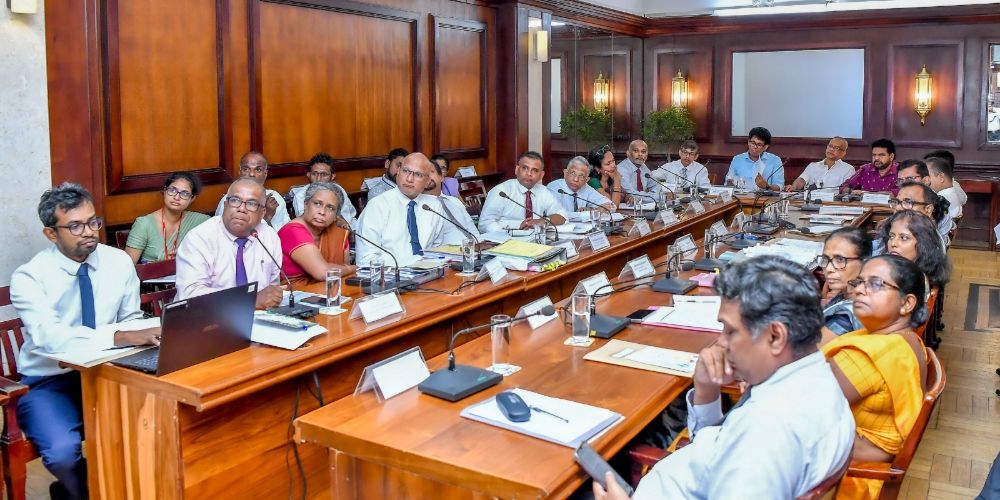
A meeting of the Food Policy and Security Committee was held on Monday (08) afternoon at the Presidential Secretariat under the co-chairmanship of Minister of Agriculture, Livestock, Land and Irrigation, Lal Kantha and Minister of Trade, Commerce, Food Security and Cooperative Development, Wasantha Samarasinghe.
The meeting extensively discussed the measures that should be taken and the preparedness required to mitigate any potential impacts on Sri Lanka arising from the anticipated global El Niño phenomenon.
Particular attention was given to the possible effects of El Niño on the agricultural sector. Discussions also focused on the need to ensure adequate water storage in reservoirs for the forthcoming Yala season and to safeguard drinking water supplies. Minister Wasantha Samarasinghe instructed officials to obtain the views and recommendations of the relevant institutions on these matters.
It was further decided to convene a special meeting of the Food Policy and Security Committee in the near future to continue discussions on the issue. Relevant line agencies, including the Ministry of Agriculture, the Department of Agriculture, the Mahaweli Authority and the Department of Irrigation, were instructed to prepare and submit comprehensive plans outlining measures to address the potential impacts of the El Niño phenomenon.
The Ministers noted that, just as the country had successfully managed challenges arising from Cyclone Ditwah and the conflict situation in the Middle East, plans were already in place to effectively manage this potential global challenge. They emphasised that the Government was giving special attention to the matter.
Minister Wasantha Samarasinghe further pointed out that natural disasters cannot be predicted with certainty and stressed the importance of developing contingency plans in advance to respond effectively to any eventuality.
Among those present were Senior Additional Secretary to the President Kapila Janaka Bandara, Secretary to the Ministry of Public Administration, Provincial Councils and Local Government, S. Aloka Bandara, Secretary to the Ministry of Health and Mass Media, Dr. Anil Jasinghe, Director General of Health Services Dr. Asela Gunawardena, Acting Director General of the Department of Meteorology, A. L. K. Wijemannage, Director General of the Department of Agriculture W. A. R. T. Wickramarachchi and other members of the Food Policy and Security Committee.
President’s Media Division (PMD)
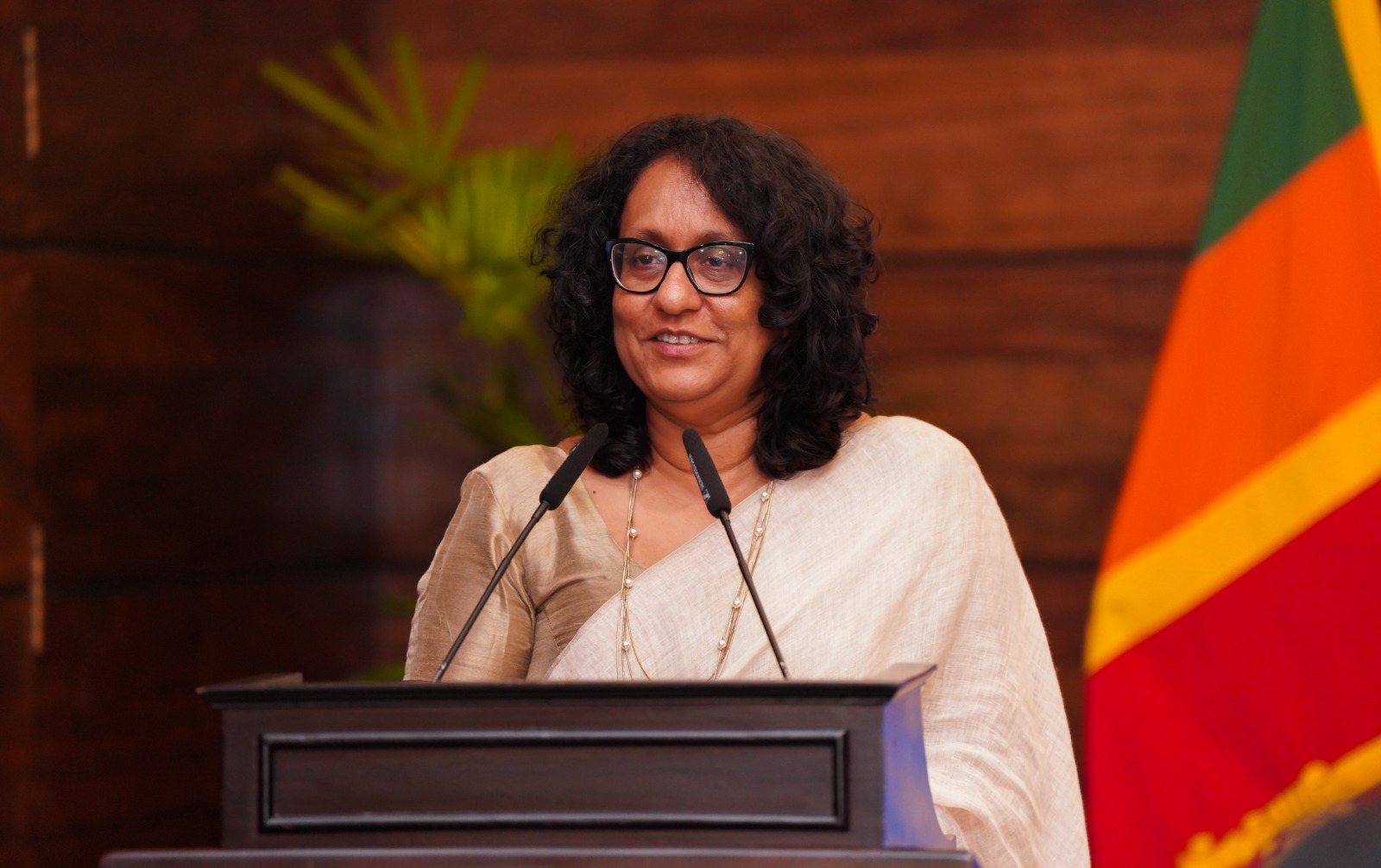
Prime Minister and Minister of Education, Higher Education and Vocational Education, Dr. Harini Amarasuriya, stated that as a government committed to ensuring the future of the nation’s children, it is essential to establish an education system in which every child can equally experience quality education. The Prime Minister emphasized that decisions must be made based on accurate data, sound policies, and technological evidence in order to achieve this goal.
The Prime Minister made these remarks while attending the official launch of the first phase of the Human Resources Module of the National Education Management Information System (NEMIS) and the pilot project of the e-Thaksalawa Learning Management System (LMS), held at Temple Trees on Saturday [6th of June 2026].
The National Education Management Information System has been developed to enhance the efficiency and effectiveness of human resource management and administration, which are among the five key pillars of the ongoing education reforms.
Previously, each province operated its own independent information systems, and through this new platform, it is expected to manage all information relating to both national and provincial schools under a single integrated system. Accordingly, the first phase, the Human Resources Module, was officially launched. Under this initial module, teacher transfers in the provinces of Sabaragamuwa, Western, Southern, and North Western will be managed through the system, with plans to expand it island-wide in due course.
The remaining modules to be introduced in the future are designed to facilitate comprehensive human resource management for all academic staff in schools.
This initiative has been implemented through the collaborative efforts of the Prime Minister’s Office, the Ministry of Education, Higher Education and Vocational Education, the Ministry of Digital Economy, the Task Force on Digital Transformation in Education, provincial and zonal education authorities, technical teams, and the Sri Lanka Air Force.
Simultaneously, the pilot project of the e-Thaksalawa Learning Management System (LMS) was also launched, aiming to expand digital learning opportunities and enhance the teaching, learning, and assessment processes for students.
Addressing the occasion, Prime Minister Dr. Harini Amarasuriya stated:
“Instead of allowing different sectors of the education system to function in isolation, we are integrating educational administration, the delivery of education, and educational content into a one framework. What we have embarked upon is by no means a minor undertaking.
Digitalisation is importance to our government. We must evolve and move forward with rapidly changing world. We believe that digitalisation is essential in order to deliver the public services more efficiently and transparently. In particular, the education reforms we will implement in the future require accurate data. Through the National Education Management Information System, we will be able to obtain reliable data while ensuring transparency and quality in education.
All national schools will be incorporated into this system in the near future. Teacher data from several provincial schools have already been entered. Through this platform, we expect to manage teacher recruitment, transfers, promotions, and other services related to the education sector in a transparent and efficient manner.
When digitalising public services, we must also nurture citizens with the knowledge and skills to use them. The primary responsibility for this lies with the education sector. That is why we have planned to build human capital through the e-Thaksalawa Learning Management System.
Digitalisation is not a substitute for teachers. Education is fundamentally based on human relationship. No matter how much technology is available in classrooms, learning does not happen automatically. It is the teacher who engages directly with students. Therefore, digital technology should serve as a tool that empowers teachers and further enhances their importance.
By using digitalisation, we intend to address key challenges such as providing high-quality education to under-resourced schools, ensuring that every school benefits from the expertise of capable teachers, and creating educational opportunities for children with special needs. Our vision is to use digitalisation to nurture humane, enlightened citizens who are prepared for the future.
During the event, commemorative plaques were presented by the Prime Minister to officials representing the Sabaragamuwa, Eastern, and Uva Provinces, as well as to officers of the Sri Lanka Air Force, in recognition of their contribution to the development of the first phase of the National Education Management Information System.
The occasion was attended by the Deputy Minister of Digital Economy Eranga Weeraratne, Secretary to the Prime Minister Pradeep Saputhanthri, Secretary to the Ministry of Education, Higher Education and Vocational Education Nalaka Kaluwewa, and Secretary to the Ministry of Digital Economy Waruna Sri Dhanapala, and Chief Secretaries of Provincial Councils, the Commander of the Sri Lanka Air Force, Provincial Secretaries of Education, provincial education authorities, senior officials representing the Prime Minister’s Office, the Ministry of Digital Economy and the Ministry of Education, as well as members of the Task Force on the Digital Transformation of Education and senior officers of the Sri Lanka Air Force.
[Prime Minister’s Media Division]

India A beat Sri Lanka A by 8 runs in thriller

T20 World Cup: Hosts, defending champions and a bunch of hopefuls in Group 2

Trump booed in New York as he becomes first US president to attend NBA Finals

Food Policy and Security Committee meets

Auguste, Andrew and Springer recalled to West Indies’ T20I squad

China’s Xi, North Korea’s Kim pledge to boost ties at rare Pyongyang summit

‘Dates have the highest sugar content to fight Coronavirus’

Sunday Island 27 December – Headlines

#SundayIsland 17th December – Headlines

Sunday Island – 28th March

Sunday Island Headlines – 21 March

Sunday Island – 21st February – Headlines
-

 Latest News6 days ago
Kusal Mendis, Pathum Nissanka, bowlers put Sri Lanka 1-0 up
-
 News6 days ago
New US tariffs proposed on 60 countries, including Sri Lanka
-

 Features5 days ago
Power crept into the Sangha and is now tearing it apart
-
 Features5 days ago
Kondachchi wind farm and battery storage project to boost energy security, says Power Ministry Secretary
-
 Features5 days ago
Saudi Arabia sets new benchmark in Hajj management as 1.7 million pilgrims complete sacred journey
-

 News4 days ago
Asst. Manager, security officer arrested over Rs 30 mn snatch at Horana PB branch
-

 News3 days ago
Women’s T20 World Cup 2026 warm-up: Chamari Athapaththu’s 94 helps Sri Lanka beat Pakistan
-

 Editorial2 days ago
Probe Sallay’s complaint