
News
Police go all out to help EC conduct free and fair election

By Rathindra Kuruwita
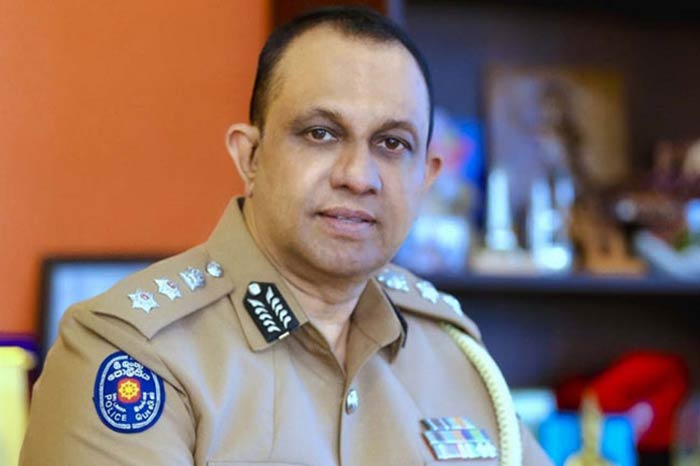
The police were ready to offer any assistance required by the Elections Commission (EC) to ensure a free and fair election tomorrow, DIG Nihal Thalduwa, Head of the Crime Division and Police Spokesperson, said during a media briefing yesterday (19).
Two police officers will be stationed at each polling centre.
“In centres serving a significant number of voters, we sometimes deploy three officers. All police personnel on special duties have reported to their respective stations. From 6 o’clock on Friday, mobile police units will begin patrolling polling centres and the surrounding areas,” he said.
DIG Thalduwa explained that one of the two officers deployed to each polling centre would go to the location where ballot boxes are issued.
“This officer will liaise with the Returning Officer of the polling centre and accompany them, along with the ballot box, back to the centre,” he said.
“In the meantime, the other officer will have secured the polling centre. On Saturday morning, both officers will remain on duty at the centre at all times,” he added.
DIG Thalduwa said the election process thus far has been extremely peaceful, with the police receiving only 449 complaints, of which just 140 fall under the Criminal Procedure Code. “We have had about three incidents involving serious injuries. In total, we have arrested 108 individuals and apprehended 14 vehicles for violations related to election law,” DIG Thalduwa said.
DIG Thalduwa said that election-related propaganda had ended at midnight on Wednesday (18).
As per the regulations governing presidential elections, election offices are no longer permitted after midnight on 19 September. “However, a candidate is allowed to maintain a central election office in each electoral district. Additionally, if a candidate’s residence has been used as an election office, it may continue to function. Candidates can also maintain one election office for each seat (160 seats in total), and these may remain operational until midnight on 22 September,” he said.
Canvassing had also prohibited since midnight Wednesday (18). The newly gazetted Code of Criminal Procedure (Amendment) Bill from 19 July 2024 has introduced significantly higher fines for election-related offences. For example, Section 169E has been amended to increase the fine for “bribery by treating” from 200 rupees to 750,000 rupees. The fine for “bribery in connection with an election” has been raised from 500 rupees to 1 million rupees. Similarly, Section 169F has been amended to raise the fine for “undue influence at an election” from 500 rupees to 100,000 rupees, and the penalty for “personation at an election” has increased from 300 rupees to 100,000 rupees.
The police will also ensure that no intoxicated individuals enter polling centres. “There is limited time for voting, and we cannot afford to deal with disturbances caused by drunken behaviour. We urge the public not to disrupt the work of election officers, and we will take strict action if necessary,” DIG Thalduwa said.
Of the 85,000-strong Sri Lankan police force, 70,000 officers will be deployed either directly or indirectly for election duty on Saturday. “Mobile phones will not be allowed inside polling booths. A small minority of people take their phones inside and capture photos or videos, which causes numerous problems,” DIG Thalduwa said.
The police are also monitoring election watch parties where large amounts of alcohol may be consumed. “As election results are announced, some individuals might cause disruptions that could even affect national security. We will disperse such gatherings. Do not drink excessively and attempt to cause trouble,” he said.
Additionally, police are keeping a close eye on individuals who continue to promote election propaganda via social media despite the ban on such activities.
“An organised group, for example, attempted to falsely suggest that an incident from two years ago was happening in the present. They circulated a video on social media with a caption accusing one party. Despite it being clear that the event was from the past, people kept contacting the police to verify the information. Acts like this can cause unnecessary confusion and problems,” he said.


A customized capacity-building programme for 10 aquaculturists from the National Aquaculture Development Authority (NAQDA) under the Ministry of Fisheries, Aquatic and Ocean Resources of Sri Lanka, was organized recently at the Central Institute of Freshwater Aquaculture (CIFA), Bhubaneshwar – the premier research institute for freshwater aquaculture in India under the aegis of the Indian Council of Agricultural Research, according to a press release issued by the Indian HC in Colombo.
The programme encompassed technical sessions on themes such as species and system diversification; carp broodstock management, cryopreservation and induced breeding; nursery pond management and seed rearing protocols; biofloc-based fish farming in freshwater; application of advanced technology in aquaculture; use of plastics in aquaculture with special reference to aquaponics; comprehensive health management in freshwater finfish and shellfish; aquaculture field school & farmer-to-farmer extension; among others. The participants were provided the opportunity to visit major farms and laboratory facilities of CIFA, including the smart pond units, biofloc facility, freshwater prawn unit, ornamental fish unit, air-breathing fish unit, and selective breeding facilities.
Subsequent to successful completion of the programme, the participants engaged in an interactive feedback session with the High Commissioner of India to Sri Lanka, Santosh Jha and Minister of Fisheries, Aquatic and Ocean Resources of Sri Lanka, Ramalingam Chandrasekar. Secretary, Ministry of Fisheries, Aquatic and Ocean Resources Dr. B. K. Kolita Kamal Jinadasa and Chairman NAQDA, Mr. Kithsiri Dharmapriya, also attended the session.
In his remarks, the High Commissioner underscored the growing partnership in the field of capacity building, an important pillar of the development cooperation between the two countries. He highlighted that India’s enhanced capacity-building endeavour now covers 1000 professionals and civil servants annually, over and above existing schemes such as the Indian Technical and Economic Cooperation programme.

General Secretary of the Communist Party Dr. G. Weerasinghe has said the national economy nosedived in 2022 due to three factors. The depletion of the country’s foreign exchange reserves was the main factor caused by the huge chronic trade deficit blamed on the import/export policy implemented through the free/liberal/open trade policies implemented since 1978.
The second factor that led to the economic crisis was the steep decline in state revenue caused by the wrong tax policy followed by successive governments since 1978 by slashing direct taxes, giving tax concessions, imposing tax restrictions, and granting tax amnesties, especially to multinational corporations. Despite sucy concessions, Sri Lanka had not received substantial foreign investment did not receive
The third reason was the huge trade deficit and the gradually collapsing state revenue, which required more and more loans to be taken. Governments obtained loans from loans from lage private financial companies. in addition to institutions such as friendly countries, the International Monetary Fund, and the World Bank. Among those who provided such loans to the Sri Lankan governments were eight Sri Lankan financial companies.
Dr. Weerasinghe said so addressing the inaugural session of the CP’s national congress that commenced on 20 February in Colombo.
Dr. Weerasinghe said that the three basic policies, namely the import/export policy that caused the loss of dollars, the tax policy that caused the loss of rupees, and the debt-building policy, especially the borrowing policy of international/national moneylenders, are all policies that arose from the so-called open economy/free trade economic strategy introduced to the country in 1978.
At the onset of his speech, the founding leaders of the CP, including Dr. S. A. Wickramasinghe, Pieter Keuneman, Rev. Udakendawala Sri Saranankara Thero, A. Vaidialingam, P. Kandiah and M. G. Mendis were remembered with great respect.
Dr. Weerasinghe said: “In Sri Lanka, we tried implementing these policies for almost 50 years – since 1978. Our infant industries, which were being built behind state protection and with assistance from the socialist countries, were destroyed. We became a market for the products of the Global North. We borrowed from the Global North’s banks to afford to buy products made by the Global North’s industries. Eventually, an economic crisis erupted in the country and it exploded.”
“When we all came together in 1935 and founded the Sama Samaja Party, and later the Communist Party, one of their main objectives was to win sovereignty – national independence. After going through various stages in the fight for national independence, we became a Republic in 1972 and completed political independence. But a question has arisen as to whether we have true political freedom today in 2026. This question has emerged so strongly in the wake of the economic crisis that erupted in 2022.
“The free market system was introduced to the world by neoliberal leaders in the late nineteen-seventies. This system was based on the views of economists who were marginal after World War II, but became more powerful following the crisis of capitalism in the nineteen-seventies. The policies of these economists were accepted by the political leaders of the United States, Britain, and Europe. These leaders then intervened in the Global South to enforce these ideas and policies.
“The main aspects of the free market system introduced to the world were: Free trade, Free movement of finance, Restriction of state intervention in the economy and expansion of the role of the private sector
“The result of these policies are that everything is determined by a handful of private international monopolies in the so-called free market. The richest 1% get richer while the poor get poorer. The rich 1% decides how the social wealth is invested, and the poor have no voice. This system was forced upon developing countries, often by military dictatorship or authoritarian governments.
Latest News
Advisory for Heavy Rain issued for the Central, Uva, Sabaragamuwa, Eastern and North-central provinces and in Galle and Matara districts

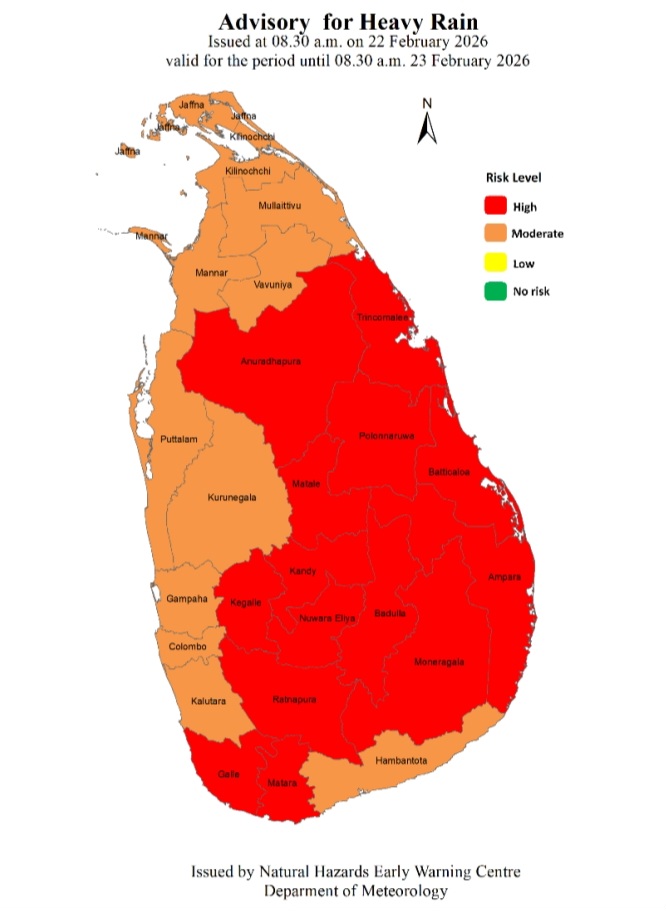
Advisory for Heavy Rain Issued by the Natural Hazards Early Warning Centre at 08.30 a.m. on 22 February 2026 valid for the period until 08.30 a.m. 23 February 2026
Due to the influence of the low level atmospheric disturbance in the vicinity of Sri Lanka, Heavy showers above 100 mm are likely at some places in Central, Uva, Sabaragamuwa, Eastern and North-central provinces and in Galle and Matara districts.
Therefore, general public is advised to take adequate precautions to minimize damages caused by heavy rain, strong winds and lightning during thundershowers

Protection of Occupants Bill: Good, Bad and Ugly

Coal scam: Will Opp. drop a sitter?

Bathiya & Santhush make a strategic bet on Colombo

Sampath Group posts record Rs 53 billion profit; assets surpass Rs 2 trillion in 2025

Aquaculturists from Sri Lanka attend special capacity-building programme in India

LOVEABLE BUT LETHAL: When four-legged stars remind us of a silent killer

‘Dates have the highest sugar content to fight Coronavirus’

Sunday Island 27 December – Headlines

#SundayIsland 17th December – Headlines

Sunday Island – 28th March

Sunday Island Headlines – 21 March

Sunday Island – 21st February – Headlines
-
 Features1 day ago
Why does the state threaten Its people with yet another anti-terror law?
-

 Features1 day ago
Victor Melder turns 90: Railwayman and bibliophile extraordinary
-
 Features24 hours ago
Reconciliation, Mood of the Nation and the NPP Government
-
 Latest News2 days ago
New Zealand meet familiar opponents Pakistan at spin-friendly Premadasa
-
 Features1 day ago
Victor, the Friend of the Foreign Press
-
 Latest News2 days ago
Tariffs ruling is major blow to Trump’s second-term agenda
-

 Latest News2 days ago
ECB push back at Pakistan ‘shadow-ban’ reports ahead of Hundred auction
-
 Features1 day ago
Barking up the wrong tree