
News
Police go all out to help EC conduct free and fair election

By Rathindra Kuruwita
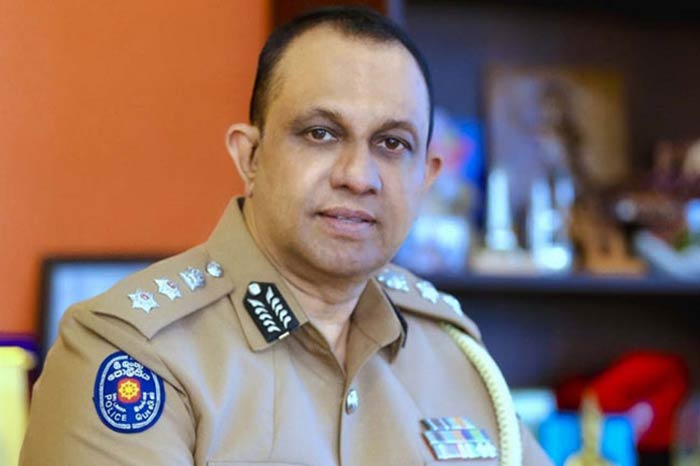
The police were ready to offer any assistance required by the Elections Commission (EC) to ensure a free and fair election tomorrow, DIG Nihal Thalduwa, Head of the Crime Division and Police Spokesperson, said during a media briefing yesterday (19).
Two police officers will be stationed at each polling centre.
“In centres serving a significant number of voters, we sometimes deploy three officers. All police personnel on special duties have reported to their respective stations. From 6 o’clock on Friday, mobile police units will begin patrolling polling centres and the surrounding areas,” he said.
DIG Thalduwa explained that one of the two officers deployed to each polling centre would go to the location where ballot boxes are issued.
“This officer will liaise with the Returning Officer of the polling centre and accompany them, along with the ballot box, back to the centre,” he said.
“In the meantime, the other officer will have secured the polling centre. On Saturday morning, both officers will remain on duty at the centre at all times,” he added.
DIG Thalduwa said the election process thus far has been extremely peaceful, with the police receiving only 449 complaints, of which just 140 fall under the Criminal Procedure Code. “We have had about three incidents involving serious injuries. In total, we have arrested 108 individuals and apprehended 14 vehicles for violations related to election law,” DIG Thalduwa said.
DIG Thalduwa said that election-related propaganda had ended at midnight on Wednesday (18).
As per the regulations governing presidential elections, election offices are no longer permitted after midnight on 19 September. “However, a candidate is allowed to maintain a central election office in each electoral district. Additionally, if a candidate’s residence has been used as an election office, it may continue to function. Candidates can also maintain one election office for each seat (160 seats in total), and these may remain operational until midnight on 22 September,” he said.
Canvassing had also prohibited since midnight Wednesday (18). The newly gazetted Code of Criminal Procedure (Amendment) Bill from 19 July 2024 has introduced significantly higher fines for election-related offences. For example, Section 169E has been amended to increase the fine for “bribery by treating” from 200 rupees to 750,000 rupees. The fine for “bribery in connection with an election” has been raised from 500 rupees to 1 million rupees. Similarly, Section 169F has been amended to raise the fine for “undue influence at an election” from 500 rupees to 100,000 rupees, and the penalty for “personation at an election” has increased from 300 rupees to 100,000 rupees.
The police will also ensure that no intoxicated individuals enter polling centres. “There is limited time for voting, and we cannot afford to deal with disturbances caused by drunken behaviour. We urge the public not to disrupt the work of election officers, and we will take strict action if necessary,” DIG Thalduwa said.
Of the 85,000-strong Sri Lankan police force, 70,000 officers will be deployed either directly or indirectly for election duty on Saturday. “Mobile phones will not be allowed inside polling booths. A small minority of people take their phones inside and capture photos or videos, which causes numerous problems,” DIG Thalduwa said.
The police are also monitoring election watch parties where large amounts of alcohol may be consumed. “As election results are announced, some individuals might cause disruptions that could even affect national security. We will disperse such gatherings. Do not drink excessively and attempt to cause trouble,” he said.
Additionally, police are keeping a close eye on individuals who continue to promote election propaganda via social media despite the ban on such activities.
“An organised group, for example, attempted to falsely suggest that an incident from two years ago was happening in the present. They circulated a video on social media with a caption accusing one party. Despite it being clear that the event was from the past, people kept contacting the police to verify the information. Acts like this can cause unnecessary confusion and problems,” he said.

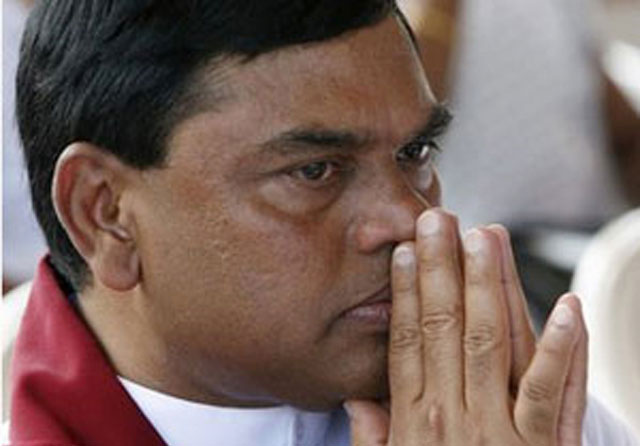
Govt. is finalising extradition proceedings against Basil to have him stand trial here in respect of several cases
By Norman Palihawadane
The process of having former Minister Basil Rajapaksa extradited from the US to Sri Lanka was being finalised, Police Headquarters sources disclosed yesterday.
The government has formally sought assistance from the United States government to extradite former Minister Basil Rajapaksa, as multiple courts have reissued arrest warrants over his failure to appear before them in connection with two separate criminal cases, a senior police officer told The Island.
The officer, speaking on condition of anonymity, said matters pertaining to obtaining US government authorities’ assistance to extradite Rajapaksa were now being finalised.
Police headquarters sources said law enforcement agencies were currently evaluating red notices, which request the location and provisional arrest of a person pending formal extradition.
The CID and Police Headquarters earlier initiated steps to seek INTERPOL assistance to secure Rajapaksa’s return to Sri Lanka to face court proceedings relating to the two cases in which arrest warrants have been issued against him.
Rajapaksa is believed to be residing in Los Angeles, United States.
The Matara Chief Magistrate’s Court on July 21, 2026, reissued an arrest warrant for Rajapaksa after he failed to appear before court for the second time in connection with a case involving the alleged purchase of a 1.5-acre coconut estate on Eliyakanda Road in the Brown’s Hill area of Matara.
The case relates to the purchase of the property for Rs. 60 million.
The case was filed by the Police Financial Crimes Investigation Division and names Basil Rajapaksa and several other accused, including Ayoma Galappaththi, identified in court reports as the sister of Rajapaksa’s wife, Tissa Galappaththi, and Muditha Jayakody.
However, officials acknowledged that seeking US assistance would only begin a formal international process and would not automatically result in Rajapaksa’s arrest or return to Sri Lanka. Sri Lankan authorities would need to submit court orders, details of the alleged offences, and other supporting documents through the appropriate diplomatic and judicial channels. Any request would then be considered by the relevant US authorities under American law and applicable legal arrangements.
Sources at the Foreign Ministry said sealed correspondence had been exchanged between Sri Lanka’s Ministry of Foreign Affairs and the Legal Department of the US State Department relating to corruption allegations against members of the Rajapaksa family residing in the United States.
The legal foundation for any extradition is the bilateral treaty between Sri Lanka and the United States signed in Washington on September 30, 1999. The treaty applies the principle of dual criminality, meaning authorities must show that the underlying conduct amounts to a crime in both countries. Rajapaksa’s status as a United States citizen would not, on its own, make him immune from a valid request under the treaty’s provisions.

Non-communicable diseases (NCDs) account for 80% of all deaths in Sri Lanka, with high blood pressure and diabetes among the leading causes, Secretary to the Ministry of Health and Mass Media, Dr. Anil Jasinghe, said early this week.
Dr. Jasinghe pointed out that the two conditions were interrelated and could lead to a range of serious health complications, with heart attacks being among the most severe consequences.
Dr. Jasinghe made these remarks while attending the commencement of construction of a modern Cardiac Care Complex at the Anuradhapura Teaching Hospital on Wednesday (16).
The Health and Mass Media Ministry Secretary said:
“The main issue is that these two diseases are interconnected and cause a range of complications in a person’s health. Looking at the current situation in Sri Lanka, only around 50% of those suffering from high blood pressure are under effective control. Similarly, only around 25% of diabetic patients are under proper control. As a result, this has now become a major problem in society.
“The most serious complication associated with both these diseases is Myocardial Infarction (MI), or a heart attack. This has also become the
leading complication. So, how do we control this modern epidemic? This is the biggest challenge before us.
“While establishing modern facilities across the country, our health system must also recognize the changes that have taken place in the demographic structure of our population and disease patterns. Accordingly, our health system must be adapted to suit these changing circumstances.
“Under the policies of the government led by the President and the guidance of the Minister of Health, the Ministry of Health and Mass Media is currently implementing a major programme in this regard. Its three main components are Arogya, Cluster Systems and High-End Care Institutions, which need to be developed to suit the requirements of our health system.”
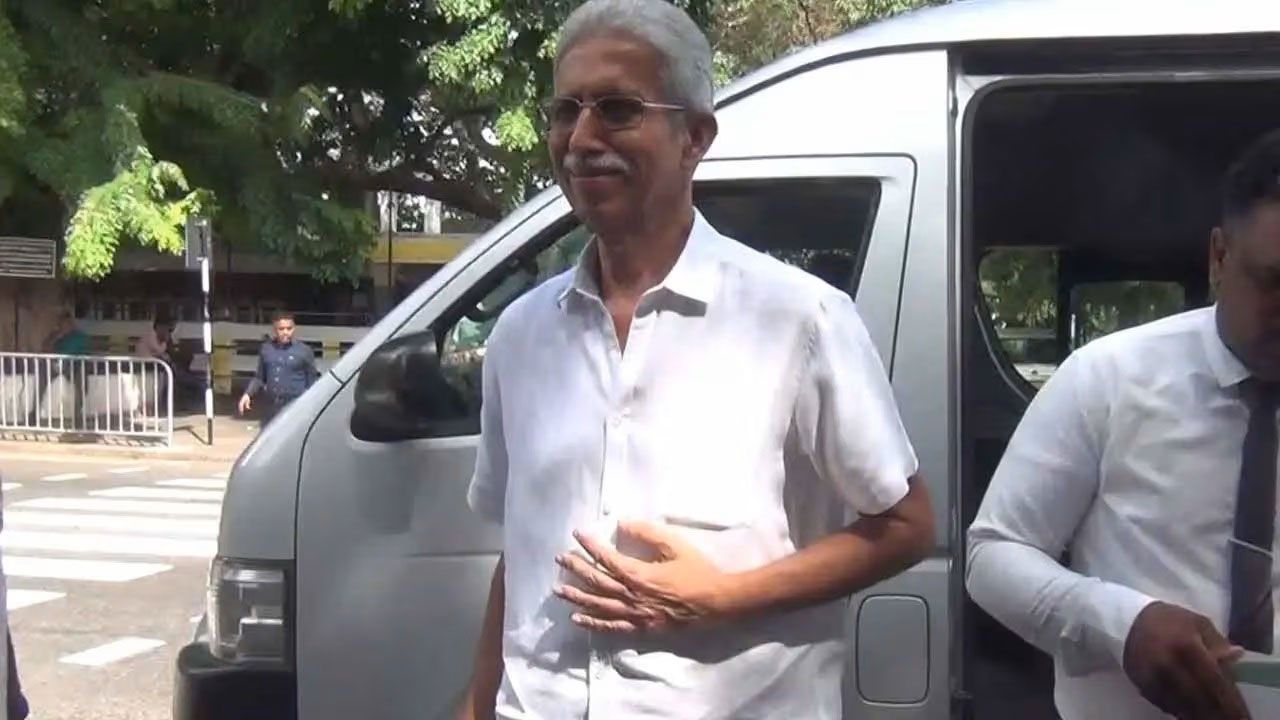
Former National Transport Commission (NTC) Chairman Renuka Perera was remanded until September 29 by the Colombo Magistrate’s Court after being arrested by the Commission to Investigate Allegations of Bribery or Corruption (CIABOC) over alleged corruption in the issuance of bus route permits.
Colombo Chief Magistrate Asanga S. Bodaragama issued the remand order after considering submissions by CIABOC officials and defence counsel.
According to CIABOC, Perera was arrested over allegations that he unlawfully issued route permits during his tenure as NTC Chairman, causing a financial loss to the government while conferring an unlawful benefit on an outside party.
Perera was arrested around 9.55 am yesterday (17) over allegations that he issued 56 passenger transport service permits for buses to operate on the Southern Expressway in violation of prescribed procedures and without collecting the applicable annual fees as a single payment.
CIABOC said the alleged offences were committed in contravention of the National Transport Commission Act No. 37 of 1991 and recommendations contained in a Cabinet decision dated September 19, 2014.
Perera, a senior member of the SLPP, currently serves as the party’s Administrative Secretary. He previously served as Chairman of state-owned dairy producer and marketer MILCO.

Showers expected in the Western, Norrh-western and Sabaragamuwa provinces and in Galle, Matara, Kandy and Nuwara-Eliya Districts.

Bid for Basil’s extradition nears final stage: Police

High blood pressure, diabetes lead to about 80% of deaths in Sri Lanka

Ex-NTC chief in remand over 56 bus permits

Order for calling investment proposals for exploration, development of petroleum resources approved

Fuel market faces fresh pressure as Asian prices rise

‘Dates have the highest sugar content to fight Coronavirus’

Sunday Island 27 December – Headlines

#SundayIsland 17th December – Headlines

Sunday Island – 28th March

Sunday Island Headlines – 21 March

Sunday Island – 21st February – Headlines
-

 Latest News6 days ago
Sri Lanka thwart Fatima Sana challenge to secure Asia Cup final spot
-

 News5 days ago
Gnanasara Thero absconding after SC ruling
-

 News6 days ago
Ammunition cache found in old Kandy bungalow
-

 News6 days ago
Green Climate Fund (GCF) Regional Dialogue for East and South Asia will be held from 14 to 17 September 2026 at Cinnamon Life at City of Dreams Hotel, Colombo
-

 News6 days ago
Prof. Pieris says Buddha Dhamma recognised as source of law under Constitution
-

 News7 days ago
Bambalapitiya Railway Station renovated under the “Dream Destination” project opened to the public
-

 Latest News6 days ago
ITS Giuseppe Garibaldi’ departs Colombo
-

 Opinion4 days ago
From Galkissa (Mount Lavinia) to Tambuttegama